
The hidden racing gem attracting ex-F1 heroes
It’s rarely mentioned when it comes to assessing the best national contests, but the Brazilian Stock Car series that reaches its climax this weekend has an ever-growing appeal. Its expanding roster of ex-Formula 1 names has helped to draw in new fans, but it's the closeness of competition that keeps them watching

One is the youngster going for his first title, the other a seasoned multiple champion hoping to further enhance his legend when the close-fought 2021 campaign is decided this weekend.
The battle for Brazilian Stock Car Pro Series honours between Gabriel Casagrande and three-time champion Daniel Serra reaches its conclusion at Interlagos with two races on Sunday. It might not have the world in its grips to the same extent as Max Verstappen versus Lewis Hamilton but, like Formula 1 with its Netflix-assisted growth, its stock is rising.
The series has new owners led by telecom entrepreneur Lincoln Oliveira who have invested significantly in advertising and TV coverage, including live-streaming races on Motorsport.TV. And it’s strategy appears to be working.
“Stock cars in Brazil is something that I really like to watch,” Mercedes GT ace Raffaele Marciello told Autosport earlier this year. “Because they are not on Eurosport or on big channels [in Europe] nobody really watches, but the level is mega-high, so I’d like to do it.”
Those on the inside are noticing too.
“The championship is on fire, it’s really picked up from last year to this one,” says ex-F1 driver Nelson Piquet Jr, who entered his own team this year but parted ways with the squad in September due to poor results. “We’re up to 32 cars in a pandemic situation and in an economic crisis that Brazil is facing, so I must say that they’re doing a very good job with what they have.”

The ingredients are the key, with a mix of ex-F1 drivers such as Piquet, Felipe Massa, 2014 champion Rubens Barrichello and Ricardo Zonta taking on established series stars including five-time champion Caca Bueno and treble title winner Ricardo Mauricio, all racing virtually identical silhouette cars badged as Chevrolet or Toyota. It makes Stock Cars one of the motor racing world’s hidden gems.
“This championship has been very strong at least for the last decade,” says 2010 Stock Car champion Max Wilson. “It might be getting a little stronger every year, but it has been strong for a long time and I think it is one of the toughest championships around the world to do well because we normally have 25 cars within a second in qualifying.”
In fact, on average no fewer than 27 cars have qualified within a second of pole this season (at the second Curitiba round, that reached a high of 29). The racing is fierce too, thanks to a push-to-pass system that can be used for around 15 to 20 seconds at a time depending on the track, requiring drivers to think tactically.
"Maybe people don’t know exactly what is the Stock Car series because we are quite far away. It’s a really nice series and super-competitive – all the drivers that I know went there to drive in the guest races, they always love it and want to go back" Daniel Serra
Amid such fierce competition, showing well has launched several drivers onto the global stage in sportscars.
Serra is just one example. His 2017-19 title hat-trick consolidated a growing reputation in international GT racing – he scored his first of two GTE Pro class wins at Le Mans for Aston Martin in 2017. Now a full-time Ferrari driver in the World Endurance Championship, Serra says competing in both series has helped his development.
“One helped me in the other one: things that I learn in the Stock Car I can use [in WEC] and stuff that I learn here I can use in the Stock Car,” the Eurofarma Chevrolet driver says.
Marcos Gomes, champion in 2015, and his 2016 successor Felipe Fraga have also used it as a springboard to race at Le Mans in the GTE Am class.
“For me, Daniel and Fraga, everything that we learned up to now in our careers, we learned it in Stock Cars,” says Cavaleiro Sports Chevrolet man Gomes. “Without the Stock Car Series, I think we couldn’t be here [in WEC].”
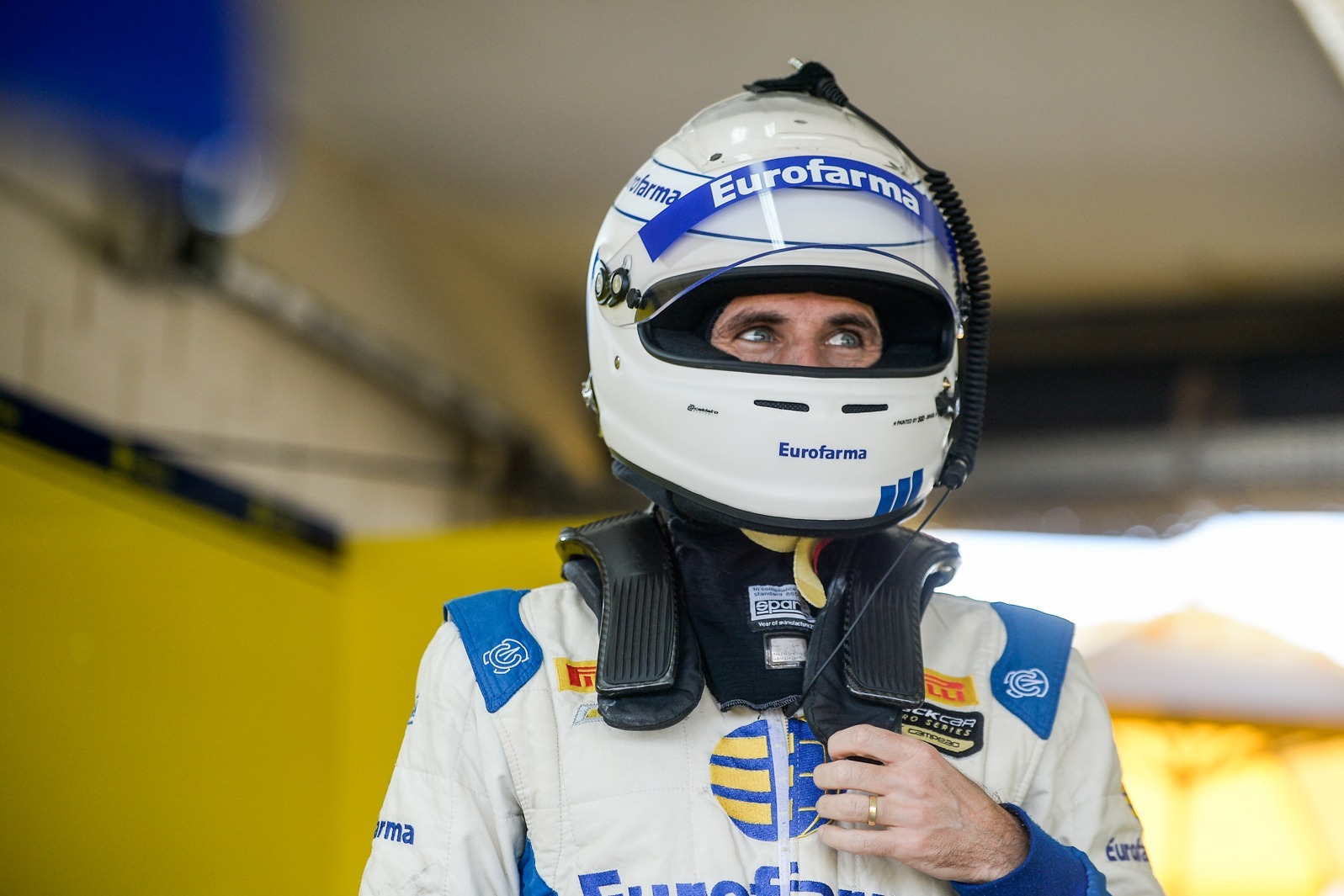
Serra has launched a sportscar career with Ferrari in the WEC from his Stock Car success, and remains in the hunt for this year's title
Photo by: Duda Bairros
“Maybe people don’t know exactly what is the Stock Car series because we are quite far away,” adds Serra. “It’s a really nice series and super-competitive – all the drivers that I know went there to drive in the guest races, they always love it and want to go back.”
All the cars are built by Giaffone Racing, a Brazilian company run by Jose ‘Zequinha’ Giaffone, the son of 1987 Stock Car champion Jose ‘Zeca’ Giaffone and brother to early 2000s IRL racer Felipe. Since 1999 it has supplied the spec chassis – including suspension, dampers and springs – and two years later began to supply engines. Today, it works with the series to ensure that the two engine marques (each producing around 440-450bhp and, depending on the track, up to around 550bhp with push-to-pass engaged) are fully equalised.
“We provide the whole car for the series: the chassis, the wishbones, everything we do in-house,” says Giaffone, whose company employs 80 people and is expanding into developing electric vehicles for road use.
“We also build all the parts. It’s easy to control so they just can change the set-up, ride-height, the camber, caster and so on. Even the shocks are the same for everybody, so that makes the series very, very close.”
As a result, time is found in small details, as Gomes confirms: “In Stock Car, the set-up makes more difference than in GT.”
“Almost everything is the same, so it’s really on the details,” says Serra. “The cars are quite the same, all the cars have the same potential. Maybe they have to work in different ways, so you just need to do small set-up adjustments to reach the maximum potential.”
Giaffone reckons that leaves “maybe 15 or 20% of the parts [the teams] can do by themselves”. But Piquet explains that despite the tightly governed regulations, “because you have a margin of grey areas in the regulations, it brings up quite a big gap of opportunities and chances teams have to do things better”.
“The brake ducts, the way you put the doors, the way you put the bonnet, the angle of the windscreen, there’s many details that we have to fabricate ourselves,” Piquet adds. “As much as they’re really tight on regulations, for example ride-height, springs, dampers, gearbox ratios – all the common stuff that needs to be standard – they don’t have a laser scanner like NASCAR has for [checking] the angle of the windscreen.
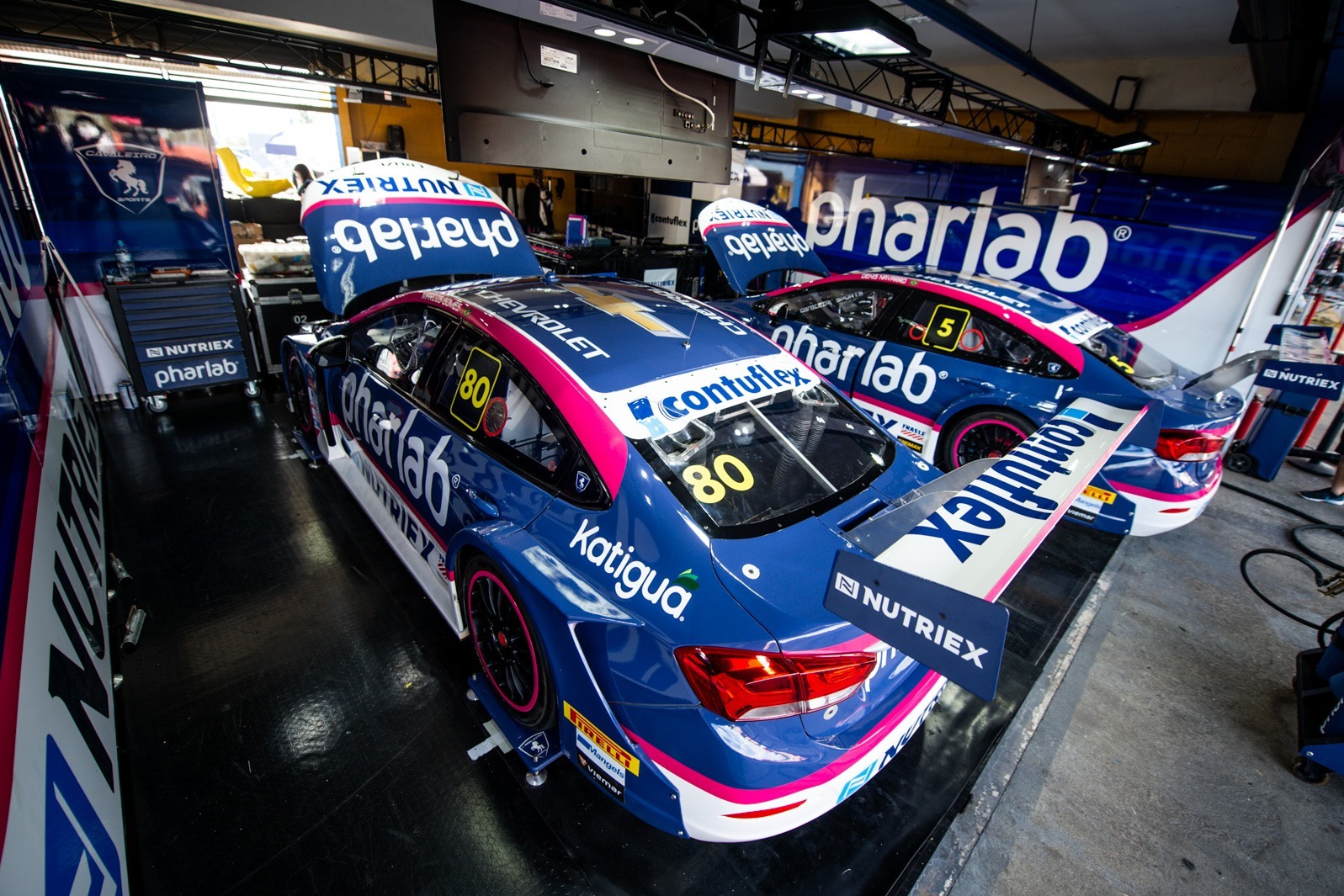
The cars are the same, but teams can make a difference with tiny details, according to Piquet
Photo by: Duda Bairros
“OK, our series is not as aero-dependent as NASCAR – because NASCAR is constantly at 150mph – but still, because the engines are all the same, if you have something that has a little bit less drag and you end up gaining three or four km/h on the straights, they end up making a difference on the car, as much as the cars are pretty much all identical.”
Since Toyota’s entry to the series in 2020, following two years of everybody running a Chevrolet, Stock Car introduced revised road-based bodykits that Giaffone estimates resulted in a 20% reduction in downforce.
“We took away the front splitter and the rear splitter, and also the rear wing is smaller,” he says. “The idea is to try to see the cars moving a little bit more on the TV and also just to have the cars close from what you see in the street.”
According to Wilson, a series regular with Eurofarma until it cut back from three cars to two for 2020, the cars are “around three seconds slower than the old car, mostly because of the aero package,” but he believes this has contributed to a condensing of the field.
"The car is still the same since four or five years, so the teams don’t have to do any big investments every two or three years"Jose ‘Zequinha’ Giaffone
“I think the car is a little bit more difficult to drive in a way because they have the same horsepower and less downforce,” says Wilson, who made a brief return this year in the Full Time Sports Toyota when travel restrictions prevented Argentinian Matias Rossi from contesting the Goiania season opener.
“But also because of that, the car became slower, especially on the corners. There are some drivers that are getting better results with this new-spec car compared to the old one. With this new format, it became more competitive. I’m not sure if it’s because it’s harder or easier to drive, but there are drivers now winning races that were not years ago.”
Under the skin, however, the regulations have been stable, helping the series to thrive and keep costs down. Giaffone puts a seasonal budget at between US $400,000-500,000 (£302,000-377,000).
“It has not had too many changes in the past four or five years,” he points out. “We changed just the aerodynamic side and not the physical parts of the car. The car is still the same since four or five years, so the teams don’t have to do any big investments every two or three years.”
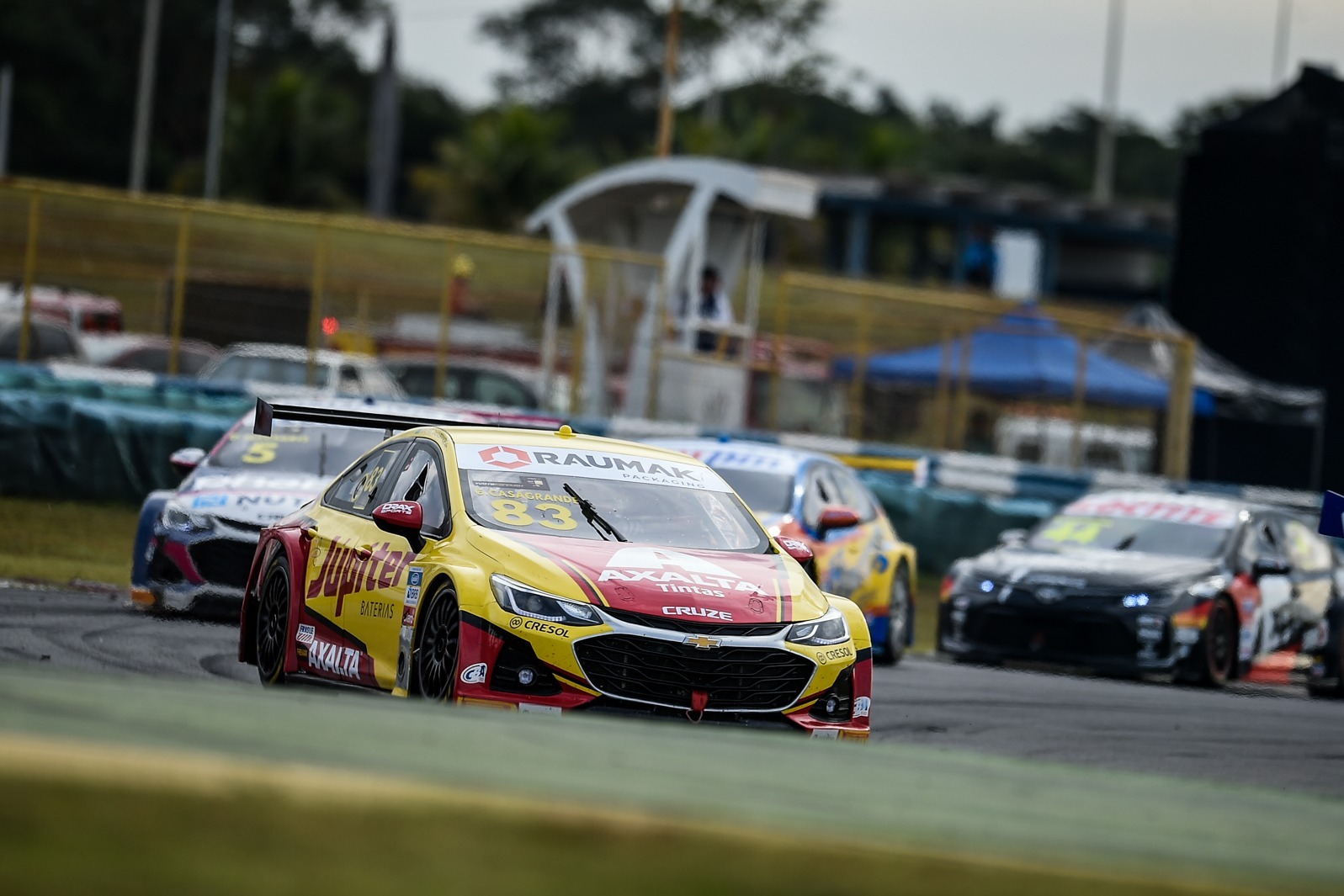
Aero reduction has made the cars slower and more difficult to drive on the limit, allowing new names to come to the fore like current points leader Casagrande
Photo by: Duda Bairros
Those coming in from outside – a fairly regular occurrence, with Antonio Felix da Costa winning at Interlagos earlier this year when COVID-19 ruled out Mauricio – have noticed the difference.
“It’s not manufacturer-controlled like DTM was,” says Jamie Green, who made a cameo in 2018 at a soaking wet Interlagos. “It’s funded by private sponsors and run by private teams, so it’s a bit more like NASCAR in that regard. It’s quite cost-effective and if you can get the commercial side of it right, you can have relatively cheap cars and create good racing, and drivers can earn a good living as professionals.”
For those young Brazilians who find the cost of following their F1 dreams in Europe too great, the existence of a strong domestic series means the lure of staying local is increasingly significant, with many comparing it in this respect to Australian Supercars.
Wilson is in the unique position of having raced in both – the former Williams F1 tester enjoyed a seven-year spell Down Under, including briefly racing for Triple Eight. He says the two series “are quite different in a lot of ways”, not least because of the huge manufacturer rivalry between Ford and Holden in Australia, and a rules set that is “a lot more open than Stock Cars”.
“The [Australian] teams back in the day could build their own roll-cages, and some bits and pieces of suspension and engines – you could play with the engines and things like this which they cannot do in Stock Cars at all,” says Wilson. “You cannot touch the engine or anything like that; it’s quite different as far as the technical rules are concerned.”
Wilson is upbeat about the progress Stock Cars has made, to the point where he believes its teams are no less professional than those found in Europe. His optimism is widely shared.
“I would say it’s growing again,” says Giaffone. “You still have 32 cars on the grid which is very good for Brazil, and it looks like for next year we can even have more. So I think we have some good possibilities, the series is going in a good direction.”
The drivers agree too.
“They are investing a lot to bring more ex-F1 drivers, so the series for sure is getting bigger now,” says Gomes. “We are very confident to see the Stock Car improving.”
“We could see some good changes this year, especially on the marketing side,” adds Serra. “I think we have a good future in front of us.”
All eyes this weekend will be on the climax of the Verstappen-Hamilton soap opera in Abu Dhabi. But those who give Stock Cars a try won’t be disappointed, reckons Wilson.
“If you don’t want to know who is going to win on any given day, you should tune in,” he says. “It’s very unpredictable.”
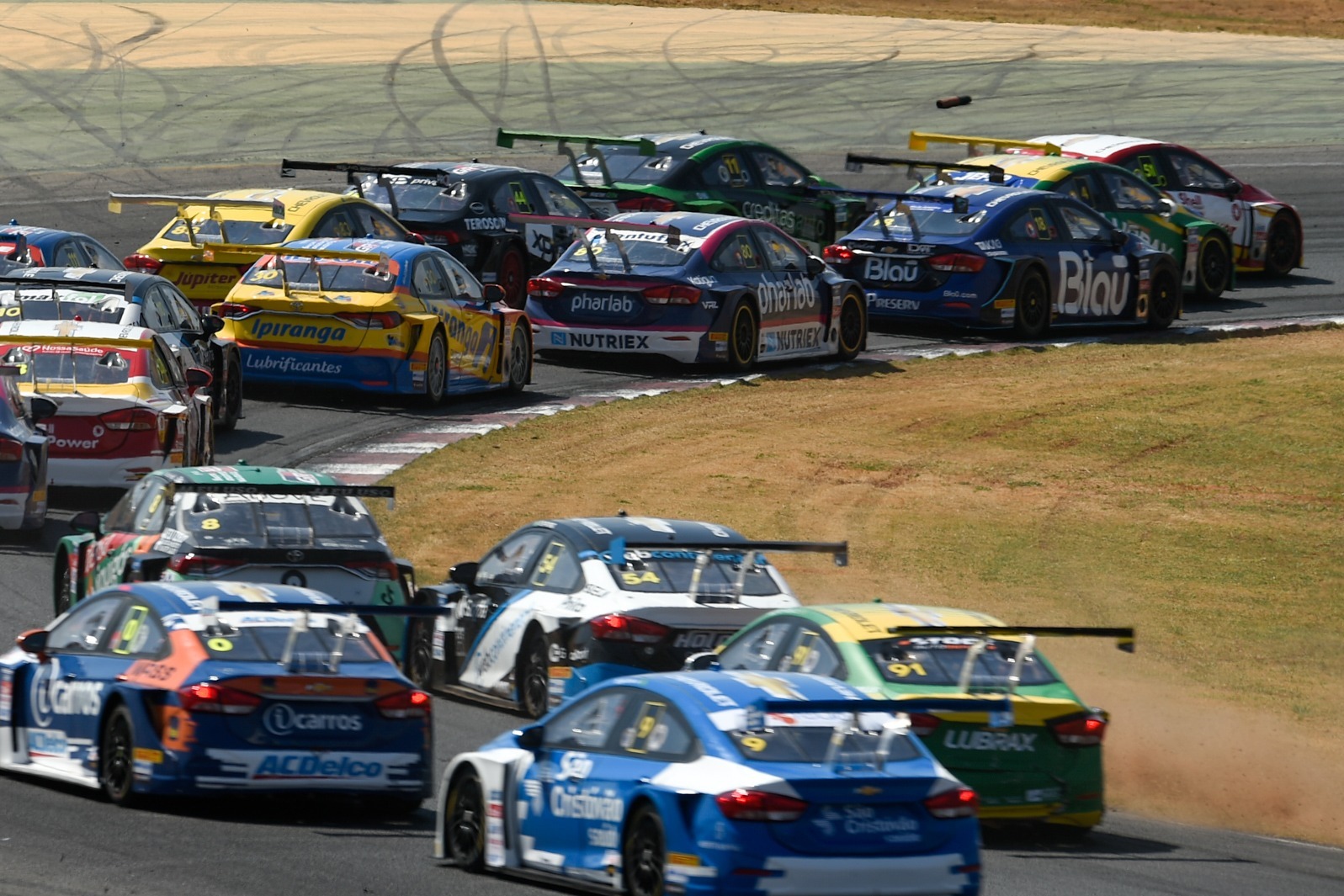
The 2021 campaign comes to a conclusion this weekend as Casagrande and Serra fight for the title
Photo by: Duda Bairros

Why ‘Mr Formula E’ has called time on his racing career

Archive: When Le Mans made its most controversial change

The man behind Japan's first Le Mans winner

Did Audi ‘give up’ on GT3 too soon?

Alex Zanardi’s top 10 moments

This retro-inspired Mercedes 190E racer is heading to the Nurburgring 24 Hours

Why Verstappen's Nordschleife approach is a win-win for motorsport

The new Mercedes star who had an unconventional route to success

Why being "very adaptive" gave Norris the edge over Piastri at US GP

Smyth makes Formula Ford Festival history as he wins despite clash with team-mate Murray

Taken for a ride? The less heralded flaw of the 2026 F1 regulations

Sainz set for Rally1 outing in latest gen WRC car
Subscribe and access Autosport.com with your ad-blocker.
From Formula 1 to MotoGP we report straight from the paddock because we love our sport, just like you. In order to keep delivering our expert journalism, our website uses advertising. Still, we want to give you the opportunity to enjoy an ad-free and tracker-free website and to continue using your adblocker.


Top Comments