




Will F1's ugly nose designs change for 2017?
Could an ugly element of modern grand prix cars disappear next season? How did a core part of F1 design come about? And what should we think of Rory Byrne at Ferrari, or Paddy Lowe switching to Williams?


Will we see an end of the horrible stub noses in 2017 under the new regs?
Calum Edward, via Twitter
Calum, once a designer finds a solution to a problem, it is very difficult to get them to change their ways.
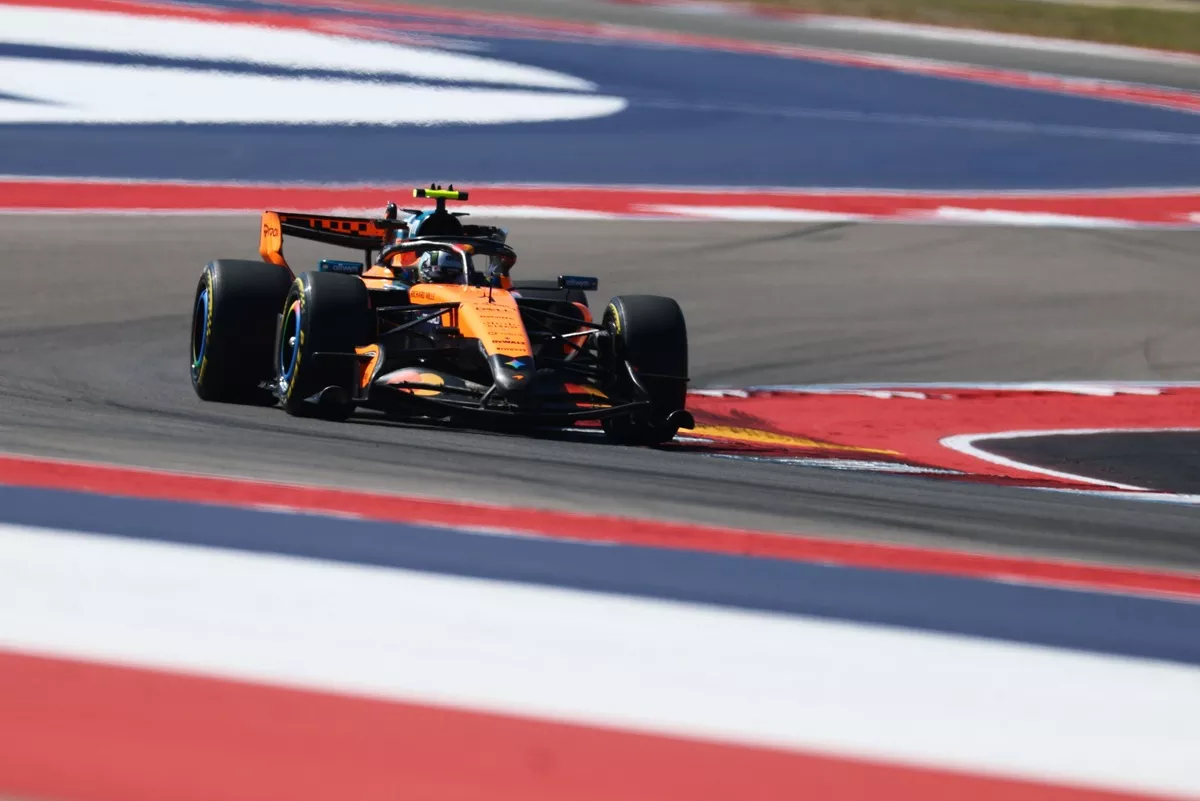
This nose design allows the maximum airflow between the front wheels, while still meeting the low nose crash-deceleration requirements in the regulations.
Unless something changes with regards to the fairly silly nose height regulations, then I am afraid we are stuck with what we have - or, at best, a derivative of what we have.
With the nose height regulations as they are, it's only a matter of time before one car goes underneath another car. It's a pity someone will probably have to get hurt before we see a change in this area.
It would be very easy to do and make the cars safer, while at the same time be more aesthetically pleasing.

Do you think Rory Byrne will be able to turn around Ferrari's fortunes? I read they are going radical in 2017 under his watch.
@zombifiedmonkey, via Twitter
You can't beat bringing an old guy back to keep an eye on the young guys!
Rory has a lot of experience and if he can help the new technical director Mattia Binotto (pictured above) while he gets his feet under the table, then it will be good for Ferrari.
Remember, Binotto comes from an engine background, which is a very different discipline since it focuses 90% on mechanical design, whereas car design is 90% about aerodynamics.
I doubt very much Rory alone can fix Ferrari's problems. As a matter of fact, the last time I spoke with him (which was a while ago) he was as disappointed as everyone else about the way Ferrari was going.
The upper management at Ferrari has always been the problem and its real success came about because Michael Schumacher, Ross Brawn and Jean Todt recognised this, and between Schumacher and Todt they were able to deflect Luca di Montezemolo and allow Brawn and Byrne to design and build great cars.

What are the chances Paddy Lowe will move to Williams and, if so, what role will he be best suited to?
Paul Moran, via Twitter
Paddy has shown he is a very capable technical director, so if he does move he should stay in that sort of role, even if the title is a bit different. I'm sure that's what he would do.
True or not, this whole story of Paddy moving to Williams just shows how ego can make or break a team. I have seen it going on for many years.
When John Barnard was technical director at McLaren, he was getting more credibility for the team's success than Ron Dennis was, so he was 'let go'.
The same happened with Adrian Newey when he was at McLaren, and now it is Toto Wolff versus Lowe - or so it appears to me. Paddy is a quiet guy doing a very good job, and if the outside world, including Mercedes management, sees it as his success then so be it.
The best situation is when everyone can enjoy everyone's success. Just look at how many years Frank Williams and Patrick Head were together as team principal and technical director - they had their good and bad years but they stuck together as a partnership.
Williams can't offer Paddy anything like the opportunity he has now, so if he does move it will be because he has been ousted because of his success - just like Barnard and Newey were from McLaren.

Why is it teams ignore the realities of car design in terms of the ability to overtake?
Stephen Camp, via Twitter
Every team will focus on that ultimate performance over one lap. That means getting the best aerodynamic performance from your car in clean air is the ultimate goal.
I personally don't agree with it, and that is probably why I am sitting here writing this as opposed to being in a windtunnel somewhere helping to optimise a car design.
I thought that when the regulations changed in 2003 and cars were put into parc ferme conditions after qualifying, teams would start to focus a little more on more robust aerodynamics that are less compromised by turbulent air. But that hasn't happened.
In fact, the opposite is probably true. Teams feel that the better the grid position the better the potential race result.
I don't know how you fix this problem other than the controversial reverse-grid system, whereby overtaking is the only way to change the way teams think. That way, robust aerodynamics would become the priority.

Why did F1 cars develop the famous 'coke bottle' shape?
Gary Jennings, via email
Gary, if you look through the years of the cigar-shaped cars, then the 'coke bottle' shape has been around for a long time.
During the 1970s and early '80s, the cars became fairly box-shaped. This was to house all the stuff contained within the sidepods and to maximise the potential underfloor downforce.
But then Alan Jenkins, who was at McLaren at the time, had a 'Eureka!' moment and designed a sidepod that swept inside the rear tyres. So in a fairly primitive manner, the coke bottle was born.
His version was a fairly gentle sweep just inside the tyre, but as time went past this styling got more and more exaggerated. Now it is a vital part of the aerodynamic package that creates a car.
The objective is to allow the airflow that is hitting the front of the rear tyre to be pulled inside the wheel and tyre. This, in effect, makes the car narrower and reduces its overall drag.
The rear wing endplates then help turn that airflow back out again into the low pressure area behind the rear tyre. Overall, it's trying to make the rear tyre as invisible as possible to the airflow.

I'm a 16-year old from Germany and a former contestant of the F1 In Schools challenge. When talking about the dominance Mercedes has had, one of the things that was talked about was FRIC (front and rear interconnect suspension system), which gave more speed in low-speed corners by connecting the front and rear axle suspension or dampers. Aside from this, I've never managed to figure out how it works technically. So how did the FRIC system work?
Tom Fischer, via email
Tom, FRIC has been around a long time. In the early days, it was a cable system that linked the front and rear suspension. When you braked the front of the car would dive, but not as much as it theoretically should, because it would pull the rear of the car down as well. So in effect, the front would be supported by the rear under braking.
It still works with a fairly similar objective, but over the years this has become a very complicated hydraulically operated system that basically allows the front ride height to run lower at slow speed and still not destroy itself when braking or at high speed.
A basic system would have a hydraulic actuator on the front and rear suspension. These would be connected to a hydraulic unit, with either a bevel, coil or air spring somewhere in the middle of the car.
As the car increases in speed and displaces hydraulic fluid from the front and rear actuators, it would compress the central spring.
However, via pressure relief and one-way valves, when under braking - with the weight transfer onto the front axle trying to compress the actuator, and the rear actuator trying to extend the fluid from the front - it helps to hold the rear of the car lower.
If this can be achieved successfully - and success would be about being able to hold the front of the car say three millimetres higher and the rear six millimetres lower under braking than in general - you will be able to run the front of the car that much lower, which in low-speed corners will make a big difference to the aerodynamic grip levels.

You're the technical director of a grand prix team - what are the qualities you need in a driver to make your job as easy as possible?
Ben Turner, via email
As a technical director, you want the driver to wring the car's neck every time he gets into it. You don't want to doubt that your product is being used to the maximum.
In the old days, before we had quite so much data to examine, the driver was all you had to give you a direction on how to improve the car's performance. Young drivers, people like Rubens Barrichello, Roberto Moreno and Giancarlo Fisichella, were great to work with.
They knew what they wanted and, in a few simple words, could get the message across to you. Rubens was great - he would be telling you about it on his inlap, and hopefully by the time he got to the pits I would have a solution to his problems.
The more experienced drivers that I have worked with, who normally were past their sell-by date when they joined us, were more of a problem. They seemed to have to justify their existence and often came back with far too much irrelevant information. They just didn't get to the point.

Everybody says engines won't be that important next year, but surely with the increased downforce and wider tyres and therefore increased drag, this will remain very significant?
Darren Baines, via email
Darren, I agree completely. There has never been a time when engines haven't been important, especially when they are as complicated as they currently are.
Back in the old days, when engines were simple and just had things like pistons that went up and down and the difference in some of the engines outputs would be 20bhp, it was still important.
Now, with the complication of the power unit package it is not only that 20bhp difference, which probably still exists within the engine itself, it is how and where you recover the electrical energy - and, more importantly, how and where you deploy that energy. After all, we are talking 180bhp for around 30 seconds per lap, which can be a massive advantage if deployed correctly.
When drivers talk about driving defensively it means that they use that energy in the areas of the track where another driver can attack, and save it in areas where it is more or less impossible to actually overtake.
Engines will be just as important, if not more so, for exactly the same reasons as they were in 2016 and before.


Ask Gary: Is there value in crossovers like Hamilton/Rossi?

Gary Anderson: How F1's 'privateers' really fared in 2019

F1's 'big four' teams' real 2019 performance levels revealed

What F1 learned from Ferrari's fuel breach

Ask Gary: Will the 2021 rules mean a Mercedes car concept change?

Where did Red Bull-Honda's pace come from?

Will Wolff's absence affect Mercedes in Brazil?

F1's prescriptive 2021 rules will only cause design convergence

MotoGP Australian GP: Marquez crashes and then takes pole in wet qualifying

What we learned from Friday practice at the 2026 United States GP

Honda rider Marini withdraws from Australian GP due to virus

McLaren's aims for its final F1 2026 upgrades amid decline in form
Subscribe and access Autosport.com with your ad-blocker.
From Formula 1 to MotoGP we report straight from the paddock because we love our sport, just like you. In order to keep delivering our expert journalism, our website uses advertising. Still, we want to give you the opportunity to enjoy an ad-free and tracker-free website and to continue using your adblocker.


Top Comments