


Why V8s have entered the F1 chat (again)
The FIA president wants F1 to abandon turbos and minimise electrification sooner rather than later – but powerful forces stand in his way, even though he claims not to need a consensus

Distant rumbles were the talk of the Miami Grand Prix weekend, thunderstorms being forecast for the Sunday with all the logistical brouhaha that entailed.
“It’s coming,” FIA president Mohammed Ben Sulayem told Reuters. "Oh yes, it is coming. At the end of the day, it’s a matter of time."
This prognostication did not concern the onset of said thunderstorms, which had been and gone by the time the race started anyway, but the arrival of a viscerally more exciting engine formula. Amen to that, you may say, if you are one of the many left cold by unearned overtaking and the dreary subject of energy management.
It has been known for some time that Ben Sulayem is determined to exterminate the present formula as soon as possible and return to normally aspirated engines with less electrical input. But this is the first time he has returned to the well vocally after previous discussions on the subject at the beginning of last season were met with stony resistance from F1’s engine manufacturers – as well they might, having invested heavily in the incoming technical formula.
“I feel like a V10… if I ask any of the manufacturers who are in F1 now if they produce any cars with a V10, an architecture many of the cars had in the past, today the answer is no," said Ben Sulayem in his Miami briefing. “The most popular and easiest to work with is the V8. You get the sound, less complexity, lightweight.
"You will hear about it very soon, and it will be with a very, very minor electrification, but the main one will be the engine. It will not be something like now, which is a 46-54 split. There will be very minimal [electric] power.”
The benefits from a naturally aspirated V8 with a small electrical component would be a return to the noise levels that once enchanted fans (and put a stop to conversation in the paddock), since turbochargers naturally muffle the exhaust note. Shorn of complex hybrid systems and batteries, the power units as a whole would theoretically be lighter, needing less cooling, and be potentially cheaper to develop.

Watch: 2026 Miami GP: Antonelli Triumphs in Miami
This latter point is significant because, while the purpose of the latest regulations was to simplify the power units by ridding them of the MGU-H element, the new engines have been ridiculously expensive to develop. Much of that expense has come through the need to run complex software to manage electrical harvesting and deployment through the lap.
While it’s right to say this expense and complexity does little for the spectator, it provides the much-prized element of a technical story and road relevance to the manufacturers who are shouldering the burden of investment. Both F1 CEO Stefano Domenicali and FIA single-seater director Nikolas Tombazis have recently spoken about the need to become less dependent on power unit manufacturers as attention turns to shaping the next technical regulations, due to begin in 2031 – but they have done so in a delicately diplomatic fashion.
In Miami, the FIA president arrived like the Flying Squad threatening to kick the door in.
“I'm aiming for 2030,” he said. “One year before the deadline. It will happen. We want to bring it one year earlier, which everyone now is asking for. When you try to tell them [the OEMs] they say no, but what will come, will come, and it will come back to the FIA.
In Miami, there were mutterings to the effect that the chief purpose of restarting the debate now was to push the power unit manufacturers towards agreeing an early abandonment of the present ruleset
"In 2031, the FIA will have the power to do it, without any votes from the PUMs [power unit manufacturers]. That’s the regulations.
“The V8, you see it with Ferrari, Mercedes, Audi, Cadillac [road cars]. You see it with most of the manufacturers, and that gives you a lightweight car. They want it to happen.
"But let's say the manufacturers don't [vote for it], then one more year and it will be done. It's not a matter of, 'Do I need their support?' No, it will be done. V8 is coming.”
There are many elements in play here. The current Concorde Agreement expires in 2030, so there is no governance structure in place for Formula 1 after that.
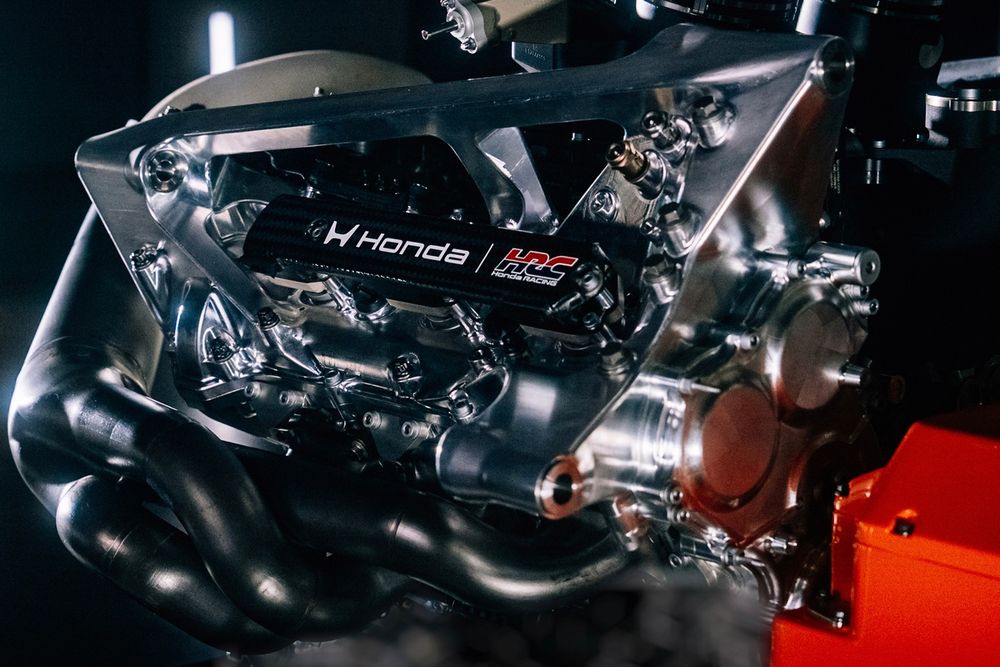
According to the FIA president, the V6 turbo-hybrid era is coming to an end
Photo by: Honda
Ben Sulayem is therefore correct in saying the FIA can set any power unit regulations it wishes for 2031 and beyond. The question, then, is whether the other stakeholders agree to sign up to that – or, well, breakaway series have been on the cards before.

Of the current power unit manufacturers, Ford and Cadillac are known to be hybrid-agnostic, and very open to a shift to V8s. Their brands in the US are predicated on engines of this ilk, and they have begun to factor the retention of this concept into their future plans rather than complete the shift to full electrification.
But Honda and Audi are hostile towards too much dilution of hybrid power in F1. Ferrari perhaps less so. Mercedes, though, is committed to hybrid both in F1 and as a proportion of its road car offering at least into the 2030s.
So unilaterally announcing a V8 with minimal electrification for 2031 would be interpreted as an act of war by some very powerful players on the grid. Indeed, there are those who view all this as bluster and noise, with the aim of securing some compromise that would be mutually acceptable.
There is historic precedent for this: Max Mosley, when he was the FIA president, would routinely open the game with an aggressively assertive move when he wished to implement rule changes, knowing that negotiation would shift the terms to a place where his adversaries would feel a sense of victory… but he had broadly got what he wanted.

In Miami, there were mutterings to the effect that the chief purpose of restarting the debate now was to push the power unit manufacturers towards agreeing an early abandonment of the present ruleset.
Be that as it may, it would be foolish to write off Ben Sulayem’s crusade as the ravings of one who has no agency in future developments. He is a canny operator who never interrupts his adversaries when they are making a mistake.

Ben Sulayem isn't pouring cold water on his V8 push any time soon
Photo by: CHANDAN KHANNA / AFP via Getty Images


How F1 let a golden opportunity slip at Sepang

How the Bahrain GP in Malaysia exposed Red Bull’s hidden resurgence

How Verstappen’s two subtly different laps beat Hamilton in Bahrain GP in Malaysia qualifying

Why Mercedes' upgrade is still a "big question mark"

F1 Bahrain GP in Malaysia: Leclerc leads second practice from Hadjar

LIVE: F1 Bahrain GP in Malaysia updates - FP3

F1 Bahrain GP in Malaysia: Verstappen dominates for pole from Hamilton

LIVE: F1 Bahrain GP in Malaysia - Verstappen wins from Antonelli, Russell DNFs after late engine failure

The greatest F1 campaigns with no wins

MotoGP to introduce sprint qualifying amid 2027 format changes

Ogier to skip Monte Carlo with other WRC 2027 plans undecided

Collard to make BTCC return for Brands Hatch finale
Subscribe and access Autosport.com with your ad-blocker.
From Formula 1 to MotoGP we report straight from the paddock because we love our sport, just like you. In order to keep delivering our expert journalism, our website uses advertising. Still, we want to give you the opportunity to enjoy an ad-free and tracker-free website and to continue using your adblocker.


Top Comments