


Why F1’s secret rulebook is causing angst among the ranks
With competition on the track increasing as the 2021 Formula 1 season intensifies, any possible advantage is being aggressively fought over. This includes off the track, as F1's rules and regulations come under scrutiny which, for multiple reasons, is causing unease up and down the grid

Formula 1’s title battle between Mercedes and Red Bull has been as intense and hard-fought off the track as it has been on it.
While Max Verstappen and Lewis Hamilton have been battling it out wheel-to-wheel on circuit, behind-the-scenes there have been political scuffles that have played their part in the contest too.
The end result has been a raft of what some perceive as mid-season de facto rule changes with the release of numerous FIA Technical Directives: including but not restricted to the flexi-wing clampdown, the change in tyre pressure protocols and a push to slow down pitstops.
It is the repeated rolling out of these FIA diktats, especially the fact they are often appearing out of the blue, that has triggered some unease among teams.
Little wonder then that Alfa Romeo team boss Fred Vasseur, whose outfit has already had to make expensive changes to its rear wing concept, was a little upset about the latest pitstop ruling which means more unexpected work.
“I think it’s not the right way to do it, that now we have more TDs than press releases on the Monday morning,” he said at the Red Bull Ring.
“Each Monday, we have a list of TDs. It’s the new way to govern F1, and it’s not the right way.”

Antonio Giovinazzi, Alfa Romeo Racing C41, in the pits
Photo by: Andy Hone / Motorsport Images
The issuing of TDs is nothing new in F1 and it has been common practice for years. In fact, it was something that began properly under the presidency of the late Max Mosley in the early 1990s.
He and then F1 race director Charlie Whiting told teams that ideas for new components could be proposed under the strictest confidence for the FIA to then give an opinion on. The benefit for teams was that this would then avoid the risk of anything being challenged at a race weekend, or them being thrown out for cheating if it was discovered later.
If something was given the all clear, then the team would be told in private and rivals would not get wind of it to then copy. However, if the governing body felt that a proposed idea was illegal, then it would sometimes inform other teams so they would not go and pursue such a route themselves.
"The game [for the teams] is to interpret the rules as advantageously as possible, and the duty of the regulator of the FIA is to define where those limits are. So one of the things that Max did was insisted the rules should be relatively open, so that the regulator can decide where the line is" Former Williams CEO Adam Parr
But, in the ruthless world of F1, this then became used by some outfits to try to weed out the tricks of their rivals. By proposing similar devices to what they suspected the opposition was using, it hoped the FIA would then reject it and that would then force it to be taken off other cars.
Over the years, TDs evolved to not just be about discussions on individual components. They became a tool by which the FIA could effectively mould the rules without needing support from teams.
In one of the extra interviews for the new Mosley: It’s complicated film, former Williams CEO Adam Parr reckoned it was no accident that F1’s official rulebook left a lot of room open for interpretation with the TD option there.
“The game [for the teams] is to interpret the rules as advantageously as possible, and the duty of the regulator of the FIA is to define where those limits are,” he said. “So one of the things that Max did was insisted the rules should be relatively open, so that the regulator can decide where the line is.
“And that's, of course, one of the reasons why he and then Charlie Whiting who worked for him was slightly feared, because they could interpret the rules, according to what they wanted.”
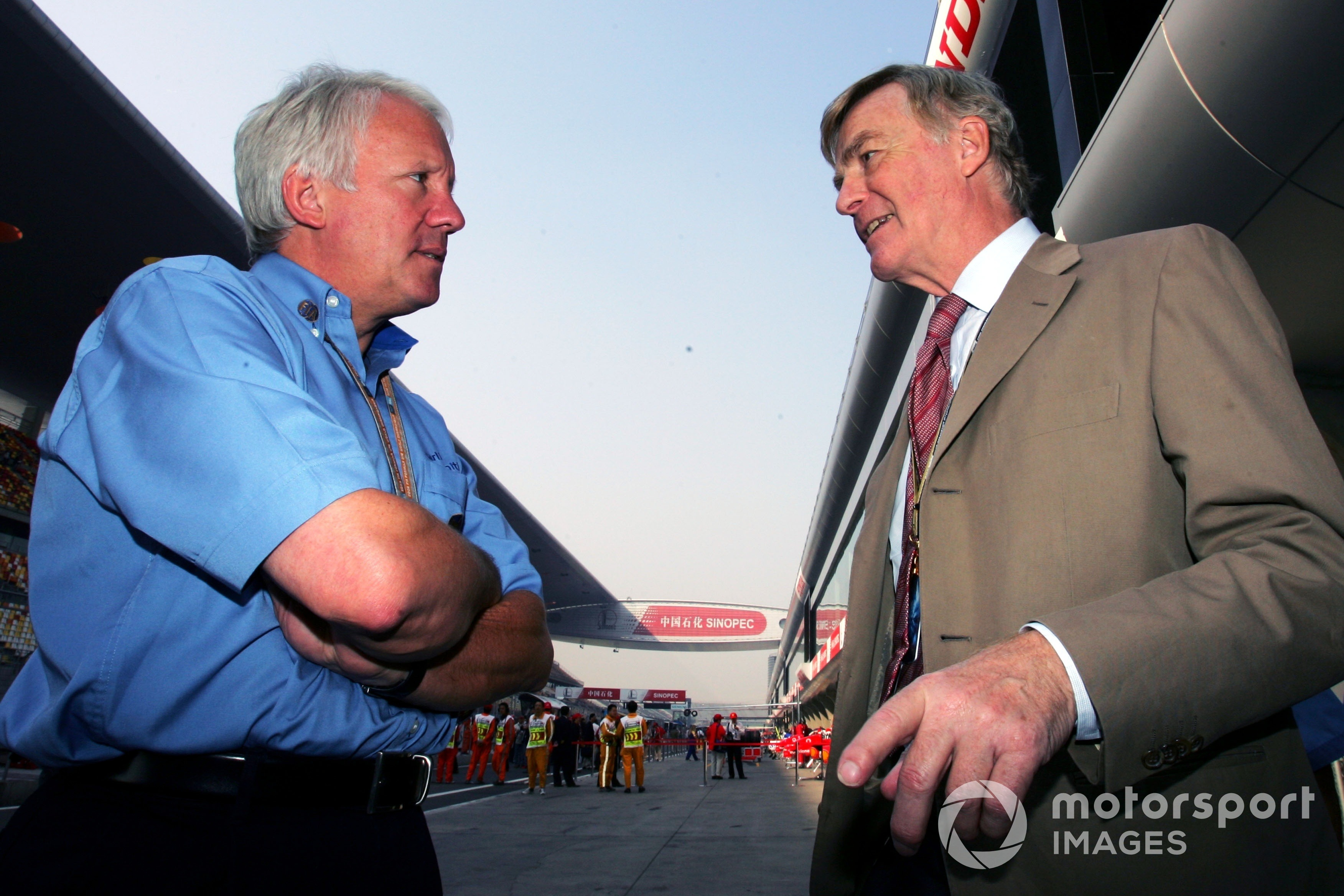
Charlie Whiting talks with Max Mosley at the 2005 Chinese Grand Prix
Photo by: Sutton Images / Motorsport Images
Indeed, strictly speaking, TDs are interpretations and are not actually rules. The official F1 rulebook can only be policed by the race stewards at each event.
Teams are reminded of this in each TD they get. Written at the bottom of the main page is a note that makes clear the wording of the TD holds no regulatory value.
It states:
“REMINDER: Any FIA opinions given above are advisory in nature and do not constitute Technical Regulations. All the content of the present document is strictly private and confidential and for the exclusive use of the FIA, the F1 Teams and the PU Manufacturers.”
But despite them being just an offering of opinion, over the 30 years the practice has been in place, TDs have occasionally been used to implement some mid-season tweaks: whether it was related to driver aids, moveable aerodynamic devices, new sensors and checks or any other ruling on the numerous car components.
On most occasions, though, such big-hitting TDs were prompted as the means of last resort: if discussions with teams had hit a dead end without consensus, the FIA really needed to step in and sort each topic out once and for all.
It was quite rare for there to have been such a run of them as has happened this season, with the recent most publicised ones being only a fraction of what has been sent out.
What is also different is that they have treaded into areas – like pitstops and rear wing design – that normally have been settled between teams and the FIA over the winter once they get together for a chat.

Michael Masi, Race Director, FIA
Photo by: Mark Sutton / Motorsport Images
Ferrari sporting director Laurent Mekies was one who suggested that it would have been better if the FIA opted for the discussion route rather than the imposition of so many TDs.
“It’s probably better moving forward if we have a chance to sit all together and to work these things out with the FIA and with the teams, as opposed to be a bit caught by surprise in the middle of the season with a TD,” he explained. “But ultimately we understand why that is, but it would probably be nice to sit down and to see what it is first.”
But the matter goes beyond just teams though, for there is a concern for fans here too. If, as Vasseur suggests, this marks the start of a new way of policing F1 by TDs, then it means the championship will have a lost a layer of transparency and accountability.
Policing teams over a complex F1 rulebook is certainly not an easy situation for the FIA. The governing body has a tough job in trying to deal with the thousands of engineers who are working against it to try to find their way around the regulations
While F1’s technical and sporting regulations are fully in the public domain, the note at the bottom of each TD says the guidance is ‘strictly’ confidential – with the FIA eager for the information not to get out there.
The TDs are not issued to the media, nor is there any notification of when they are sent.
Indeed, in recent times, teams have been specifically requested not to leak information to the media about them. Luckily for readers, the details do still get out most of the time...
But, if the FIA had its way and friendly teams didn’t play ball with the F1 media, then last year’s banning of ‘party’ engine modes, plus this season’s flexi-wing clampdown, change on tyre pressure rules and the pitstop rule revisions would all have taken place amid complete secrecy.
Could you imagine football’s governing body telling teams that it was changing the rules over its interpretation of offside, or extra time just prior to a major tournament – and fans were deliberately kept in the dark?

The busy pre race grid
Photo by: Steven Tee / Motorsport Images
Sure, it is fully understandable that TDs that involve the top secret designs and IP of teams, or confidential information that could harm their performance, is not automatically released to the public.
However, when it comes to TDs that are borderline rule changes and impact the entire grid – like recent flexi-wings, tyre pressure and pitstop rulings – then there aren’t many strong arguments for why such details are not put in the public domain.
Whiting himself even suggested a few years ago that such openness would make sense, but was always clear that it was a matter for those higher up within the governing body to approve.
Policing teams over a complex F1 rulebook is certainly not an easy situation for the FIA. The governing body has a tough job in trying to deal with the thousands of engineers who are working against it to try to find their way around the regulations.
But F1 race director Michael Masi has played down talk of the FIA trying to use TDs as an underhand way to change rules, or rule F1 in a different way.
Instead, he reckons that the recent wave of documents is simply the result of the FIA coming under increased pressure to come up with detailed answers on rules because this year’s F1 title battle is so close.
PLUS: How the Rumble in the Jungle can inspire Mercedes to beat Red Bull
“The need for clarification on operational guidance and directives in certain areas has increased, but I think that’s also increased as a direct result of what’s going on with the competitive order on track,” he said.
“I wouldn’t call it a governance mechanism but it’s certainly a way to try and communicate with all the teams of the way certain regulations, from an internal technical department perspective, may be interpreted or to certain procedures that may be followed, to determine compliance or otherwise.
“The clarity around those is everyone always wants more clarity in certain areas, so hence the number of them with everything that’s going on.”

Max Verstappen, Red Bull Racing, 1st position, celebrates in Parc Ferme
Photo by: Zak Mauger / Motorsport Images
But the FIA needs to tread a careful line in not over reacting to teams who are in it only for themselves. Plus it must ensure that it doesn’t over step the mark in turning F1 into too much of a nanny state where ‘rules’ are changed as knee-jerk responses.
In an awful lot of cases, the best way to deal with things is not to respond to rule queries after the horse has bolted by imposing new TDs. It’s to head off the problem before it emerges.
Red Bull’s Christian Horner was spot on when he said: “F1 is about innovation and competition. Seeing pitstops sub two seconds is a remarkable feat and we should be encouraging it, not trying to control it, otherwise where does it stop?
“We're going to be told which way to walk into the garage, where we should sit on the pitwall, and which buttons we should press I guess.”

Christian Horner, Team Principal, Red Bull Racing
Photo by: Mark Sutton / Motorsport Images


Brundle awarded OBE in King’s New Year’s honours

The new rules dilemma that will define the 2025 F1 season

Verstappen issues Red Bull title warning in push for RB21 progress

Mercedes opens up on the factors that hurt Hamilton with the W15

How McLaren faced up to the misinformation, noise and distractions of being an F1 title challenger

Why Bottas is not letting the “worst-case scenario” end his F1 career

Jon Noble: An unfair perception or a genuine concern? Lifting the lid on Red Bull’s Tsunoda scepticism

Binotto on Audi's F1 reality check after finding team "frozen" with no plans

F1 United States GP live commentary and updates - Hamilton leads FP3

F1 United States GP: Ferrari completes perfect practice record as Hamilton tops FP3

James Hunt’s 10 greatest races

The intrigue caused by Cadillac's F1 boss dodging driver market question
Subscribe and access Autosport.com with your ad-blocker.
From Formula 1 to MotoGP we report straight from the paddock because we love our sport, just like you. In order to keep delivering our expert journalism, our website uses advertising. Still, we want to give you the opportunity to enjoy an ad-free and tracker-free website and to continue using your adblocker.


Top Comments