


Why F1’s best-sounding car flattered to deceive
Matra’s MS120 married rocket technology to an engine which sputtered out far too often. STUART CODLING examines how the championship-winning constructor’s ambitious project to build car and engine under one roof came to fail
If you know, you know. To readers of a certain age – or those who have made the pilgrimage to historic festivals in recent years – the Matra name is synonymous with the fleeting appearance of a missile in French racing blue, accompanied by the cochlea-rattling symphony of its otherworldly V12.
It’s easy to forget Matra’s only F1 constructors’ title came courtesy of Cosworth’s V8, with Jackie Stewart at the wheel, and that the V12 achieved its only world championship race victories attached to Ligier chassis.
Between one and the other the French aviation conglomerate went it alone in a three-season F1 spell during the early 1970s. While never quite hitting the heights of that 1969 campaign with JYS, it did manage to deliver the luckless Chris Amon to victory in an F1 car – though sadly in a non-championship event. It would find richer pickings in sportscar racing as it wound down its F1 operations, winning the Le Mans 24 Hours over three consecutive years.
PLUS: How Graham Hill won Le Mans
The beginning (and the end) of the Matra F1 story is a typical one of French industry in the 1960s – ambition, expansion, consolidation, and an opportunistic eye for tapping into state funds.
Mecanique Aviation Traction was founded as an aircraft constructor in the 1940s by Marcel Chassagny, who in 1964 made two key moves that would bring Matra into the automobile world: hiring the entrepreneurial former engineer Jean-Luc Lagardere from Dassault Aviation as his new general manager; and acquiring friend and sometime Le Mans entrant Rene Bonnet’s moribund car marque. A lover of racing, both horses and cars, Lagardere identified motorsport as a means of driving sales of Bonnet’s smart little coupe, the Djet, and received sign-off from Chassagny to found Matra Sports.
Mated to a one-litre Ford engine, Matra’s first F3 chassis enabled Jean-Pierre Beltoise and Jean Pierre Jaussaud to finish 1-2 in the 1965 French F3 series. But Lagardere was canny enough to recognise his team lacked the experience to step up to F2 straight away, and his drivers were not from the top drawer. Via the supremely well-connected French journalist and race organiser Jabby Crombac, Lagardere engineered a meeting with successful F3/F2 team boss Ken Tyrrell.
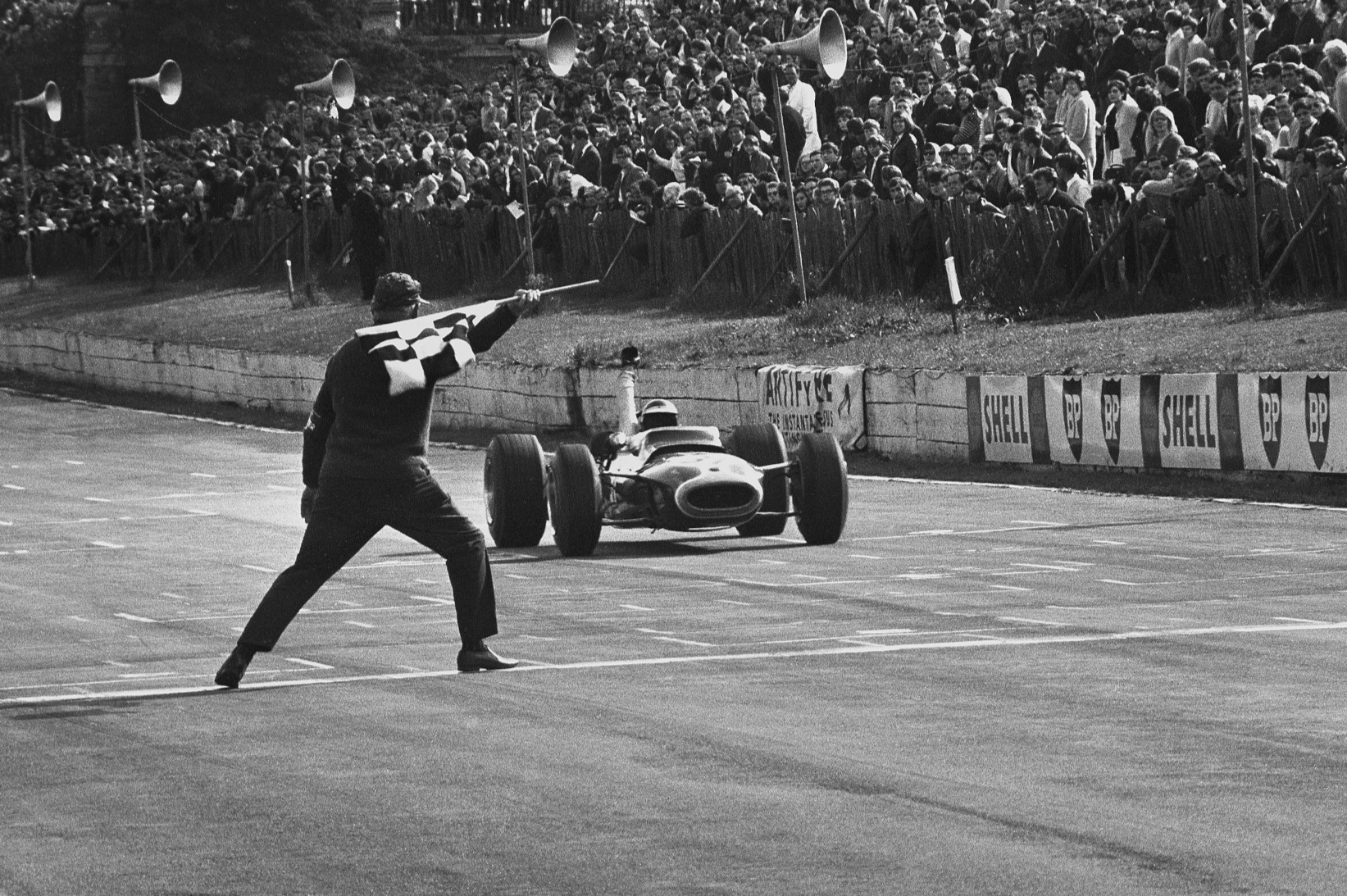
Success with Tyrrell gave Matra added credibility - Jacky Ickx took the inaugural European F2 crown in 1967 with the French marque
Photo by: Motorsport Images
Initially less than keen, Tyrrell accepted an invitation to the Matra facility at Velizy, outside Paris, and was blown away by the quality of its F3 car’s engineering. Stewart, Tyrrell’s F2 driver for 1966 alongside Jacky Ickx, also wrinkled his nose at this who-are-they-anyway marque until Matra flew over a car for him to test. JYS described it as “pure quality”.
What set the Matra chassis apart was the slightly over-engineered nature of the structure, which yielded unparalleled solidity and enabled a driver of Stewart’s class to steer with confidence and precision.
Tyrrell’s success in blue drew the heat from the works Matra International team, which laboured through 1968 as the V12 arrived late, thirsty and temperamental. Beltoise managed second in the rain at Zandvoort, but was over a minute and a half down on Stewart’s similar but Cosworth-powered car
The aerospace heritage was writ large on the exterior, with its rows of meticulously aligned rivets, and on the inside, where the box sections on either side of the cockpit which housed the fuel were sealed with a polymer resin. Lining the fuel tank in this way was costlier and more difficult, but it facilitated extra internal bracing which improved the chassis’ torsional rigidity. It was an advantage which would last until bags became mandatory in 1970.
Most remarkably, Matra’s leading engineers had few formal qualifications and were largely self-taught. Gerard Ducarouge had a degree in aeronautical engineering and joined from Nord Aviation’s missile programme. He would go on to lead the design of race-winning cars at Ligier and Lotus.
Bernard Boyer had raced motorcycles, competing in the 24-hour Bol d’Or in 1956, and picked up what he knew about engineering by working as a mechanic on the Panhard and Alpine cars he co-drive at Le Mans in 1962 and 1963. Before joining Matra, Boyer’s sole design credit was the Sirmac Formula Junior car.
Similarly, Georges Martin had begun his career at Simca before graduating to the design office, where he created the ‘Poissy’ small-displacement engine which motivated sundry Simcas, Chryslers, Talbots and Peugeots until the turn of the 1990s.
The relationship with Tyrrell blossomed but it remained Matra’s plan to contest F1 with its own team… and its own engine. The stars aligned as F1 shifted to become a three-litre formula in 1966 and the French government developed an interest in motorsport as a vehicle of national prestige.
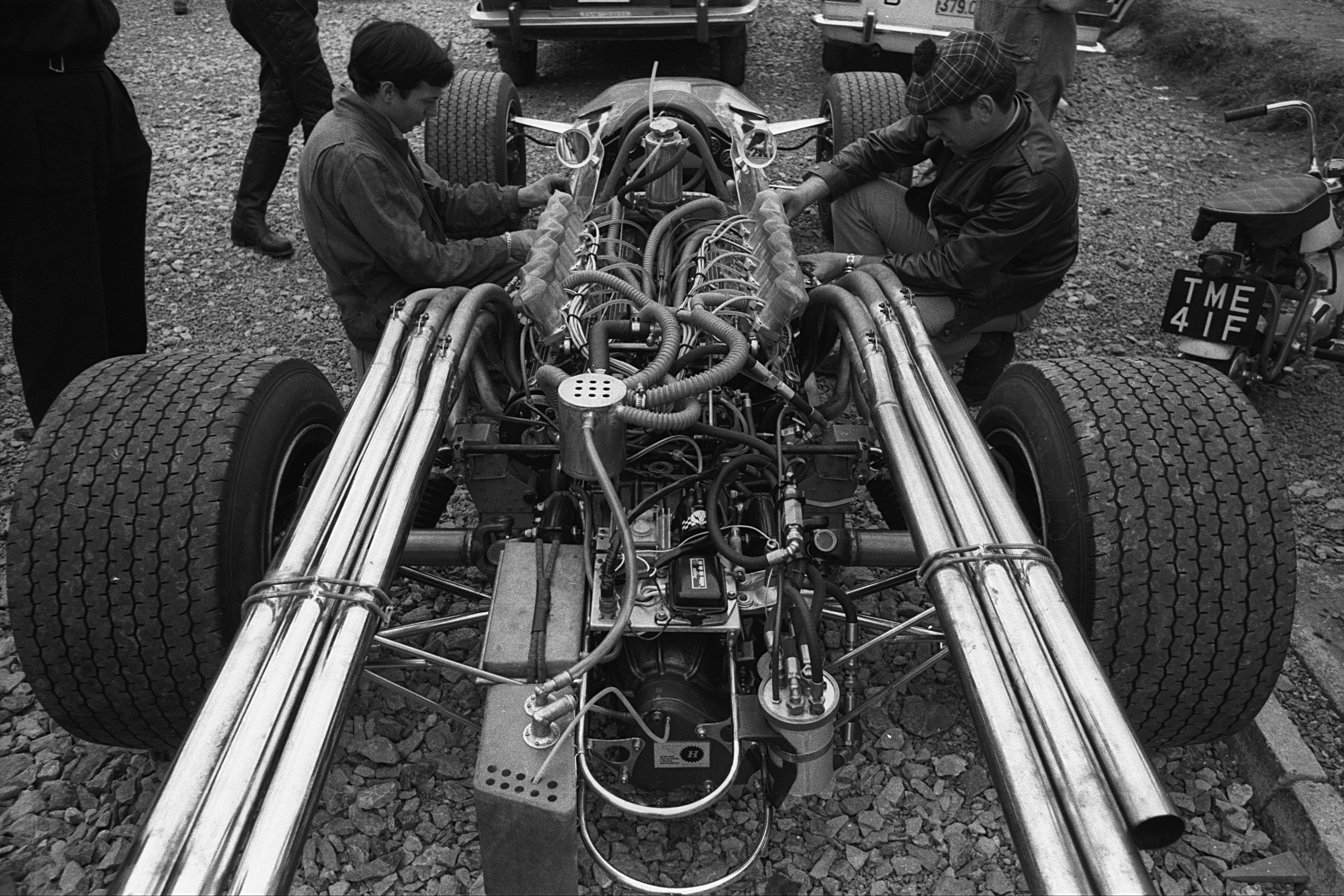
V12 engine arrived late for the 1968 F1 season and a second place for Beltoise at Zandvoort was the best result for the works team, which withdrew at season's end
Photo by: Motorsport Images
Lagardere secured sponsorship from Elf, the largely government-owned oil company recently formed through the consolidation of several smaller firms. Then, in April 1967, he sweet-talked six million Francs out of the taxpayer’s wallet to subsidise development of a new V12 engine.
Georges Martin had never designed a bespoke racing unit, so he quietly arranged for the British manufacturer BRM to work on it on a consultancy basis. Within weeks, the cross-channel collaboration was snuffed out when BRM proprietor Sir Alfred Owen boasted about it and the French government took umbrage, threatening to take its money back.
Design work resumed solely in-house, while Martin came to terms with the task of going from blank sheet of paper to competitive engine within fewer than 12 months – even as hype and expectations stoked up by the French press raged around Matra. When Tyrrell reached a deal with Cosworth and proposed running Jackie Stewart in a Boyer-designed Matra-Ford in F1 for 1968, Lagardere said yes.
Tyrrell’s success in blue drew the heat from the works Matra International team, which laboured through 1968 as the V12 arrived late, thirsty and temperamental. Beltoise managed second in the rain at Zandvoort, with a little help from Dunlop’s class-leading wet tyre, but crossed the line more than a minute and a half down on Stewart’s similar but Cosworth-powered car.
Come the end of the season Matra withdrew its works team, ostensibly to focus on sportscar racing, while Tyrrell flew the flag in F1 in 1969 under the Matra International name with Stewart in the new MS80 chassis… and a Ford engine.
This arrangement couldn’t last. Matra had been trying to tie up a marketing arrangement with Ford, to little avail, and at the end of 1969 it concluded an alliance with Simca which gave it a presence in all of the Chrysler-owned company’s dealerships in the growing European Economic Community. There would be no question of Tyrrell campaigning Boyer’s new MS120 with a Ford-badged engine.
A week after tying up the drivers’ and constructors’ championships at Monza, Stewart tested the Matra V12 at Albi, rumoured to be hosting the following year’s French GP. He came away nonplussed, feeling the engine had “no bite” compared with the DFV; all that extra reciprocating weight and internal drag over a V8 sapped the V12’s midrange fizz.
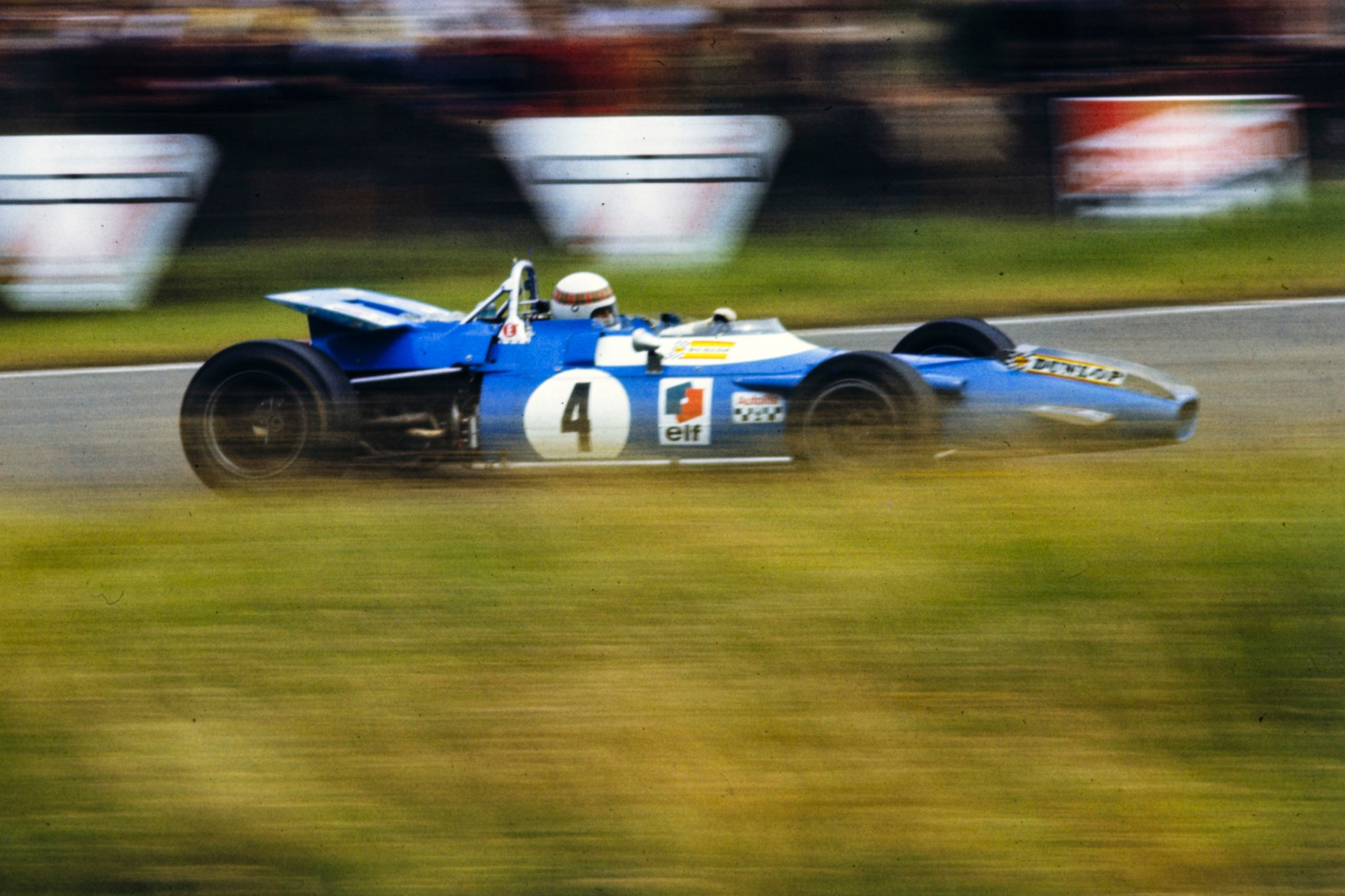
Stewart, pictured en-route to victory at Zandvoort, won his first world championship in 1969 with Ford DFV-powered Matra MS80, but the relationship couldn't continue for 1970
Photo by: Motorsport Images
‘Leisurely’ may not seem an apt descriptive term for an engine which announced itself to spectators like a thunderclap direct to the eardrum, but this was the feeling which transmitted itself through the seat of JYS’s pants. The world champion and his team were sticking with Ford, come what may.
Thus the Tyrrell-Matra partnership was dissolved and the works team returned for 1970, fielding a pair of cent-vingts for Beltoise and Henri Pescarolo under the Equipe Matra Elf name. As the reigning constructors’ champion, it carried great expectation from within F1 as well as from its home country, but the MS120 was no lazy sequel to the title-winning MS80, even if resources had been stretched by the creation of a four-wheel-drive car in 1969 which Stewart had tried and rejected.
This was a period of wild experimentation with aerodynamics. Pylon-mounted aerofoils had been introduced, then rapidly banned on safety grounds. Where the MS80 had been rounded, even bulbous, the MS120 was flatter and more angular around the flanks, and much narrower between the front wheels as Boyer and Ducarouge sought to create downforce via the body surfaces as well as the wings and dive planes.
The 60-degree V12 engine retained the same essential architecture from its inception but underwent a detailed overhaul. The biggest amendment was the strengthening of the aluminium sump and block castings to enable the engine to function as a stressed element of the MS120 chassis.
The engine and its oil system remained temperamental, forcing the team to withdraw from the 1971 Austrian GP entirely to focus on development
This new version, designated MS12, featured a revised head design with narrower valve angles and a flatter cylinder crown, and a stronger aluminium casting to fulfil its role as a structural join between the tub and the upper rear suspension mountings.
Ford-engined cars continued to show Matra the way on track, though, as Beltoise finished fourth at the opening round behind a Brabham, a McLaren and a March. The top 10 would grow more competitive as Ferrari got on top of its new 312B and Lotus debugged the 72.
PLUS: The troubled story of F1's greatest racing car
From mid-season it was all about Lotus and Jochen Rindt; Hethel’s new wedge-shaped chassis, with the fuel tank behind the driver and the radiators ahead of the rear wheels, pointed to the future. Beltoise and Pescarolo picked up three podiums between them as Matra finished seventh (out of eight) in the constructors’ world championship.
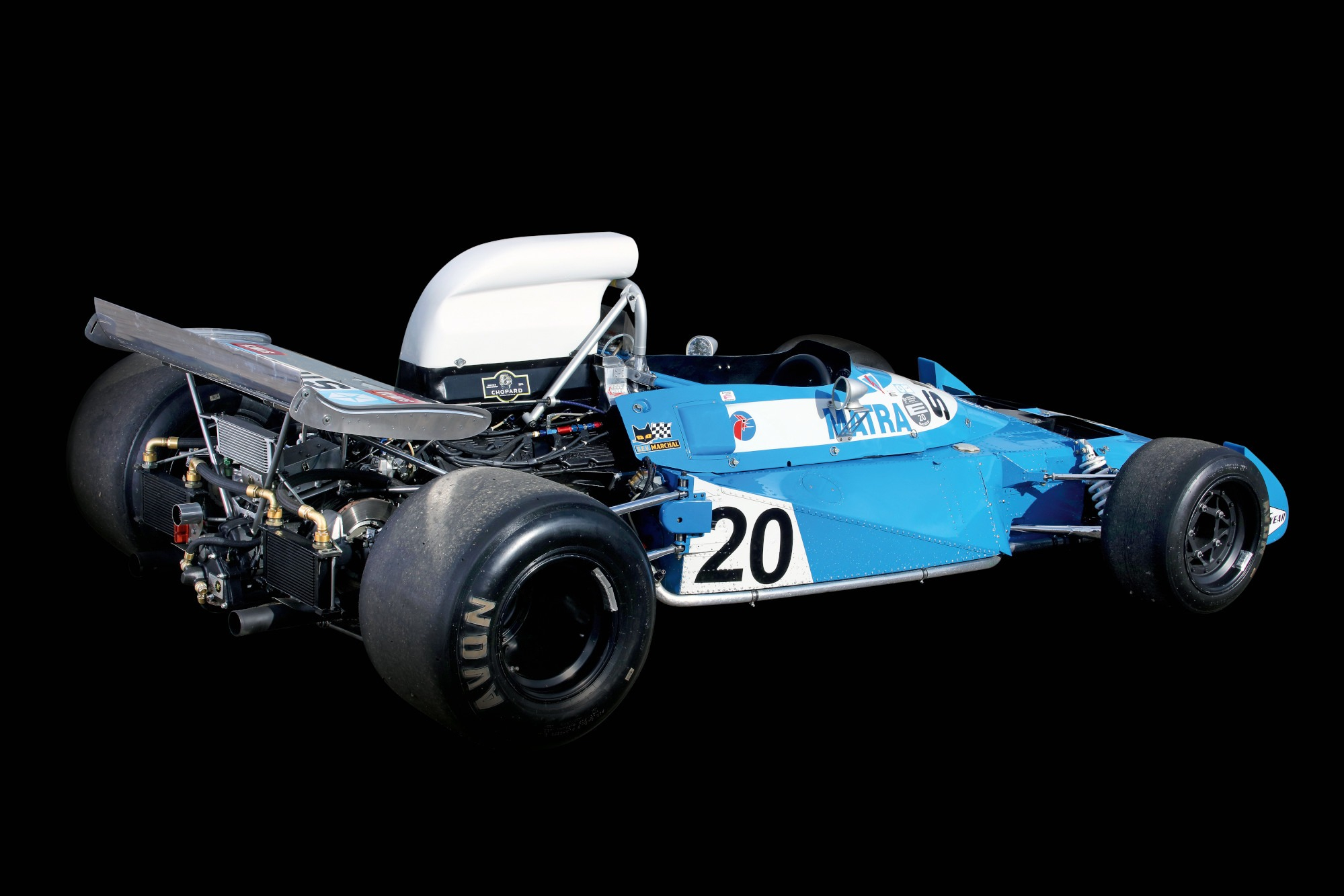
After splitting with Tyrrell, Matra's new MS120 chassis was a disappointment in 1970 and finished seventh out of eight in the constructors
Photo by: James Mann/GP Racing
Feeling the drivers hadn’t extracted the most from the car, Matra dropped Pescarolo from its F1 line-up and appointed Chris Amon as team leader, which served to put Beltoise’s nose out of joint.
In the non-championship Argentine GP in January 1971, Amon won on aggregate over two heats ahead of a mixed F1/F5000 field which included a young Carlos Reutemann. Amon then qualified second for the F1 championship opener in South Africa but made a slow start and finished fifth.
The definitive B-spec of the MS120 was introduced at round two in Spain, six weeks later, with more rounded flanks, a nose cone in place of dive planes, and an upgraded version of the engine featuring revised valvegear and a new intake system fed by an item which would become de rigueur in F1: an airbox.
Amon qualified and finished third, 58s behind Stewart, the winner. In Monaco both cars went out with transmission failure; Amon qualified fourth but got away last, almost half a lap behind, after his engine lost fuel pressure on the grid. The rest of the season panned out similarly as the engine and its oil system remained temperamental, forcing the team to withdraw from the Austrian GP entirely to focus on development.
Next time out, at Monza, the V12 was finally delivering the horsepower claimed for it. During practice Amon ran chassis number six, photographed below, and qualified on pole despite an attempt by the organisers to strike off his time in favour of Ickx’s Ferrari.
Choosing chassis four for the race, Amon ducked and dived in the multi-car lead battle, then established himself up front at mid-distance. With nine laps to go, Amon reached for a tear-off – and his whole visor detached from his crash helmet. Struggling to see, and stymied by a vapour lock in the fuel system, he trailed home sixth.
Matra was beginning to lose faith in its ability to compete in F1, slimming down to a one-car entry for Amon in 1972, for which chassis six was upgraded to C-spec with new front suspension and a revised airbox. Further revisions to the engine’s cylinder heads nudged claimed power north of 460bhp but by this point Amon was beginning to doubt the results registered on the dyno.

Monza 1971 was another of the races that got away from the perennially unfortunate Amon
Photo by: Motorsport Images
It is perhaps fitting that Matra registered its best performance of the season at the French GP at Clermont Ferrand, where Amon put the new D-spec MS120 on pole by nearly a second from McLaren’s Denny Hulme. As seemingly ever with Amon, disaster struck while he was leading comfortably: a puncture, after which he smashed the lap record battling back to third place.
At the end of 1972 Matra departed F1, leaving a fascinating question: would it have achieved the results it warranted with better drivers, or simply drivers with better luck?
RACE RECORD
Starts: 54
Wins: 0
Poles: 2
Fastest laps: 2
Podiums: 5
Championship points: 46
SPECIFICATION
Chassis: Aluminium monocoque
Suspension: Double wishbones with coil springs/dampers front and rear
Engine: 60-degree naturally aspirated V12
Engine capacity: 2993cc
Power: 450bhp @ 11,000 rpm
Gearbox: Five-speed manual
Brakes: Discs front and rear
Tyres: Goodyear
Weight: 580kg
Notable drivers: Chris Amon, Jean-Pierre Beltoise, Henri Pescarolo
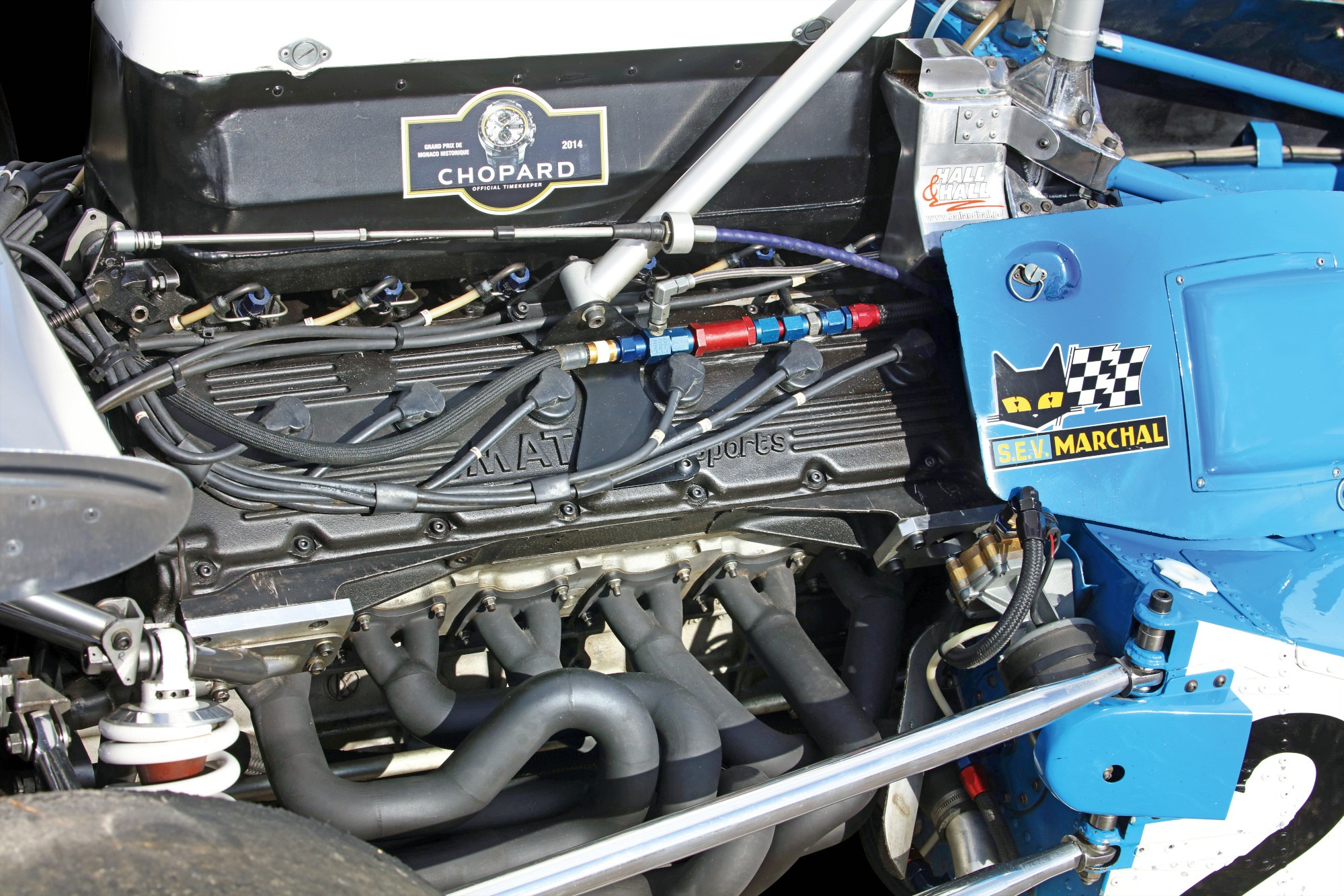
The Matra V12 is widely recognised as F1's best noises, but that rarely translated into results
Photo by: James Mann/GP Racing

How Ratzenberger beat the odds to realise his cruelly short-lived F1 dream

F1 uncovered: A weekend behind the scenes with a chief mechanic

When McLaren was pipped by Red Bull in a modern F1 classic

The big opportunity Sainz’s Williams switch affords to F1’s latest centurion

Inside the science of F1 fuel

How F1’s plan for rotating races could look in practice

The early decisions that set Sauber’s rookie for success

How F1 media coverage has evolved in line with its subject

F1 United States GP live commentary and updates - qualifying coming up

F1 United States GP: Ferrari completes perfect practice record as Hamilton tops FP3

James Hunt’s 10 greatest races

F1 United States GP live commentary and updates - Hamilton leads FP3
Subscribe and access Autosport.com with your ad-blocker.
From Formula 1 to MotoGP we report straight from the paddock because we love our sport, just like you. In order to keep delivering our expert journalism, our website uses advertising. Still, we want to give you the opportunity to enjoy an ad-free and tracker-free website and to continue using your adblocker.


Top Comments