


Why Aston Martin is unlikely to repeat Jaguar’s F1 mistakes
Two famous manufacturer teams born out of humble midfield origins, splashing the cash while attempting to rise to the top of F1 in record time. There are clear parallels between Lawrence Stroll’s Aston Martin and the doomed Jaguar Racing project of 22 years ago, but MARK GALLAGHER believes struggling Aston can avoid a similar fate
An iconic British sportscar brand with a rich motor racing heritage. An ambitious owner deciding that the best way to achieve success in Formula 1 is to buy an independent team with a race-winning pedigree, rebrand it in racing green, with a star Ferrari driver slotted in for good measure. The team is launched to much fanfare and attention. Britain’s answer to Ferrari.
Except seventh in the constructors’ championship is nothing to write home about, and all this new venture can manage. The role of team principal is unenviable, ultimately untenable. Management changes become the order of the day.
Such was the Jaguar Racing Formula 1 team. Any similarities with the Aston Martin F1 team are purely coincidental.
Ford’s purchase of Stewart Grand Prix, rebranding it as Jaguar, with Eddie Irvine joining from Ferrari, is echoed by Lawrence Stroll’s decision to buy the team formerly known as Jordan, now renamed Aston Martin and featuring another Maranello old boy: Sebastian Vettel.
After mirroring Jaguar’s best-ever seventh in the world championship for constructors last year, Aston Martin was hoping for better things this season. Dreams of early success in 2022 have been dashed, starting with Vettel missing the first two rounds thanks to COVID-19.
Round three of this year’s competition, in Melbourne, summed up how things are going. In first practice, Vettel’s car ground to a halt, smoke billowing from the back. His decision to return to the pits by driving a scooter on the track resulted in a “joke” €5000 fine. The subsequent engine change meant he missed FP2, while the sister car of team-mate Lance Stroll caused the session to be red flagged when a wheel cover flew off.
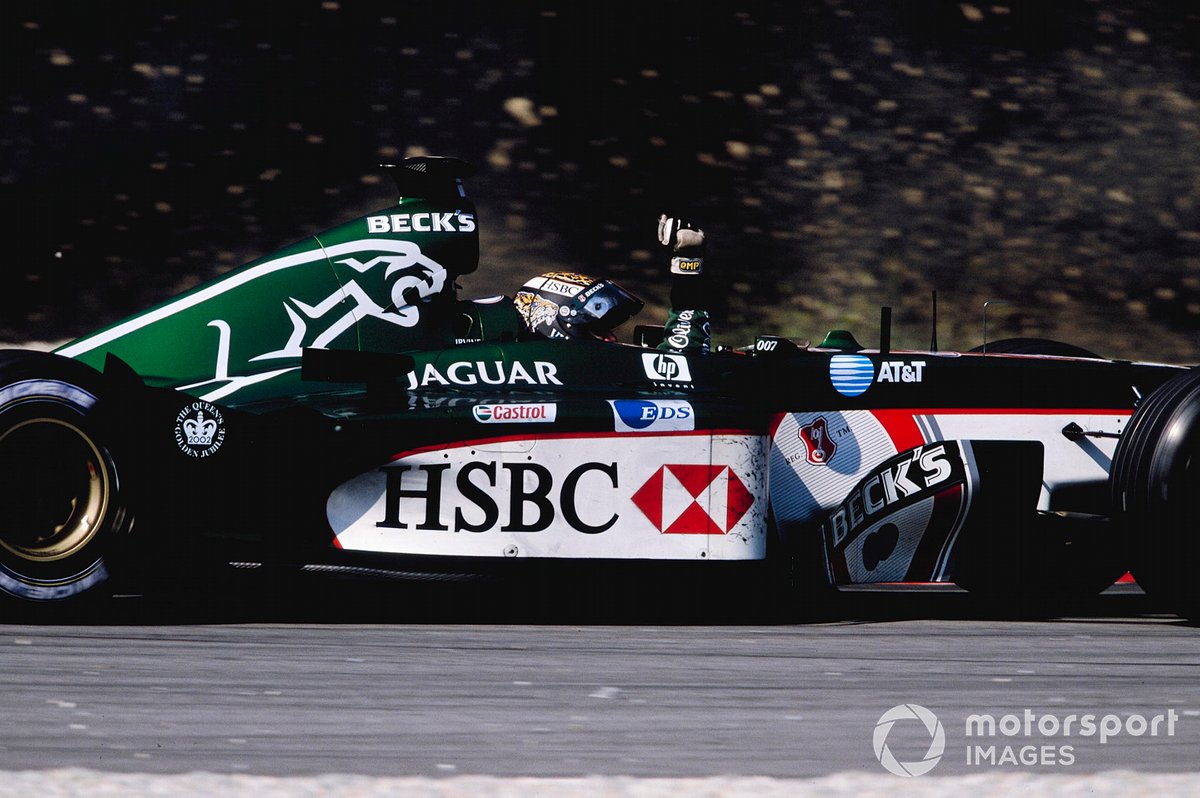
Irvine's third place at Monza in 2002 was one of few bright spots for Jaguar in Formula 1
Photo by: Motorsport Images
In final practice both Astons crashed. In qualifying Stroll failed to set a time after colliding with Nicholas Latifi’s Williams – a collision the Stewards judged to be Stroll’s fault, resulting in a three-place grid penalty. Vettel managed a lap, the Astons lining up 17th and 19th on the grid following the disqualification of Alex Albon’s Williams for failing to provide the requisite fuel sample.
Vettel crashed out of the race, while Stroll finished 12th, 90 seconds behind Charles Leclerc’s winning Ferrari. It’s easy to see why people now draw parallels between Aston Martin and Jaguar Racing...
It was none other than Ford’s then CEO, Jacques Nasser, who made the final decision to buy Stewart Grand Prix and rebrand it as Jaguar, at that time part of the company’s Premier Automotive Group headed by German executive Wolfgang Reitzle. That division also included Aston Martin...
"The root cause [of Jaguar's failure] was that Ford is a very big company and came into Formula 1 without really understanding the magnitude of what it was getting into. Or actually, anyone at board level really being very interested in it" Tony Purnell
Jaguar’s team wasn’t short of experience. Technical direction was under Gary Anderson, Jordan’s famed designer who had later been lured to Stewart. An out-and-out racer and pragmatist, he was excited by the prospect of working in a fully fledged manufacturer team. He was gone within the year. It was a sign of things to come.
Nasser and Reitzle first appointed Ford’s vice president and chief technical officer Neil Ressler to oversee the team. Ressler was chairman for just a year, then stepped aside to allow American racing legend Bobby Rahal to take the helm. When Niki Lauda was parachuted in conflict was inevitable, and Rahal departed. Even Lauda, with his straight-talking style, could not make it work. The relationship never gelled.
When Lauda quit, Ford’s Global Vice-President of Product Development, Richard Parry-Jones, placed Jaguar Racing in the hands of two well-regarded executives: Tony Purnell and David Pitchforth. Purnell, founder of the motorsport electronics business Pi Research, which Ford purchased in 1999, brought an altogether more analytical approach to the task. Pitchforth came with 15 years of experience managing complex automotive engineering projects.
In 2003 they were, according to Purnell, “given a good crack at it” by Ford, but seventh in the constructors’ was still as good as it got. Patience was running short, the budget was cut for 2004 and by the end of the summer the team was put up for sale. Red Bull came in, saving it from closure. Looking back, Purnell is clear about the reasons why Jaguar Racing failed.
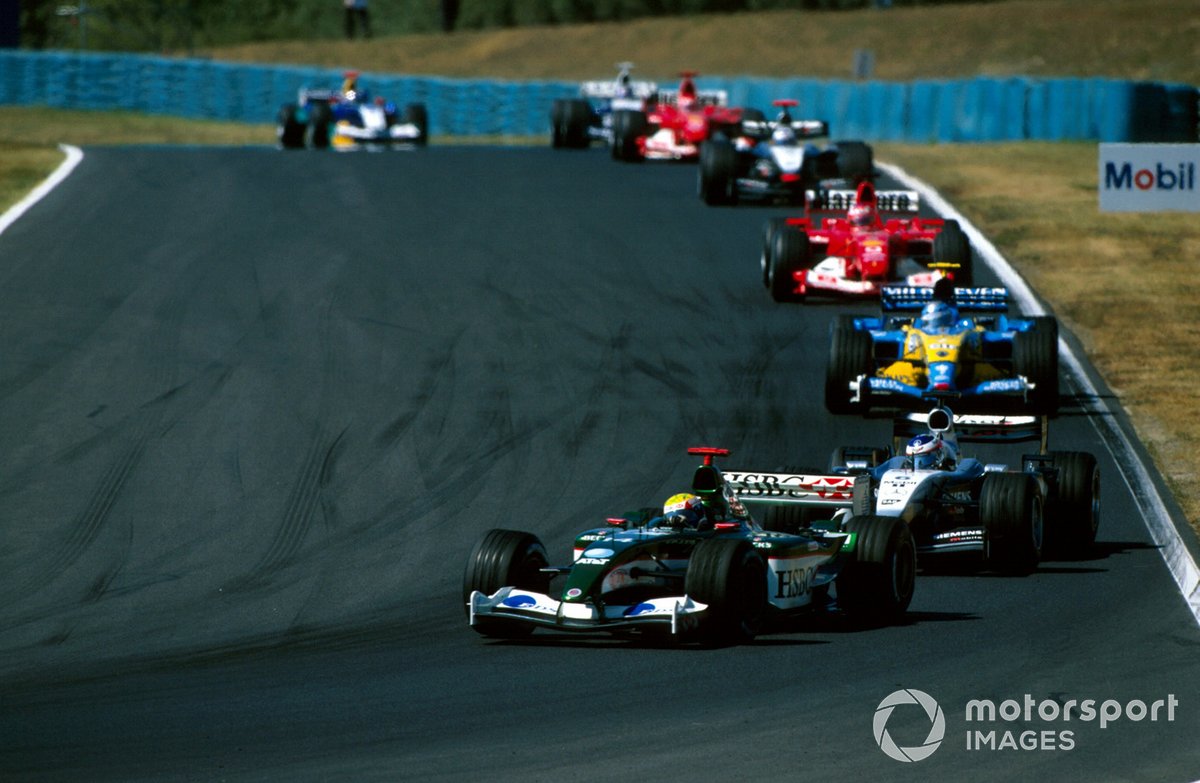
Mark Webber holds up a pack of faster cars after qualifying second on a light fuel load at the Hungaroring in 2003
Photo by: Russell Batchelor / Motorsport Images
“The root cause was that Ford is a very big company and came into Formula 1 without really understanding the magnitude of what it was getting into,” he says. “Or actually, anyone at board level really being very interested in it. It wasn’t huge money when you have a trillion-dollar spreadsheet – and they were very enamoured by Jackie Stewart.”
It seems extraordinary that Ford, a company with a successful history in F1 in partnership with Cosworth, did not understand the scale of the challenge. When Purnell took over, he realised Jaguar, for all its prestige, lacked the budget and board commitment from its owners. His opinion is that teams are often oversold, new owners never being told the reality of what it will entail.
“I always remember Bernie [Ecclestone] saying to me, ‘All that matters is that you’ve got two teams right at the top who the public latch onto, nothing else. The rest are just to fill up the numbers.’
“I said a lot of teams are not going to survive and he said, ‘Look, the way it works is that a team gets sold to a billionaire. The billionaire puts more money than they ever dreamt possible into the sport. Then they get disillusioned, and they leave. But there’s always another billionaire to pick it up. So you don’t have to worry.’”
Whether Ecclestone ever expressed that view to Force India’s Vijay Mallya or Lawrence Stroll is unknown, but many a successful businessman and billionaire has lived the cycle of enthusiasm and disillusionment in Formula 1. Ask Caterham’s Tony Fernandes…
In Purnell’s opinion the failure of Jaguar’s owners to understand the scale of the challenge was compounded by the desire to then find a quick fix. An approach he cautions against.
“They lash about looking for silver bullets – like bringing in Niki Lauda – and then slowly, it dawns on them that this is very tough, it needs a really long-term strategy. It needs very good management and, if you don’t have that, then at least supply tonnes of money.”
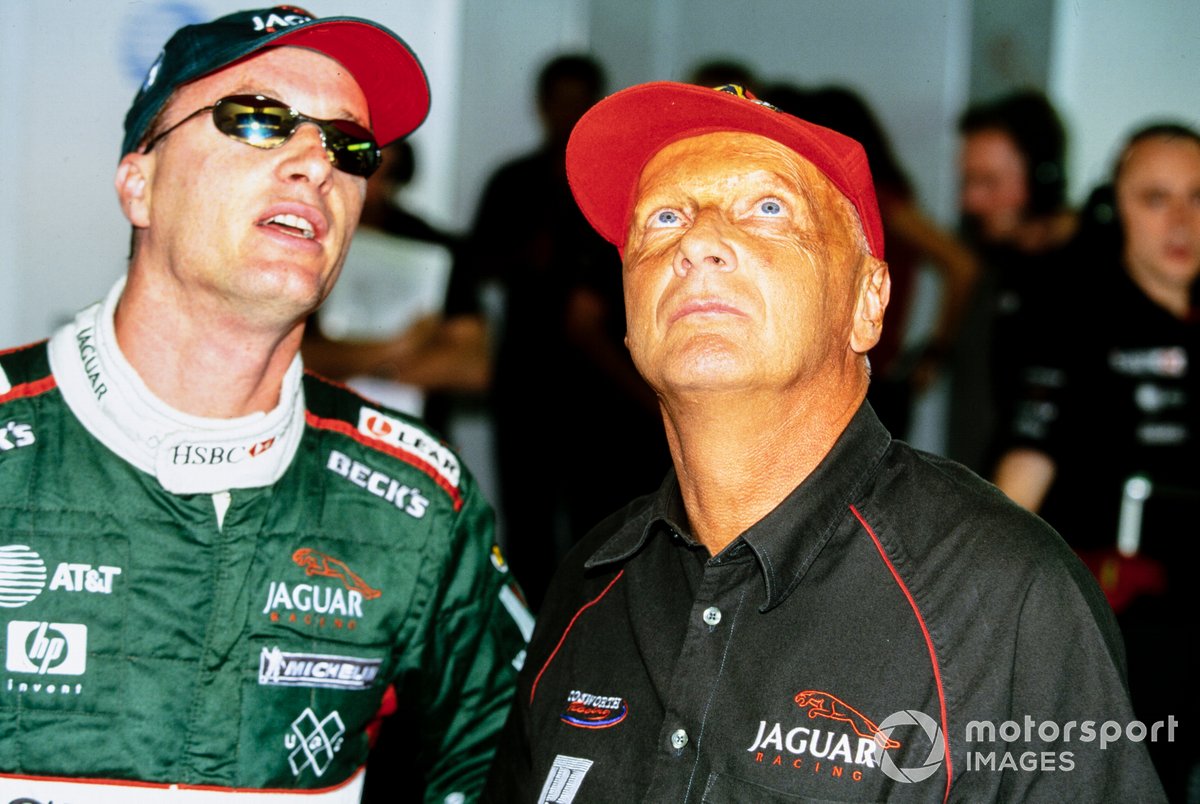
Even the addition of straight-talking Lauda couldn't turn the tide for Jaguar
Photo by: Charles Coates / Motorsport Images
In the end Jaguar’s fate came down to a meeting in Detroit during which Purnell was asked a simple question: What does it take to win this? It’s a question Lawrence Stroll will have pondered.
“I have always kind of kicked myself because I answered it honestly,” admits Purnell. “I said, ‘Look, we’re up against Ferrari, who you know, and to beat Ferrari means a massive effort. Also, it’s going to take five years’. I think that meeting was probably the beginning of the absolute end.”
It is hard not to conclude that too many owners believe that success in one area of business means they can automatically repeat the feat in F1.
"There is a big difference in that the bloke who controls the board is committed and knows what he’s getting into. It wasn’t like Bill Ford – who famously didn’t know who Eddie Irvine was" Tony Purnell
“These are high-achieving guys and along with that is a kind of Midas touch, a belief,” adds Purnell. “That arrogance, I’m afraid, is in the Greek myths, it backfires on you because you don’t respect the opposition. To be fair to [Red Bull owner] Dietrich Mateschitz, he did respect the opposition, although he definitely spent more than he ever dreamed of in the first five years.”
Which brings us back to Aston Martin, because while some may paint a parallel with Jaguar Racing under Ford, it may be apposite to compare Stroll to Mateschitz. Not many expected an energy drinks magnate to wash the floors with F1’s car manufacturers, so can a billionaire famed for building fashion brands Tommy Hilfiger and Michael Kors repeat that success?
Neither Mateschitz nor Stroll suffer fools gladly – they know what they want and expect the people they employ to deliver. They don’t like to be disappointed. Mateschitz and his motorsport advisor Helmut Marko brought in Christian Horner to run Red Bull Racing, recruited David Coulthard to help pinpoint the team’s weaknesses, then headhunted Adrian Newey from McLaren.
Stroll has tasked another former McLaren man, Martin Whitmarsh, with making the F1 programme work. Appointed Group CEO of Aston Martin Performance Technologies, Whitmarsh’s arrival signalled the end for Otmar Szafnauer. Undermined, with his responsibilities taken away, the American’s departure to Alpine took some months to play out.
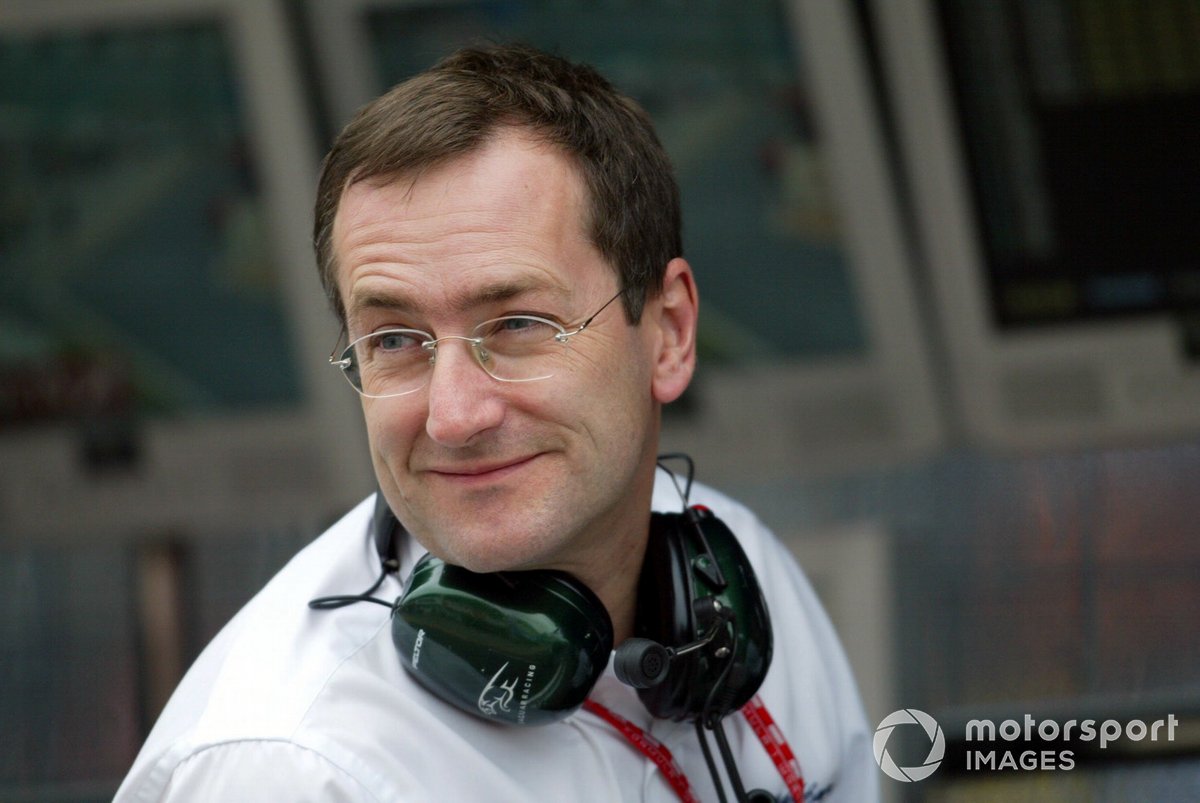
Ex-Jaguar man Purnell says Stroll is far more clued up about the challenges ahead than Ford executives were, and knows more of what he’s getting into
Photo by: Sutton Images
With Mike Krack brought in from BMW as replacement team principal, Aston Martin has experienced racers in all its key management roles – particularly with the continued presence of highly regarded team veterans such as sporting director Andy Stevenson, chief technical officer Andy Green and performance director Tom McCullough. Recruiting aerodynamicist Dan Fallows from Red Bull and appointing Luca Furbatto from Alfa Romeo as engineering director illustrates the drive to provide greater depth.
It’s no surprise Stroll is keen on recruiting the best people he can find. He has been passionate about racing throughout his life, a capable driver who has been involved in Formula 1 for 30 years – including sponsoring Team Lotus and Ferrari. It’s a point Purnell is quick to acknowledge when faced with the Jaguar comparison.
“If you look at Aston Martin, there is a big difference in that the bloke who controls the board is committed and knows what he’s getting into,” Purnell says. “It wasn’t like Bill Ford – who famously didn’t know who Eddie Irvine was. Bill is the nicest guy, but had no idea about Formula 1, nor did the rest of the board.”
Another major difference is that while Jaguar Racing was heavily reliant on funding from the parent company, Aston Martin has secured an impressive line-up of sponsors.
PLUS: Why Stroll believes his “de-risked” Aston masterplan is feasible
The team’s chief commercial officer is Olly Dale, previously the commercial director of Liverpool Football Club, while Stroll appointee Jefferson Slack is the team’s managing director for commercial and marketing. February’s announcement that Saudi Arabian energy and chemicals giant Aramco would be joining American technology services company Cognizant in sharing the team’s naming rights underlined the success of Aston Martin’s commercial operation.
These are not small companies. Aramco boasted revenues of US$400billion last year, somewhat dwarfing Cognizant’s no less impressive US$18.65billion. Cryptocurrency exchange Crypto.com, the Peroni beer company and industrial equipment manufacturer JCB are just three of the team’s 23 other partners. This translates into more than US$100m in third party sponsorship support, which goes a long way towards the US$140m budget cap. Throw in the team’s slice of F1’s prize money and the financial picture looks bright.
The money is there, but what about the timescales?
Lawrence Stroll and his investors are in the midst of an ambitious five-year plan to turn around the fortunes of the Aston Martin Lagonda car company, which they bought in February 2020. With the sales last year returning to pre-pandemic levels, due in part to the success of the DBX SUV, and new models in the pipeline including the DBX707 and new V12 Vantage, current CEO Tobias Moers has some formidable targets to meet.
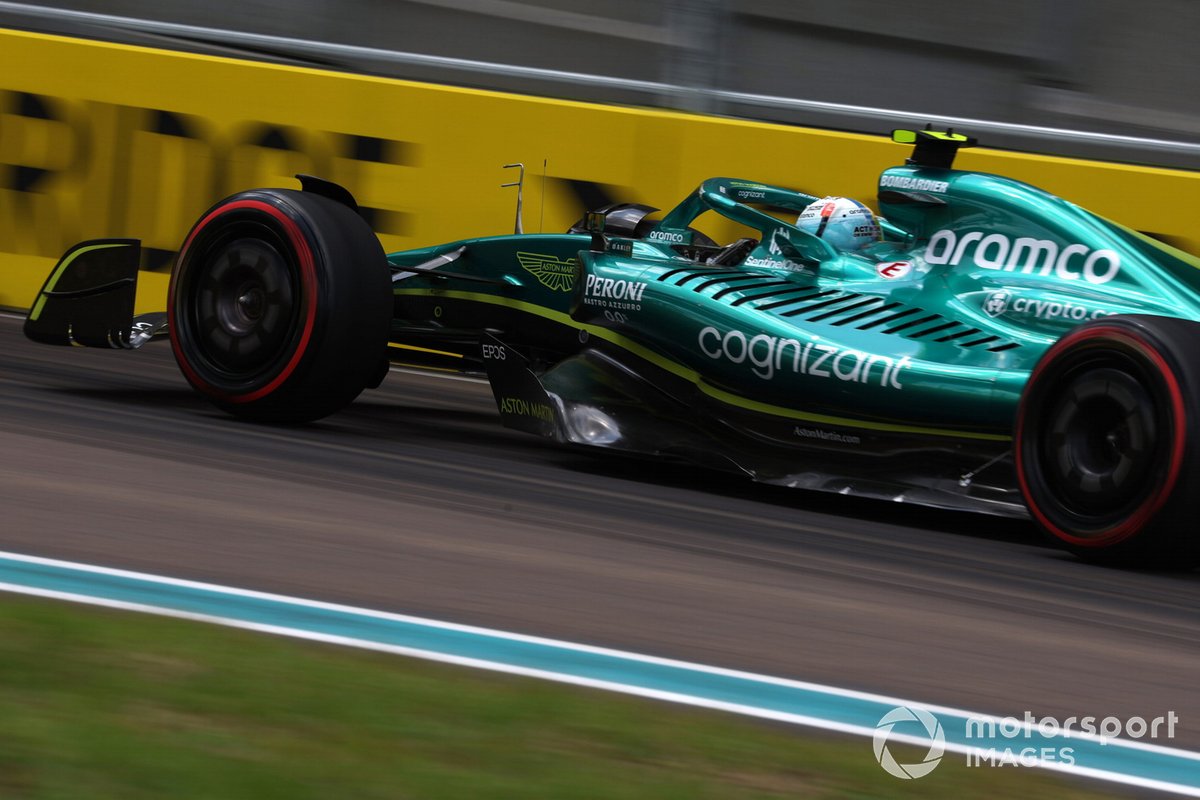
Aston isn't short on well-financed sponsors, a luxury Jaguar didn't have as it proved overly-reliant on Ford's backing
Photo by: Glenn Dunbar / Motorsport Images
The sales forecast for this year is good however, with Aston aiming to sell around 6,600 cars, while the ultimate goal is to sell 10,000 units per year by 2025. Daimler Benz’s 20% stake in the company is critical to helping weather the storms caused by the automotive industry’s transition towards hybrid and fully electric powertrains. That relationship is also important in F1.
The F1 team also has a five-year plan which commenced last year. It will soon be freed from the confines of the Silverstone factory built by Jordan Grand Prix in 1991, moving into a purpose-built £200m, 400,000 sq ft headquarters compete with new windtunnel.
PLUS: Why F1 teams still deem windtunnel investment necessary
The move will happen next year, which means the 2024 car will be the first to be designed in the new facility. Allowing for the inevitable teething problems which can come with operating an entirely new factory and wind tunnel, never mind integrating staff, 2025 should be the first year in which Aston Martin has a car capable of matching its owner’s aspirations.
That’s the final season of the five-year plan, and although there is talk of taking a tilt at the world championship by then, a more realistic and no-less-worthy objective would be to win races. There is no shortage of precedents for the time it takes to become a winner, no matter how impressive the financial resources or management expertise.
Lawrence Stroll is looking to his F1 team management to deliver on the immediate plan, his personal commitment to the project providing the bedrock of support and continuity of focus which a team like Jaguar Racing always lacked
When Mercedes-Benz bought Brawn Grand Prix in the aftermath of Brawn’s shock 2009 title double, it took four more years to return the team to title contention. Red Bull’s first victory came four and half years after the Austrian energy drinks company purchased Jaguar Racing from Ford.
There is another side to Stroll, of course, as father to Lance. Some see it as a blind spot, others point out that Stroll Jr is quick enough to have claimed three podiums and a pole position. Last season, his average grid position was 13th; team-mate Vettel’s 12th – and although the German scored that fine second in Azerbaijan (and second on the road in Hungary), they weren’t that far apart on points by the year’s end: Vettel 43-34 Stroll.
Vettel considered retirement last year and it will surely be playing on his mind again. Although outwardly positive about his continued career, the mistakes are more frequent. The marginal gains of a superior driver are replaced by the cumulative effect of errors which suggest a focus that’s drifted. He has not forgotten how to be fast, but the consistency is no longer there.

Work has already begun on Aston Martin's vast new campus
Photo by: Aston Martin Racing
Assuming Stroll Jr continues as one of the team’s drivers for as long as Stroll Sr wishes, the question arises as to what happens when Vettel leaves? Will the team target an A-lister capable of leading the team to race wins in 2024-25, or settle for something less? That is likely to be a pivotal decision over the next 18 months, giving a clear indication of the team’s confidence in itself to deliver a truly competitive car during the remainder of its five-year plan.
What happens after 2025 is anyone’s guess – particularly if Porsche and Audi join F1, a game-changing development if and when it’s confirmed. But Lawrence Stroll probably isn’t thinking that far ahead. He’s looking to his F1 team management to deliver on the immediate plan, his personal commitment to the project providing the bedrock of support and continuity of focus which a team like Jaguar Racing always lacked.
In short, the similarities are only skin deep. Aston Martin’s journey is an altogether different tale. At least for now…
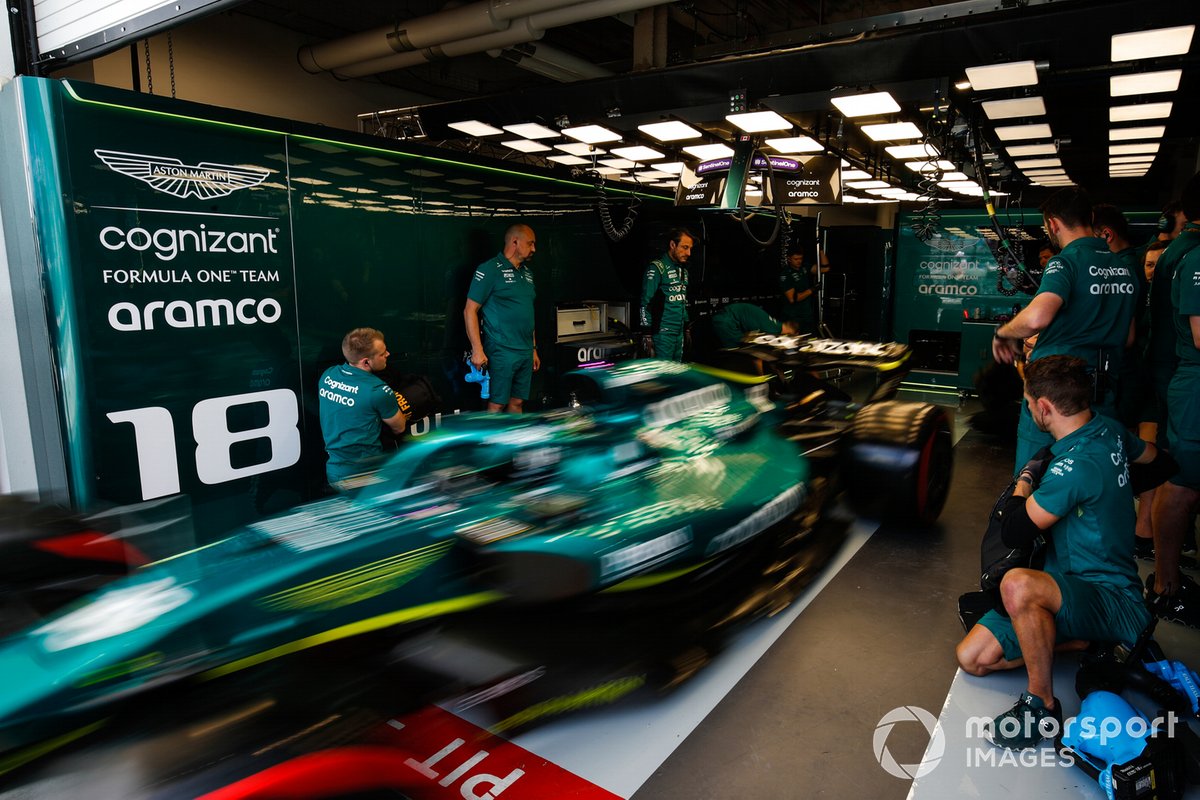
Aston is for the time being a long way off its stated goals of becoming a regular race winner and title contender
Photo by: Zak Mauger / Motorsport Images

How Ratzenberger beat the odds to realise his cruelly short-lived F1 dream

F1 uncovered: A weekend behind the scenes with a chief mechanic

When McLaren was pipped by Red Bull in a modern F1 classic

The big opportunity Sainz’s Williams switch affords to F1’s latest centurion

Inside the science of F1 fuel

How F1’s plan for rotating races could look in practice

The early decisions that set Sauber’s rookie for success

How F1 media coverage has evolved in line with its subject

F1 United States GP: Leclerc pips Antonelli to top FP2 while McLaren struggles

The reasons behind Ferrari's US GP upgrades

F1 United States GP: Leclerc beats Verstappen to top FP1 in upgraded Ferrari

F1 United States GP live commentary and updates - Leclerc leads FP2
Subscribe and access Autosport.com with your ad-blocker.
From Formula 1 to MotoGP we report straight from the paddock because we love our sport, just like you. In order to keep delivering our expert journalism, our website uses advertising. Still, we want to give you the opportunity to enjoy an ad-free and tracker-free website and to continue using your adblocker.


Top Comments