


Who is F1's greatest ever street racer?
Another Monaco Grand Prix is in the history books. Sebastian Vettel won, but with whom does the title of 'F1's greatest street racer' lie?

There's something special about a Formula 1 car dancing between walls and the all-time greats of motorsport have tended to perform well in such high-pressure and precise challenges.
Ahead of last Sunday's Monaco Grand Prix, Autosport magazine decided to take a look at F1's masters of the art. Who's the best when it comes to F1 between the barriers?
We put together a list of relevant circuits and then totted up the world championship race winners to help find an answer.
Selecting which circuits to include was more tricky than it first appeared. Chief among the criteria was that at least part of the circuit had to consist of public roads. They also had to have a genuine street/town nature, as opposed to road circuits such as Reims.
We concede there are some grey areas, but the final list, used to calculate the table below, was: Adelaide (Australia), Albert Park (Australia), Dallas (USA), Detroit (USA), Las Vegas (USA), Long Beach (USA), Marina Bay (Singapore), Monsanto (Portugal), Monaco, Montjuich (Spain), Pedralbes (Spain), Phoenix (USA), Porto (Portugal) and Valencia (Spain).
F1's top 10 street fighters
The drivers who have taken the most grand prix victories on street circuits
| Driver | Starts | Wins |
|---|---|---|
| Ayrton Senna | 28 | 13 |
| Sebastian Vettel | 34 | 10 |
| Michael Schumacher | 43 | 9 |
| Alain Prost | 36 | 7 |
| Lewis Hamilton | 36 | 6 |
| Fernando Alonso | 44 | 6 |
| Nico Rosberg | 36 | 6 |
| Graham Hill | 23 | 5 |
| Stirling Moss | 11 | 5 |
| Jackie Stewart | 11 | 5 |
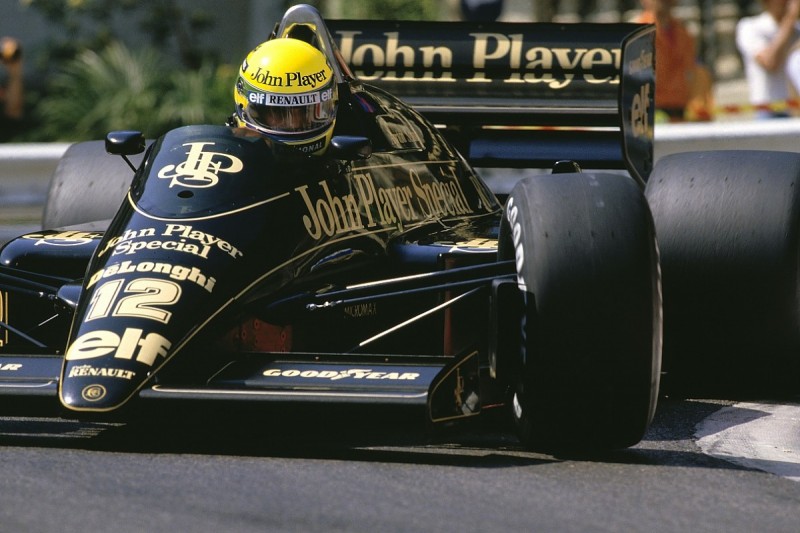
Given his mastery of Monaco - the most prestigious of F1's street venues - it is perhaps not surprising that Ayrton Senna tops the list with 13.
Senna's record in Monte Carlo was extraordinary. After qualifying 13th on his first F1 outing there (Toleman team-mate Johnny Cecotto was 18th), he never qualified outside the top three.
In his nine other visits, Senna scored five poles, was never outqualified by a team-mate, and Nigel Mansell and Alain Prost were the only other men to top the timesheets during that period.
Apart from famously crashing out while leading in 1988 - having beaten team-mate Prost to pole by 1.4 seconds - Senna's finishing record was even better.
His wet-weather drive to second in 1984 was his F1 breakout moment and he led the '89, '90 and '91 races throughout for McLaren.
He needed more luck in 1987 and '92, taking victory after troubles for Mansell (turbo failure and puncture respectively), though the latter race still required a canny defence from the flying Williams. Senna's '93 success was helped by Prost's jumped start and Michael Schumacher's Benetton suffering hydraulics failure while in the lead.
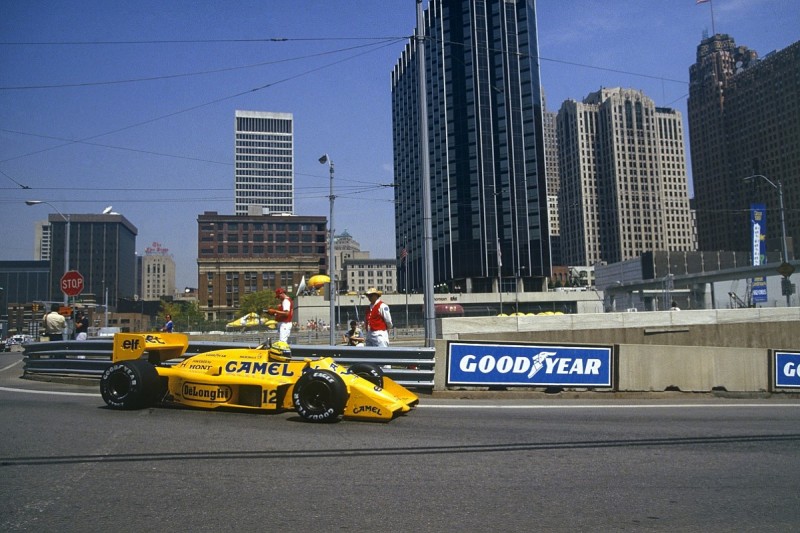
Even without those pieces of good luck - often essential on a street venue - Senna would top our list, thanks to a hat-trick in Detroit and braces in both Phoenix and Adelaide. More than 21% of his F1 career points total came from street venues, an even higher rate than five-time Monaco winner Graham Hill.
Behind Senna there are 28 other drivers who have scored two F1 street victories or more.
Sebastian Vettel is second on the all-time list, having finally added a second Monaco win to his name last weekend. Albert Park (two wins), Marina Bay (four) and Valencia (two) put him one ahead of Schumacher, who took five of his nine street wins in Monaco.
Schumacher's time in Monaco was mixed, though he was invariably impressive. Highlights included his stunning pole for Ferrari in 1996 and one of the great wet-weather wins the following year, plus his last hurrah in qualifying for Mercedes in 2012.
But there was also the crash on lap one in 1996, clashes with other cars in '98 and 2004, and his infamous 'park' during qualifying in '06.
Prost is fourth, with four Monaco successes contributing to his tally. His ability to be consistent, not make mistakes and to be kind to the equipment paid dividends everywhere, including street venues, though he surely loses marks for crashing out of the lead in 1982.
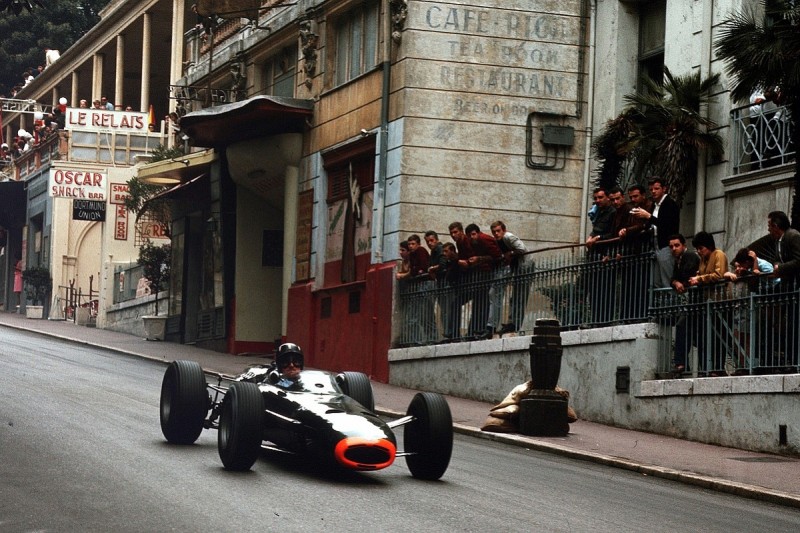
Hill's presence is not a surprise. The original 'Mr Monaco' racked up five wins, despite scoring only two poles (interestingly, in 1965 in the absence of rival Jim Clark, and in '68, when Jackie Stewart was not present).
He also scored one of the finest of all Monaco wins. Hill's 1965 success - charging back to the front after being forced down an escape road - was arguably his greatest race and stands comparison with the best drives of any around the principality.
The other current drivers on the list are Lewis Hamilton and Fernando Alonso on six wins, the same as retired reigning world champion Nico Rosberg - the highest-placed person with 'only' one F1 title.
Hamilton and Alonso (two Monaco wins apiece) would fall down the list if only Monaco successes were counted. And being beaten for three consecutive years by team-mate Rosberg, and struggling dramatically this year as well, has got to hurt Hamilton's case, even if the circumstances were odd for at least one of those.
His former McLaren team-mate Jenson Button, who returned to F1 in Monaco last weekend while Alonso raced at Indianapolis, is 11th, with four wins.
But it's Stirling Moss and Stewart who round out the top 10, both amassing their totals on far fewer starts than the drivers above them. Each of them scored a Monaco hat-trick too, with some of their finest victories coming around its streets.
Moss (in Rob Walker's privately entered Lotus 18) defeated the superior Ferrari 156s to win in 1961, lapping 2.8s faster than his own pole time, while Stewart succeeded in '71 with no rear brakes.
Stewart's view on the Monaco GP is rather different to most: "I don't think it's that difficult to win Monaco - if you qualify well and you don't make mistakes you can win Monaco. I don't think it's as big a deal as some people make it.
"In 1971 I won with no rear brakes so you can't say I was driving on the limit to the extent you would expect. It was obviously a good win, but the fact there were no rear brakes on a place that's all stop and go..."
That may tell you something more about Stewart's abilities than the nature of Monaco, but it is true that starting at the front is crucial, as Senna's qualifying record demonstrates.
And looking at the pole list (below) also helps to highlight some drivers who are perhaps unfortunate not to have made it onto the wins table - as ever, some statistics lie.
Top 10 street speed kings
The drivers who have taken the most pole positions on street circuits
| Driver | Starts | Poles |
|---|---|---|
| Ayrton Senna | 28 | 16 |
| Lewis Hamilton | 36 | 11 |
| Sebastian Vettel | 34 | 10 |
| Nigel Mansell | 36 | 7 |
| Alain Prost | 36 | 6 |
| Michael Schumacher | 43 | 6 |
| Stirling Moss | 11 | 5 |
| Mika Hakkinen | 21 | 5 |
| Niki Lauda | 26 | 5 |
| Juan Manual Fangio | 6 | 4 |
Of those not previously considered, the three drivers that jump out are Mansell, Clark and Juan Manuel Fangio.
Fangio only missed out on the wins list due to his low number of world championship starts on street circuits. From his six, he won three and was on pole four times.
He was only beaten in a straight street fight twice: by Moss in the 1956 Monaco GP and after struggling to third in the '54 Spanish GP with his Mercedes.
Mansell's poor luck in Monaco has already been touched upon, but his street jinx went further than that, particularly in Adelaide.
His pole position and 'safe' run to third in the 1986 season finale famously ended with a high-speed tyre blowout, while a collision with Senna ruined his '92 pole. Mansell's only street victory was his last in F1, after he took advantage of the Schumacher-Damon Hill clash in the 1994 Australian GP.
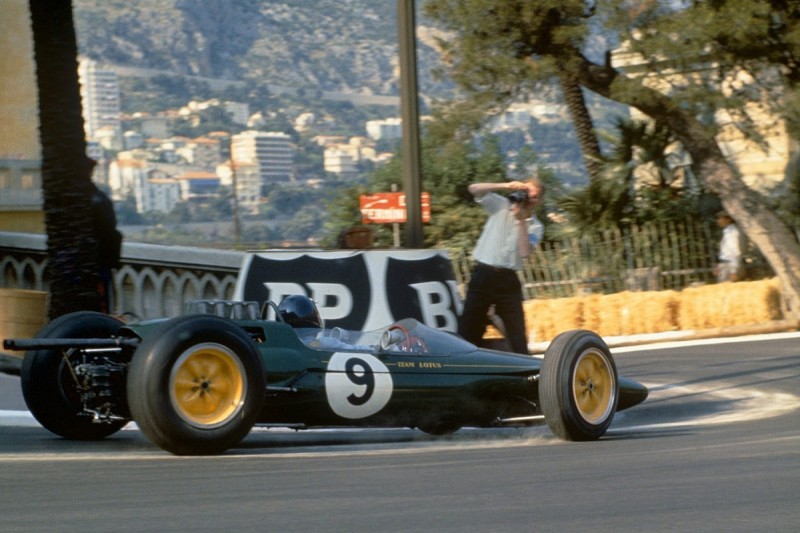
Monaco has certainly proved a car breaker, as well as a driving challenge, over the years. In the early days of the world championship it was not unusual for only two or three cars to cover the full 100 laps and even as late as 1996 there were only three cars running on track at the finish.
That largely explains how Clark didn't get a single victory from his four Monaco poles.
"Jim Clark never won Monaco but that's because he drove for [Lotus boss] Colin Chapman," reckons Stewart of his fellow world champion Scot. "Monaco wasn't the billiard table it is today - there were kerbs and manhole covers. There was no one smoother than Jim Clark and he didn't run into anybody - [but] the car didn't finish."
Clark lost out at the start in 1962, but battled Graham Hill's BRM before the Lotus's clutch failed. Once ahead of Hill, Clark dominated the '63 edition before gearbox failure. Hill had Clark beaten the following year, but the Lotus hit trouble anyway while in second, this time running out of oil.
It is perhaps understandable that Clark missed Monaco in 1965 to contest the Indianapolis 500. That was a good call as he not only won America's greatest race, he managed to win the F1 world title too.
Clark returned and was on pole again in 1966 in a two-litre car in the first race of the new three-litre engine regulations, but never got his nose ahead even before the suspension collapsed.
Hill was undoubtedly the most successful street racer of the era, but it's hard to argue Clark's performances were inferior.
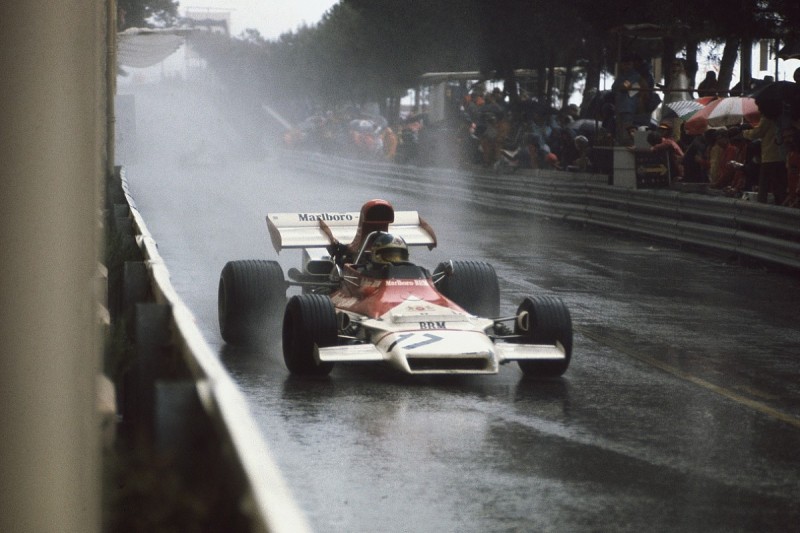
Finally, two of F1's lowly street scorers are worthy of mention. Jean-Pierre Beltoise destroyed the field - lapping all but rainmaster Jacky Ickx - in an incredible wet-weather drive at Monaco in 1972, while Gilles Villeneuve won in both Long Beach (1979) and Monaco (1981).
The latter was particularly special, coming in the powerful but incredibly difficult Ferrari 126CK. After putting in one of the greatest qualifying laps in F1 history (2.5s and 15 places better than team-mate and 1980 Monaco poleman Didier Pironi), Villeneuve benefited from problems for Nelson Piquet (crash) and Alan Jones (fuel feed) to record an unlikely victory.
Ultimately, though, Senna has to win this street brawl. He was a force even when not in the best car, was the street benchmark in a competitive era in terms of drivers, and tops both our lists.
Fangio, Moss, and Stewart also deserve honourable mentions on the basis of their impressive strike rates. Of the current crop, Vettel leads the way from Hamilton and Alonso, but in relative terms all three lack the high number of blue-riband Monaco wins.
Vettel made his case all the stronger with victory last weekend, while Alonso chased an entirely different accolade. Vettel might be Senna's superior in terms of titles, but as street fighters go he's still got to prove he's on the Brazilian's level.


The Egal has landed – again

Autosport magazine: Antonelli and a Can-Am celebration

Top 10 Can-Am drivers

Top 10 Can-Am cars

Top 10 greatest F1 qualifiers

Top 10 Tyrrell F1 drivers: Alesi, Brundle, Stewart and more

Autosport magazine: We grade the 2026 F1 grid so far

Top 10 unexpected F1 polesitters

Acosta's long road to his maiden MotoGP win

MotoGP Austrian GP: Acosta finally claims maiden win

Great debate: Which circuit should host the F1 2026 finale if the calendar has to change?

Live: MotoGP Austrian Grand Prix updates as it happens
Subscribe and access Autosport.com with your ad-blocker.
From Formula 1 to MotoGP we report straight from the paddock because we love our sport, just like you. In order to keep delivering our expert journalism, our website uses advertising. Still, we want to give you the opportunity to enjoy an ad-free and tracker-free website and to continue using your adblocker.


Top Comments