




What will it take to get American drivers in Formula 1?
The FIA says it wants American drivers in Formula 1, but would it take an IndyCar driver to transfer or does an American need to join the European junior ladder system to get there?

Two weeks ago, following the announcement that a Miami Grand Prix was on the Formula 1 schedule for 2022, F1 CEO Stefano Domenicali was asked by Wall Street analysts about whether it was necessary to get US drivers on the grid.
“The answer for me is very clear, it's yes,” was his reply. “You know, we are working with teams, trying to understand what is really the possibility for American drivers to come to the attention of F1 teams in the short term.
“This could come. I don't see that, being very pragmatic and realistic, coming in the next two or three years. But maybe after, yes. I know that there are teams watching other good drivers, that if they're ready, will be a big boost for the American fans.”
But the genial Italian’s comments attracted plenty of “yeah, sure”-type cynicism from open-wheel fans in the US. Graham Rahal, to his immense credit, has always spoken well of rivals he considers to be in the top echelon of talent. His response on Twitter was: “With all due respect, Mr. Domenicali, have you ever seen Colton Herta? He doesn’t need 2 to 3 years, and he’s only 21. Throw him in a good car and he’ll win. #RespectAmericanDrivers”.
Which seems a fair enough comment. But what came first – Formula 1’s perceived lack of respect for US drivers, or American drivers’ apparent lack of interest in trying to make it in F1? That word ‘apparent’ is not used carelessly; of course American drivers are fascinated by grand prix racing. Unless they have other commitments, they’ll sit and watch the grands prix from lights out to chequered flag. But the idea of finding a sponsor – or the hassle of finding a conglomerate of investors – to pay a seven- or eight-figure sum to sit in a tail-end car year after year is not appealing to a driver for whom competition has been the be-all and end-all ever since they squeezed their backside into a kart.

Connor Daly and Alexander Rossi in the Toro Rosso garage
Photo by: Sam Bloxham / Motorsport Images
“How can you live with yourself paying millions to be with a team that on their best days is gonna allow you to finish 15th?” exclaimed one IndyCar veteran a few years ago. “Why not come here and for half that money or less, you’ll get a ride that could change your career if you can beat some of the guys on the big teams because you have basically the same equipment?
“Formula 1 is so… layered: two teams at the top, three teams behind, three teams behind that and a couple of teams at the back. So you go into each race knowing that realistically you’ve got to beat just a few other guys on the grid – your team-mate, and the other guys in your layer. If you’re in the back half of the grid, you might get noticed and move up a level or two – but usually a team with a young driver program is gonna go with one of ‘their’ guys, so you could be stuck back there forever. Look at [Nico] Hulkenberg: wins everything there is to win on the way up but still doesn’t even have a podium in F1 because he’s never with the right team.
"I was impressed with the level that you get here in IndyCar when I came in. I'm sure the guys have got the talent, but it's more the bigger picture. Is he going to fit into the European model?" Romain Grosjean
“I don’t get it. Why do you want to go through all those spec formulas, trying to beat other guys with the same car, pretty much, doing all that work to win, and then pay millions to drive a car that’s two seconds slower than the guy who’s fastest? Seriously, what kind of sport is it where you pay to lose? That’s crazy.”
Did young American drivers just figure that out sooner than their European counterparts? Something has to explain why there is such a shocking lack of American drivers even trying to make their way to Formula 1. In current terms, F3 drivers Logan Sargeant, Jak Crawford and Kaylen Frederick are the only ones currently on the ladder.
American underrepresentation

1978 World Champion, Mario Andretti, Lotus 79
Photo by: David Phipps
A brief recap is in order here. America has produced two F1 world champions – Mario Andretti and Phil Hill, and one other F1 winner who was obviously champion quality, namely Dan Gurney. Other Americans to win races in F1 (excluding the 1950s when the Indy 500 was classified as part of the world championship) were Richie Ginther and Peter Revson. American drivers who finished on an F1 podium include Harry Schell, Masten Gregory, Mark Donohue, George Follmer, Eddie Cheever and Michael Andretti.
If Formula 1 is truly a world championship, then representation by the world’s third most populous country is abysmal. “Didn’t you know? Americans have just been genetically indisposed to succeed in Formula 1 over the past 40 years,” snorted one IndyCar team owner when I asked him about the mutual apathy between F1 and the USA.
Mario Andretti believes a fast American in a good team would be all it took to turn America on to grand prix racing and told Autosport last month that he believes Colton Herta has the potential to be that guy. Asking 10-time Formula 1 podium finisher Romain Grosjean how he rated the drivers, he now finds himself racing in IndyCar and how he thinks they’d fare in F1.
“The drivers here are super talented,” he replied. “Many of the American drivers, they've been growing up through the series – Indy Pro 2000, Indy Lights… the Road to Indy.
“[But] the atmosphere is very different from Europe. You may have some drivers that have been trying to come over to Europe, and they may not just feel good because it's different. Everything is probably more strict. 'Strict' is not the word, but more 'into a square'. The cars are different to drive. I had to adapt my driving style quite a bit coming in here. From Europe to America it's a bit easier to adapt than the other way around.
“I mean, I was impressed with the level that you get here in IndyCar when I came in. I'm sure the guys have got the talent, but it's more the bigger picture. Is he going to fit into the European model?”
PLUS: Why IndyCar is satisfying Grosjean’s appetite for his second life
Colton Herta is an obvious candidate… or is he?

Race winner Colton Herta, Andretti Autosport Honda
Photo by: Phillip Abbott / Motorsport Images
Colton Herta did fit that model for as long as his parents could afford it. He went to Europe at the age of 15 to race in MSA Formula, and after learning the tracks in the first half of the year, scored four wins and proved a regular match for Carlin team-mate Lando Norris who is set to be a future Formula 1 superstar. The following year, Herta competed in the Euroformula Open Championship and again finished third in points with four wins. Then his parents simply ran out of money for him to continue in European open-wheel. He was quite interested in DTM but that was going through an uncertain period, and so he returned to the US and is now very much a star in IndyCar. It was therefore no surprise when Michael Andretti last week announced Herta will remain at Andretti Autosport for at least two more years, and that his form has convinced Gainbridge to remain a sponsor.
PLUS: How Herta's aversion to complacency spells bad news for his IndyCar rivals
In the wake of this, Autosport asked Michael about whether he believed the FIA is sincere about trying to entice American drivers.
"I think the bigger problem is whether a Formula 1 team takes the chance on an American. You know and I know that with someone like Colton, it’s not really taking a chance, right? We know he’d be good" Michael Andretti
“Well, they haven’t yet shown anything to suggest they’re trying to make it happen,” he said. “So I don’t think American drivers are going to get any help on that side. I think it’s going to take a team that wants to have a go at it.
“I saw Dad put Colton’s name out there. I was like, ‘What are you doing, Dad?! I want him to stay with us!’ Which is why we signed him up real quick. But seriously, I think Colton’s going to get offers – he should do, anyway. He’s raced those young guys that are looking really good in F1 now. He’s been team-mates with Lando and showed he could beat him, so he’s got the talent to do it. So yeah, maybe one day he’ll get the chance that he deserves with a good team over there.”
Andretti, who is the only IndyCar team owner who consistently runs a team in the Road To Indy junior formulas, said he doesn’t understand why European team owners don’t acknowledge that USF2000, Indy Pro 2000 and Indy Lights are strong training grounds for racing talent.
“They have a funny way of looking at things,” he shrugged. “Road To Indy has some great racing and the cream rises to the top, like it does in any one-make formula, right?
“But Colton’s already shown how good he was in junior formulas in Europe, too. Like I say, he was team-mates with Lando, they switched back and forth for pole positions every weekend, and so he did come up through that system and was extremely strong. Unfortunately, he and Bryan [Colton’s IndyCar race-winning father and now team partner with Andretti] saw that he wasn’t going to make it without getting on a young driver programme because the budgets are so crazy.
“He came back here where the budgets make sense – and he made the right choice. Yeah, I know: I would say that, right?! He’s driving for us and he’s a winner. But you know, winning at a top level is what a top driver wants to do, so I think he’s happy here in IndyCar. At the same time, I’m sure he’d pay attention if a good F1 team came looking.”
With Formula 1 cars and IndyCars being so far apart in terms of how they produce their pace, and given how few test days are available to rookies in F1 (and IndyCar, for that matter), would Herta or someone of similar potential really be able to produce their best were they to make that transatlantic trip? Two days in Abu Dhabi at the end of the year, and three or four days pre-season doesn’t sound like enough time to adapt, however good your simulator is.

1993 Italian Grand Prix, Michael Andretti, McLaren-Ford, 3rd place
Photo by: Sutton Images
“Well I know two-and-a-half days isn’t enough, because that’s all I got with McLaren in ’93!” chuckled Andretti. “Yeah, maybe twice as much is fine!
“No seriously, I think that is a problem factor. I mean, heck, I think that’s a problem here, too: an IndyCar rookie only gets one extra day compared with the veteran drivers. When I was young, the days were unlimited: we could test as much as we wanted, as much as the team could afford, and for a young driver those miles are so important.
“There’s always going to be adjustments going from one formula to another. But talent is talent, and if you work at it – and I mean the team working with the driver and the driver working hard to maximise their potential together – it can translate, whether it’s test days or sim time.
“Honestly, I think the bigger problem is whether a Formula 1 team takes the chance on an American. You know and I know that with someone like Colton, it’s not really taking a chance, right? We know he’d be good. But like I say, they look at it like they’re taking a big risk, because they just get into this mindset of only drivers who know European racing can really succeed over there.
“I know that if I was a team owner in F1, I’d sign Colton up in a second. He’s very quick, he works so hard to get better and better, and he’s smart enough to put what he learned into practice. I can’t say enough about him.”
Rossi on the different attitude in European racing

Alexander Rossi, Manor F1
Photo by: Alastair Staley / Motorsport Images
One of Herta’s current team-mates, Alexander Rossi, was the last American to start a grand prix. Winning races in GP3, the Formula Renault 3.5 Series and GP2, and being an official test driver for the Caterham F1 team, eventually earned him five grand prix starts with F1 minnows Marussia in 2015. He did well in the circumstances, out-qualifying his more experienced team-mate Will Stevens four times, but the car was so far off the pace of even the next slowest team, Rossi’s performances couldn’t be put in any greater context.
Now very much an established star in IndyCar, with seven wins – including the Indy 500 – and two top-three finishes in the championship, Rossi was very forthright on the subject of American drivers in F1.
"I don’t believe there’s any real weight behind the push for an American driver, and I won’t believe it until I see something happen" Alexander Rossi
He said: “Here’s what bothers me when I hear someone from the FIA or a Formula 1 team owner say ‘there’s no American drivers currently ready to go into F1 but we have an interest in making it happen; we want to develop someone to make it happen.’ From what I can see, it’s just lip service.
“Ultimately, to get an American driver to Formula 1, he’s got to go to Europe, and that’s just the way it is. It’s nothing to do with your nationality, but there’s no Formula 1 drivers who have not come through the European junior categories. It’s never really happened, or the times it has happened, it hasn’t gone well. That’s because there’s a lot of nuances that exist within the culture of racing over there and they’re things that you need to ignore because you just need to focus on the racing, because it is very, very different.
“There are a lot of political games being played, there isn’t the sense of loyalty and camaraderie you find here, and you’re only looking out for yourself. Once you realise that, it’s fine, it’s normal, and you just focus on driving. But if you go over there thinking you’re going to be successful just because of your talent, and the off-track stuff doesn’t matter, then… it’s a rude awakening.
“So if they’re serious about having an American driver because of the interest that exists in the US and this being the largest market for sales of Mercedes-Benz, Ferrari, McLaren, and so on, then they need to do something similar to what Red Bull did. They need to go look for very young talented drivers and have the funds and support necessary to uproot them from America to go race in Europe.

Scott Speed, Scuderia Toro Rosso STR01
Photo by: Sutton Images
“I was very fortunate that my family was willing to literally alter everything to support me, allowing me to finish school in the way that I did, and go overseas and commit my life to racing and living in Europe. That’s a pretty rare thing for obvious reasons – not just financial but because it’s just weird, isn’t it? To let your young child move to another country.
“So you have to have manufacturer support or marketing support and I think Red Bull did a very, very good job of that. And the FIA and F1 teams have the framework with that programme to make it happen. So when they say, ‘Oh yeah, we’d love to have it happen, we need to do something,’ those are just words until someone does actually make it happen, and does it in a structured way. Interest in F1 over here has peaked with the US consumer because of that Netflix programme, and there’s obviously the demand for F1 over here because there’s going to be a second race, in Miami. But I don’t believe there’s any real weight behind the push for an American driver, and I won’t believe it until I see something happen.
“Then you have people, quite frankly, speaking out of their ass, saying there’s no qualified racing drivers over here who could compete in F1. That’s ridiculous. Obviously first-hand I experienced it, and then you can look at someone like Josef [Newgarden] or Colton and you know they’re more than qualified to do F1.
“And then look at some of the F1 drivers who have come over to IndyCar or some of the people that come over from the junior formulas in Europe to compete in IndyCar or junior formulas here. It’s not as if they arrive and wax the floor with the Americans. There’s plenty of talent that exists in IndyCar that is more than capable of driving a Formula 1 car. Would there be too much of a culture shock in changing over? Possibly – I could see the viability of that argument. But that’s why the FIA or F1 team owners need to be looking at kids coming up from karts, and putting the money behind their so-called ambition to have American drivers in F1.”
US drivers must learn their trade in junior European formulas

Kaylen Frederick, Carlin Buzz Racing in FIA Formula 3 at Barcelona.
Photo by: Mark Sutton / Motorsport Images
Some may raise a quizzical eyebrow at Rossi’s point that an American kid needs to be groomed for Formula 1 stardom in European junior ranks but his reasoning has merit.
“Like I said, the culture’s very different,” he explains. “You’re not going to go over as a 21-year-old American and be signed with whatever team and expect you’ll get the same amount of upgrades as the established driver. So you’ve got to be able to play the political game off the track to deal with that.
"We’ve seen Fernando Alonso go back to Formula 1, and even as a two-time world champion, he’s not the number one driver at Alpine, and it makes a difference. It’s not that there’s always an intention to have a number one driver and a number two driver in a team; it’s just such a specialised sport and you’re operating against your team-mate at all times, so without having the relationships, a subconscious thing exists among the team members that can work against you.
"I don’t think it’s a question about the talent of the drivers in IndyCar. There is just always going to be the cultural disconnect between American racing and European racing, and so time and money need to be invested in getting young drivers racing in Europe early" Alexander Rossi
"And I think if you’re an American going to F1 from IndyCar, you’ll be seen as the outsider. Whereas if you’ve committed your time and money to racing in Europe in junior formulas and have embraced the European culture for four or five years, you’re part of the scene. I know that’s how I felt. I wasn’t looked at as American or an outsider; I was just one of the young guys from any number of nations trying to get into Formula 1.
"The other big factor to consider is learning the tracks. I realise Colton is in a somewhat unique situation because he did two years in Europe and raced at quite a lot of the tracks, but for any American going over there, there’s so much to learn. I mean, you wouldn’t expect Romain to be on it right away next month when we go to Detroit, up against a bunch of drivers who’ve raced there for 15 years.

Alexander Rossi, Manor Marussia MR03
Photo by: Alastair Staley / Motorsport Images
"In F1, there’s drivers who have been racing at Silverstone, Barcelona, Spa since they were 12 years old in junior formulas and that advantage can’t be underestimated because there are nuances to all these tracks, and I don’t care how talented you are, if you’re up against someone that’s been driving on that track since they were 14 in Formula Renault and now they’re 26 and in Formula 1, they will have the upper hand."
Another worry, you might expect, would be the parameters that can be changed on a spec car designed down to a cost, such as an IndyCar, hardly prepare a driver for a technology-first formula such as F1, where the car can be better tailored to the individual.
“I don’t know if that’s such a factor,” says Rossi. “I would almost say F1 is easier because they have such sophisticated machine-learning and optimised setups. I remember from my time there, whether you were in a Mercedes or a Caterham, the car basically felt good – the balance was neutral everywhere we went, regardless of the scenarios, because the teams’ simulations are so good that they know exactly what the car needs for any given set of parameters. It’s then purely about whether your car can go 15mph quicker through a corner than the other car, or if it’s capable of braking 50 feet deeper, and there’s your lap time.
“So I would say the spec series are actually more challenging to give feedback and engineer what you can. Over the course of a race weekend in F1 you might change toe-in/out, front wing angle and potentially ride heights; the rest is what it is. You don’t change springs, suspension geometries, weight distribution and things like that. So honestly I feel there’s less for the drivers to consider on the technical side of things in F1 – over the course of a race weekend, at least.”
The perfect age
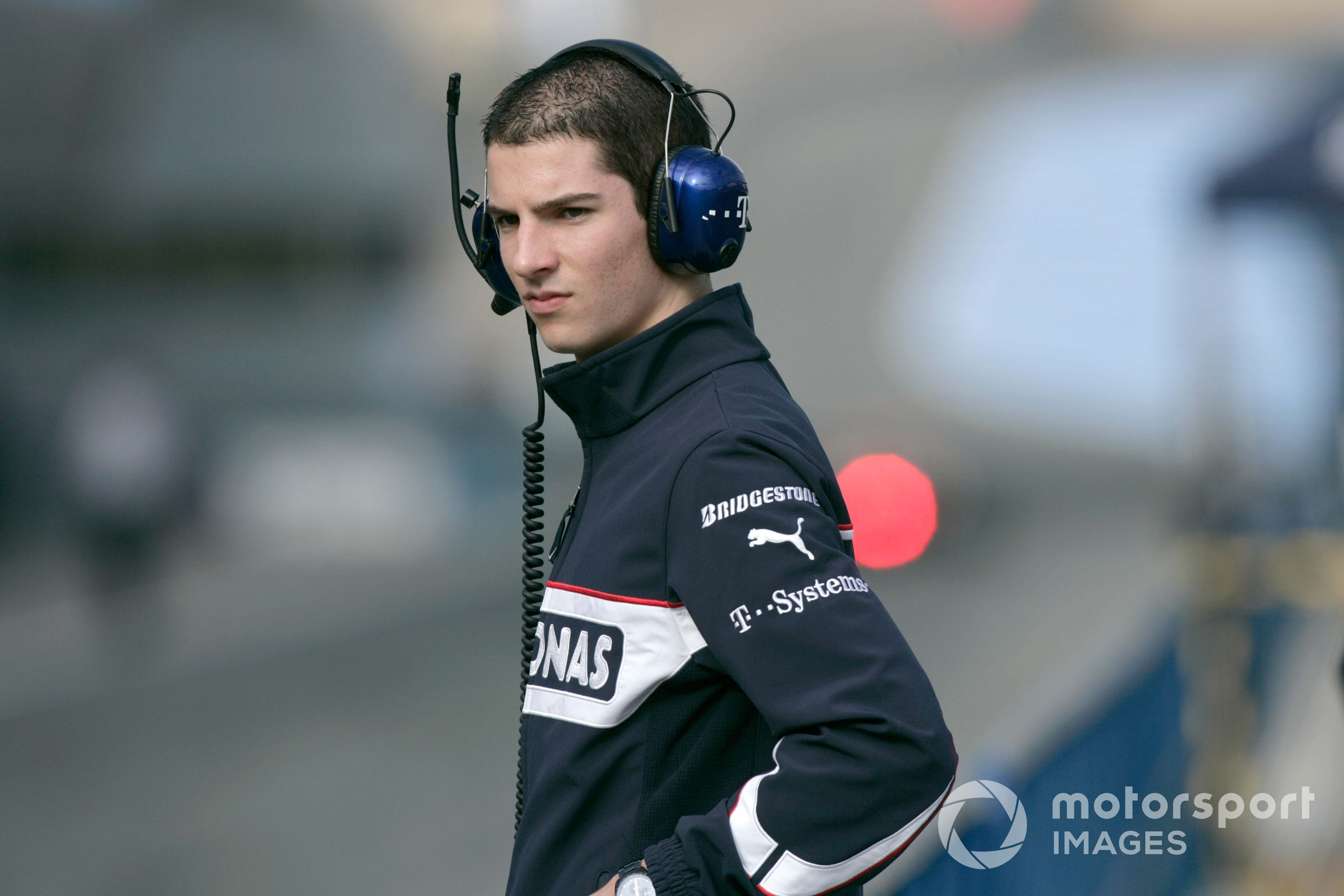
Alexander Rossi, BMW Sauber F1, Young Drivers Test, Jerez, December 2009
Photo by: Motorsport Images
If Rossi believes an American driver needs to be on the European junior ladder in order to make it to F1, in what age group should the FIA be seeking US talent? Surely straight out of karting is too soon because there are plenty of ace karters who don’t quite translate that ability into cars.
“These drivers have to be grabbed early, say, 13 or 14,” says Rossi. “Then you’ve got five or six years to prove yourself in Formula Renault, F3, F2…, time for a couple of seasons in each one.”
If he’s right, then this obsession with youth – extreme youth – is quite infuriating. At what point is Colton Herta – still just 21, remember – going to be ‘too old’ to be considered a viable prospect?
“Yeah, I know; Colton, could 100% go to F1 and, in a competitive car, be just as good as his team-mate,” says Rossi. “I don’t think it’s a question about the talent of the drivers in IndyCar. There is just always going to be the cultural disconnect between American racing and European racing, and so time and money need to be invested in getting young drivers racing in Europe early.
"If the relevant people can’t see past the age thing, then they need to get a programme started right away for, like I say, 13- and 14-year-old Americans of potential who also want to go over and be European during their formative years" Alexander Rossi
“Heck, I’d love to see Colton get an opportunity because he would represent the USA very, very well… but I don’t know if they might consider 21 too old already, or he’s right on the cusp of it, with one or maybe two years to be in their window before they start looking elsewhere.
“It’s just the way it’s always been – always looking past what they currently have to find the next thing, and once you fall out of that window that they feel is optimum, it doesn’t matter what you’re doing, unless you’re a champion. And you’re right, it is infuriating. Scott Dixon is 40 and he’s plenty fit enough, plenty talented enough to go over and still get the job done.”
Rossi pauses, before adding: “Of course, Max Verstappen ruined it for everybody! Straight from Formula 3, debuts at 17, gets his first win at 18… Doesn’t help the cause of us guys in our late 20s!”
Everyone would benefit from US racers in F1

Phil Hill, Ferrari 156 'Shark nose' became America's first Formula 1 World Champion in 1961.
Photo by: Sutton Images
Rossi’s cynicism at Domenicali’s comments is not borne of sour grapes that his own F1 dream fell through, nor does he feel that he deserved special support for that dream. He’s more frustrated at the attitude he believes prevails among F1 team owners that would prevent someone as young as Herta from making the transfer, and he also wants the FIA to not just talk about getting Americans adequately prepped for Formula 1 but to actually do something about it.
“I hope it happens, I really do; it needs to,” he concludes. “I believe the manufacturers would embrace it because they want the fan base to embrace it. The manufacturers recognise that two American grands prix – assuming we have two F1 races here, Austin and Miami – need to have one or two American drivers in good cars to fulfil their potential as far as attracting crowds in their biggest markets.
“Like I said, there are one or two obvious candidates the right age already, but if the relevant people can’t see past the age thing, then they need to get a programme started right away for, like I say, 13- and 14-year-old Americans of potential who also want to go over and be European during their formative years.
“Basically, the end result would be a benefit for everyone. No one would lose out by F1 taking a proactive stance on this and making it happen.”
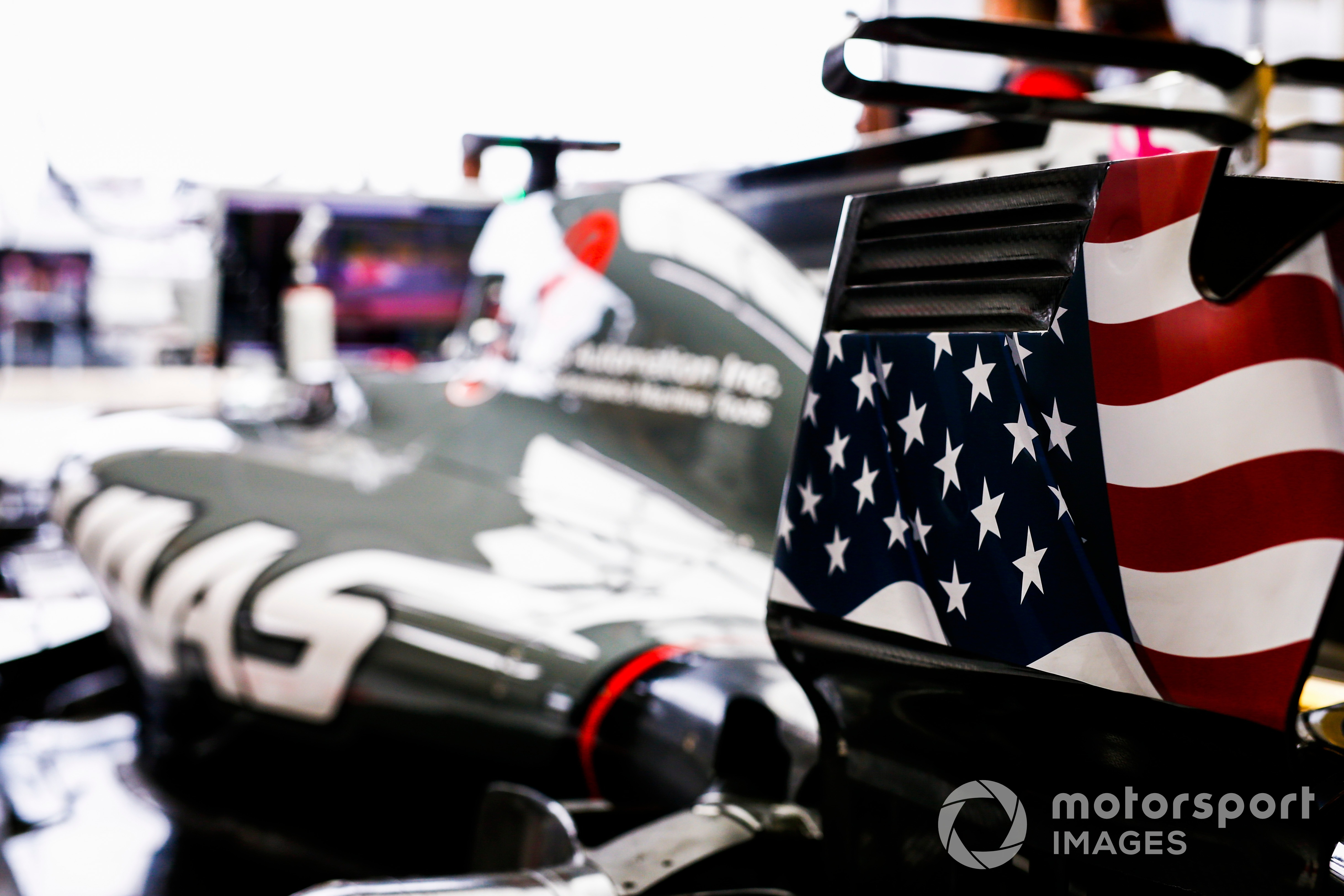
US flag on the rear wing end plate of the car driven by Romain Grosjean, Haas VF-17, 2017 F1 United States GP
Photo by: Motorsport Images

The long evolution of Dallara's Indy 500 winner

How to be an ace engineer: Leading IndyCar race engineer Michael Cannon

IMSA Laguna Seca: Ganassi Cadillac holds off Tandy Porsche for victory

Palou surprised IndyCar rivals didn’t use his winning tyre strategy in Indy GP

IndyCar Indy GP: Palou beats McLaren drivers to claim points lead

Lundgaard: I can call Indy GP track "home” after maiden IndyCar pole

IndyCar Indy GP: Lundgaard beats Rosenqvist, Palou for first pole

IndyCar Indy GP: Palou tops second practice, Rahal Letterman Lanigan shines again

New WRC champion Evans relieved after “surreal” Sardinia title showdown

Solberg has no regrets after WRC title near-miss: “It hurts a lot”

How the Bahrain GP in Malaysia exposed Red Bull’s hidden resurgence

Why the Motegi tyre drama delivers a lesson MotoGP teams cannot ignore
Subscribe and access Autosport.com with your ad-blocker.
From Formula 1 to MotoGP we report straight from the paddock because we love our sport, just like you. In order to keep delivering our expert journalism, our website uses advertising. Still, we want to give you the opportunity to enjoy an ad-free and tracker-free website and to continue using your adblocker.


Top Comments