


What the drivers think of the "crazy" Madrid F1 circuit
A layout featuring all kinds of corners, many of which are blind, plus banking and gradient changes make the Madring a huge challenge

"I'll put my money on a red flag, that's for sure," said Pierre Gasly when asked what he thought of Formula 1's new Madring street circuit.
Risk and difficulty level have been the common denominators in conversation with drivers about the Spanish Grand Prix track and its layout. Well perhaps not Lance Stroll, but at least he managed a distant orbit of the topic, saying, "I think we're going to be busy, very busy." While all the drivers have tackled the track in their simulators, the only real-world reference so far, apart from a mildly controversial Ferrari filming day in July, has been a Formula 3 test late last month. It is fair to say this did not go well, with no fewer than 19 red flags and three wrecked cars.
The incidents that brought out the red flags, and triggered some unwelcome repair bills, were not concentrated in one specific area but spread out through the lap, mostly in the second sector where there are a number of chicanes and blind corners, plus the banked 'La Monumental'. One of the more intriguing facets of canvassing driver opinion on this track is the fact that so few of them are being negative about the Madring, even while comparing it with Jeddah, whose layout was revised between its first and second appearances on the calendar in response to criticism.
The impression is that the drivers cannot wait to test themselves against it.
"I think this track is going to be extremely difficult for the drivers," said Franco Colapinto. "In the simulator, putting together one complete lap could take me hours. So imagine what it is going to be like here when you only have two or three laps to do it. Finding that perfect lap is going to be very difficult.
"It has a bit of everything. If you took everything you find across the 24 races on the calendar and mixed it together, you would probably get something like this. So I'm happy and looking forward to trying it."
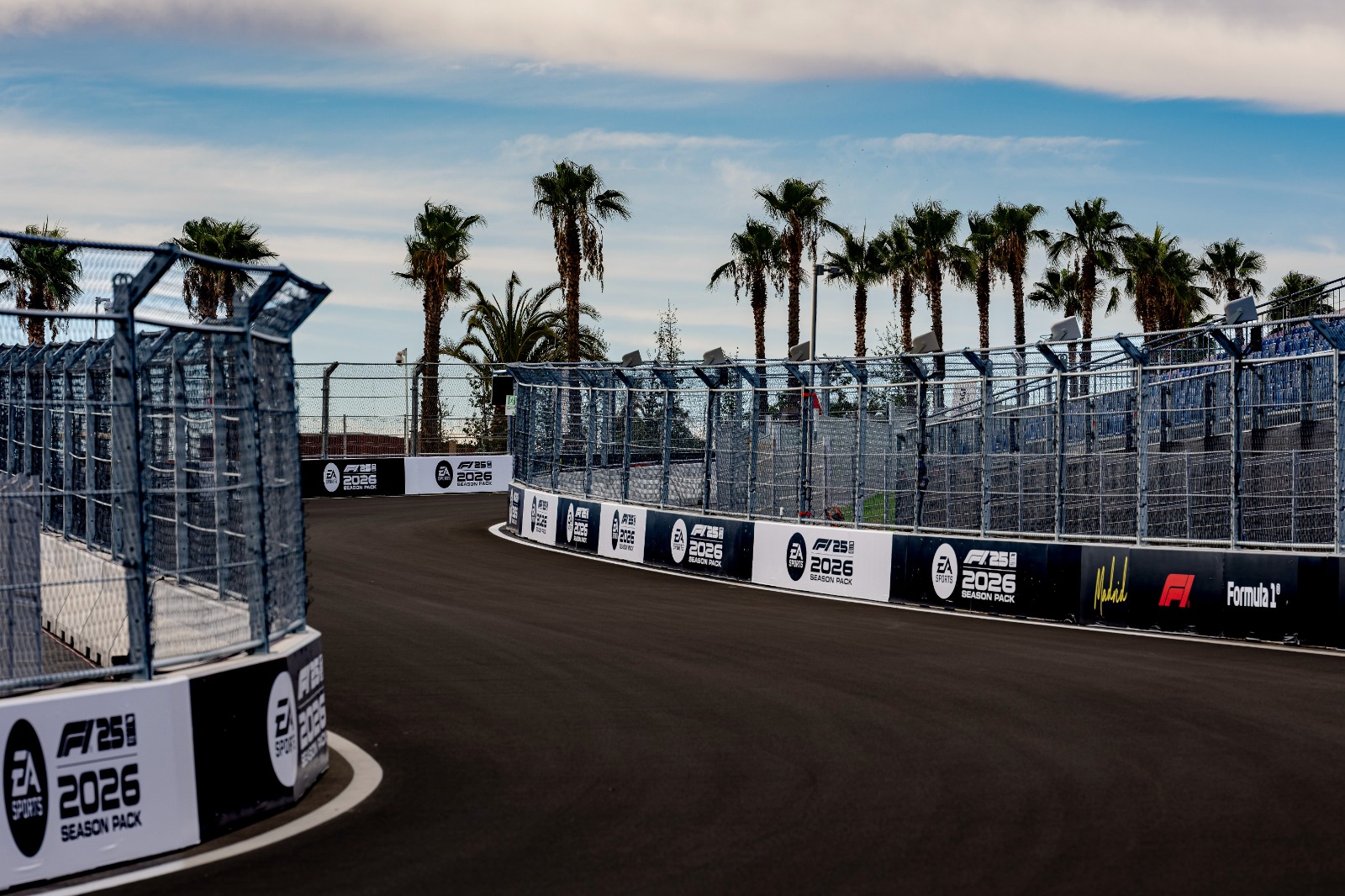
Tight, blind-entry corners pose a challenge because lap time can leak away with a more conservative approach
Photo by: Getty Images
"It's a bit scary," said Sergio Perez. "It reminds me a bit of Jeddah. Good, proper track, [I'm] really happy to be here, and I think the atmosphere here is going to be one of the best."
Asked how punishing this track could be in response to driver error, Perez was unequivocal.
"I think very," he said. "It all depends what sort of grip level we get, but I think there is no room for error. It's very rare, depending on which corner you do a mistake, you might get away with it – but in most places, there is no margin for it."
In the consequence-free environment of the simulator, most drivers have already made the majority of their big mistakes. It's now a question of fine tuning.
"Driving-wise, I must say in the sim it was very enjoyable and very exciting," said Gasly. "I got a good read and feel of pretty much every single wall at every single corner, so actually I know what to do and what not to do.
"But I think it's going to be very challenging, especially in terms of evolution, probably a lot of track evolution, kind of slightly off-road braking zones, which are not fully straight, kind of like snaky, very twisty type of corners, many corners, a lot of blinds, banking, up and down, undulation all the way."
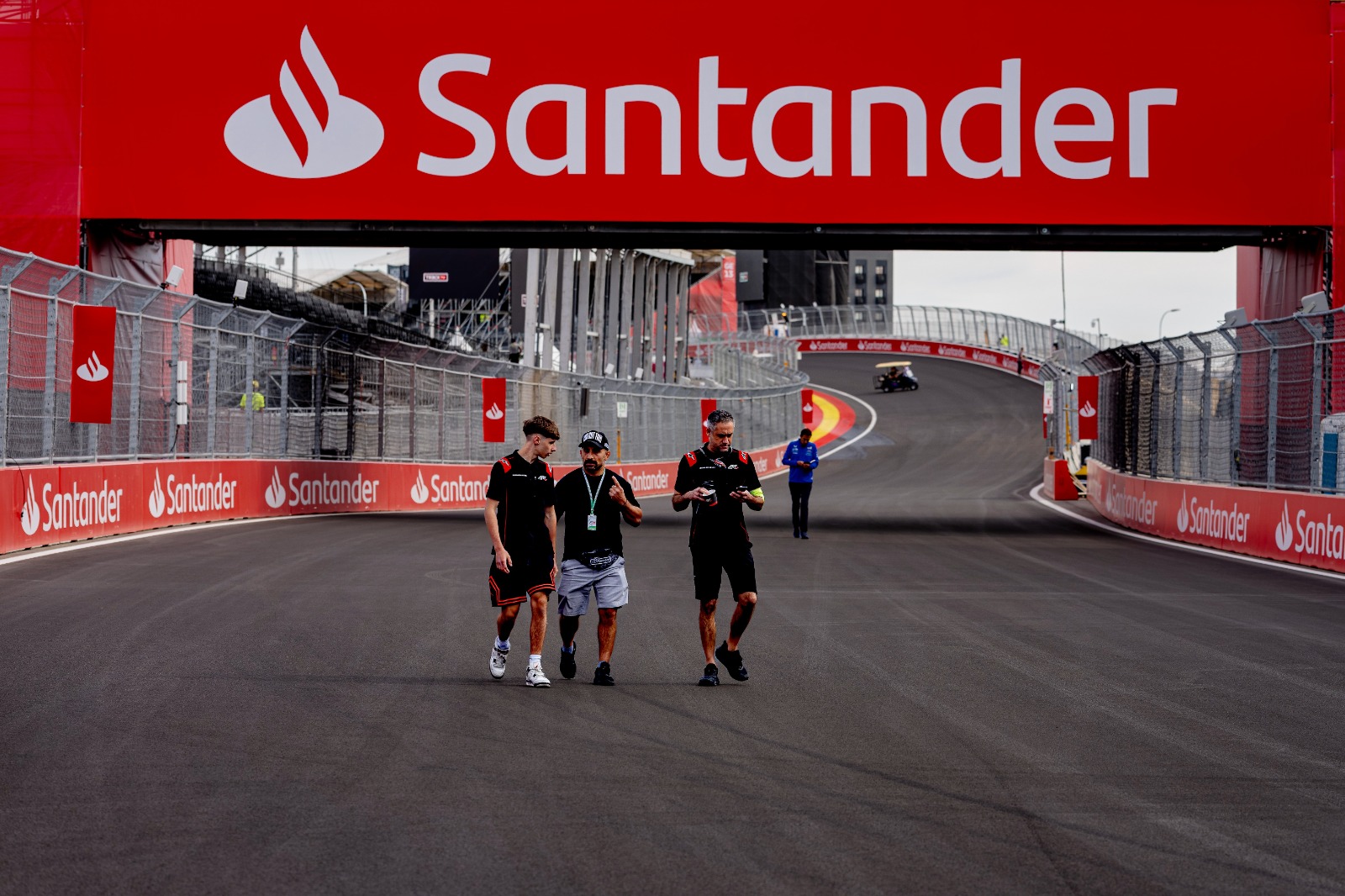
The Madring's bank corner isn't linear, and flows onto a section which also has a change of camber
Photo by: Getty Images
Photographs and television images have a tendency to flatten out gradients so the undulations will be less apparent to those watching or reading at home. But the flow of the track is going to have a powerful effect on lap time. From the end of the first sector, all the way through the second, the circuit poses a highly technical challenge. For instance, the second chicane feeds onto an uphill gradient, so drivers must carry as much speed through as possible – but there is a wall at the exit, and the entry trajectory is complicated by steep kerbs.
In terms of risk vs reward, it bears some similarities with the chicane at the Norisring in Germany, where the quickest way through involves kissing the wall at the exit. But that chicane doesn't have aggressive entry kerbs that will guide your car into the wall if you don't get your approach right.
This is one aspect of the track the drivers will have to adapt to quickly, since the simulations may not have rendered the kerbs with total accuracy.
"I think Monaco is more unforgiving," said Arvid Lindblad. "But yeah, it's not a very forgiving track. I think all street circuits now, there's not much margin. This one definitely does not have much scope for error.
"That's probably the thing that's the hardest to simulate. From offline simulations, but also just from the sims that we drive, they get, I think, a measurement from the FIA with a photo saying, 'it looks like this, and this is this many centimetres', you know, width and length, whatever.
"But yeah, that's the hardest part to simulate. So I think that I would already say just from a driving point of view will be a challenge because they're not small kerbs, they're proper kerbs, so we'll need to attack them."

Oliver Bearman finds some cause for humour in the track layout…
Photo by: Getty Images
Unlike the banked final corner at Zandvoort, which most drivers barely regard as a turn at all because speeds through there are limited by engine power rather than outright grip, 'La Monumental' is grip-limited. So there may be some experimentation before competitors converge on an ideal line. There may also be some carambolage as drivers explore the limits of a corner where they will be at full throttle – or close to it – for over four seconds.
After the F3 test, the track was jet-washed to remove the greasy layer left when freshly laid asphalt cools and some of the bitumen used to bind the aggregate leaches through to the surface. But even so, grip levels are uncertain and the track will evolve through the weekend.
It's also likely that the racing line will evolve at a different rate, producing scenarios similar to Miami where the track is very slippery away from that line – especially when the tyres shed 'marbles' of rubber during practice, qualifying and the race. This will compound the effects of any imprecision, and make overtaking tricky because a defending driver will be able to 'park the bus' on the line.
One thing that will not change this weekend is the technical challenge of many of the blind corners. Most of the turns are of the late-apex variety, requiring the drivers to commit before they see the apex.
"You're kind of swinging in from a blind spot and you've got to try and pick an imaginary spot that's a few hundred meters in front of you," explained Alex Albon.
"That's really challenging to do. It's a lot of repetition and muscle memory just to get that timing right. Because you basically can't see an apex. So now you're just using your internal body clock and almost imaginary, you're trying to focus on a reference point or something to know what's your apex point of that corner."
As with Jeddah, the blind corners will likely cause some flashpoints in qualifying as drivers on push laps come up quickly on those on in- or out-laps. The demands of the track will also have a compounding effect on disparities between cars, because those with more efficient downforce will enjoy better performance from the electrical elements of their power units.
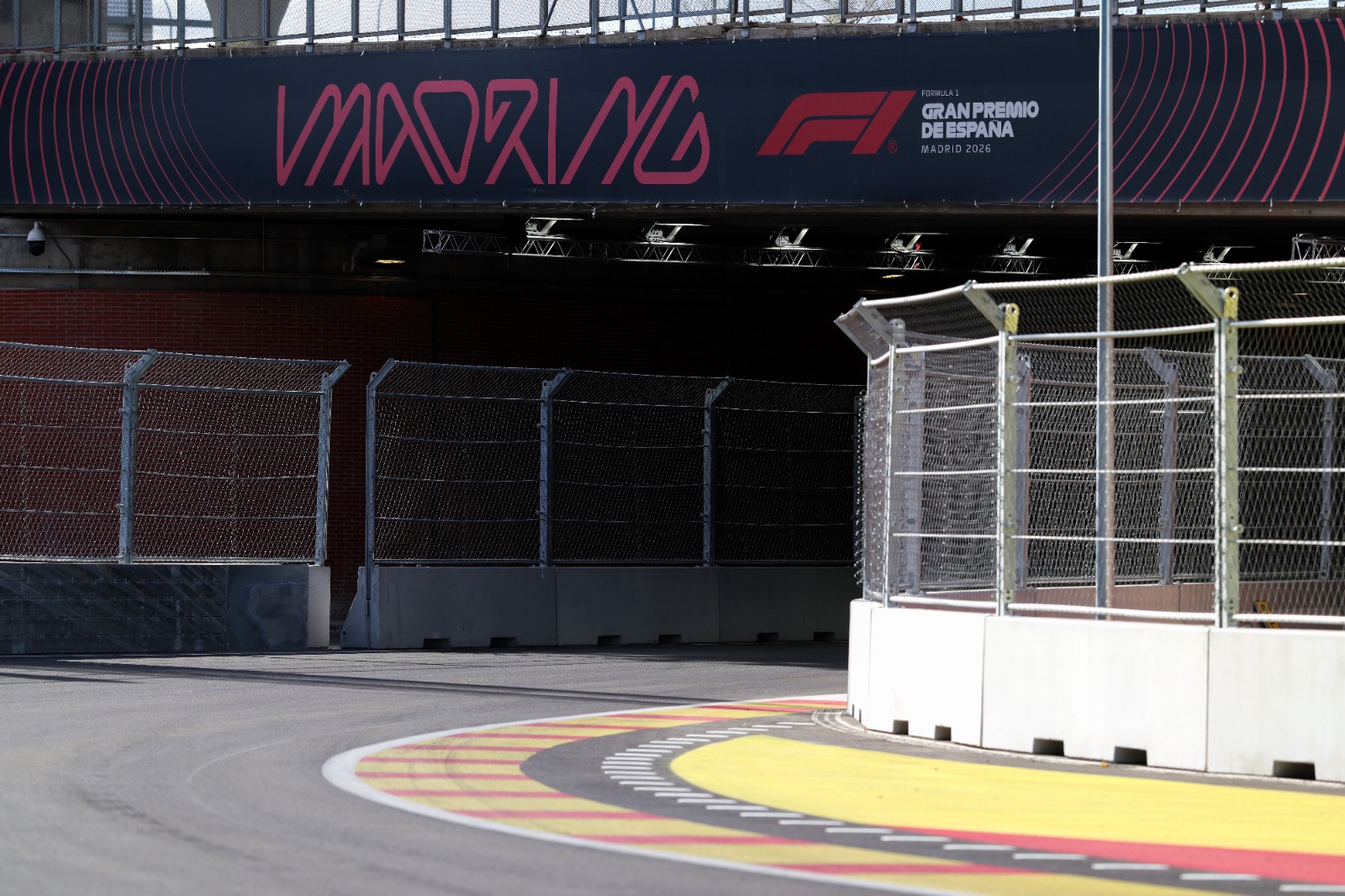
Bridges and tunnel complicate the sight lines – and mean the outside walls are quite tight in some blind-entry sections
Photo by: Getty Images
"Technically speaking, there's a lot of corners on this track that will be between 90% and 100% throttle," explained Albon. "I think for the top teams, it will be flat out. For the midfield teams and the backfield teams, a bigger lift, which has a big effect in deployment. If you can do a corner flat or not, it massively changes the way the deployment works.
"And you don't want to go in qualifying, suddenly all these corners start to become flat and your deployment starts to move around a lot. That's what we've found so far.
"The technical part will be, can you make a car that is good over the kerbs from Turn 1 to Turn 5? But you want the stiffness in the car for Sector 2 and Sector 3, because actually, the stiffer car gives you more load.
"But then you're going to sacrifice your Turn 1, Turn 2 kerb riding. And then the final thing is, is it one of those weekends where Q3, Run 2 for those guys – Q1, Run 3 for us – do you end up just sending it across the kerbs? I mean, that Turn 5, 6 feels a little bit like, I hope there's a rhythm to it and it's actually not that bad. But I think there's an angle there that you're going to just send it.
"If you get through the other side, you're going to be two or three tenths quicker. And if you don't want to take that risk, you lose out on those few tenths.
"The other thing we've seen in the simulator already is the tyres are going to be absolutely screaming."

Share Or Save This Story


How both Verstappen and Antonelli were “surprised” in United States GP qualifying

The intrigue caused by Cadillac's F1 boss dodging driver market question

McLaren's aims for its final F1 2026 upgrades amid decline in form

Pryce pips McRae in final stage showdown to win British Rally Championship

Dakar Rally moves 2027 event out of Saudi Arabia; new location to be announced

How both Verstappen and Antonelli were “surprised” in United States GP qualifying

Inside COTA's Turn 1 clubhouse and its plans to build a second track
Subscribe and access Autosport.com with your ad-blocker.
From Formula 1 to MotoGP we report straight from the paddock because we love our sport, just like you. In order to keep delivering our expert journalism, our website uses advertising. Still, we want to give you the opportunity to enjoy an ad-free and tracker-free website and to continue using your adblocker.


Top Comments