


What F1 should aim to learn from Zandvoort experiments
Zandvoort recently revealed its intention to withhold circuit data from teams, in order to make this year's Dutch Grand Prix weekend more unpredictable. If that's a success, Formula 1 has a host of options to try to replicate that at more venues

Zandvoort's deliberate decision to not offer up all its track data to Formula 1 teams, in a bid to hamper their headstart in preparations for the Dutch Grand Prix, will certainly have divided opinion depending on which side of the pitwall you sit.
For the race organiser and the fans, the hope is that the limited flow of information to teams will put them a little on the backfoot as they head to the race in May. This will hopefully mean more track action on Friday, and the potential for a shake-up in the order.
For engineers though, there will be the annoyance of an incomplete data set, and will have to fill in the blanks with their best estimates when setting up their simulators. Ultimately, it'll mean they aren't as well prepared as they would like to be.
Rampant technology development means simulators have, in recent years, moved from being a luxury to now being an essential piece of the armoury that a team cannot do without. In fact, there's an argument to suggest that, more often than not, the work teams do at the factory to perfect the set-up and strategy - both before an event and during those overnight shifts on grand prix weekends - is proving critical to performance.
How many times, for example, have we heard drivers come out of Friday practice feeling a bit lost with where they are on tyres and set-up? Then, by the following morning - after the simulator boys have burned the candles overnight - they emerge from the wilderness and hit the ground running - marching on to more success.
The growing value of simulators became clear at the end of last season when even F1's smallest (in personnel numbers) team, Haas, had trialled a new simulator that it wants to have up and running for race weekends from this year.

Ferrari president Louis Camilleri was proud at his team's Christmas lunch with media last year when he pointed to the money being poured in to improving facilities at Maranello, which includes an all-new simulator.
"As a company, we are ready to invest in Formula 1," he said. "I believe that in the past we have not invested enough in terms of infrastructure but if you take a tour around here today you will see a good number of cranes in the place where we are building the new simulator. So, with a long-term vision, we are passionate and we want to win, but we don't panic."
Ferrari is not alone in deciding that the time has come for a replacement simulator, with McLaren - which once had a state-of-the-art system - installing a brand new one at its Woking base too.
"The more processing power you get, the more you're able to combine those effects and better replicate what the car does" James Key on the latest generation of F1 simulators
Speaking on the subject of simulators towards the end of last year, McLaren technical director James Key explained that the technology has moved on so quickly that the team's requirements now are far beyond what was thought possible when the first generation of simulators came out.
"I think the understanding of the limitations of the first and maybe even the second generation of [F1] simulators are better understood by most teams now," he explained. "As a result, the third generations are really quite different animals actually. The technology that goes into them is very new and very different. So it's a completely fresh start this project."
While simulators perhaps started out as a way of better preparing drivers for circuits and finding the best set-up for them, they have now been transformed into a tool that teams now develop, understand and improve their cars on. That requires much more computer processing power.

Asked about the strengths of the third generation simulators, Key said: "It's a better representation of the car model, quicker processing. So you can add more dimensions.
"The thing with the car is it's multi-dimensional. An aero map: there used to be a set of curves and it was a surface, now it's loads of surfaces that all somehow interact. The same with tyres, same with certain aspects of the engine, and it's certainly the same with aspects of the suspension as well.
"And the more processing power you get, the more you're able to combine those effects and better replicate what the car does. So, as that's increased over the years, you just have to put more maths into it and get a more representative model out.
"Combined with that, I think all teams better understand what a driver really needs to feel to replicate the car because you can't generate sustained g-levels [in the sim]. You've got to give better indications of what the car is doing.
"And I think previous simulators were very strong in some cases and weak in others. So we're addressing those weaknesses and making it better. So, ultimately, it is to give a globally better representation of the car."
All of this is great news for teams and drivers, who have never had it so good when it comes to being battle-ready for each and every race on the calendar.

They can turn up for Friday practice knowing exactly how the car should feel, do some running to collect numbers on the tyres, and then lob all that data back over to the simulator to have things in tip-top shape ready for final practice and qualifying.
For fans though, it's not a great route for entertainment. After all, these hours of driving and development work take place behind closed doors, and it's the exception rather than the rule that any outsiders get even a peek inside to see what it looks like.
If holding back that data works, and the Zandvoort weekend is more unpredictable than a normal one, it should be used as food for thought on how to spice things up further in the future
Thanks to the accessibility of the simulators, teams aren't forced to do too much in Friday practice. It also means that the natural order of performance is pretty much set before even a single wheel has turned, as everyone has been perfecting what they need. The best teams have the best facilities and the best preparation, so are the most ready. And that means they will naturally hit the peak performance of their car much quicker.
By withholding data, Zandvoort is hoping that there are a few more uncertainties thrown into the mix. When the teams head to the track in May without the full picture, there is a greater possibility for someone big to have got it wrong.

The tight nature of the Dutch circuit will make it a particularly tricky one to master quickly, and there will be the added complication caused by the two banked corners. The forces that those two turns will put through the cars - and drivers - will inevitably mean higher tyre pressures from Pirelli, and that could push teams even further outside their comfort zone.
If the policy of holding back that data works, and the Zandvoort weekend is a bit more unpredictable than a normal one, then it should be used as food for thought on how to spice things up further in the future. It's not realistic to ban simulators and teams are not going to unlearn all that they have discovered in them, but there must be ways of ensuring that the help they glean from them only takes them so far.
Potentially, that could come through tyre rules that force teams to do more learning on grand prix weekends (perhaps by introducing a random compound they know nothing about), banning teams from visiting tracks to fully understand surfaces and perfect layouts, or tweaking the DRS zones so they are only revealed on a grand prix Friday. There are a whole host of options that would limit the level of preparedness teams can reach before the first day of action.
Hopefully, Zandvoort can show that the inclusion of greater uncertainty, and the resulting headaches for teams, is one of the best ways of being more certain of action and excitement for fans.



Brundle awarded OBE in King’s New Year’s honours

The new rules dilemma that will define the 2025 F1 season

Verstappen issues Red Bull title warning in push for RB21 progress

Mercedes opens up on the factors that hurt Hamilton with the W15

How McLaren faced up to the misinformation, noise and distractions of being an F1 title challenger

Why Bottas is not letting the “worst-case scenario” end his F1 career

Jon Noble: An unfair perception or a genuine concern? Lifting the lid on Red Bull’s Tsunoda scepticism

Binotto on Audi's F1 reality check after finding team "frozen" with no plans

McLaren retains Fornaroli as F1 reserve and hands him WEC programme for 2027

How Andrew Jordan realised his teenage rallycross dream
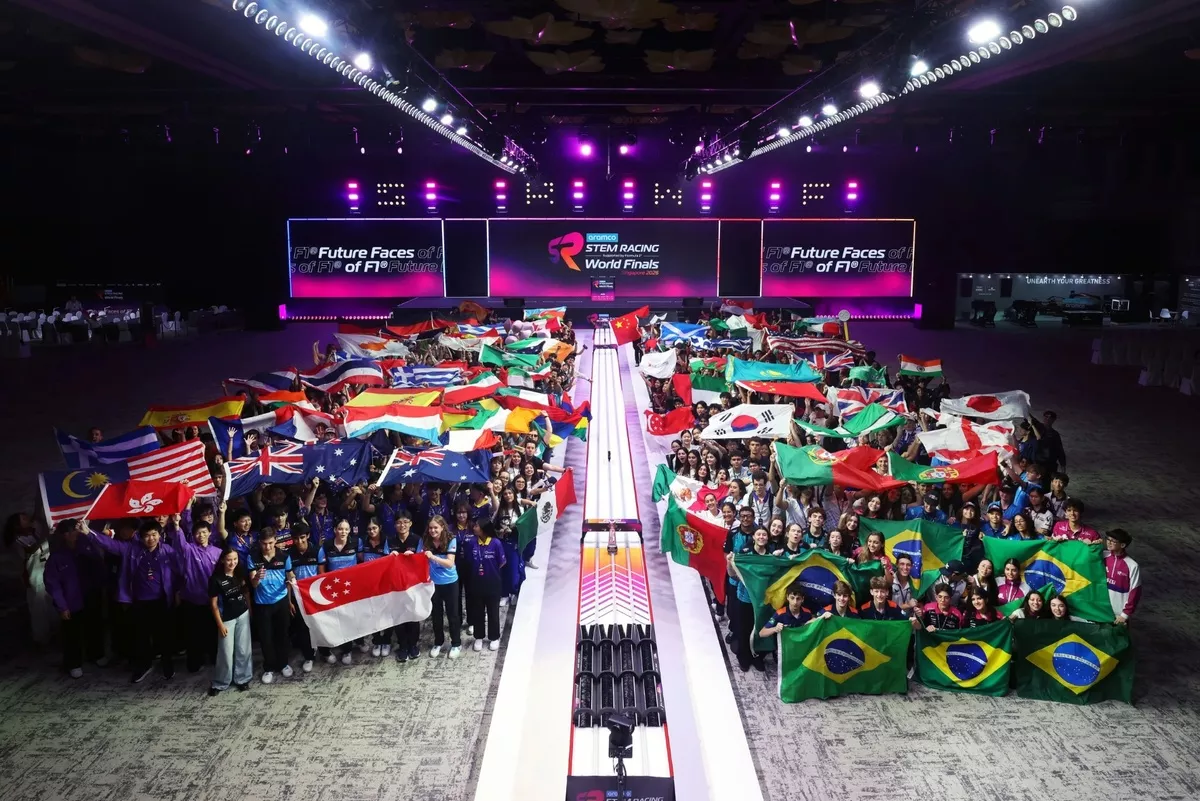
Inside the competition building F1’s future engineering talent

WEC Barcelona: Toyota scores dominant 1-2 to clinch manufacturers’ title
Subscribe and access Autosport.com with your ad-blocker.
From Formula 1 to MotoGP we report straight from the paddock because we love our sport, just like you. In order to keep delivering our expert journalism, our website uses advertising. Still, we want to give you the opportunity to enjoy an ad-free and tracker-free website and to continue using your adblocker.


Top Comments