


The ulterior motive behind Mercedes' F1 engineering talent stockpile
When talented Formula 1 engineers start to think about retiring or taking up other interests, it creates headaches for their current employers when rival teams come sniffing. This, as STUART CODLING explains, could answer what was behind the planned Mercedes engineering management reshuffle
Monopolising the talent pool is a virtually surefire way to ensure success in Formula 1. Until pretty recently, for instance, Mercedes had so many former technical directors from other teams on its books that it seemed to have one for every day of the week and another for Sunday best.
Aside from laying hands on sufficient coin of the realm to pay all those salaries, the challenge is how to manage that inevitable moment when they decide they want to leave – either for another team or to enjoy more time on the sofa, spending Sundays digesting Bridgerton or somesuch froth rather than performance data.
Long-time McLaren insiders remember what ensued when John Barnard signalled his intention to move to Ferrari: blazing rows, followed by Ron Dennis flying to Maranello to have it out with Enzo Ferrari personally. Ron thought nobody would be left to design his car, temporarily forgetting there was a whole team responsible for putting pen to paper.
Even today, while no one person is responsible for drawing every detail of the car, senior engineers with a vision of car concept and performance remain highly prized. That’s why, to flick back to the 1980s, Dennis tried to ‘get medieval’ with Ferrari, then poached the inventive and highly rated Gordon Murray from Brabham (parenthetically, authorship of the legendary MP4/4 remains the subject of a bunfight too steeped in angst to go into here).
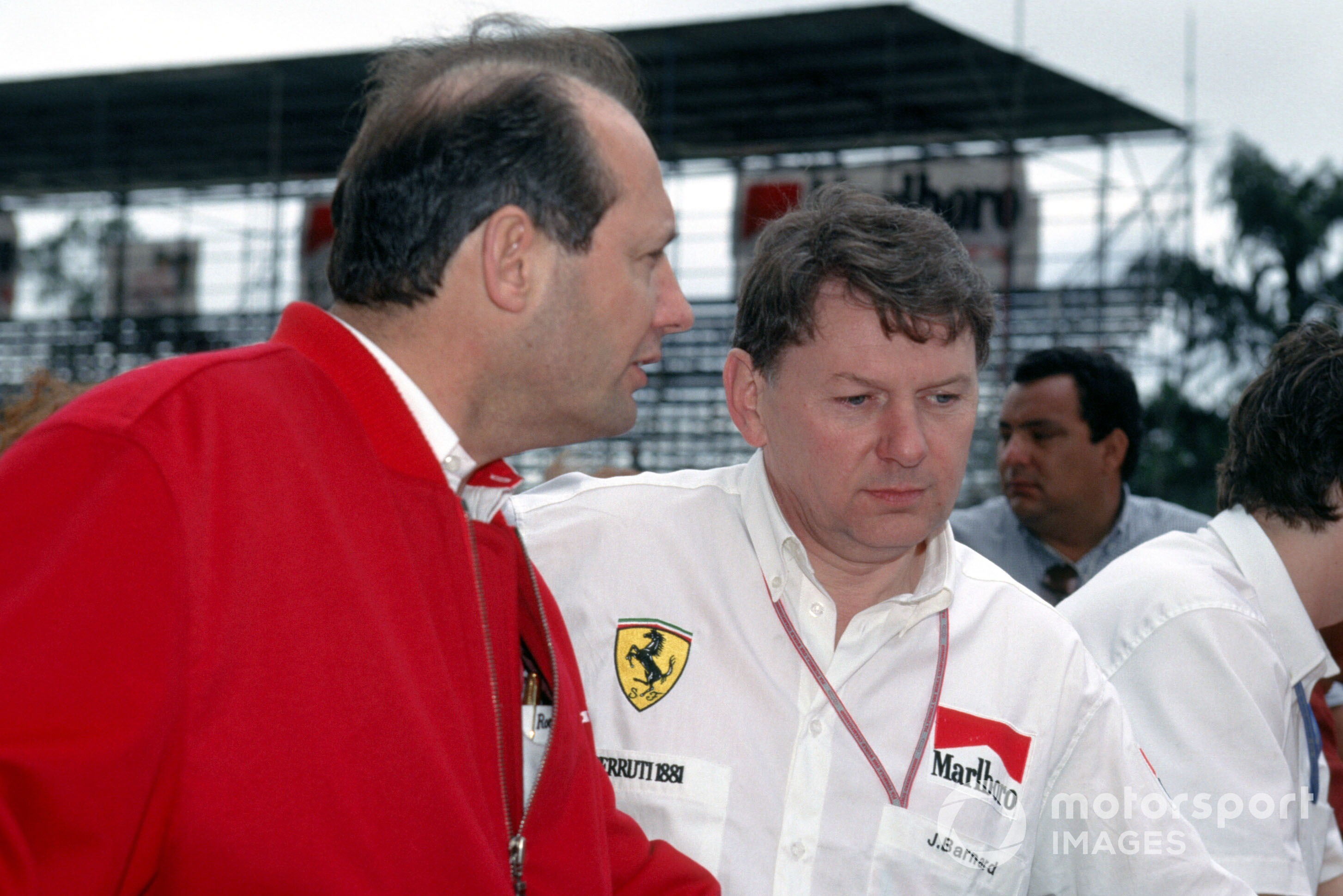
John Barnard and Ron Dennis, 1995 Brazilian Grand Prix
Photo by: Ercole Colombo/Motorsport Images
It’s also why, when Murray pronounced himself sick of F1’s ever tighter regulations, Ron threw him the F1 road car project – better to sink millions into that than let Murray ‘retire’ and be recruited by someone else. What was Murray doing between 1998, when the last F1 was built, and 2004, when he left McLaren? Not being involved in the design of any other team’s racing cars, that’s for sure. More recently, Red Bull has had to perform the same dance of the seven veils to keep Adrian Newey on board.
PLUS: The clues Hamilton’s F1 contract afterthought gives to his future
The concept of being ‘paid and displayed’ remains alive and well, it seems. A few weeks ago, Mercedes issued a press released detailing a new management structure in which technical director James Allison would move to a newly created chief technical officer role, with technology director Mike Elliott slotting in as technical director.
Essentially the chief technical officer role has been created by team principal Toto Wolff to keep Allison engaged as part of the organisation, rather than drifting into a retirement from which he might quickly become bored, as creative and driven people are wont to do
In the carefully crafted corporate communication, Allison said “people have a shelf life in senior roles in this sport”, and that it was “the right time for the organisation and myself” to step aside so the team would “benefit from the freshness” a new person might bring to the role.
Subsequent conversations have added more nuance, as Allison revealed that establishing an end point formed part of his last round of contract negotiations in 2019.
“I wanted to make sure I could be true to this team,” he said, “to make sure that I committed to being a technical director over a period where I could earn my salt but not to outstay my welcome, and to know when the right time to step away was. I would much rather that was done while I was still useful than becoming an old embarrassment…”

Andrew Shovlin, chief race engineer, Mercedes AMG, and James Allison, technical director, Mercedes AMG, on the pitwall
Photo by: Steve Etherington / Motorsport Images
Essentially the chief technical officer role has been created by team principal Toto Wolff to keep Allison engaged as part of the organisation, rather than drifting into a retirement from which he might quickly become bored, as creative and driven people are wont to do.
This Allison has tacitly acknowledged, saying, “I thought I would be stepping away to my sofa to cheer the team from the sidelines as a punter. Happily, Toto saw it a little differently.”
The new role will enable Allison to “focus on longer wavelength” stuff and not tread on Elliott’s toes. Who knows? In the next 15 years he might design the ultimate road car…
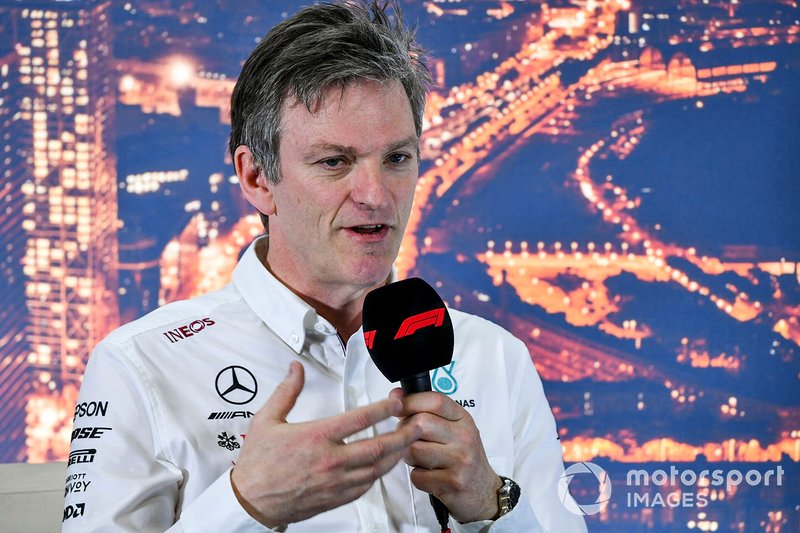
James Allison, technical director, Mercedes AMG in the press conference
Photo by: Mark Sutton / Motorsport Images

How Ratzenberger beat the odds to realise his cruelly short-lived F1 dream

F1 uncovered: A weekend behind the scenes with a chief mechanic

When McLaren was pipped by Red Bull in a modern F1 classic

The big opportunity Sainz’s Williams switch affords to F1’s latest centurion

Inside the science of F1 fuel

How F1’s plan for rotating races could look in practice

The early decisions that set Sauber’s rookie for success

How F1 media coverage has evolved in line with its subject

Why F1's Madring debut was a wasted opportunity

Bruising F1 2026 will not be the end for Russell - Wolff

Haas confident of getting 2027 F1 budget closer to cap with new partner talks

Top 10 Can-Am drivers
Subscribe and access Autosport.com with your ad-blocker.
From Formula 1 to MotoGP we report straight from the paddock because we love our sport, just like you. In order to keep delivering our expert journalism, our website uses advertising. Still, we want to give you the opportunity to enjoy an ad-free and tracker-free website and to continue using your adblocker.


Top Comments