


The trackside verdict on F1 2021 testing
There was a sense of urgency about Formula 1 pre-season testing, with teams permitted just three days of running to get acquainted with their 2021 cars. Away from confusing laptime data, the view from trackside tells a clear story

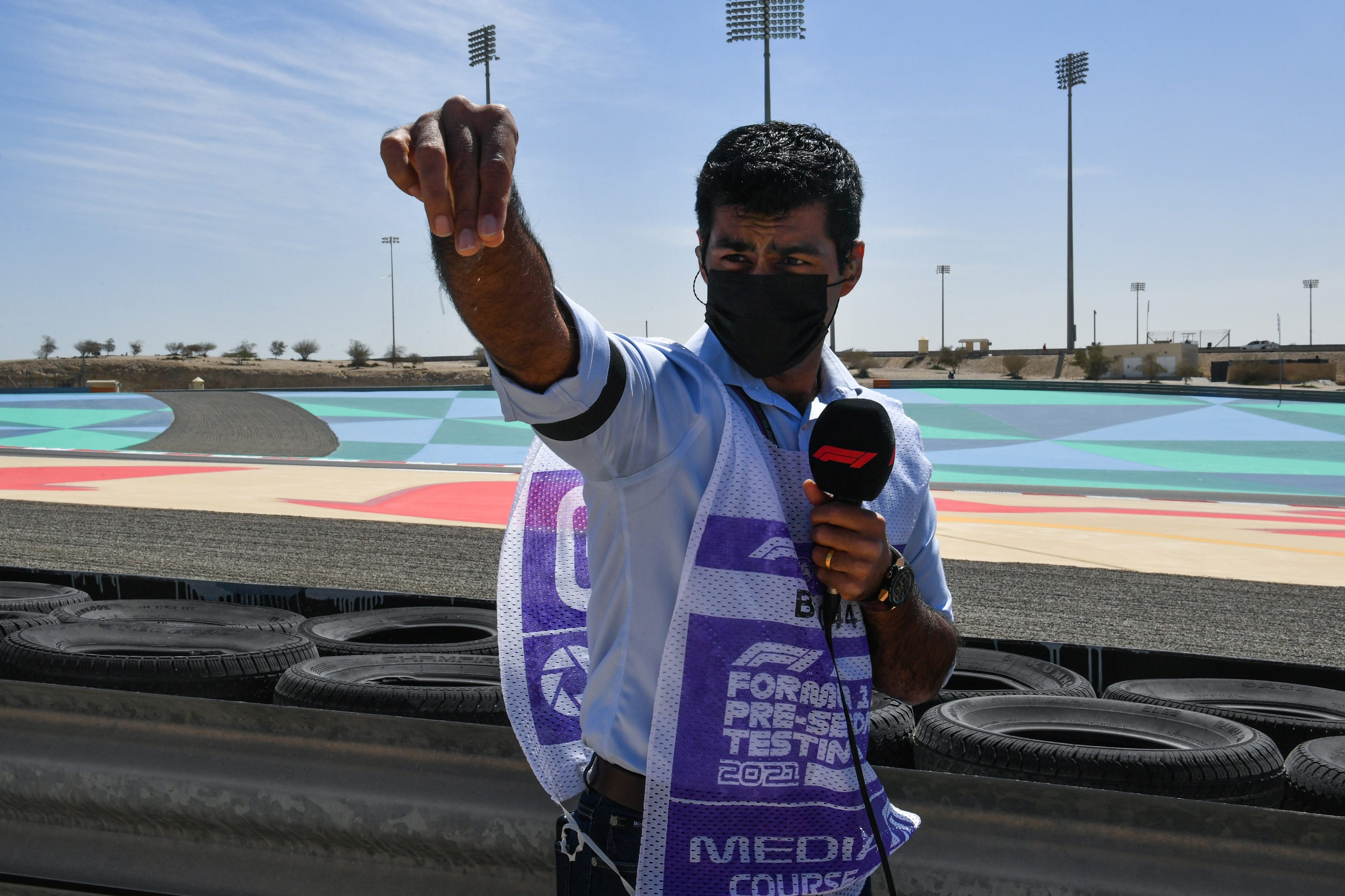
For the past few years, I’ve been heading to Barcelona to watch pre-season testing and it’s something I always enjoy. After a winter of no Formula 1, it’s nice to not only go and watch cars at the side of the track but also spend time with people in the teams as we all play the usual guessing game of ‘who’s hot and who’s not’.
Normally of course we’re all freezing in the paddock in Barcelona while having these conversations, so it was nice to be in the sunshine of Bahrain for a change. The circuits are quite different in terms of layout – Barcelona has more long radius corners with high speeds, therefore putting a larger emphasis on aerodynamics. The Sakhir circuit is traction limited with some big braking zones, although it does have some high-speed corners in the middle sector.
In Spain, the mornings until about 1100 are a bit of a write off because the track temperature is too cold for the teams to do any meaningful running. After that, however, the conditions tend to be pretty consistent. Conversely in Bahrain, the track temperature earlier in the day was nearly 20 degrees more than at the end of the day, which posed a different problem in terms of comparisons. Running in the heat seemed to be about 1.5 seconds slower than later in the day. Add in the strong winds and sandstorm we had on the opening day and we get an extra layer of complexity when trying to work out the pecking order.
Karun Chandhok, Bahrain F1 test 2021
Photo by: Mark Sutton/Motorsport Images
Changes in the fight at the front
For the first time in this V6 hybrid era that began in 2014, Red Bull appears to have hit the ground running as a realistic challenger to Mercedes for the opening race. I think the whole sport would love to see the two teams slugging it out in a title battle and, for that to happen, Red Bull and Max Verstappen needed to build on their run of form towards the end of 2020. The early signs are that they have.
PLUS: How Red Bull won F1 2021 pre-season testing
The RB16B has quite a radical change to the rear suspension to help with the airflow around the rear of the car while maintaining the high-rake concept. From trackside, it appeared that Max was able to attack the corner entries in the medium and slow-speed corners, where he had the confidence to brake and turn with plenty of aggression. The rear of the car seemed to have the stability that it lacked last year.
This of course will be helpful for Sergio Perez as well. As a new driver coming into the team, he would want a car that’s confidence inspiring and not edgy to drive – something his two predecessors in the second Red Bull seat didn’t have the luxury of. The team also did a lot of mileage and seemed to get through its programmes without a hitch.
Honda also talked about the fact it’s not backing off in its final year of F1 (for now) and seems to have made a decent step, although that’s something that all four engine manufacturers are claiming, so it may be a net zero across the board.
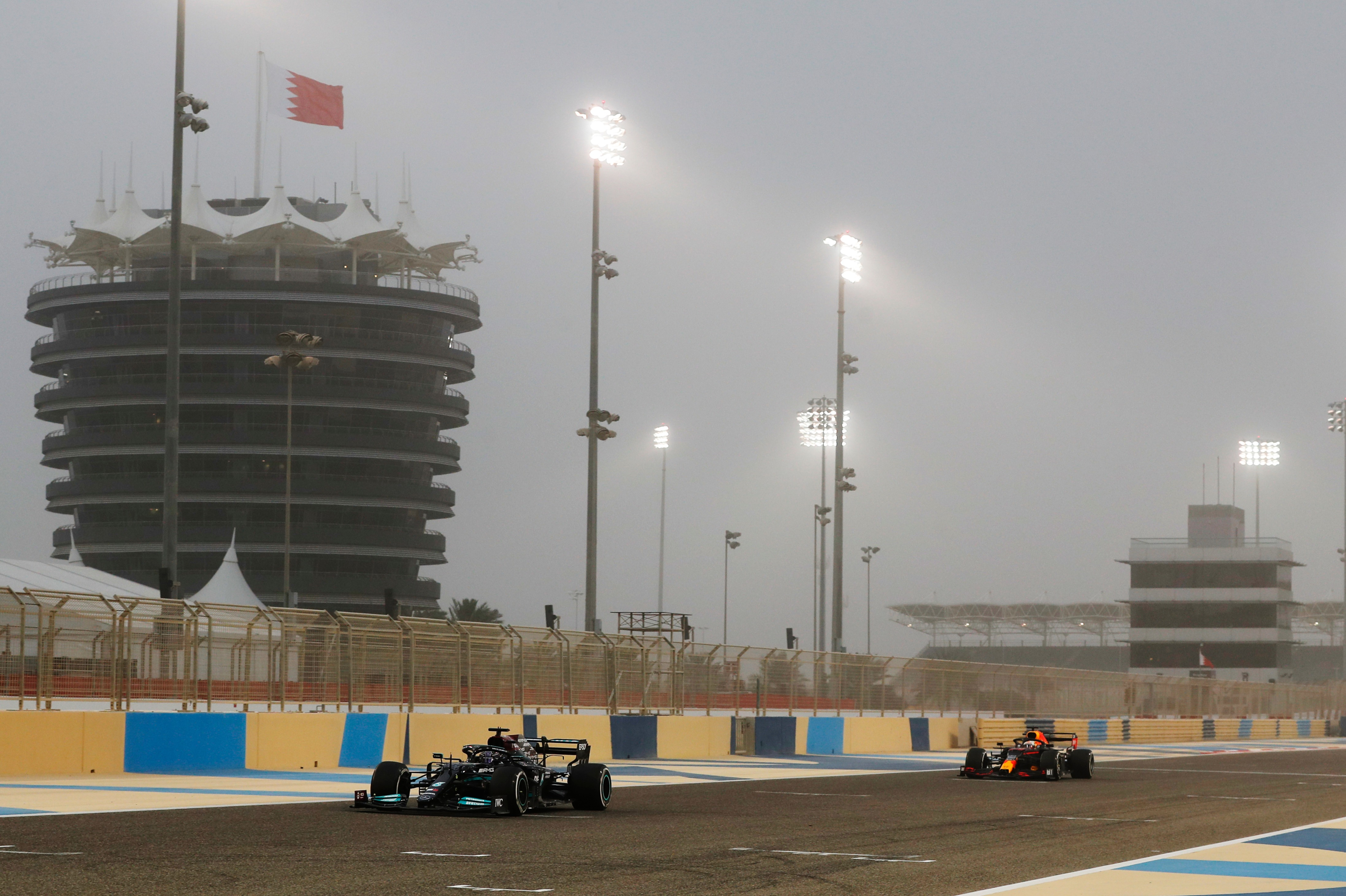
At lunchtime on day two both Red Bull and Mercedes personnel joked with me that they seemed to have swapped cars! The Red Bull was reliable and stable while the Mercedes seemed to lack rear-end stability on corner entry
Mercedes seemed to have an uncharacteristically shaky start to its 2021 campaign. We’ve got so used to the cars being wheeled out of the truck and covering race distances with ease and pace. So when it had a gearbox issue within a few laps of the first morning, that caught everyone by surprise. Later when the car did get running, it really didn’t look good out on track.
At lunchtime on day two both Red Bull and Mercedes personnel joked with me that they seemed to have swapped cars! The Red Bull was reliable and stable while the Mercedes seemed to lack rear-end stability on corner entry. By the time we got to the second evening, however, the car started to show some indications of being the fast and solid Mercedes again. Clearly the team needs to work a bit harder than usual to find its sweet spot but the Brackley team is too good an operation to be held down for too long.
By the morning of day three, Valtteri Bottas looked like he was back driving the Mercedes of recent years. When I was watching at the entry of Turn 13, where Lewis Hamilton actually spun earlier in the test, the Finn was able to carry a huge amount of entry speed, with the rear of the car fairly well planted. He was mainly doing heavy fuelled, long runs at that point. Lewis drove in the faster evening session but on the shorter performance runs with the soft tyres the car didn’t look as good as the Red Bull and Mercedes was unable to extract the peak performance that you would have expected to see.
Mercedes is heading in the right direction and I have no doubts that it will be battling for the championship all the way through. But the knock-on effect of not starting half a second ahead of the opposition like it did last year is that it will now be in a development war with Red Bull, taking potential brain power and resources away from the big rule change coming in 2022. Under the new cost cap model, this will be a big juggling act for both teams.
Lewis Hamilton, Max Verstappen 2021 Bahrain F1 test
Photo by: Charles Coates/Motorsport Images
Midfield order still confusing
The midfield battle has been really hard to read, as usual. AlphaTauri and McLaren seemed to be slightly ahead of Alpine, Aston Martin and Ferrari at the test but I think this order could come down to which cars suit a particular track, and also which drivers are able to extract more performance out of their cars in qualifying.
PLUS: 10 things we learned from F1 testing 2021
The AlphaTauri looked like a very stable and driver-friendly car all throughout the test. Right from the first morning, both drivers could hustle the AT02 and push hard despite the dusty track and strong winds. Last year AlphaTauri had a very good midfield car but it took Daniil Kvyat two-thirds of a season to get up to match Pierre Gasly’s pace, which cost the team points.
The squad is very aware that it has a young rookie and therefore needs to have a car with a wider operating window, rather than chase a higher peak downforce that could make it edgier to drive. It certainly seems to have done that when you watch trackside.
Early in the test, Yuki Tsunoda wasn’t always on the same line through Turns 6 and 7 but the car seemed forgiving enough even in the crosswinds for him to carry decent speed through the apex. On the final day, the team clearly wanted to practice some back-to-back runs on new tyres, to prepare for qualifying, and he did a good job, posting the second fastest time of the test. There were a few lock-ups and scruffy bits as you would expect from a rookie, but on the whole I think that the team and Honda will be very pleased with how he’s adapted to life in F1 so far.
McLaren seems to be in very good shape and will be a real contender for third best team again. The mood in the camp seems buoyant, with good reliability from the renewed Mercedes partnership all through the test. The car looked very stable over the bumps and quite benign in the crosswinds on the opening two days. The drivers looked like they could push when they wanted to on the softer tyres, but also get a good and consistent balance in the whole range of temperatures.
Insight: How McLaren's "baby steps" could pay off in 2021
When it comes to one-lap pace, based on everyone’s 2020 form, I do think McLaren has probably got the best driver pairing of the midfield teams. That could prove crucial in this battle, where a few tenths could be the difference between being fifth or 14th on the grid. Having drivers that can deliver those special qualifying laps could be more valuable than some performance upgrades given how tight the battle is.
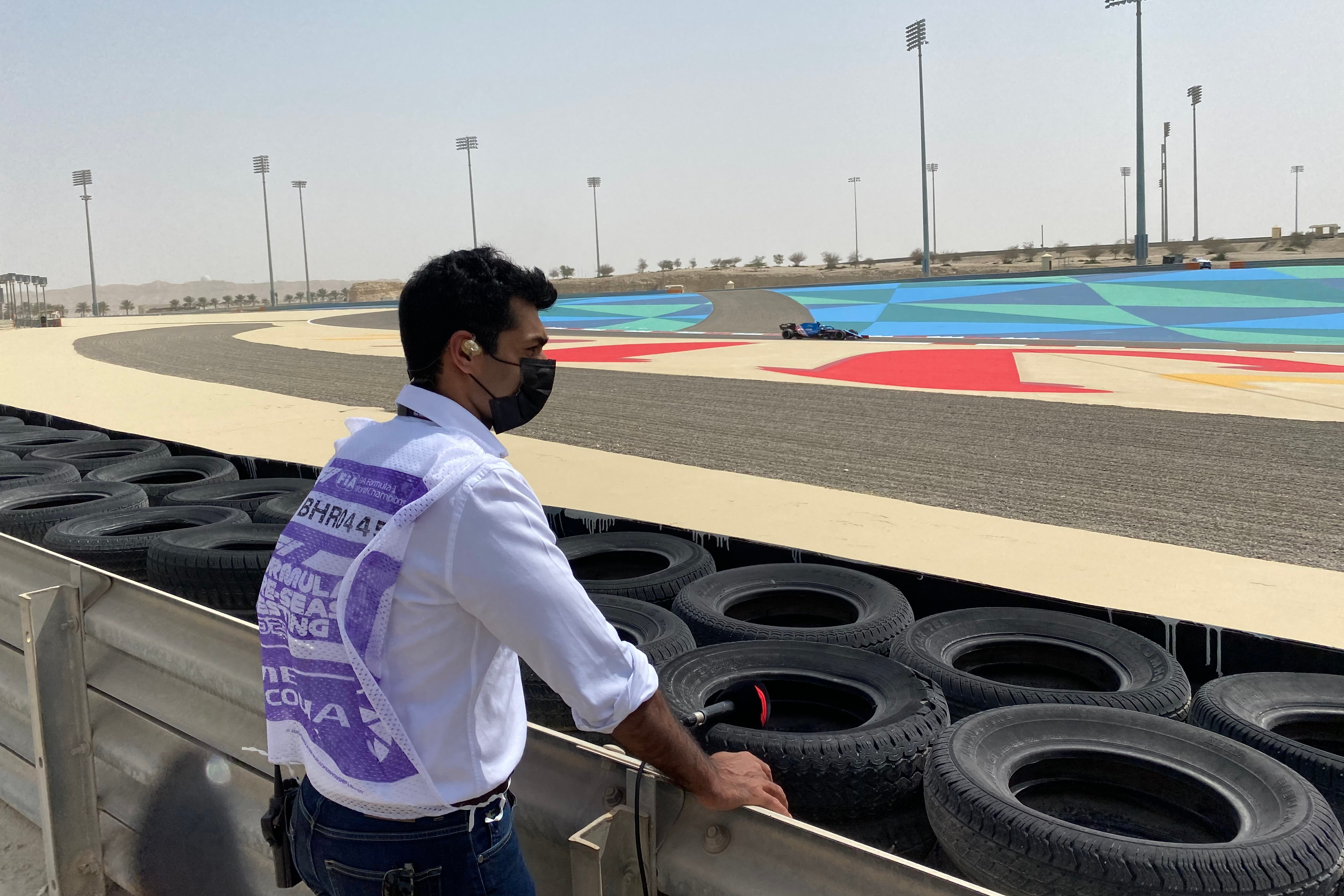
Early on in the test, the Alpine looked very good on the kerbs in Turns 6 and 7 and also on corner entry into the slow-speed corners such as Turns 8 and 10 (a bit like the Renault last year). As the test wore on, the track gripped up of course and everyone’s pace improved but Alpine seemed to slip marginally behind McLaren and AlphaTauri. It seemed to have a touch more mid-corner understeer in the medium and fast corners than the other two, costing the drivers a bit of time when it came to releasing the steering lock and picking up the throttle.
When I was watching on the first day with the high crosswinds, Esteban Ocon seemed to have more snappy moments when changing direction in the middle sector across the wind than other cars, which could suggest it’s more wind sensitive, but it could also have been because it was early in the test and the car wasn’t yet dialled in.
Karun Chandhok F1 testing 2021
Photo by: Karun Chandhok
Aston Martin was the team that most people seemed to struggle to gauge. Before a single car ran on track, I was pretty sure that it was going to be the third best team. It may still be in that position come the race weekend, but the test certainly didn’t go as smoothly as it would have liked.
Lance Stroll seemed to have more understeer in the car than the McLaren or AlphaTauri that were running around at the same time on the same tyres on day three. For example, his time off the throttle at Turn 13 waiting for the front end to bite was audibly longer than Lando Norris by a car length or two, and that trend seemed to continue at the other corners I got to during the final morning.
Sebastian Vettel managed the least number of laps across the three days of testing out of all the race drivers, which is not what he needed as he a) needs to rebuild his confidence and b) learn all about his new team and car. Andy Green and Tom McCullough lead a very good trackside engineering team, which will be working very hard to help Seb work through this process, but the first few races could be tricky.
Out on track neither Carlos Sainz Jr nor Charles Leclerc looked like they ever had a happy balance in the car. The ride quality over the bumps didn’t look as good as the AlphaTauri or McLaren
There are high expectations for the Silverstone-based team with the Aston Martin takeover and the influx of an impressive portfolio of sponsors. The opportunity to take the 2020 Mercedes rear end without wasting tokens should be a real benefit and I’m really intrigued to see where the team is when we get to qualifying for the opening GP.
PLUS: Why Aston Martin's "limitless" F1 ambitions aren't misplaced
One of the biggest talking points coming into this season was whether we were going to see a Ferrari recovery in 2021. The team was talking up the dyno figures from its new power unit last year but the first real evidence we were going to get of the recovery was from testing. The early signs don’t suggest that it is going to be back challenging the Mercedes and Red Bull, which is where a team as big and well-funded as Ferrari should be.
Out on track neither Carlos Sainz Jr nor Charles Leclerc looked like they ever had a happy balance in the car. The ride quality over the bumps didn’t look as good as the AlphaTauri or McLaren. But the bigger question revolves around the power they can produce when they turn it all up for qualifying and the race. If Ferrari is going to be at the front of the midfield pack then it needs to have outdeveloped its rivals in the power game. Only time will tell if that’s the case.

Charles Leclerc, Ferrari SF21
Photo by: Zak Mauger / Motorsport Images
The battle at the back
The Alfa Romeo looked like a very balanced car whenever I watched it on track. It obviously lacked the outright speed of the AlphaTauri or McLaren but both drivers looked like they had a very consistent car with which they could metronomically thrash out long runs. The team felt that the new Ferrari power unit has given it a boost, which will be enough to get ahead of Williams again, something it didn’t always manage last year.
The new era of Williams properly starts this season but to a large extent it’s still a transitional year. Dorilton Capital has done well thus far to invest in the infrastructure back at base but, with the lead times involved in seeing results in F1, it will only see the fruits of that investment from 2022. The race drivers had to give up a day to Roy Nissany, which wasn’t ideal for them, considering the already limited opportunities of track time, but at least they both know the team well from last year and don’t need to get used to a whole new world like Vettel or Daniel Ricciardo.
Haas has been very open about the fact that 2021 isn’t a year it’s going to focus resources on, with the big regulation change coming for 2022. The two rookie drivers will have a lot to learn and good solid people such as chief race engineer Ayao Komatsu will be good for them. The critical thing will be to stay out of trouble on the opening laps of the races and be there to pick up the low hanging fruit on days when we have an unusual race such as at Monza or Istanbul last year.
Insight: Why Haas is prepared to sacrifice its 2021 F1 season
Guesstimating the order
If I had to take a guess at a pecking order from that test, I would say Red Bull and Mercedes on top, ahead of AlphaTauri and McLaren, closely followed by Aston Martin, Alpine and Ferrari, with Alfa Romeo, Williams and Haas a step behind them.
The teams have two weeks to analyse the data and tweak their cars before the opening GP so this will probably change but, either way, I think we’re in for a closer championship than we’ve had in recent times!

Valtteri Bottas, Mercedes W12
Photo by: Zak Mauger / Motorsport Images

Karun Chandhok's 10 big F1 questions of 2025

Karun Chandhok's Indy 500 adventure and why every fan should experience it

Karun Chandhok's 10 big F1 questions of 2024

The driving style secrets of F1's current stars

Karun Chandhok's 10 big questions facing F1 2023

Karun Chandhok's 10 big questions facing F1 2022

Chandhok: Why charming F1 boss Williams will be dearly missed

Driving the F1 icon that launched Schumacher's career

F1 Bahrain GP in Malaysia: Follow qualifying at Sepang with live timing

MotoGP Japanese GP: Marquez defeats Moreira for sprint victory

F1 Bahrain GP in Malaysia: Antonelli recovers from tough Friday to top FP3

LIVE: F1 Bahrain GP in Malaysia updates - FP3
Subscribe and access Autosport.com with your ad-blocker.
From Formula 1 to MotoGP we report straight from the paddock because we love our sport, just like you. In order to keep delivering our expert journalism, our website uses advertising. Still, we want to give you the opportunity to enjoy an ad-free and tracker-free website and to continue using your adblocker.


Top Comments