


The potential benefits of losing the F1 constructors' title
As the battle continues to rage over the F1 2021 drivers' championship, teams up and down the grid are turning their attentions to the prize money attributed to each position in the constructors' standings. But F1's sliding scale rules governing windtunnel and CFD use will soften the blow for those who miss out on the top places

Two rounds, eight points. 2021’s thrilling Formula 1 season has so far spanned 18 countries and around 5800 kilometres of racing across nine months of heated competition – and just one hypothetical sixth-place finish separates Max Verstappen and Lewis Hamilton with two races remaining.
Whatever happens at the Jeddah and Yas Marina circuits, this season will live long in the memory as one of F1’s greatest title fights. It’ll also be up there as one of the most tempestuous title battles, one largely fought by the F1 equivalents of two football dads hurling abuse at each other in between barking orders from the touchline to their children. But we’re still living through history.
Of course, all of the attention is on the drivers’ title. Verstappen and Hamilton are the two box-office stars trying to compete for every point on offer, hopefully at their rival’s expense. Social media is flooded with passionate conversations comparing the two, as the championship-battling duo has block-booked the column inches with the endeavour of an over-eager holiday maker draping their towel on the sun lounger at 5:30 in the morning.
But although the drivers’ championship has the prestige, it doesn’t really count for anything of material value. The main bulk of prize money and associated benefits are tied up with the constructors’ title, which not only changes the dynamic of the drivers’ title battle – as Mercedes and Red Bull are only separated by five points – but also gives the teams further down the grid something to battle over.
After a miserable triple header, McLaren has been effectively seen off by a resurgent Ferrari in the battle over third, with 39.5 points now between the two outfits. To overcome that margin assuming no mechanical issues, Lando Norris and Daniel Ricciardo would have to go and win at least one of the final two races, such is the scale of its deficit.
Alpine’s battle with AlphaTauri over fifth is tighter, with the 25 points that the Anglo-French squad scored in Qatar now the margin having gone to Losail equal on points. There’s a chance that Alfa Romeo could pip Williams to the post in the quest for eighth overall, with a 12-point gap between them. However, points have been in scarce supply for both teams.
Depending on where each team finishes, there’s a real uptick in prize money the higher a team finishes; a swing of around $20-25 million provides something of a variable on a team’s balance sheets. Even though the cost cap is in play, that prize money can be the difference between making that cap and just falling short. At least Haas and Aston Martin, on course for tenth and seventh respectively, effectively have their budgets set for next year.

Gasly has taken on Alpine almost single-handedly in the fight for fifth in the constructors' standings
Photo by: Charles Coates / Motorsport Images
But if a team loses out in their battle for a higher championship placing, it’s not all doom and gloom. If either Red Bull or Mercedes fails to snare the constructors’ crown, the loss of prize money will be a considerable disappointment – but that can be neatly offset by a perk that the designers get access to: extra time in the windtunnel.
The all-new regulations for 2022 effectively hand the teams a soft reset, in that there will be minimal carryover from this year’s aerodynamic research to next year’s cars. Venturi tunnels replace the flat floors that have been in place to some degree since 1983, and the gratuitously complex bargeboard area will be thankfully discarded – hopefully never to be seen again. The front and rear wings will be different too; it’s a complete overhaul from top to bottom, and each team will have to get their designs right.
The FIA’s sporting regulations dictate how much time each team gets relative to their constructors’ placing, split into “restricted windtunnel testing” and “restricted CFD” (RCFD). Each position is then allocated a percentage, and the team finishing in that position receives the corresponding percentage of the base limit to use
As ever with F1, the design doesn’t just stop there; engineers are forever tasked with developing their solutions to chase performance, and innovations from other teams that yield strong gains are naturally ripe to be copied. The teams are currently designing in the dark and won’t be able to gauge what the best solutions are until the covers come off in next year’s preamble.
Having extra time available to spend in the windtunnel or on CFD runs gives a team more flexibility when it comes to developing the car next year. Although missing out on a shot at glory and a greater prize pool this year will sting, more simulation time is enough to sugar the pill.
The FIA’s sporting regulations dictate how much time each team gets relative to their constructors’ placing, split into “restricted windtunnel testing” (referred to as RWTT, because who doesn’t love a good acronym?) and “restricted CFD” (RCFD). Each position is then allocated a percentage, and the team finishing in that position receives the corresponding percentage of the base limit to use. Make sense? No? Okay, I promise it will in a minute.
The windtunnel limits are easier to pick through. The base figures are as such; you get 320 windtunnel runs available per aerodynamic testing period (ATP, but not the tennis ranking system) There’s six ATPs in a season, three between 1 January and 30 June, and the other three from 1 July to 31 December.
Within one ATP, the base restrictions are 320 windtunnel runs, 80 hours of wind-on time (defined as when the air moves more than 15m/s), with teams allowed to spend a total of 400 hours within the windtunnel.
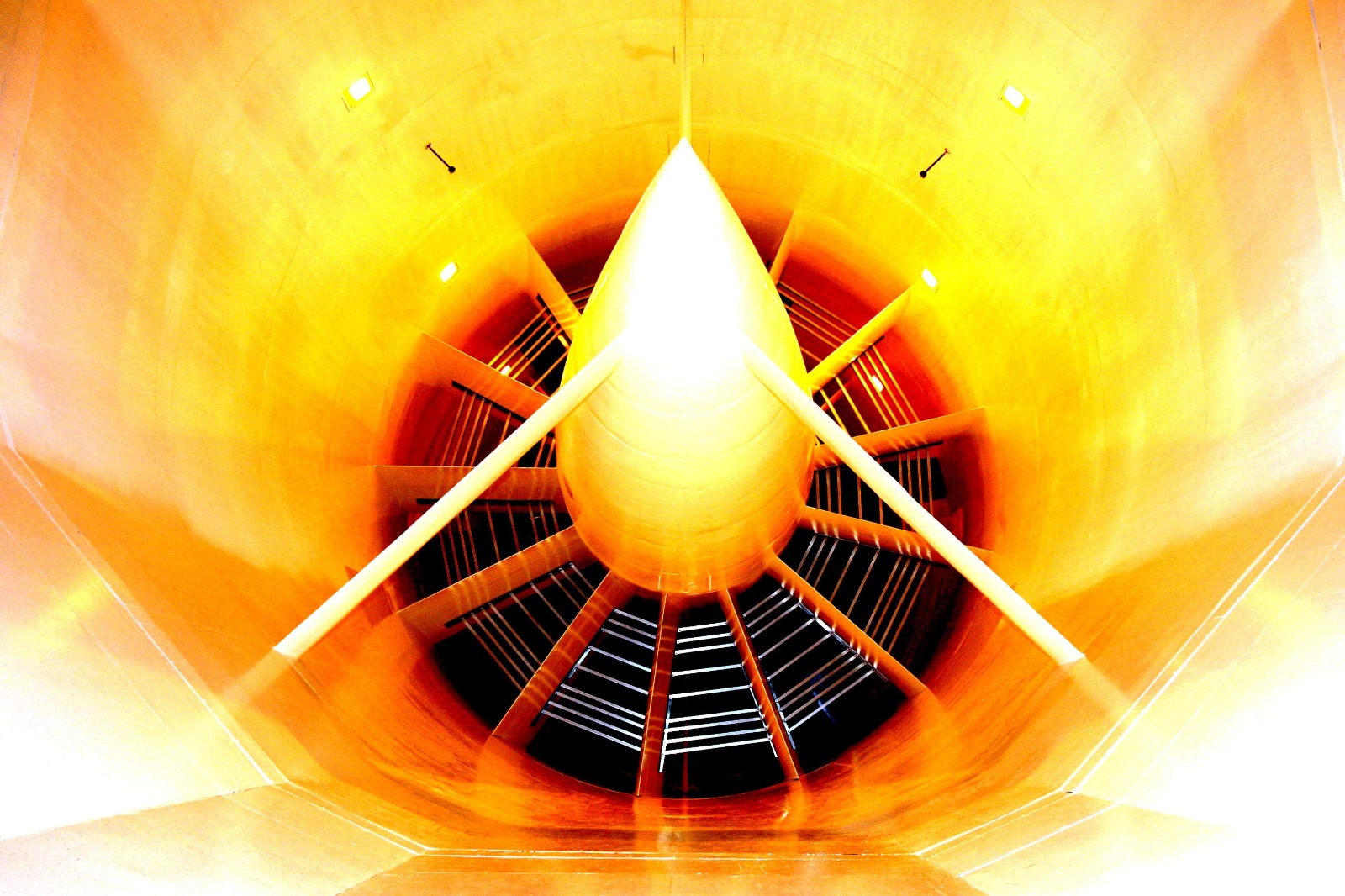
Windtunnel use will be restricted as F1 moves towards a goal of dropping them altogether by 2030
Photo by: Red Bull
Then, you apply the percentage values depending on where each team finishes. Finishing first in the constructors’ standings gives you a multiplier of 70%, meaning a team’s time in the windtunnel is handicapped, and finishing 10th comes with a 115% multiplier, meaning they get more time available. Thus, the windtunnel allocations look like this:
|
Championship |
Base |
1 |
2 |
3 |
4 |
5 |
6 |
7 |
8 |
9 |
10 |
|
Percentage (%) |
100 |
70 |
75 |
80 |
85 |
90 |
95 |
100 |
105 |
110 |
115 |
|
Runs (#) |
320 |
224 |
240 |
256 |
272 |
288 |
304 |
320 |
336 |
352 |
368 |
|
Wind-on time (hours) |
80 |
56 |
60 |
64 |
68 |
72 |
76 |
80 |
84 |
88 |
92 |
| Occupancy time (hours) |
400 |
280 |
300 |
320 |
340 |
360 |
380 |
400 |
420 |
440 |
460 |
Based on the 2021 standings following Qatar, Haas will receive 60 more hours of overall time in the windtunnel, with 48 extra runs per ATP and 12 extra wind-on hours. Overall, it’s not a night-and-day advantage, but it’s certainly enough to give a team more options during their visits.
The CFD rules are more complex, because governing a virtual space is remarkably more difficult than physically restricting windtunnel time. Teams are allowed to make a certain quantity of new models for a CFD simulation, and even the slightest change to the overall shape of an existing model counts as a new one. Changing pre-existing elements such as wing angle, car position (for example, in yaw or roll) and anything that does not physically change the shape of the car doesn’t eat into the allowance available. These independent models are referred to as RATGs (restricted aero testing geometries).
There’s also an allowance on the level of computation used within the simulations, determined from the product of the peak processor frequency (in GHz), cores used and the in-simulation seconds to solve. That computation has been given the unit MAUh (Mega Allocation Unit hours, if you want something that sounds pseudo-sciency).
If you want to know what that actually means, it’s this: the process of a CFD simulation basically relies on solving tons of equations, and to do that quickly you need more processing power. So if you’ve got lots of that, your peak processor frequency and core values will be high, but the time offset will be low – and vice versa. Like crypto-mining, it’s perhaps not massively environmentally friendly - but nor is powering a giant turbine to make wind...
Regardless, the share in CFD resources looks like this:
|
Championship |
Base |
1 |
2 |
3 |
4 |
5 |
6 |
7 |
8 |
9 |
10 |
|
Percentage (%) |
100 |
70 |
75 |
80 |
85 |
90 |
95 |
100 |
105 |
110 |
115 |
|
3D new RATGs (#) |
2000 |
1400 |
1500 |
1600 |
1700 |
1800 |
1900 |
2000 |
2100 |
2200 |
2300 |
|
Compute used (MAUh) |
6 |
4.2 |
4.5 |
4.8 |
5.1 |
5.4 |
5.7 |
6 |
6.3 |
6.6 |
6.9 |
Using the same outline as before, Mercedes would currently be able to use 900 fewer new models in CFD during a time period compared to Haas – meaning that the team would have to employ fewer deductive steps to iterate their simulations. That would coincide with the reduced computation available.

Mercedes and Haas are set to be at either end of the sliding scales
Photo by: Mark Sutton / Motorsport Images
Within those aero testing rules, there’s a very clear disadvantage to finishing higher-up, part of F1’s push to mix up the field and increase the closeness of competition. But the teams aren’t locked into those positions all season long; after the third ATP, the teams are allocated their times and values based on the mid-season 2022 constructors’ standings.
If a team turns up in 2022 and proves immediately to be the class of the field, their allowances will be cut down which will give the other teams a chance to catch up. This should alleviate any concerns that a team will simply turn up and dominate the whole season, as the rest of the field will have the opportunity to throw more resources at reducing the deficit.
We’re not for one minute suggesting that any teams will willingly take a hit on this season and rely on the revised aero testing rules to catch up. That's simply not in their nature. But one team will lose out in each battle for position and, when the points are all totted up at the end of the season, the loser will have a chance for redemption.
Both Mercedes and Red Bull would be hugely upset to miss out on winning the 2021 title honours. However, each team will have a crumb of comfort to gnaw on once this year’s curtain closes: there’s always next year.
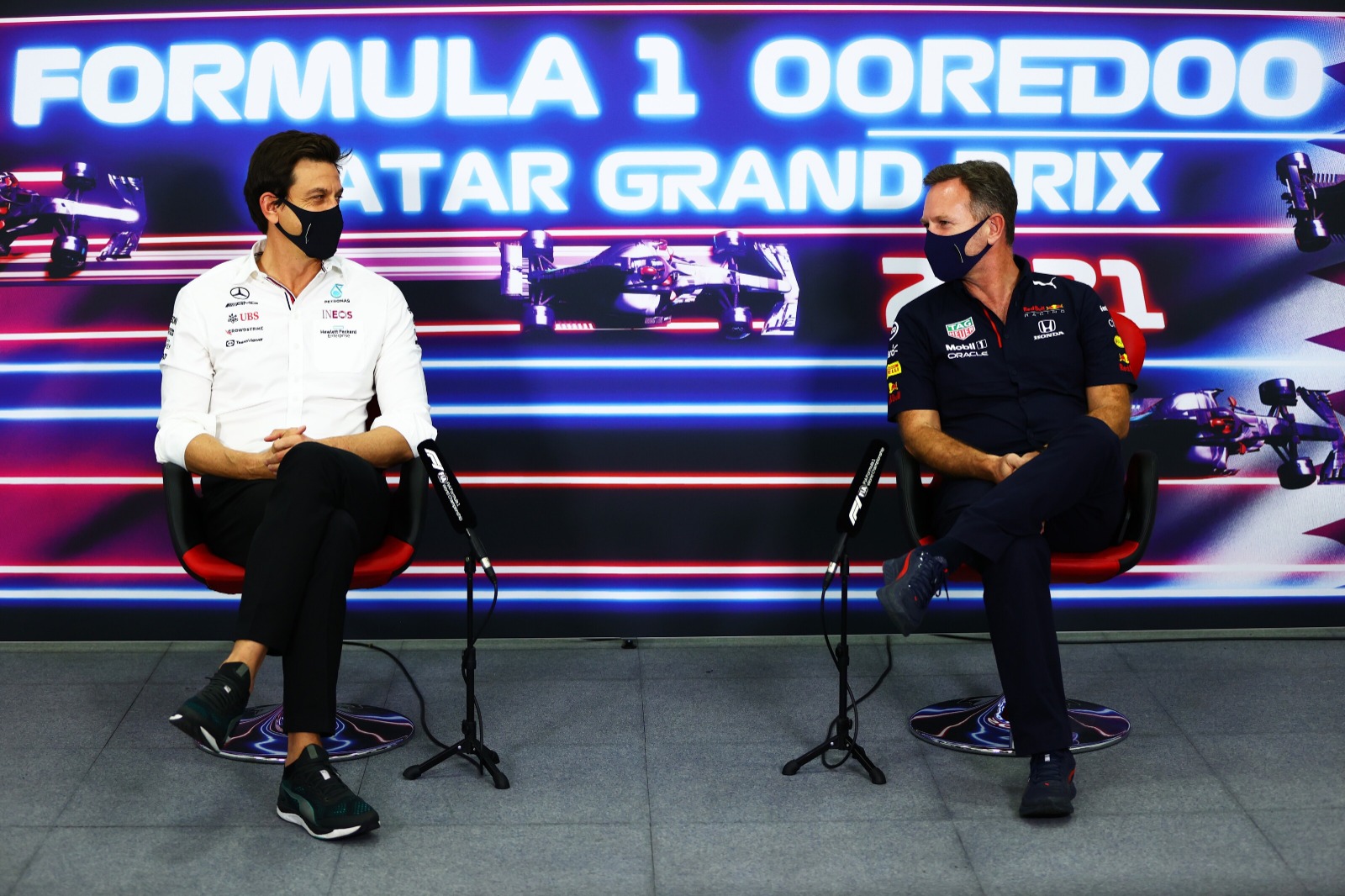
Will prospect of a small advantage next year for Mercedes or Red Bull be enough to make up for the prestige blow of losing out to their bitter rival?
Photo by: Red Bull


Leclerc and Hamilton's differing theories behind Ferrari's Austin qualifying disappointment

What we learned from Friday practice at the 2026 United States GP

The reasons behind Ferrari's US GP upgrades

Mission control: Inside the FIA and F1's remote operations centre

FIA expects F1 races in Qatar and Abu Dhabi to run as planned

Why Piastri has struggled to show his best with this year's McLaren MCL40

Lights, Camara, action: How Haas picked F1's latest rookie for 2027

Horner's inside story of how Red Bull built its own F1 engine

Supercars Gold Coast: Feeney converts Race 2 pole to win after Saturday defeat

MotoGP's final Australian GP at Phillip Island cancelled due to poor weather

Antonelli pole shows Mercedes is 'finally seeing the results' of car upgrades
Leclerc and Hamilton's differing theories behind Ferrari's Austin qualifying disappointment
Subscribe and access Autosport.com with your ad-blocker.
From Formula 1 to MotoGP we report straight from the paddock because we love our sport, just like you. In order to keep delivering our expert journalism, our website uses advertising. Still, we want to give you the opportunity to enjoy an ad-free and tracker-free website and to continue using your adblocker.


Top Comments