


The crucial improvements Russell needs to reproduce to soothe Styrian GP DNF "hurt"
Having been cruelly denied a long-awaited first points finish as a Williams driver at the Styrian GP, George Russell gets another crack at it this weekend at the Red Bull Ring. While his impressive pace remains unquestioned, a few other vital gains shown at recent races will be needed again to finally deliver

“We’ll get those points next week.”
George Russell made sure to console his Williams Formula 1 crew as he climbed out of his car 35 laps too early at last weekend’s Styrian Grand Prix.
It had been a fine weekend overall for both the British driver and his team, backing up what Russell had called his “best ever” race at Williams with his 12th place finish a week earlier at Paul Ricard.
He’d maintained his perfect Q2 progression record in 2021 – only missing a spot in Q3 by 0.008 seconds – then been boosted into the top 10 on the grid by Yuki Tsunoda’s penalty for impeding Valtteri Bottas. In the race, he surfed the chaos caused by Charles Leclerc clipping Pierre Gasly, benefitting significantly to run solidly in eighth behind Fernando Alonso. Daniel Ricciardo’s threat suddenly disappeared, and Russell was holding his own.
Then came the call after 16 laps: “We need to convert to Plan B – for reliability.”
Russell was initially “a bit confused” about what that would mean strategically, but it became clear when he pitted at the end of lap 25 of the scheduled 71 – not overly early, but definitely ahead of expectations given his medium starting tyres.
Williams had been forced to call its driver in to top up the pneumatic pressure F1 engines need to run their air valve systems, and it knew it would need to bring him in a second time before the end. Ultimately, that was required after just one lap more and then Williams had to retire the “gutted” Russell a short while later.
He reckoned he “would have definitely finished ahead of Alonso”, who came home ninth, but how does that stack up considering how the race played out in reality?

Fernando Alonso, Alpine A521, George Russell, Williams FW43B, and Daniel Ricciardo, McLaren MCL35M
Photo by: Charles Coates / Motorsport Images
Well, qualifying 11th was far from the worst thing that could’ve happened – even if a first Q3 berth since Monza 2018 would’ve been another nice morale booster for the resurgent Williams squad. It allowed Russell to have free choice to start on the harder compounds and avoid the softs the Q3 shootout runners would be forced to take (other than pole and race winner Max Verstappen, Lewis Hamilton and Valtteri Bottas, who all inevitably shunned the red-walled rubber in Q2).
This meant Russell was set to “drop the hammer” when the soft tyre runners pitted and try the overcut strategy, which worked a treat for Carlos Sainz Jr – the Ferrari rising from 12th on the grid to sixth at the flag (aided somewhat by his team-mate’s clumsiness) and ruing getting lapped and stuck behind Hamilton, without which Sainz felt he had a remote shot of catching former team-mate Lando Norris in fifth.
Despite the Ferrari’s remaining limitations, the FW43B is still a slower package overall, but with that strategy and the race pace Russell had demonstrated in FP2 – which put Williams only slower than Mercedes and Red Bull on the hards and over a longer stint than both (albeit with the benefit of conducting that run on a brand-new set of that compound) – there’s enough reasons to suspect he would have held onto eighth or indeed risen further.
At Paul Ricard, he put his charge up the order down to “constantly managing those tyres”, working hard “not to grain them or not to lose the temperature” – a crucial skill area where Russell feels he has made recent gains
Either result would’ve been brilliant for both Russell and Williams. And it’s interesting to note that, in one way, the first third of the Styrian GP was better for Russell than his fantastic French GP.
PLUS: Why George Russell is ready to fight for F1 titles
At Paul Ricard, he put his charge up the order down to “constantly managing those tyres”, working hard “not to grain them or not to lose the temperature” – a crucial skill area where Russell feels he has made recent gains. And Williams is seeing that progress play out.
“He’s always learning how to a little bit better,” says the team’s head of vehicle performance, Dave Robson. “[With] how sensitive those tyres are, it’s amazing how subtle the control is to reduce the deg. So, I’m sure there’s a bit of that.
“[We’re] still curious about how this revised policing and the [tyre] TD details are playing out – I think it’s a bit early to say with that yet – but for sure he did a very good job [in France]. He has learned. Again, just continuing to learn some of those subtleties you need.”
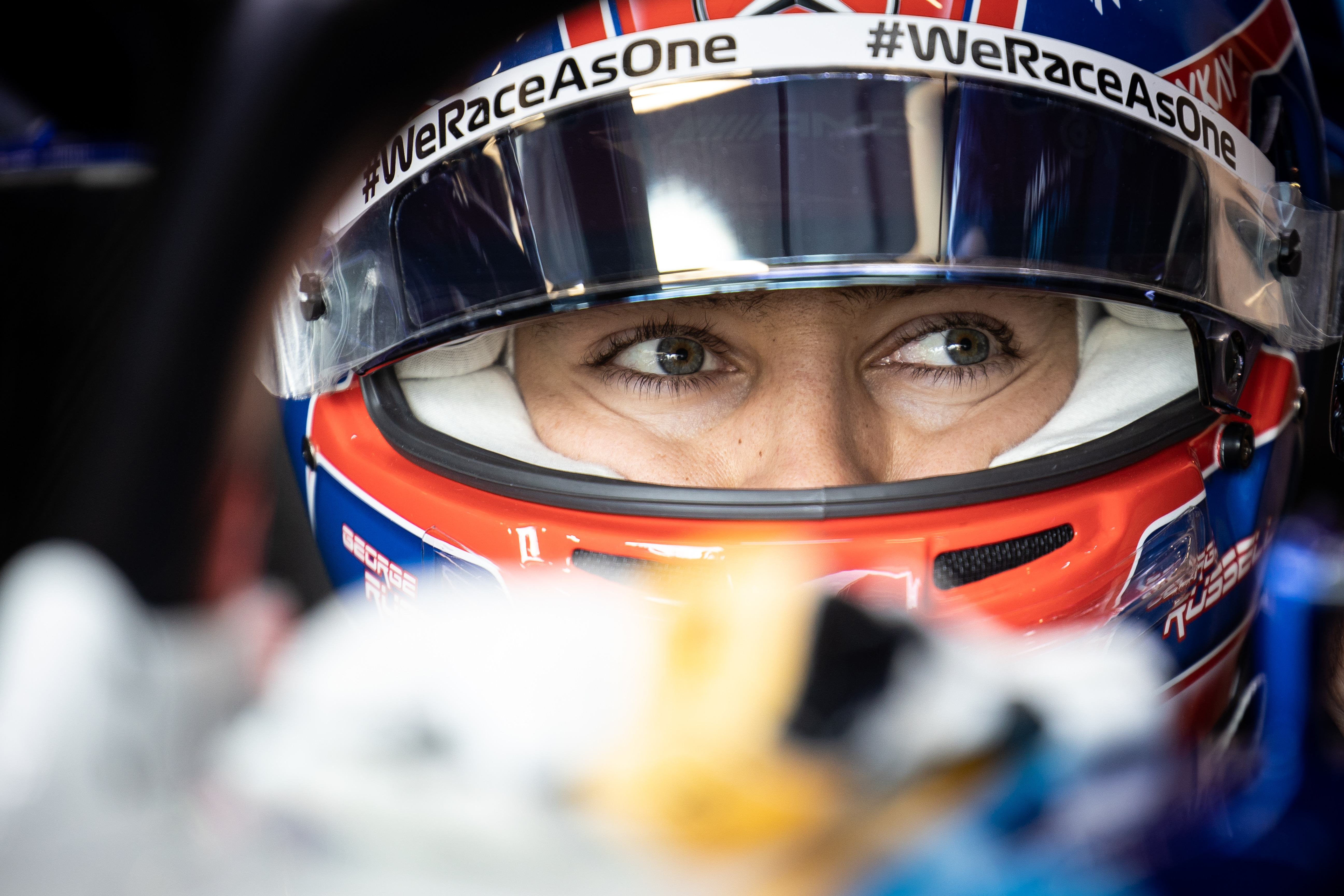
George Russell, Williams, 2021 Spanish GP
Photo by: Williams Racing
But Russell’s Paul Ricard promise was actually hurt by something of a long-standing weakness: his race starts.
For clarity, this includes the whole first lap away from the line (Robson said his French GP launch was OK until he “got on the throttle a little bit early and aggressive, and span the wheels up, which cost him”). It’s something that featured in his early junior single-seater career, was there at the start of his rookie title-winning campaign in GP3 – particularly as he adjusted to using a hand-operated clutch in that series – and has continued in F1.
Most notably, a poor getaway at the final restart in the 2020 Tuscan GP meant another real points shot for Williams went begging. Although, there was no hint of a problem when it arguably mattered most at his Mercedes audition in the Sakhir GP as he shot past Bottas at the first opportunity. Consistency has been the problem.
But in Austria, he held onto his place in the pack. There was still a touch of hesitancy at Turn 1, where Ricciardo nearly jumped him, and a lock-up at Turn 4 – but a bold run to the outside at Turn 3 got him back on terms with Tsunoda, which was key to maintaining his net starting position.
“It is really tough and it’s one of those things it’s hard to analyse because there’s so many variables and it’s all so dynamic,” Robson says of Russell’s starts. “You also run the risk if you start overthinking it. That’s potentially a problem as well because there’s so much of it that’s instinct.
“There’s a lot of experience as well and probably being towards the back of an F1 pack is a bit different to some of his past experiences. It’s fascinating when you watch [some others] – Kimi Raikkonen is always normally extremely good on opening laps of the race and I’m sure you’ve got to hand a lot of that just directly to Kimi. And similarly at the restart in Baku when there was only 2/3 laps left, Fernando Alonso was astonishing. Maybe he got lucky, but I think there’s an element of ‘wily old fox’ in there somewhere for these two examples.
“Again, I think it’s something that he will improve, but a lot of it just has to be done on instinct. And I think once he has a couple of good opening laps, and starts to forget about it to some extent and let his talent deal with it, I think he’ll be a lot better off. Once you hook up on that spiral, you improve quite quickly.”

Max Verstappen, Red Bull Racing RB16B, Lewis Hamilton, Mercedes W12, Lando Norris, McLaren MCL35M, Sergio Perez, Red Bull Racing RB16B, Valtteri Bottas, Mercedes W12, and the rest of the field at the start
Photo by: Andy Hone / Motorsport Images
After two very strong weekends, even if the most recent one was cut cruelly short, Russell and Williams will be out to continue their streak at this weekend’s Austrian GP. Making another good start will be key, but the excellent race pace form Russell has been demonstrating of late will be tested in a different way compared to the Styrian event on the same Red Bull Ring layout.
As it did between the British GP and 70th Anniversary GP at Silverstone last year, Pirelli has made its tyre compound range a step softer for the repeat event in Austria. The drivers will use the C3, C4 and C5 tyres this time around.
"I think once he has a couple of good opening laps, and starts to forget about it to some extent and let his talent deal with it, I think he’ll be a lot better off" Dave Robson
Williams remains unsure if its recent bargeboard upgrades have solved its wind sensitivity problem – the tyre management race at Paul Ricard’s blustery setting meant the drivers weren’t pushing flatout so had no struggles with the wind – and “genuinely have taken a step forward”, per Robson.
But its home event at Silverstone will likely expose any remaining weakness in this area, so it needs to capitalise at a track where it has shown strong form, which this weekend’s event offers.
Although the Styrian GP was a tame affair overall, Red Bull Ring races can be thrillers, where the weather can play a randomising role and the layout is something of car breaker. That gives a team hoping to score its first F1 points in nearly two years a great chance to reverse the “hurt” it and its rising star driver experienced last weekend.
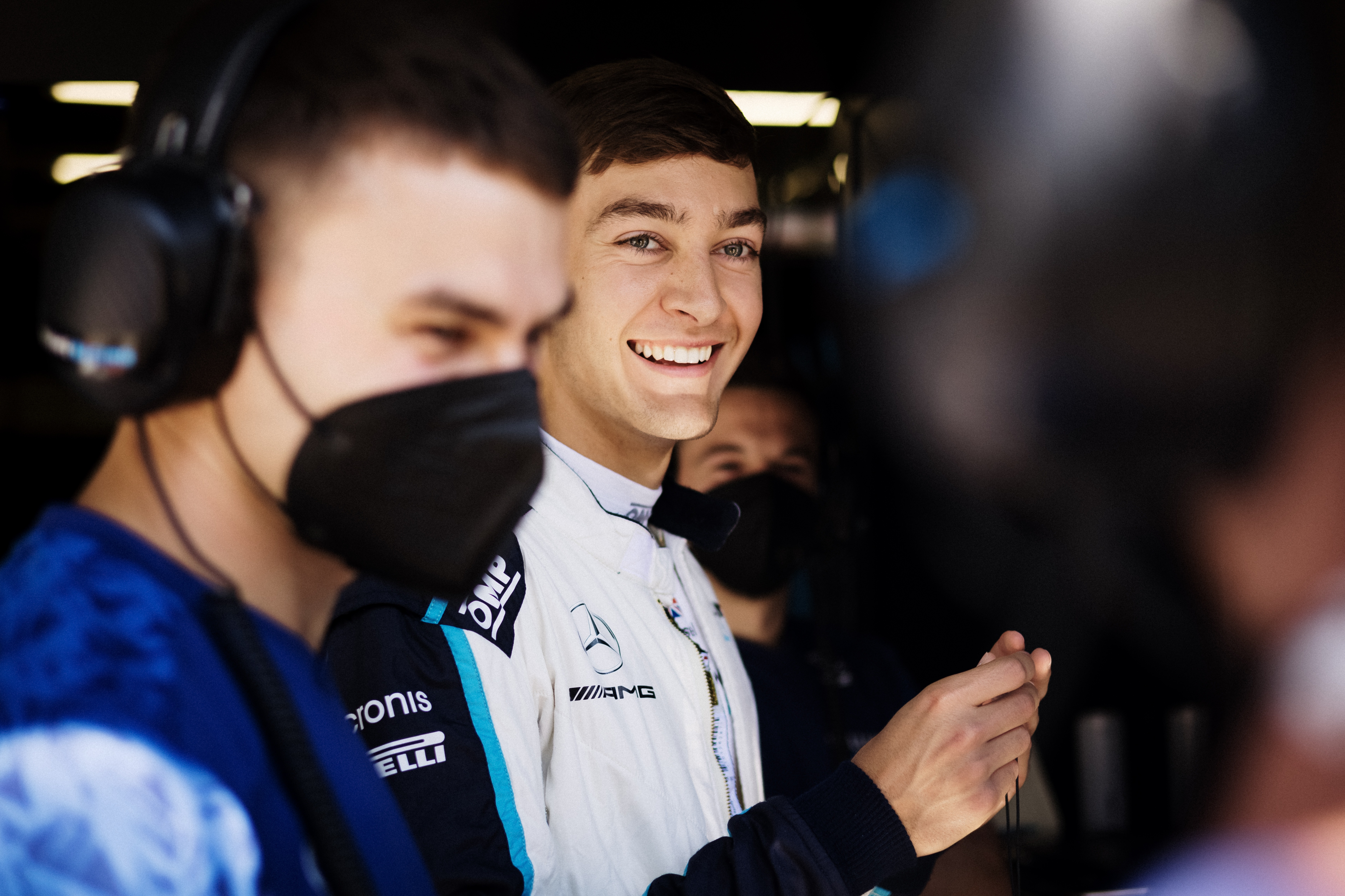
George Russell, Williams, 2021 Styrian GP
Photo by: Williams Racing


Why Britain’s role in Formula 1 endured a troubled start

Why Bottas believes his F1 reserve driver role is the fastest route back to a race seat

Why Norris is now ready for his final exam

The key advantage for Bottas vs Perez in the 2026 F1 return race

Why Ferrari's management is under pressure after its bad start to F1 2025, not Hamilton or Leclerc

Why Red Bull can’t solve its second F1 car problem with a simple paint job

Hirakawa replaces Doohan at Alpine for Japanese GP FP1 outing

How Alonso and Bortoleto can be F1 rivals in a unique driver management deal

Kelly's masterclass secures Leinster Trophy victory at Mondello Park

Spanish GP organisers promise Madring track changes following F1 criticism

What we learned from MotoGP’s decisive San Marino Grand Prix

Honda replaces F1 power unit boss in organisation shuffle
Subscribe and access Autosport.com with your ad-blocker.
From Formula 1 to MotoGP we report straight from the paddock because we love our sport, just like you. In order to keep delivering our expert journalism, our website uses advertising. Still, we want to give you the opportunity to enjoy an ad-free and tracker-free website and to continue using your adblocker.


Top Comments