


Switch off or ramp up? How the smartest F1 drivers managed the summer break
Formula 1's recent calendar expansion, and the late arrival of another triple-header this season, means the rare periods of 'down time' have to be managed scientifically

Autosport Explains
Our experts decode the most important stories in motorsport.
"I usually don't feel like I need a break," said George Russell after an arduous Hungarian Grand Prix in which he had to fight his way back to a points-paying position after a technical issue scuppered his race at the start. "This year I definitely feel like I need one."
That sentiment was echoed by Pierre Gasly after a run of races where his Alpine has performed inconsistently for reasons yet to be understood by the team.
"I'm more caring about trying to fix the pure pace… and, yeah, I need a break," he said in response to a question about the blue-flag chaos in Hungary.
Rewind three decades, to a time when the F1 calendar comprised 16 races rather than 24, there was no such thing as a summer break. Grands prix were scheduled at two-week intervals from San Marino at the beginning of May to Portugal at the end of September. If you fancied an extended summer holiday, you skipped Hungary in the middle of August – not an option for the drivers, of course, but something many non-operational staff made a point of doing.
The current 24-race calendar is considered to be the maximum possible without inducing burnout in personnel, and a two-week ‘summer shutdown' in which the factories close their doors for two weeks has been enshrined in the sporting regulations since 2014, when there were just 19 races a year.
While war in the Middle East led to an April without any F1 events this year, it's clear many of the drivers felt the gap between the Hungarian and Dutch GPs represented time off they urgently required in an otherwise congested schedule. But is it possible, or even desirable, to switch off entirely?
Most serious practitioners of sports science view the concept of 'momentum', where positive or negative outcomes are inherently self-sustaining, to be illusory. But a lull in the relentless parade of race weekends does offer the possibility for drivers suffering what psychologists term "negative accumulation" to undergo a reset. There is a way of exploiting the free time afforded by the summer break to either sustain human high performance or recover to previous levels, depending on the individual.
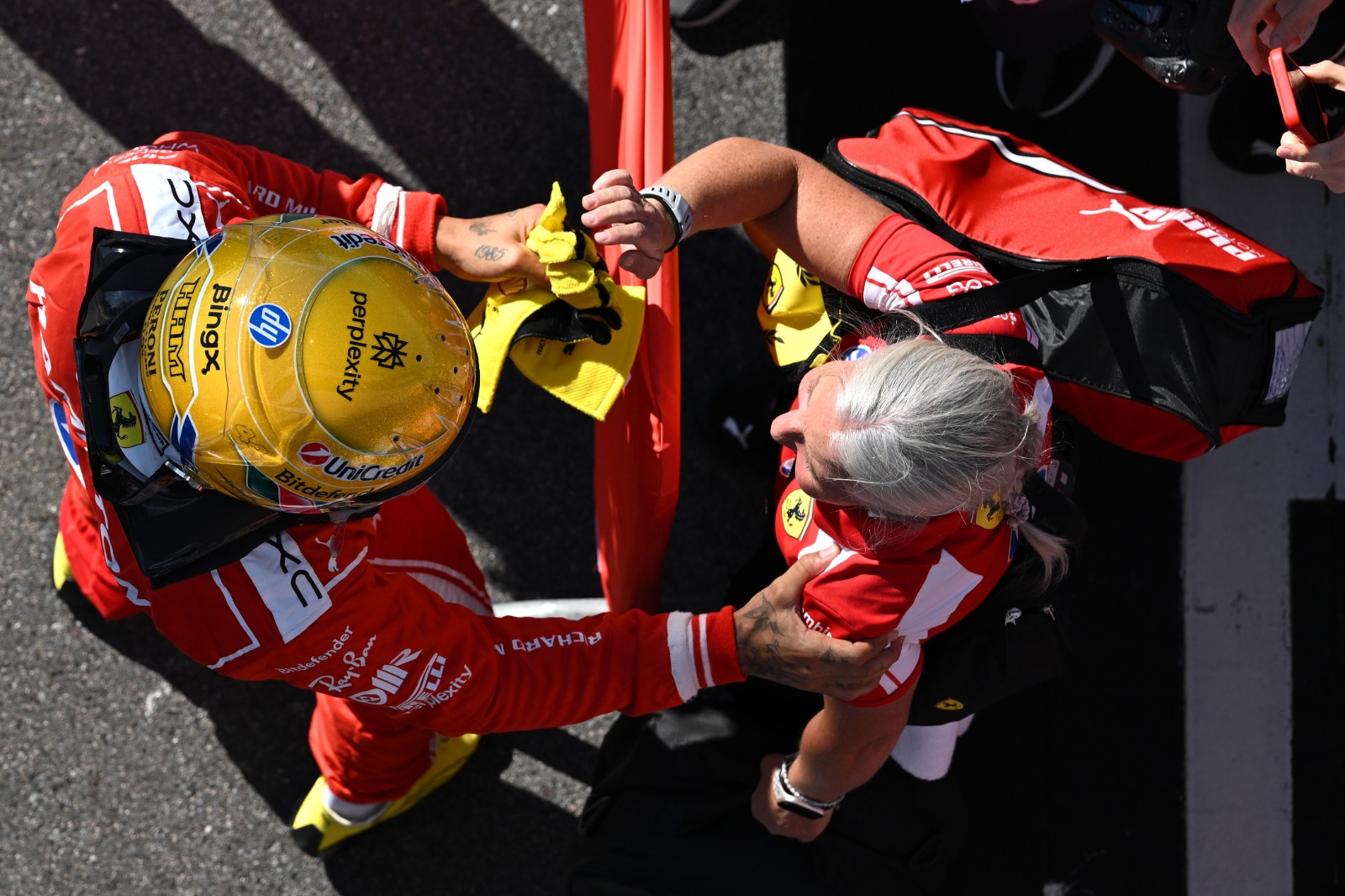
Physios often act as 'driver whisperers' for mental as well as physical health, drawing on long relationships; Angela Cullen, for instance, has worked with Lewis Hamilton for many years
Photo by: Getty Images
"I would say that all drivers need it," said Dr Elina Haukipuro, elite mental performance coach and former Mercedes F1 team doctor, in an exclusive interview with Autosport. "We've seen in the last couple of race weekends before the summer break, drivers who've said, ‘I don't want to think about racing for a while, I just want to completely switch off'. Some who have been performing well [on track] don't necessarily express that, but it doesn't mean that there is less of a need.
"Even if you're performing well, the same kind of accumulation of just being tired throughout the season from travelling, from being jet lagged, from maybe having had some injuries from training.
"If we look at the F1 schedule now, they're always saying every year, ‘We're trying to make it easier for the people who are in the sport so that they don't have these massive changes [in time zones].' But we still have a lot of this zigzagging throughout the world. So the room for recovery, especially in the last three or four weeks of the season, has been very small."
Even before the mid-season break there were four grands prix in five weekends. It was a particularly mentally damaging time for Russell, to name just one, as he was forced to undergo a period of soul-searching over whether his driving style was to blame for a peculiar top speed deficit to Mercedes team-mate Kimi Antonelli.
At McLaren, Oscar Piastri was in a similar position and this appeared to manifest itself externally in the form of some uncharacteristically ratty radio exchanges with the pitwall in Hungary.
"As soon as you have a double-header, triple-headers, having this natural small amount of time to just go back, to recover, is completely lost," explained Haukipuro. "So everybody definitely needs that. And obviously, the worse a performance you've had, maybe during one race, let alone if you've had it several races in a row, the more the negative accumulation is happening – and the bigger the need is then to be able to get that recovery, both mentally and physically.
"I always say the recovery period isn't some kind of reward for working hard or doing well – it's actually part of the work. It's something we're planning beforehand as well, what we're doing, how we're doing it.
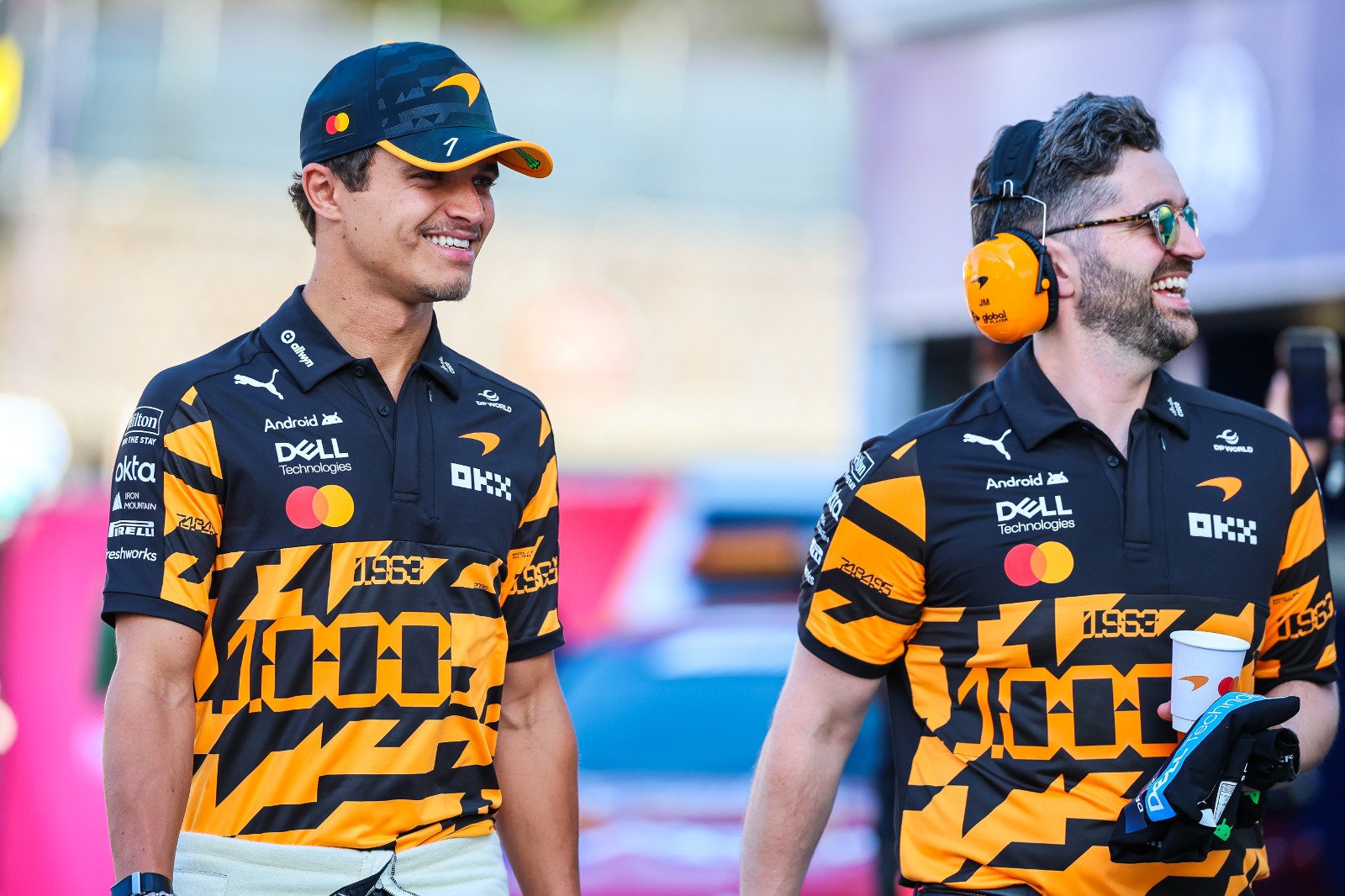
Lando Norris, seen here with long-time performance coach Jon Malvern, has been a vocal advocate of mental health awareness
Photo by: Getty Images
"I wouldn't release any drivers and say, 'Three weeks, OK, I'll see you later.' We're very meticulously planning, we're mindful about what the recovery looks like. We usually divide it into three phases.
"The first one is to completely switch off, mentally, especially. It can be a couple of days, can be a full week. And then we have that building up phase in the middle and then the wrapping up phase at the end. And how that looks for each driver, or how that affects them, it depends on what they do with the time."
Negative accumulation or spiralling is where self-doubt compounds over time as a competitor makes a mistake, or believes themselves to be the victim of an error and it goes unresolved. This generates frustration which triggers further errors.
It's also possible for competitors who have generally had positive outcomes to fixate upon relatively inconsequential errors because the brain has a natural tendency to focus on negatives. 'Reset' routines depend on the individual and generally require time to reflect – with an appropriate support network – on what triggered the spiral in the first place, and what can be done to focus on new goals while not overthinking the problem.
In this case the 'building up' phase is working on so-called anchoring techniques so the driver can recognise the onset of spiralling and refocus. 'Wrapping up' focuses on constructive reactions to events.
While there may be a temptation to head to the beach and forget about it all, this isn't the best strategy.
"If you have someone who has had a bit of a rough season, and they don't actively deal with that because, for example, they're lacking the support around them, or they're just not as engaged within the topic, then a break is usually not the best thing," said Haukipuro.

While the winter is often the longer period to rest and reset, last winter was shorter due to earlier testing and new regulations
Photo by: Simon Galloway / LAT Images via Getty Images
"Because you end up spiralling more within that like negative space that you have. Completely switching off, not maintaining the work, not dealing with things that should be dealt with, and doing that for several weeks, it's usually a recipe for disaster.
"Those cases where it's well planned, and we have the complete recovery in the beginning, then dealing with everything mentally, physically, and then wrapping up some training. Then also really dealing with the challenges that we've had during the season that far, so that we can completely let go of that, and focus on what's about to come – then it's a successful recovery.
"Everybody definitely needs some amount of time just like catching their breath. Having some normal routines, not being in a different time zone, constantly in an aeroplane, but actually just having some time to see their friends, doing some other things, but still very much engaging within their recovery. Active recovery is how I would describe it."


The unpredictability to expect for F1's one-off return to Sepang in 2026

Ocon fighting for his F1 future - but is adamant he deserves to stay

Audi confirms plans for new F1 base

Colapinto still has full support of Alpine and Briatore despite Azerbaijan GP clash

Why Mercedes is still quicker than McLaren

Why "dangerous" Hamilton-Lawson incident in Azerbaijan GP practice hasn't led to change

Will the "big swing" Williams F1 car upgrade be a hit or a miss?

Russell's theory on his big hope for F1 2027 – and Antonelli's reply

WRC Rally Italy: What Evans, Pajari and Solberg need in Sardinia

WRC Rally Italy: Solberg grabs early lead with Evans third in title decider

The unpredictability to expect for F1's one-off return to Sepang in 2026

The reasons behind Ford's impending WRC factory return
Subscribe and access Autosport.com with your ad-blocker.
From Formula 1 to MotoGP we report straight from the paddock because we love our sport, just like you. In order to keep delivering our expert journalism, our website uses advertising. Still, we want to give you the opportunity to enjoy an ad-free and tracker-free website and to continue using your adblocker.


Top Comments