


Red Bull's F1 rivals shared fuel sensor doubts, but followed FIA
Red Bull was not the only team doubting the Formula 1 fuel-flow sensors during the Australian Grand Prix, but its rivals knew they had to follow the FIA equipment


As the reigning champion team prepares its appeal against Daniel Ricciardo's disqualification from second place at Albert Park, sources from other teams have told AUTOSPORT that they too experienced minor discrepancies between the sensor's rate and what their own fuel-flow estimation was.
But on the back of clarifications made by the FIA earlier this month - making it clear that the fuel-flow rate being produced by the sensor would be the one that determined conformity with the regulations - no other team went down the Red Bull route and deliberately ignored the sensor reading.
| Red Bull fuel flow controversy |
| Ricciardo excluded from Australian GP |
| The stewards' ruling in full |
| FIA: Red Bull ignored requests |
 |
Instead, the teams have accepted that when they are alerted to the possibility the sensor could exceed the 100kg per hour rate at peak flow, irrespective of what their own data says, they have to peg back their rate slightly to ensure there is no breach of the rules.
The winding back is minor but has become an accepted part of understanding the new fuel efficiency formula.
Red Bull did not trust the readings from the sensor on Ricciardo's car, however, and furthermore ignored advice from the FIA to turn down its flow rate in the race.
Sensor supplier Gill Sensors claims that 52 per cent of its meters are with a 0.1 per cent accuracy reading, with 92 per cent within 0.25 per cent.
TEAMS HAVE FAITH IN THE FIA
The fuel-flow sensor technology is new, and there have been issues with calibrating the sensors accurately since they were first tested.
But Red Bull's rivals are adamant that teams have to put their faith in the governing body.
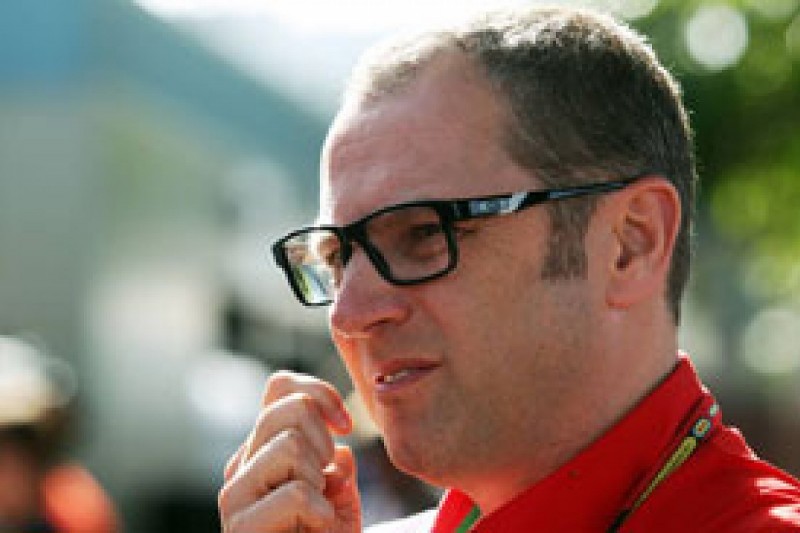
Ferrari team principal Stefano Domenicali said: "We need to rely on the fact that it is a situation that is well managed by the FIA, and that is it to be honest.
"We have the FIA that will do their job and I am sure there will not be a problem at all."
Mercedes motorsport boss Toto Wolff said: "I think it is just all the systems have to work together.
"The FIA is obviously controlling fuel flow and checking with all the teams, and it is a question of learning by doing it between the FIA and the teams.
"The fuel-flow meter is an FIA system, and this needs to be integrated in the cars.
"This is a learning process where the teams support the FIA and vice versa."
Share Or Save This Story


Brundle awarded OBE in King’s New Year’s honours

The new rules dilemma that will define the 2025 F1 season

Jon Noble: An unfair perception or a genuine concern? Lifting the lid on Red Bull’s Tsunoda scepticism


Tsunoda's in-depth look at why he failed to master Red Bull’s F1 car in 2025

How Antonelli is proving unbeatable, even when he's beaten

Red Bull defends decision to force Verstappen to give back two positions

Acosta's long road to his maiden MotoGP win

MotoGP Austrian GP: Acosta finally claims maiden win

Great debate: Which circuit should host the F1 2026 finale if the calendar has to change?

Live: MotoGP Austrian Grand Prix updates as it happens
Subscribe and access Autosport.com with your ad-blocker.
From Formula 1 to MotoGP we report straight from the paddock because we love our sport, just like you. In order to keep delivering our expert journalism, our website uses advertising. Still, we want to give you the opportunity to enjoy an ad-free and tracker-free website and to continue using your adblocker.


Top Comments