


Has a loophole been found in the F1 2026 engine rules?
Reports have surfaced that some manufacturers have asked for clarification because Mercedes and potentially Red Bull Powertrains may have found a way to increase the compression ratio of their six-cylinder engine when hot, while FIA checks are carried out at ambient temperature. Is this the first real case, or just a storm in a teacup?


Formula 1’s new 2026 power units will debut at the Circuit de Catalunya in just over five weeks’ time, but questions over a grey area of the new regulations have already come to light.
German outlet Motorsport Magazin revealed that some engine manufacturers have sent a request for clarification to the FIA regarding the compression ratio, one of the parameters changed in the 2026 regulations. This represents a reduction from the 18.0:1 value set by the previous regulations, now lowered to 16.0:1 for the upcoming season.
Mercedes, and potentially Red Bull Powertrains, are said to have found a way to circumvent what is stipulated in the technical regulations, according to which the compression ratio must comply with the specified value during checks carried out at ambient temperature.
Suspicions that it might be possible to change the compression ratio as temperatures vary have led Ferrari, Audi and Honda to request FIA involvement.
Attention has focused on the use of materials that could expand as operating temperatures rise, helping to increase the compression ratio. This would be a violation of the technical regulations, which reiterates that the cars must be compliant at all times during a race weekend.
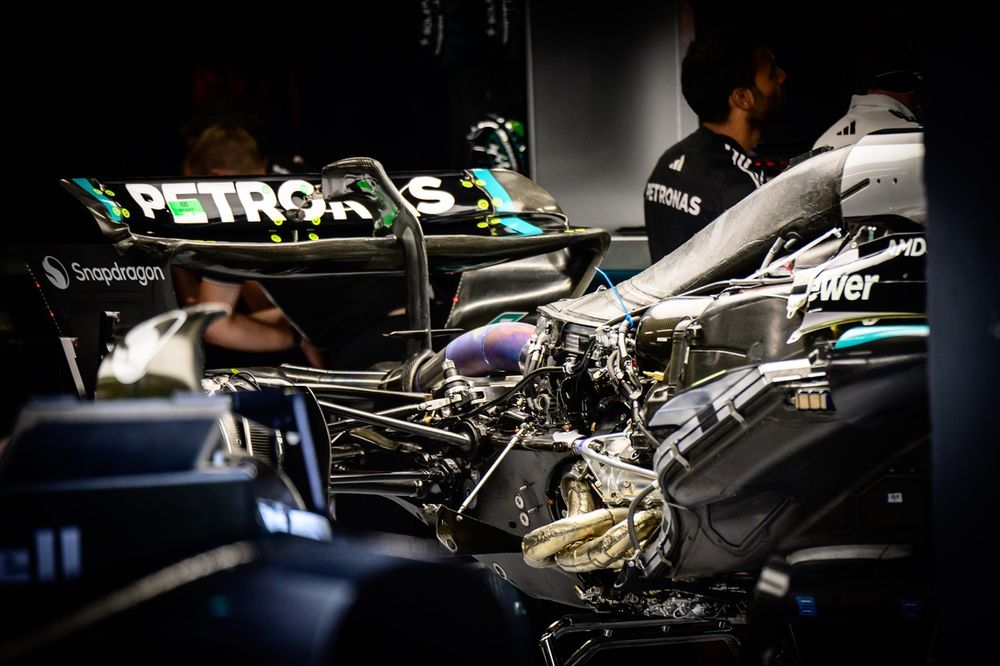
Mercedes W16, technical detail
Photo by: Erik Junius
The FIA has said: “The topic has been and continues to be discussed in the technical forums with the PUMs (power unit manufacturers), as the new limit naturally raises questions about interpretation and compliance. The FIA continuously reviews such matters to ensure fairness and clarity and, if necessary, may consider changes to the regulations or measurement procedures in the future.”
It is curious to note how suspicions surrounding Mercedes and Red Bull have taken shape even before the engines have completed a single kilometre on track. As has previously happened in F1, a simple change of employer by a staff member can be enough to reveal a team’s or engine manufacturer’s activities to direct rivals.
The ball is now in the FIA’s court. “The regulations clearly define the maximum compression ratio as well as the method for measuring it, based on static conditions at ambient temperature,” the governing body stated.
“This procedure has remained unchanged despite the reduction in the permitted ratio for the 2026 season. It is true that thermal expansion can influence dimensions, but the current rules do not provide for measurements to be carried out at elevated temperatures.”


Share Or Save This Story


The initial plan for F1's next engine regulation in 2030

Vasseur rejects Ferrari internal crisis claims as he defends team

Sainz interview: “I always believed in McLaren… but then Ferrari called”


Employing team orders can simply be a matter of common sense

Why Horner sees history repeating itself for Newey at Aston Martin

Mekies under the microscope: How different is his leadership at Red Bull from Horner?

Colapinto urges fans to stop online abuse: “You’re not helping me or my future”

Evans given a hero's homecoming after WRC title triumph

How an unspectacular showing in a kart race is such good reason to celebrate

Lights, Camara, action: How Haas picked F1's latest rookie for 2027
Subscribe and access Autosport.com with your ad-blocker.
From Formula 1 to MotoGP we report straight from the paddock because we love our sport, just like you. In order to keep delivering our expert journalism, our website uses advertising. Still, we want to give you the opportunity to enjoy an ad-free and tracker-free website and to continue using your adblocker.


Top Comments