


F1 and FIA unveil new renders and terminology for 2026
F1 and the FIA have released new renders of next year’s cars and revealed new terminology, aiming to make it easier for fans to understand the new rules

Power shift
Power shift
A little over a month before the first test of 2026 - which will take place behind closed doors in Barcelona - Formula 1 and the FIA have shared a new impression of what the next generation of cars should look like in the upcoming years.
The FIA has published renders based on the recently updated technical regulations. Next year’s cars will feature active aerodynamics, slightly smaller dimensions with a 200mm shorter wheelbase and a 100mm narrower chassis, and a marginally lower minimum weight of 770kg - although many in the paddock question how realistic that number is for teams, especially in the first year of the cycle.
The most recent FIA renders also feature small updates to the sidepods and the so-called in-wash boards, as reducing dirty air is one of the key aims behind the new ruleset. Overall drag should be reduced by approximately 40%, while the new cars will generate 15% to 30% less downforce compared to the previous generation.
The renders also show the new Pirelli branding for the 2026 tyres, which were tested by all teams after the Abu Dhabi Grand Prix. The tyres will remain 18 inches, despite the FIA’s initial preference for 16 inches, but will be slightly narrower to help reduce weight.

Overtake, Boost and Recharge
As Nikolas Tombazis explained during a media roundtable including Autosport in Abu Dhabi, the official terminology has been overhauled as well.

2026 F1 car render
Photo by: Liberty Media
When the FIA first presented the 2026 rules during last year’s Canadian Grand Prix, they included X-mode and Z-mode for active aerodynamics, and Manual Override Mode as an overtaking aid. The latter was introduced because DRS will logically disappear with the arrival of active aerodynamics. Manual Override Mode was, however, quickly shortened by fans to MOM.
The FIA aimed to simplify all terminology ahead of 2026, to avoid making F1's new era too complicated for fans, and the governing body has officially announced the new naming convention.
From now on, Manual Override Mode will go by the name Overtake. Just like with DRS, drivers may only use this when they are within one second of a car ahead at the detection point. The major difference is that the overtaking aid will no longer come from opening the rear wing - since everyone will be doing that on the straights - but from additional electric power.

When it comes to electric power, the FIA has also specified two other terms: Boost and Recharge. Boost Mode refers to the driver-operated energy deployment of the ERS. It is up to each driver to decide where in the lap he uses which portion of the available energy to attack or to defend.
Because this tactical element will play a much greater role than ever before, some teams expect to see overtakes in unusual places. In practice, however, that remains to be seen, as it seems likely that all drivers know which parts of the track are most critical and will therefore deploy most energy at similar places. Recharge is the mode in which energy is used to recharge the battery.
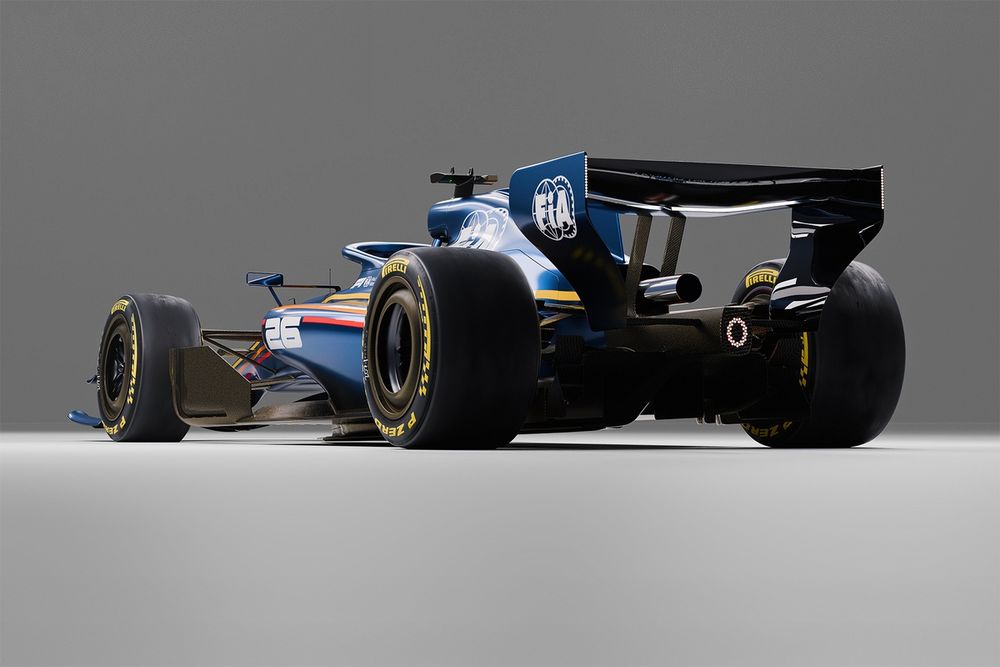
2026 FIA F1 car render
Photo by: FIA
Straight Mode and Corner Mode
The FIA has also chosen to simplify the terms for active aerodynamics. The initial distinction between X-mode and Z-mode is no longer deemed necessary by the federation, as all drivers will essentially use the same mode in different parts of the track: the normal, higher downforce configuration in corners and the low-drag configuration of the front and rear wing on the straights.
From now on, these will simply be called Straight Mode and Corner Mode. The setting for the straights was previously known as Z-mode, and the FIA now describes it as follows:
“Straight Mode is the active aero configuration in which the front and rear wing flaps open to reduce overall drag and increase top speed. It will be available to all cars at designated points on the circuit, on straights of a minimum length.”
For Corner Mode, the wings return to their usual forms: “Corner Mode is the active aero configuration in which the front and rear wing flaps remain in their normal, high-downforce position to maximise cornering performance.”
The FIA added that all new terms for 2026 have been tested with so-called “fan focus groups”, consisting of new, existing, and core F1 fans.


Share Or Save This Story


The two recurring issues that hampered Verstappen and Red Bull again at the US GP

Red Bull no longer falls away on difficult days: What Austin qualifying reveals about its progress

Verstappen’s words explained: Why Red Bull’s turnaround is so different this time

Why being "very adaptive" gave Norris the edge over Piastri at US GP

Smyth makes Formula Ford Festival history as he wins despite clash with team-mate Murray

Taken for a ride? The less heralded flaw of the 2026 F1 regulations

Sainz set for Rally1 outing in latest gen WRC car
Subscribe and access Autosport.com with your ad-blocker.
From Formula 1 to MotoGP we report straight from the paddock because we love our sport, just like you. In order to keep delivering our expert journalism, our website uses advertising. Still, we want to give you the opportunity to enjoy an ad-free and tracker-free website and to continue using your adblocker.


Top Comments