


Why drivers rarely use F1’s wet tyres, and how Pirelli plans to improve them
Drivers rarely opt for Pirelli's full wet tyres and often run with intermediates instead – here's why the full wets are so tricky, and how the tyres could be improved for 2026


Seeing full wets in action during a race weekend has become a rare sight in Formula 1. The main reason for that is visibility, as when there’s significantly more water than – let's say – was seen during the British GP at Silverstone, high levels of spray greatly hinder visibility on track.
The FIA hoped to reduce spray with the current generation of cars, but little progress has been made. Visibility remains a limiting factor in the wet – a problem that won’t go away quickly, given the failed tests with wheel covers.
Another key issue is the tyre itself. Multiple drivers – including reigning world champion Max Verstappen – have indicated that they prefer to stay on intermediates for as long as possible, even when conditions call for full wets.
To address this, Pirelli is working on improving the so-called crossover point between both tyres. One of the goals for 2025 was to set the crossover point for full wets at around 115-116% of dry lap times. In reality, however, that threshold has been closer to 118%, according to Pirelli’s head of motorsport, Mario Isola.
Complex complaints from drivers
But there’s more at play than just the amount of water or the crossover point. During an exclusive interview with Autosport, Pirelli outlines another, perhaps even more important issue with the full wets in recent years.
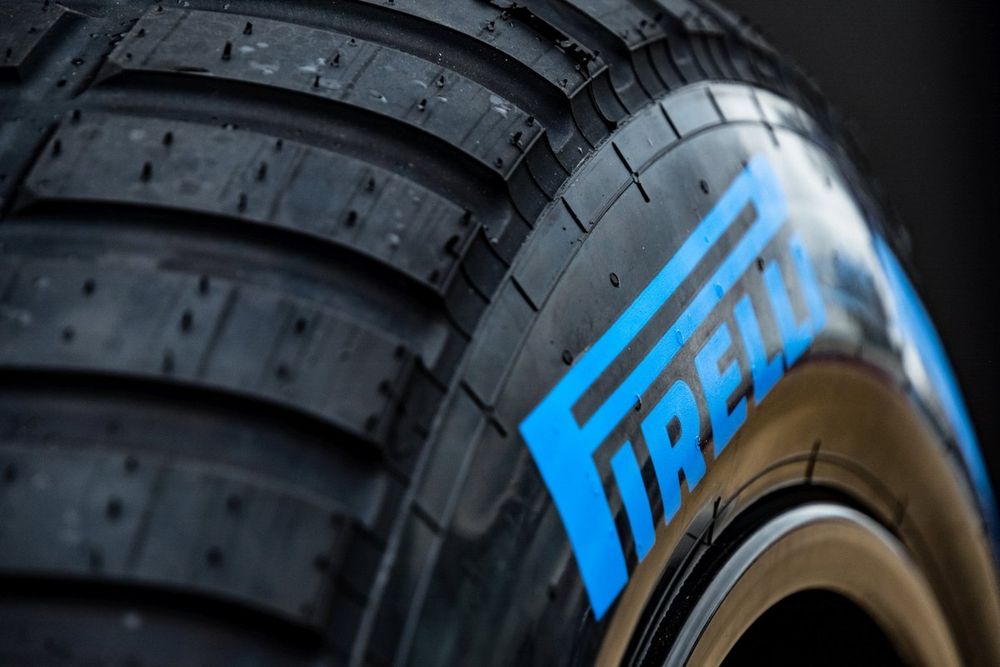
Pirelli wet tyre
Photo by: Erik Junius
“We’ve slightly changed the development direction for the full wets,” Isola said. “So, instead of looking at aquaplaning as we did in recent years, as that was a comment coming from drivers, we've now made a better analysis of what those comments actually mean. And we realised that it was more related to a loss of grip in cornering than to actual aquaplaning.”
That loss of grip, Isola explained, is mainly linked to the tread blocks: “When you develop in the direction to fight aquaplaning, you put more and more grooves into the tyres.
“But that means you have smaller tread blocks and that those blocks will move more. If those blocks move, you generate heat and that means that we had overheating of the wet tyre. It seems a joke, but it's true! That overheating problem caused a loss of grip, and that’s what drivers were actually referring to.”
Bigger changes coming for 2026?
This insight has already been applied to some extent to this year’s wet tyres: “We’ve decided to modify the tread pattern slightly to reduce overheating with the current construction and compound,” Isola said.
“That should help to have less movement of the blocks and less overheating on tracks with a higher intensity than Fiorano and Paul Ricard, the two tracks where we can test.”
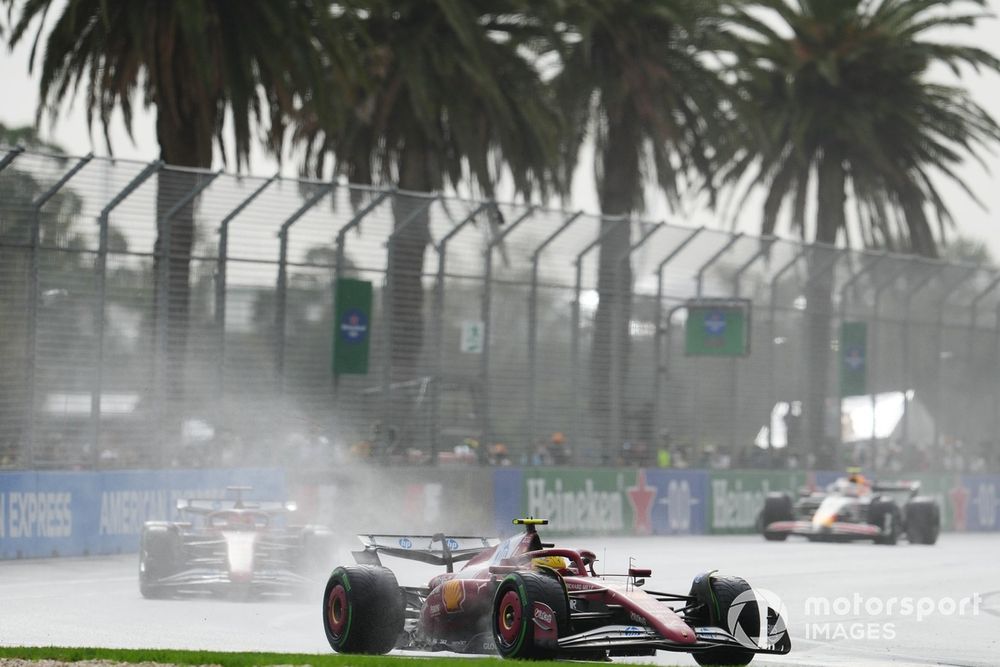
Charles Leclerc, Ferrari, Lewis Hamilton, Ferrari
Photo by: Lubomir Asenov / Motorsport Images
The complete overhaul in regulations for 2026 includes all-new tyres, and therefore Pirelli has a chance to work on improving the compounds even further.
“For 2026, our first target is to improve the crossover point between the intermediates and the full wets, so teams can choose one or the other without losing performance,” Isola added.
“And yes, we are also considering a completely different tread pattern to try and go even more into the direction that we just discussed.”
A recurring topic in talks about F1’s wet tyres is the lack of testing opportunities. Teams and drivers often complain about the full wets, but Pirelli insists that developing them is inherently difficult under the current limitations.
“We still have the issue that we cannot test on high severity tracks under wet conditions,” Isola said.

“But what we are doing now is that at any circuit where we are going to test – Barcelona, Jerez and so on – we always have a backup plan with wet tyres available.
“So, if it rains, instead of throwing one day of testing in the bin, we switch the programme and try to test the wets. Obviously, that's not in a controlled environment, and you don't have the sprinklers for a controlled level of water, but you still have water and that’s similar to what you encounter during a race weekend.”
Share Or Save This Story


F1 drivers push for Madring changes after "very poor" Spanish GP: "I almost fell asleep"

The impact Madrid's "six kilometres long" pitlane will have on Spanish GP strategy

The deeper meaning of Vettel’s emotional Schumacher demo run at Monza

F1 reveals 2027 calendar as Monaco joins expanded sprint schedule

Ferrari not yet switching focus to 2027 F1 car

The verdict on the WRC Rally Chile tyre solution

Top five roles on Motorsport Jobs this week
Subscribe and access Autosport.com with your ad-blocker.
From Formula 1 to MotoGP we report straight from the paddock because we love our sport, just like you. In order to keep delivering our expert journalism, our website uses advertising. Still, we want to give you the opportunity to enjoy an ad-free and tracker-free website and to continue using your adblocker.


Top Comments