


How Mercedes outdid its own Armageddon
No wonder Mercedes team boss Toto Wolff compared Austria 2018 to Spain '16 - it was another descent from total control to total wipeout, the fall less sudden than at Barcelona two years ago but more costly for the team's title hopes

At ten past three on Sunday afternoon, Mercedes looked set for a scenic stroll to a one-two having annexed the front row with a car featuring a heavily revised aerodynamic package on top of the engine upgrade introduced at the previous weekend's French Grand Prix.
Seventy minutes later, Mercedes had thrown away the lead and parked both cars while Max Verstappen took a wonderfully executed victory on Red Bull's home circuit.
Mercedes shot itself in the foot spectacularly through a combination of unreliability, tyre blistering and, most significantly, another strategic blunder. No wonder boss Toto Wolff described it as the team's "worst day".
"We had half a lap to react, and we didn't" Toto Wolff
The inexplicable decision not to call leader Lewis Hamilton into the pits under the virtual safety car, which was only deployed because team-mate Valtteri Bottas ground to a halt with a hydraulic problem that originated in the power-steering, was the crux of the pain.
No matter what followed, specifically Hamilton retiring with a failure in the fuel system, this was a painful blunder in a season blighted by strategic misadventures.
Things started so well, despite Bottas, who beat Hamilton to pole position by 0.019 seconds, bogging down at the start and then picking up wheelspin.

With Kimi Raikkonen using the extra bite of the ultrasoft Pirellis both Ferrari started on compared to the supersofts on the Mercedes and Red Bulls to thrust his Ferrari into the tight gap between the two Mercedes, it briefly seemed he might take the lead.
But Raikkonen had to back out of it because he was, legitimately, "scared we would hit" and went wide over the sausage kerb at the exit of Turn 1. Behind, Bottas was hung out to dry on the outside line and slipped to fourth place behind Verstappen.
Although Raikkonen's exit was compromised, he did get a run on Hamilton and had a look around the outside into the Turn 3 hairpin. This resulted in him locking up, the rear stepping out and pitching him over the run-off area. We didn't know it at the time, but what followed was effectively the battle for victory between Raikkonen and Verstappen.
Into Turn 3, Verstappen had wisely backed off from Raikkonen and Hamilton to maximise his exit from the corner, and he got a run on the Ferrari despite a little wheelspin off the turn. As Raikkonen moved right, briefly pushing Verstappen onto the grass, Bottas blasted past both of them on the outside line on the approach to the Turn 4 right-hander to reclaim second place.
Raikkonen held off Verstappen initially, but ran wide in the Turn 6 left-hander and allowed Verstappen to edge alongside him to Turn 7. They made light contact, Verstappen's front right to Raikkonen's rear-left, with the Red Bull driver emerging in third place having just made what he could not have known was the race-winning overtake.
"I got a little bit sideways, or lost the line a little bit into 6," said Raikkonen. "Obviously we were pretty close to each other, I think the car in front of me, the Mercedes, disturbed me a bit [and cost] downforce and then obviously he got the run.

"I tried to hang on around the outside, but got a little bit sideways because we touched and lost a place."
What Verstappen described as "hard but good" racing left him in a good position after a superb first lap during which he dovetailed the patience to know when not to stick his nose in, and the instinct for knowing when to seize the opportunity Raikkonen presented him.
With Hamilton and Bottas up front and Verstappen leading the charge ahead of Raikkonen and Daniel Ricciardo in the second Red Bull, the race looked firmly set.
Further back, Sebastian Vettel, still smarting from a three-place grid penalty for impeding Carlos Sainz Jr's Renault at Turn 1 in the second segment of qualifying, was hauling himself back into contention.
Having started sixth, he slipped behind Ricciardo and the Haas of Kevin Magnussen at the start after locking up into Turn 1 and then also running wide at Turn 3. He picked off the two Haas drivers to run sixth on the third lap, then spent much of his first stint keeping a watching brief behind Ricciardo, who was trying to find a way past Raikkonen. Then, the race was blown apart by the first Mercedes disaster.
Bottas, sat a couple of seconds behind Hamilton and out of the worst of the turbulent air, slowed 14 laps into the 71-lap race. A hydraulic leak in the power-steering led to the system shutting down and the loss of gearchange, and he did everything he could to park out of the way. He ended up rolling down an asphalt road lining the edge of the Turn 4 gravel trap, stopping when he had nowhere else to go and triggering the virtual safety car.

Astonishingly, Hamilton was not called into the pits. Tellingly, all of the cars in the rest of the top 10, save for Magnussen's Haas, who was left out because of concerns about a problem with his tyre blankets, and Sergio Perez's Force India, who was too close to team-mate Esteban Ocon to avoid losing time in a double-stack pitstop, did come in.
"The VSC came out, we had half a lap to react, and we didn't," said Wolff. "This is where we lost the race. At that stage of the race with the VSC, pitting is probably 80% the thing you need to do.
"With one car out there against two others, the thinking process that happened was, 'What would happen if the others pitted a car?' We would come out behind Kimi because they would leave Kimi out. What would that mean for the race? That whole thinking loop I wouldn't say distracted us, but we spent too much time on that.
"For me, [it's] the most painful day in my years at Mercedes, worse than Barcelona [2016]."
The plunge from one-two control to zero points in Austria did indeed mirror the outcome of the Spanish GP collision between Nico Rosberg and Hamilton two years ago. But that implosion had a single cause - a failure of driver discipline - and came at a time when Mercedes was still comfortably clear of its rivals on a normal day. It's now in a three-way fight, and its Red Bull Ring unravelling had multiple elements: failures of strategy, tyre management and reliability.
It's easy to be critical of strategic decisions in the heat of the moment. But the thinking time should have been ample. Bottas slowed emerging from Turn 3, meaning that from the moment the problem first manifested itself Hamilton completed the majority of a lap under green flag conditions before the VSC was deployed when he was on the run from Turn 3 to Turn 4 next time round.

Under controlled conditions, he probably took around 50s to get from there to the pit entry, so even by the most conservative of estimates Mercedes had maybe 90s from the moment it should have become clear a safety car, virtual or real, was a possibility to decide what to do.
There was nothing to gain for Hamilton, but Mercedes needed to minimise the chances of a loss. By not pitting it guaranteed both Ferraris and both Red Bulls would pit and put themselves in with a shout of jumping him when he eventually did stop.
While Hamilton stopping might have allowed Ferrari and Red Bull to gain track position by splitting its strategies and leaving one car out while the other stopped, it would have been better than the alternative. And it should be noted that Red Bull team principal Christian Horner was adamant both cars were coming in whatever happened. This smacked of indecision, as although there was the expectation the VSC would last long enough to see what other teams did first time round and allow Hamilton to pit and retain the lead, it was a risky shout.
Mercedes was also caught by how quickly the VSC ended, believing it would have an extra lap to make its decision before racing resumed.
Unfortunately for Mercedes, the VSC period was too short to allow the damage to be repaired by bringing Hamilton in the next time round thanks to the green flags flying when he was in Turn 5 of his 16th lap. Then, he had a green-flag lead of 13s and was informed he needed to find eight seconds over Verstappen by engineer Pete Bonnington, a request Hamilton responded to with incredulity.
"I've got no time in these tyres," said Hamilton in response. Chief strategist James Vowles then, to his immense credit, came onto the radio to take responsibility for the error. "I understand, we're still with you mate - it's my mistake but give us what you can."
Vowles later reiterated his message, saying "I have thrown away the win".
From lap 17 to 24, Hamilton attacked as much as his older supersofts allowed. But it got him nowhere, and he was called in at the end of lap 25 when Verstappen was, give or take a couple of tenths, still the same 13s behind. Hamilton was on average only the fourth-fastest driver on track during this period, 0.132s off pacesetter Ricciardo and, more importantly, 0.129s slower than Vettel.

As the German was about to get close enough to jump the Mercedes when it stopped, it made sense for Hamilton to cut his losses and ensure he rejoined on softs in fourth behind Verstappen, Raikkonen and Ricciardo but still ahead of title rival Vettel - who hinted he might have been able to do more about that had he been told more about the race situation.
"Am I fourth now?" asked the understandably incredulous Hamilton after stopping to take on softs. The plan from there was to try and recover, but with blistering of the rear tyres afflicting, in particular, those drivers who were pushing hard - namely Hamilton and Ricciardo - things were about to get harder. That was even after Ricciardo was forced to pit for new rubber, putting him back to fifth.
This smacked of Mercedes indecision, of the inability to do right for the fear of doing wrong
The blistering came as a surprise to some, but it shouldn't have. On Friday, when teams did their long-run work, Pirelli clocked the track temperature at 25-26C. On Sunday, it was 42C. The runs were also longer and the tyre wear was minimal, meaning on the softs in particular there was plenty of tread left, leading to more heat being retained and therefore a greater chance of blisters. Combine all this with the heavy braking areas and the many traction zones, and the constant corners from Turn 4 to the end of the lap, and the problems were inevitable.
Hamilton then came under attack from Vettel. The Ferrari driver got a run out of the first corner and, taking a bite of the grass exiting the Turn 2 kink, executed a brilliant move into the Turn 3 hairpin. Brilliant because, rather than overdoing it on the brakes, he held a middle line and delayed Hamilton's turn in as much as he could, ensuring he could get on the power earlier and retain third.

And that was it for Hamilton's race, with a second pitstop dropping him back to fifth behind Ricciardo. He had every chance of passing, but it proved unnecessary as the Red Bull slowed on the main straight with an exhaust problem. The Mercedes ignominy was crowned when Hamilton ground to a halt with a loss of fuel pressure.
While things unravelled for Mercedes, they came together beautifully for the Verstappen side of the Red Bull garage. Having taken the lead when Hamilton pitted, Verstappen had an advantage of 3.9s over Ricciardo, with Raikkonen a further 1.5s back.
Ricciardo had earlier overtaken Raikkonen with the assistance of the DRS on the run into the downhill right-hander at Turn 4, only for the reverse to happen on lap 38 as Ricciardo was battling seriously blistered rear tyres. At this point, Verstappen was controlling things beautifully with an advantage of 7.4s over Raikkonen.
The gap was at 5.8s when Ricciardo slowed with 17 laps left, leading to Red Bull turning Verstappen's Renault engine down to minimise any chance of a similar problem. That allowed Raikkonen to close to just 1.504s down at the chequered flag after 71 laps - a gap that wasn't representative of how consummate a performance this was from Verstappen. It was also further distorted by Raikkonen setting fastest lap last time round.
"The margins in F1 are so fine," said Horner. "There was a touch with Kimi and a few races ago that could've been a puncture, and there's a very different story. Max has had a tough first third of the year and, all credit to him, he's kept his head and in the last three races he's been third, second and first with three very impressive drives."
While being up front and in control, rather than chasing, helped to mitigate the blistering, Verstappen's ability to manage tyres, minimising wheelspin and showing a willingness to be conservative to keep temperatures under control is an under-recognised skill. In two of his early Red Bull races - his win in Spain 2016 and then his run to second in Austria - he showed his mastery of that, picked up after some intensive work done during his Toro Rosso days.
Verstappen had been given an opportunity by the collapse of the Mercedes challenge, but he had to make it happen for himself in a race that Raikkonen might just as easily have won.
His willingness to make it happen at the key moments, but play it safe when the race situation required it - a balance he has sometimes failed to strike this season - is what will ensure Verstappen is a formidable force in grand prix racing for years to come.
He might keep saying he hasn't changed his approach after the troubles earlier in the year, but it certainly looked like it in Austria. And to glorious effect.


Did Bianchi have potential to become F1 world champion?
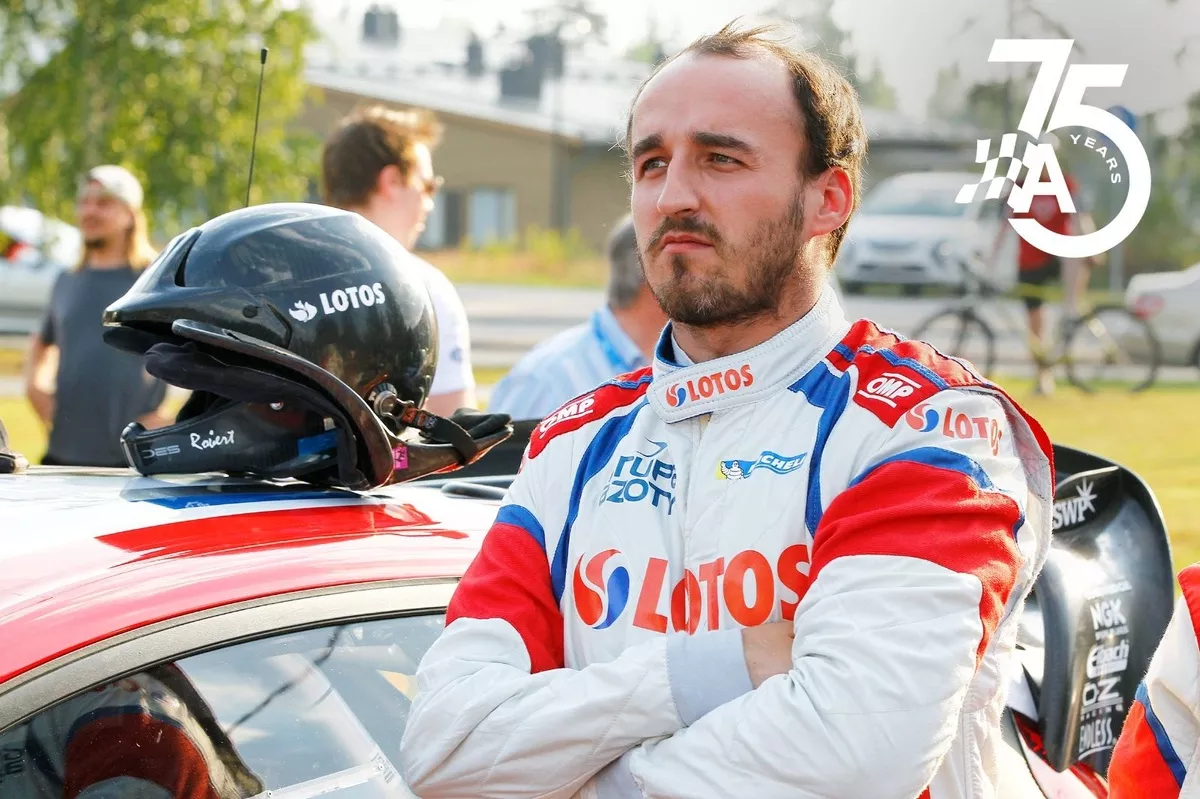
Autosport 75: Kubica's road to recovery and beyond

Autosport 75: When Red Bull had its own intra-team fight like Norris vs Piastri

Autosport 75: Why Verstappen was ready for F1 at 17

How the Senna myth has been transformed

Archive: When the French GP almost produced F1's greatest shock

Autosport 70: How Scheckter instigated Silverstone's most famous F1 incident

Autosport 70: The lost F1 team that launched Newey

Acosta's long road to his maiden MotoGP win

MotoGP Austrian GP: Acosta finally claims maiden win

Great debate: Which circuit should host the F1 2026 finale if the calendar has to change?

Live: MotoGP Austrian Grand Prix updates as it happens
Subscribe and access Autosport.com with your ad-blocker.
From Formula 1 to MotoGP we report straight from the paddock because we love our sport, just like you. In order to keep delivering our expert journalism, our website uses advertising. Still, we want to give you the opportunity to enjoy an ad-free and tracker-free website and to continue using your adblocker.


Top Comments