


How Alpine's no-nonsense boss is leading its ascent towards F1 success
Having quit Aston Martin because there were too many people in charge, Otmar Szafnauer moved to a role of undisputed authority at Alpine. But, as OLEG KARPOV discovered, the hot seat has proved to be an occasionally uncomfortable one, even for a leader of Szafnauer’s experience…
In early September, during an interview reflecting on Alpine’s particular difficulties at the time, the Renault-owned French car manufacturer’s boss Laurent Rossi said something about Otmar Szafnauer that caught many people’s attention.
Over the month and a half before that interview, the Alpine Formula 1 team had failed to secure the services of two-time world champion Fernando Alonso for 2023, and was then rejected by its own protégé Oscar Piastri. The young Australian was lured away by McLaren, and Alpine’s attempts to protect its interests via the Contract Recognition Board proved an image disaster – not only was the eventual ruling not in its favour but the details of the case that had made their way into the press betrayed systemic failings in how the Enstone team’s legal department dealt with Piastri.
PLUS: Why is Oscar Piastri F1's most sought-after rookie?
Yet, speaking of Szafnauer, his boss offered nothing but praise. “Otmar is one of the hires I’m most proud of,” Rossi said.
If casual observers schooled in the reductive thinking of the daily F1 news cycle might think Laurent Rossi is mad, he really isn’t.
While a potential F1 team principal’s CV should definitely include ‘ability to manage drivers’ in the list of skills, Rossi hadn’t hired Szafnauer just to manage two – granted, very important – employees. It was Szafnauer’s 25 years of experience in various F1 roles across a wide range of projects that represented a major asset – including his time before F1 when, having bought a Formula 2000 car and set up a team for it – he found himself working for the Ford Motor Company.

Szafnauer took over as team principal at Alpine in February and oversaw the team's run to fourth in 2022
Photo by: Alister Thorpe / GP Racing
To F1 via the blue oval
“It helps in being able to understand the mentality of the entity that owns us,” says Szafnauer of that Ford experience. “It [Renault] is a big car company, very similar to Ford. The structure isn’t dissimilar, and the mentality and the thinking is very much aligned with what I was used to. So that helps me be able to steer the Formula 1 team – sometimes the bureaucracy of a big company can be overbearing, and I need to be able to deflect that for good reason.”
There’s even something of a parallel between his projects at Ford and the essence of Alpine as Renault’s performance brand.
“I was responsible for all new concepts that were related to, let’s say, high-performance cars,” he recalls. “One idea I had at the time was to take the Ford Explorer and make a high-performance version of it. My immediate boss liked it, but then the guys above him said, ‘No, that’ll never work.’ No one else had it before, and they thought there’s not enough people out there to like it. And now look: Porsche has one, Lamborghini has one, Aston has one...”
One project which got further down the line was Indigo, a road-going two-seat sportscar “with a lot of IndyCar technology in it”, which is how Szafnauer came into contact with Adrian Reynard, head of the American series’ pre-eminent manufacturer at the time. Ultimately Szafnauer’s entry into F1 was as part of British American Racing, in which Reynard was a partner, with a limitless budget provided by British American Tobacco servicing a dream of making Jacques Villeneuve world champion again.
While the biggest lesson from BAR’s early history probably concerns the perils of unchecked ambition, it did offer Szafnauer – among others – the opportunity to learn a thing or two about Formula 1
“Yeah, at the beginning it was a bit like that, unlimited,” smiles Szafnauer. “Until we ran out of money. And I remember Adrian calling us all and saying, ‘That’s it. You can’t spend any more…’”
While the biggest lesson from BAR’s early history probably concerns the perils of unchecked ambition, it did offer Szafnauer – among others – the opportunity to learn a thing or two about Formula 1.
“The thing I liked most about that was all the challenges that came with starting a new team,” he says. “So, building relationships, hiring people, actually building the car – that team of people had never built a Formula 1 car together. They might have individually at other places, but not together.
“I was the Operations Director, and I’d never built one. And that was my job. So it was very satisfying – in February of ’98 we’d just started designing the car, in February ’99 we had two cars and all the spares. So in that year of 1998 a lot happened, including hiring people, designing a car, getting it built, testing it, and getting prepared to go racing, even building motorhomes, just from scratch.”
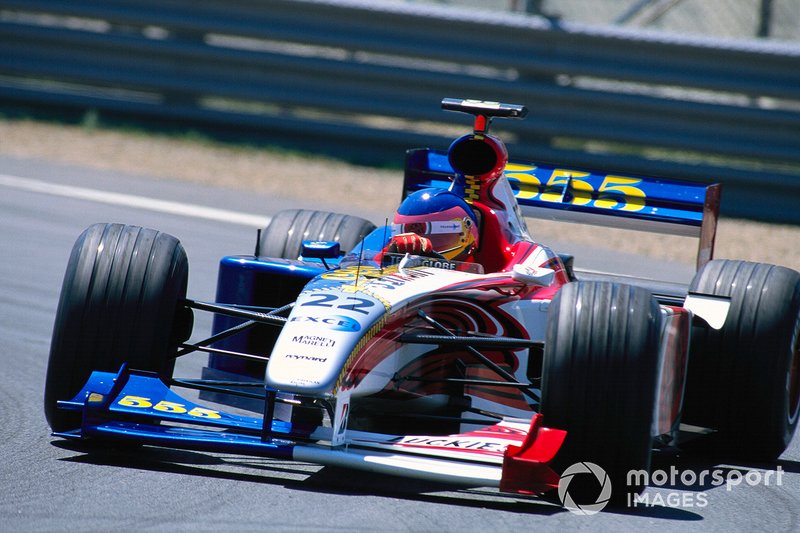
Szafnauer’s entry into F1 was as part of BAR, with a limitless budget that taught him some valuable lessons
Photo by: Rainer W. Schlegelmilch / Motorsport Images
Szafnauer became vice president of Honda Racing Development when the Japanese manufacturer acquired BAR, with a mandate to oversee the relationship between the ‘mothership’ and the Brackley factory. That ended when Honda abruptly withdrew from F1 and put the team up for sale during the 2008 financial crisis. Under Ross Brawn’s ownership the radically slimmed-down team won the 2009 championship, while Szafnauer conceptualised and produced what became F1’s first mobile app.
Feel the force
The team formerly known as Jordan had spent three years being passed around from owner to owner with precious little investment when Vijay Mallya acquired it – and decided to clear out a management Mallya thought lacked ambition. Szafnauer was hired as chief operating officer.
“When I first got there, we had 280 people, an OK budget,” he says. “It was a bit depleted of some of the talent they had in the past as Jordan. But once Vijay bought it and said, ‘I’m gonna be in for a long time,’ I could hire.
“I took it from 280 to 405, and that wasn’t just hiring 125 people, because some left, some retired, some wanted to go elsewhere to see something else, so you had to replace them too. I probably replaced 50-60% of the people there. And then once you hire the new ones, you look for a certain attitude, a certain way of working, being able to work together. And before you know it, the group works really well together.”
Force India developed a reputation for punching above its competitive weight, finishing ‘best of the rest’ behind the leading three works teams twice. A third consecutive fourth-place finish went begging when the team was dragged into the maelstrom of Mallya’s financial difficulties and went into administration in mid-2019. What’s remarkable is that the group remained together both before and during the period of greatest uncertainty before Lawrence Stroll’s consortium acquired and rebranded it.
“We lost no one,” Szafnauer emphasises. “So, we went from 280 people to 405, and then when we went through the bankruptcy time, nobody left – it’s a miracle. And I mean, nobody. Zero. I think it shows the importance of trusting the leader. When I said, ‘Look, it’ll be okay, but we have to stick together,’ everybody trusted that.”
Perhaps it was inevitable that after playing such a crucial role in holding the organisation together he should become disenchanted at that authority becoming diluted as Stroll packed out the c-suite and the executive floor with new hires such as ex-McLaren team principal and COO Martin Whitmarsh. Szafnauer left just over a year ago, saying openly that an F1 team can’t be run by “two popes”.

Szafnauer oversaw the Force India team's transition into Racing Point and subsequent rebrand as Aston Martin under Stroll's leadership, keeping the team's core staff together through tough times
Photo by: Glenn Dunbar / Motorsport Images
The Oscar goes to...
Now it’s time to apply all that experience at Alpine. Szafnauer’s new team has some parallels with BAR in terms of great ambitions currently unfulfilled and geographically disparate chassis and engine departments.
And, much as some rival teams have protested somewhat about the difficulties of operating under F1’s new budget cap, the present figure is almost double what Szafnauer had at his disposal at Force India. He has been able to expand the staff from 850 to over 900 and a few more will join over the winter, including a certain Pierre Gasly.
August, when Alpine suddenly found itself with one driver instead of three, definitely wasn’t easy for Szafnauer. Not only because it was a problem he didn’t expect, but also because it was him in front of the press having to explain how Alpine had no valid contract in place to claim Oscar Piastri. Even though it was Szafnauer’s predecessors who caused the state of affairs which left the CRB unimpressed.
“You know, our lawyers, when they told us we had a contract with him – although in law nothing’s ever 100% – I wish their opinion would have been a little bit more robust or more to reality,” he says. “The right thing to do, though, is not to blame others, but learn from what we did and not repeat it. Blaming others doesn’t help you.
"It was all about who’s the fastest we could get, had youth on his side as well as good experience. So Pierre fits the bill" Otmar Szafnauer
“For me, the most important thing there was not to lose focus on what this team is about, which means on-track performance. All this stuff is about a driver in one seat for next year. So first, ‘Let’s not lose focus as a team, let me worry about that, you guys don’t, we have to finish fourth [in the championship]’.
“And then secondarily, once that water was under the bridge, so to speak, I had to find the best driver we can for our open spot. And because we had good on-track performance, our open spot was attractive to a lot of drivers. At one point I had 14 different drivers calling me. And because it was such an attractive open spot, I knew we would fill it with a very competent, fast driver.”
Szafnauer’s claim that Alpine’s line-up for 2023 will be even better than if the CRB had ruled in favour of his team could be interpreted as a cheap shot at the departed driver. But in Gasly Alpine has an experienced, proven race winner rather than a rookie. While Piastri is certainly one of the standout talents of his generation, he will face a very difficult task at McLaren next to the established and quick Lando Norris.

It was Szafnauer in front of the press having to explain how Alpine had no valid contract in place to claim Oscar Piastri
Photo by: Carl Bingham / Motorsport Images
“He [Gasly] had all the elements,” says Szafnauer, “which was speed, youth and experience. Mainly the speed, and he’s fast. And then it became apparent that there might be a deal to be done, since with us he can have a longer-term future than was promised to him at AlphaTauri, and AlphaTauri were willing to release him if they found a replacement they were happy with. It just fell into place that both those things were possible. And we were fortunate to be able to sign Pierre.
“It was all about who’s the fastest we could get, had youth on his side as well as good experience. So Pierre fits the bill. And the nationality is a bonus. You know, we’re a French team. He’s a French driver, and he’ll now have a French team-mate. So all that’s a bonus. But it wasn’t the driving factor.”
Climb every mountain
Piastri saga aside, Szafnauer’s first year in the role has taken a largely positive trajectory. Alpine’s risky strategy of prioritising performance over reliability paid off: while Red Bull, Ferrari and Mercedes remained out of reach, the Enstone team beat McLaren to fourth in the constructors’ championship.
“It was a bit up and down,” says Szafnauer. “The downs are that I think we deserved to score more points than we did. We didn’t optimise all opportunities, we were a little bit too close in the fight for fourth than I would have liked to be towards the end.
“But the good news is we had a super car, Viry did a great job on improving the performance of the powertrain, and because of it we finished fourth. So it was a great year. I would have just liked it to be a little bit more comfortable than it was.”
Off-track Szafnauer has put much energy into getting to know as many of the staff as possible. Instability and uncertainty has haunted the corridors of Enstone for years now as disappointments on track have begat a series of management reshuffles. He needed the personnel to buy in to the new setup.
“I know them a lot better now,” Szafnauer says. “Still not all of them, but I like the fact that they’re very experienced racers and want to continuously improve.
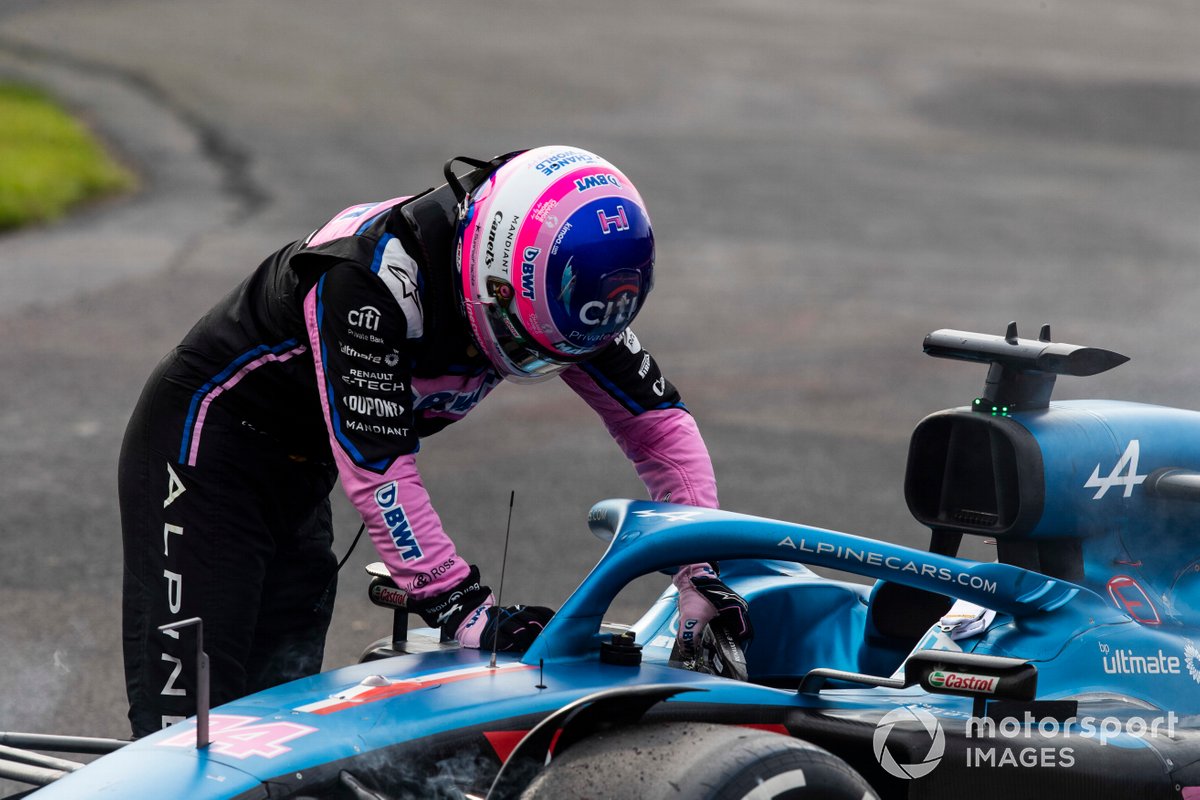
Alpine beat McLaren to fourth by pursuing a aggressive approach to engine development, with the resultant reliability hiccups making the race closer run than Szafnauer hoped for
Photo by: Carl Bingham / Motorsport Images
“We’ve got a good plan in place, we call it a mountain climber plan. That probably comes from the fact that we’re branded as Alpine... So, yeah, we will be climbing that mountain to get better. We have to improve the tools, the efficiency of the place, and also add some skill sets we don’t already have to complement the good people that we have. All that is happening.”
Szafnauer has occupied many roles within and without F1. What appealed at Alpine wasn’t just the question of resources at his disposal – there were plenty of those at Aston Martin – but a relatively uncluttered management structure in which he is clearly in charge, answering only to Laurent Rossi.
“I’m 58 now,” Szafnauer says. “I’ve been in Formula 1 for 25 years. So I think all that experience will help me push this team in the right direction for improvement.
“Yes, I have bosses like everywhere. However, Laurent said, ‘Listen, we didn’t hire you for your French speaking abilities. We hired you for something else’. And that something else is my cumulative experience, which I need to apply here to take those steps forward.”

Alpine will run two French drivers, Pierre Gasly and Esteban Ocon, in 2023
Photo by: Alpine

How Ratzenberger beat the odds to realise his cruelly short-lived F1 dream

F1 uncovered: A weekend behind the scenes with a chief mechanic

When McLaren was pipped by Red Bull in a modern F1 classic

The big opportunity Sainz’s Williams switch affords to F1’s latest centurion

Inside the science of F1 fuel

How F1’s plan for rotating races could look in practice

The early decisions that set Sauber’s rookie for success

How F1 media coverage has evolved in line with its subject

Mercedes has a Russell-sized problem and it is sharing responsibility

Phillips wins inaugural GB4 Winter Series in dramatic circumstances at Snetterton

Rally US host city announced ahead of WRC return

The role Friday practice played in Hamilton failing to achieve a podium at the US GP
Subscribe and access Autosport.com with your ad-blocker.
From Formula 1 to MotoGP we report straight from the paddock because we love our sport, just like you. In order to keep delivering our expert journalism, our website uses advertising. Still, we want to give you the opportunity to enjoy an ad-free and tracker-free website and to continue using your adblocker.


Top Comments