


FIA agreement on TPC testing in F1, but will power unit costs double in 2026?
F1 teams switching engine suppliers next year will be allowed to continue TPC testing, thanks to an FIA agreement requiring manufacturers to supply former customers - however, costs are set to increase significantly

Ferrari power unit
TPC testing - private tests using at least two-year-old cars - has become an increasingly important part of a Formula 1 team’s operation.
These sessions are typically used to develop juniors, although McLaren raised eyebrows last year by running an intensive programme with its current drivers. Red Bull let Max Verstappen test a two-year-old car in Imola as well to get a clearer development path. It prompted the inclusion of a new rule in the FIA’s sporting regulations, capping seasonal TPC mileage at 1,000 kilometres for current F1 drivers.
More changes are coming for 2026; this time related to the supply of power units. Half of the grid will switch engine partners for F1's new technical era: Sauber (to become Audi) will move from Ferrari to its in-house engine, Aston Martin from Mercedes to Honda, Alpine from its own engine to Mercedes, and Red Bull, plus Racing Bulls, will run a brand-new power unit that is developed and built in Milton Keynes.
It raises the issue of how these teams can continue their TPC programmes with older cars, which are still powered by the current engine partners. After several discussions, Autosport has learned that a solution has now been reached. The FIA has mandated that across the next two F1 campaigns, power unit suppliers with expiring contracts must still make current engines available to their former customer teams.
The governing body has enforced a two-year supply obligation, but has not set any cost limits. Since TPC testing is not part of the budget cap, suppliers will be free to set the prices themselves. According to paddock sources during the Belgian Grand Prix weekend, one major PU supplier has already informed its customers that the prices will double compared to the current costs.
It will make TPC testing significantly more expensive in 2026, although that shouldn’t be a problem for most teams involved. As TPC running falls outside the budget cap, the additional spendings won’t come at the expense of a team’s development budget.
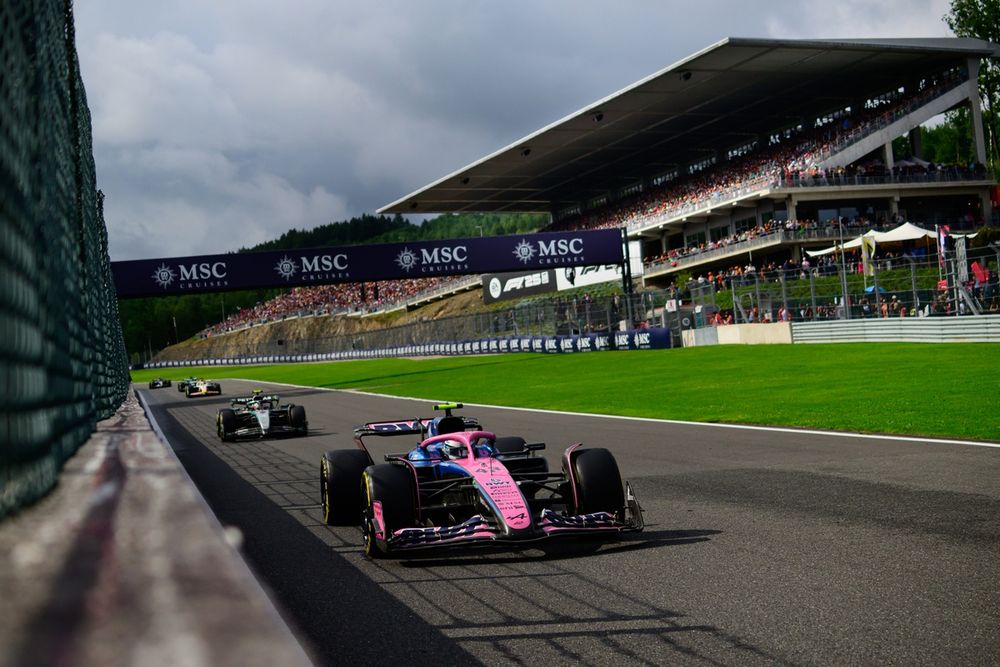
Franco Colapinto, Alpine
Photo by: Erik Junius
“I don’t think it will be a problem,” said one team insider. “Any expense not included in the budget cap doesn’t seem to be an area where F1 teams are looking to save money nowadays.”
Ferrari, if requested, will therefore be required to provide engines to Audi, Mercedes to Aston Martin, and Honda to Red Bull and Racing Bulls.
Alpine will have a simpler task, as it can still use its own power units — unless the Viry-Châtillon facility decides to fully shut down the department responsible for maintaining the current F1 engines.


Share Or Save This Story


What Verstappen knew about Red Bull’s big upgrade when he signed his new F1 deal

Why Horner sees history repeating itself for Newey at Aston Martin

Mekies under the microscope: How different is his leadership at Red Bull from Horner?

WEC Barcelona: Genesis secures maiden series pole from Toyota

What drives Bortoleto as his junior rivals hit new heights in F1

How the M8B became the most dominant car in McLaren’s history

What Verstappen knew about Red Bull’s big upgrade when he signed his new F1 deal
Subscribe and access Autosport.com with your ad-blocker.
From Formula 1 to MotoGP we report straight from the paddock because we love our sport, just like you. In order to keep delivering our expert journalism, our website uses advertising. Still, we want to give you the opportunity to enjoy an ad-free and tracker-free website and to continue using your adblocker.


Top Comments