




F1 is a lose-lose for engine makers
Criticised for 'spoiling the show' if they win or for dissuading others if they struggle, castigated over costs but unable to break even, F1 engine manufacturers are in a painful position, says DIETER RENCKEN
Much criticism was heaped upon the Mercedes/Ferrari engine duopoly in the Formula 1 paddock (and elsewhere) for having allegedly 'destroyed' the 2015 season - with this writer being among the most vociferous critics of Ferrari's use of its historic veto for self-confessed commercial purposes, rather sporting/technical reasons, when it blocked engine cost capping.
However, while both operations conceivably stand accused of placing their respective interests first - surely the very essence of competition in a multi-million dollar global arena - by being highly selective in their (non) supplies to direct competitors, the fact remains that they are hardly culpable for F1's distinct dearth of engine suppliers.
True, Honda's current travails may have frightened off incomers - there could be a raft of reasons why others chose not to follow suit long before the depth of Honda's tribulations problems became evident - but the fact that Mercedes made a (double) winning fist of hybrids proves it can be done; that Honda and not F1's regulations are to blame for this woeful lack of performance.
After all, why insult prospective newcomers by prejudicially comparing them with the lowest common denominator when aspiration is the name of this game? But F1 has yet to learn that truism.
There is an argument that Honda is playing catch-up after missing year one; equally, the Japanese company enjoyed two dedicated developmental seasons while the rest were actively competing, so where lies the problem? Certainly not the regulations...
 Toyota and Honda were among the rush of manufacturer exits in the late 2000s © XPB
|
For that matter, how could Audi (or Hyundai, BMW and Toyota) have known in 2011 - when the current formula was effectively formalised - how formidable would be the Three Pointed Star package, or that regulatory loopholes would enable Ferrari to close the gap? In real terms the others are not absent through fear of competition, but, again, for myriad other reasons - for which F1 has only itself to blame.
While it is convenient to blame the global economic crisis for the mass exits of BMW, Honda, Toyota and Renault (the last-named as a team owner) in 2008/9, the brutal truth is that they did not cut back on other elements of their respective marketing plans - indeed, in many instances, they increased advertising spend and/or embraced other motorsport genres - which indicates they simply viewed their F1 campaigns as cost-inefficient.
The bottom line is that under F1's current structure it is arguably the least hospitable arena of all categories for engine suppliers, and has been for at least a decade now. Consider the formation of FOTA back in 2008: the teams' association was effectively a manufacturer forum, founded off the back of frustrations.
In such low esteem are engine suppliers held in F1 that even the successful brands among them seldom receive recognition, with the losers generally being highly criticised - usually by their partners. In short, teams win grands prix; engines lose races. A lose-lose situation - even for winning engine suppliers.
The engine companies hold no assigned seats on the Strategy Group - despite engine matters being at the forefront of most discussions, particularly at present - and have only a single representative voice on the 26-strong F1 Commission. Therefore Honda depends on McLaren to represent it on both forums, as Renault relied on Red Bull this year and last, and the state of the latter relationship is well documented.
True, a Power Unit Working Group was originally established and recently reinstated, but any proposals are filtered through the official channels outlined above. That procedure led to the current mess in the first place, and in any event the original PUWG failed to entice any newcomers to F1 despite strenuous attempts, and the obvious attraction of road-relevant engine technology. That surely tells its own story.
The engine token system has been reworded so often that even Einsteinian mathematicians no longer understand its intent, let alone practicalities. The homologation process has become elastic, seemingly being dependant upon whoever wishes to run whatever specification at any one time. Is that any way to expect major suppliers to run their $150million per year engine operations?
 Mercedes' dominant engine programme requires a subsidy from elsewhere in the company despite customer deals © LAT
|
Commercially, engine suppliers are on hidings to nothing and nowhere, too. Despite investing gazillions in dedicated F1 engine operations and employing hundreds of top-class engineers they smell not a penny from F1's billion dollar income - instead receiving hefty criticism from the commercial rights holder; win (for 'spoiling' the show) or lose (for deterring others).
Based on publicly available figures, not a single F1 engine supplier makes a profit from engine supply - indeed, estimates have Renault "absorbing" around £100million over two years, with Mercedes' filed statements showing a subsidy from the main company of approximately the same amount - yet in both instances they have been heavily criticised.
Either way, win or lose, they pay - and heavily - for the dubious 'privilege' of supplying power units to a raft of often ungrateful customers, many of whom would be nowhere near an F1 grid were it not for their largesse, then, to add insult to injury, they are unilaterally instructed to halve prices!
Why doesn't CVC establish its own engine supplies for F1? That was the gist of suggestions during a recent F1 Commission meeting, and sources confide that back in 2009, in the wake of the manufacturer withdrawals, just such suggestions were put to CVC. Where did it go? Precisely nowhere.
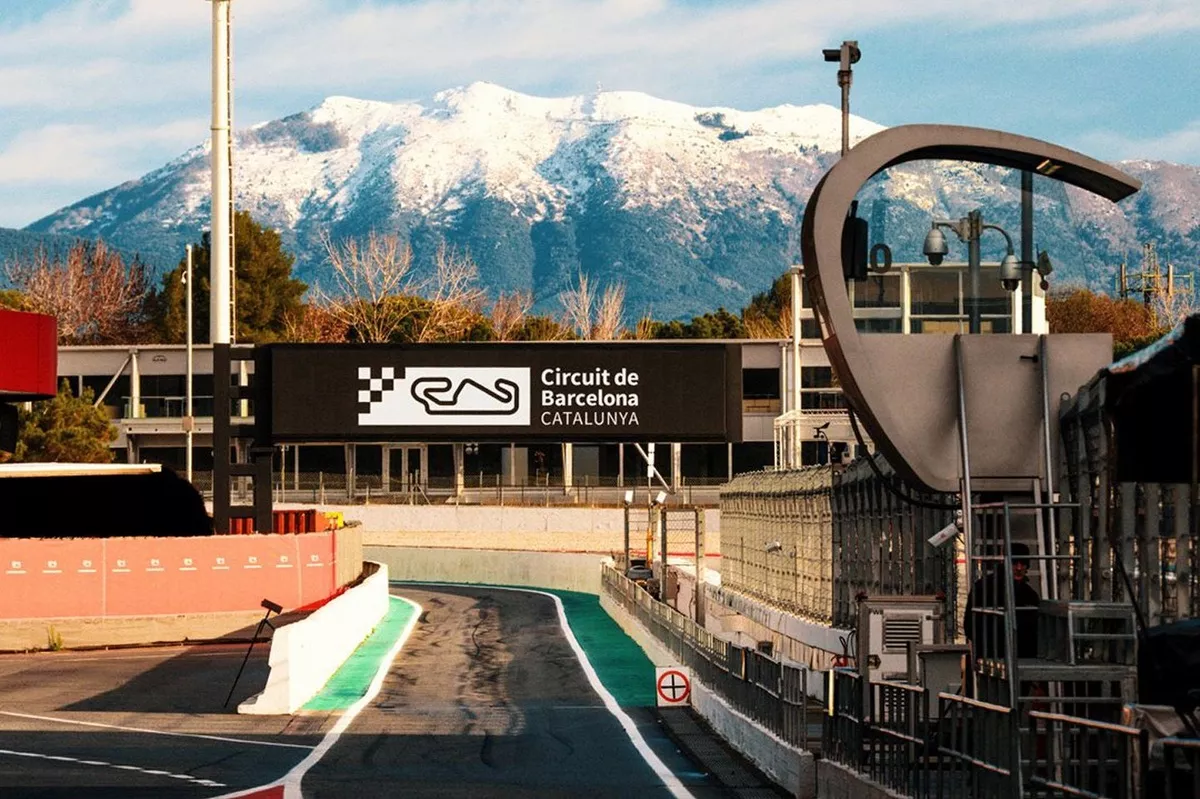
Nor do engine suppliers derive direct paddock and hospitality benefits, as Renault discovered four years ago after a brief fall-out with the rights holder. Not only was the company's hospitality/paddock base banished to the outer edges of Barcelona's circuit, but personnel passes mysteriously produced that ominous "baaaap baaaap" when presented at stiles...
As for hospitality and guest access, engine suppliers are beholden to their team partners unless they splash out on $5000 per head Paddock Club passes - after annually committing 30,000 times that on their respective F1 engine programmes.
When independent engine suppliers - which all and sundry suddenly believe to be the perfect foil for the current duopoly - attempt(ed) to enter the sport they receive(d) little, if any, official encouragement. Indeed, a case could be made that they are actively discouraged, certainly if the fates of PURE and Cosworth are any measure.
 Craig Pollock tried to create an alternative F1 supply with PURE © LAT
|
According to sources in those loops both had developed advanced hybrid engine concepts before realising they were on hidings to nowhere. True, funding was an issue - despite F1's billion-buck turnover and global audiences - but, given the foregoing, that surely is no surprise. After all, which investors would align themselves with F1 under such circumstances, particularly when F1's CEO slams power units at every turn?
During independent interviews, Craig Pollock and Mark Gallagher, formerly of PURE and Cosworth respectively, stated that an independent engine company producing competitive power units could be established for well under £100m, with a two-car annual supply costing around £15m, or approximately the current going rate.
However, PURE's business plan was based upon funding through naming rights, enabling, say, a Dell or Apple or whatever to sponsor the engine and form part of the team title. Think Red Bull racing's deal with TAG Heuer, but almost three years ago.
But, unending criticism of the engine formula from folk who should know better, plus regular threats to switch back to V8s resulted in PURE being unable to attract the necessary funding despite having engine guru Gilles Simon on-board. This was the man who framed the original regulations that Mercedes so successfully exploited.
PURE folded through a lack of investment, and Pollock found himself castigated by the very folk who created an unsustainable environment for his project - the same folk who today lament F1's lack of independent engine suppliers.
F1's commercial controllers have long been masters of illusion, and so it is with F1's engine dilemma - which patently was not created by Mercedes/Ferrari, but by a regime that systematically views motor manufacturers (in general) and engine suppliers (specifically) with disdain, rather welcoming them as crucial partners in a global motorsport. Until that attitude changes there can be no end to F1's engine crisis.
Once again F1 should have been careful about what it wished for.


Vettel: Last Ferrari step back to winning F1 titles will be hardest

Revealed: What F1 teams really spent in 2017

Aftermath of Hamilton Baku clash Vettel's 'worst feeling' of 2017

Why F1 is sitting on a timebomb of contradictions

Lewis Hamilton hopes Fernando Alonso is in 2018 F1 title fight

How teams lost patience with F1's new era

Michael Schumacher doubted himself, reveals ex-Ferrari F1 boss Todt

Why Todt's reign is eight years longer than planned

The reasons behind Ferrari's US GP upgrades

F1 United States GP: Leclerc beats Verstappen to top FP1 in upgraded Ferrari

MotoGP riders ask for guarantees to go and race in Qatar

F1 United States GP live commentary and updates - Leclerc on top in FP1
Subscribe and access Autosport.com with your ad-blocker.
From Formula 1 to MotoGP we report straight from the paddock because we love our sport, just like you. In order to keep delivering our expert journalism, our website uses advertising. Still, we want to give you the opportunity to enjoy an ad-free and tracker-free website and to continue using your adblocker.


Top Comments