


Celebrating 20 years of F1's knockout qualifying system
After a three-year spell of tinkering with qualifying formats, F1 finally captured lightning in a bottle with its knockout system in 2006. Now 20 years on, it has largely resisted the urge to mess with it - and long may that continue

As 2026's sweeping-broom approach to the rules demonstrates, Formula 1 is not averse to reinventing itself - popular or not. Across the past 20 years, F1 has enjoyed nearly as many reinventions and metamorphoses as David Bowie, although which era of the championship is analogous to the Thin White Duke period will undoubtedly serve as a topic of debate. I suppose it depends on how the Venn diagram between the two fanbases overlaps.
In that time we've had the start of the V8 era, the introduction of wide-front-wing-narrow-rear-wing aero, the shift to turbo-hybrids, the reversion to wider and faster cars, a brief spell of ground effects, and now the second-order hybrid machines with a much greater electric element - each with their own sound and vision.
Such is F1's proclivity for change, it's somewhat amazing that it has retained largely the same qualifying system in those two decades. If it ain't broke, don't fix it, or so they say - although that didn't stop those in power from attempting to meddle with a settled and successful format.
Perhaps the application of a stage format, plus its bite-size deliveries of jeopardy, were ahead of the curve; folk like to aim their sociopolitical barbs at the so-called 'TikTok generation' and their apparent inability to consume any media past the 60-second mark, but the sessions-within-a-session preserve interest throughout. And that was in a world before Twitter was even a thing.
F1 qualifying was in a strange place in the early 2000s. While the old qualifying format was condensed into a single hour-long session with 12 available laps in 1996, the less hardcore fanbase was not particularly keen on watching the opening 45 minutes as the big-hitters tended to hang on until track conditions were at their peak. While people like us might love the idea of watching nothing but the Arrows and Minardi drivers scrapping to avoid the back row for three-quarters of an hour, most wanted to see Michael Schumacher and Mika Hakkinen trade blows and sector times for pole.
The single-lap reforms for 2003 were, on paper, a good idea; every car would be broadcast, and the one-shot nature punished the slightest mistake. Yet, it was a bloated format; initially, there was a qualifying session to decide the reverse order of the actual qualifying session, very much a "this could have been an email" pursuit decided by other means. Eventually, the "qualifying to decide qualifying order" was binned off in 2005 in favour of picking the order by finishing order from the previous race, usually funnelling the quickest cars into the best track conditions, unless rain had come to play.

2005 ran under two different qualifying formats, prompting 2006's switch to a knockout system
Photo by: Sutton Images
Let's not forget, however, that the tweak to the one-lap system had come after 2005's maddening aggregate qualifying system. Lap times in Saturday's low-fuel qualifying session - again, a one-shot system - were added to a second lap set in a Sunday session on race fuel. Since this effectively stripped the Saturday session of its excitement, the aggregate system was dumped after just six races.
With the one-lap system easily exploited by just fuelling light (since laps were again set on race fuel for whatever reason), 2006's three-stage knockout qualifying was implemented to maintain excitement throughout: could a big scalp fall at the first hurdle, and could a driver in a smaller team make it all the way to Q3? This is an element of precariousness that continues to this day, most recently experienced by Lewis Hamilton's late-season travails in last year's Ferrari. Who's clear of the cut-off, and who sits on the bubble? The old qualifying systems scarcely hosted such a persistent element of drama, unless (again) inclement weather was involved.
The first Q1 session in 2006's Bahrain Grand Prix hosted its own moment of scalp-based hi-jinks, as if to justify its existence from the get-go: Kimi Raikkonen's suspension failure consigned him to a first-stage exit, while Ralf Schumacher also failed to make the cut - joining the two Midlands and Super Aguris on the bench.
It's been conveniently forgotten that this year's Australian Grand Prix also marks a decade ago when 'elimination qualifying' was introduced for the first time
That's not to say that 2006's qualifying system was perfectly formed in the womb. A cursory read of the Autosport Forum's comments section from the time identifies the main problem with pithy four-letter epithets: the Q3 set-up.
At the time, there seemed to be an obsession within the FIA of making cars qualify on race fuel - and the 10 drivers who'd made it to Q3 had to fill up on their declared fuel load for the first part of the race. Since the teams could add any used fuel back in at the end of the session, the first part of Q3 (which was 20 minutes long!) was spent trundling around the circuit in a fuel-burn phase - purely aiming to burn off some fuel to get the car weight down. Imagine doing that today - if Just Stop Oil was still campaigning, they'd be around to your house in a jiffy to smear fingerpaint on your sash windows before defacing some artwork...
Thankfully, the length of Q3 was cut to 15 minutes at the French Grand Prix to stamp out some of the practice, although this element was never truly fixed until refuelling was banned again for the 2010 season. Q3 has since been run to the same parameters as the other stages, albeit with a 12-minute duration in contemporary times.

The two Toro Rossos escaped Q1 in Bahrain, as Ralf Schumacher and Kimi Raikkonen were the new system's first big scalps
Photo by: Glenn Dunbar / Motorsport Images
Knockout qualifying has been largely good to us across myriad eras of F1, to the point where other championships have adopted a similar style (MotoGP has a version of it, for example, with just Q1 and Q2 sessions). It's not just about getting one lap right, but three - and the closeness of the field in recent years has meant that even the big teams can ill-afford to be conservative in Q1 and Q2. And if you're having an off-day, as Max Verstappen found with a sickly Red Bull in Brazil last year, even the best can struggle to avoid the scythe's remorseless swing. Still, at least his climb through the order on Sunday contributed to a rather exciting race.
But while we celebrate 20 years of our current qualifying format, and long may it continue, that's not to say that F1 ironed out the kinks and left it there to stand the test of time. It's been conveniently forgotten that this year's Australian Grand Prix also marks a decade ago when 'elimination qualifying' was introduced for the first time.
Although ostensibly run to a Q1-Q2-Q3 format, each stage now had a timer. After seven minutes (six in Q2, five in Q3), the driver at the bottom of the timesheet would be eliminated, after which further drivers would be frozen out at 90 second intervals. It worked very much like F-Zero, or certain game modes in Project Gotham Racing (can we get that franchise back please?), where the driver in last place at the end of a lap would get a 'game over' screen, and intended to keep the cars on track to beat the clock.
But it never worked that way. While the first elimination-knockout hybrid format began with a flurry of activity, as the entire 22-car field wanted to get a lap on the board, it wasn't a viable strategy to keep logging laps. To get the best out of the car, you needed a light fuel load and to use up the tyres, but you could only go once; if you fuelled up for more laps, the tyres would suffer.
The majority of the drivers elected to do their laps, pit, and usually stay there if there wasn't enough time or tyres to go again. In a turn that rather capped off the farcical nature of the elimination system, Lewis Hamilton did his pole lap with four minutes to spare, and this thus deprived us of a genuine last-gasp shootout for pole as nobody had the wherewithal to beat him. That he was in parc ferme with two minutes left on the clock was enough to stoke the uproar even further.
"I think the new qualifying format is pretty rubbish," Toto Wolff said in the aftermath, a viewpoint that pretty much everyone agreed with. F1's former ringmaster Bernie Ecclestone agreed at the time, suggesting that it was "pretty crap", but also suggested that F1 should stick it out for a bit longer. Although the teams had voted to revert to the previous system, the F1 Strategy Group duly elected to keep the format in place for the Bahrain Grand Prix - by China, however, this had thankfully been abandoned.
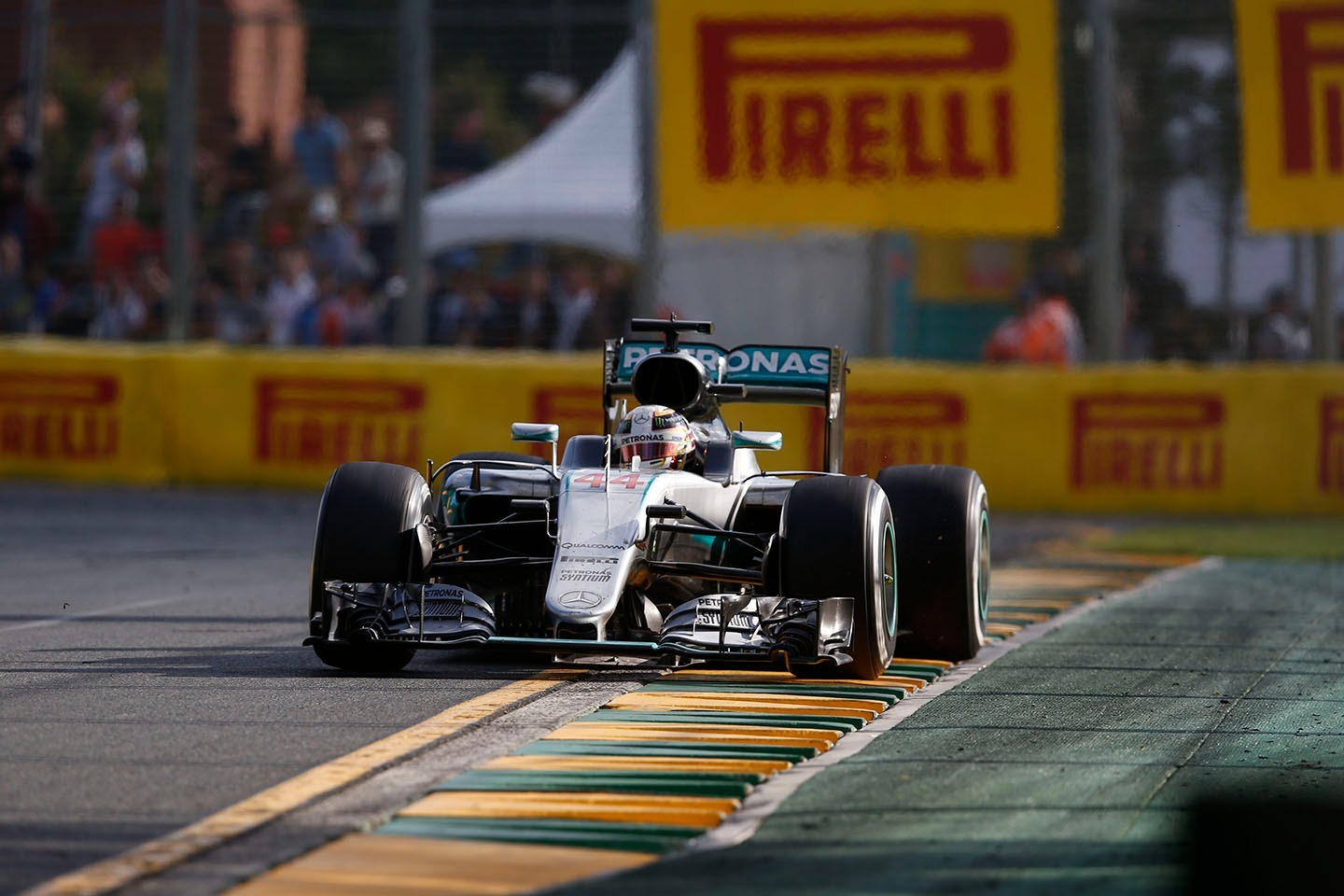
Hamilton snared pole in both of the unpopular elimination-style qualifying sessions in 2016
Photo by: Mercedes
While there may be fans of a certain vintage who prefer the 60-minute format, this writer feels that the current system offers the perfect blend of excitement and jeopardy needed for the TV viewer, without compromising on ultimately rewarding the fastest team and driver on a given day. The minor tweaks to remove the stodgier elements seen in its maiden years have ensured that the knockout format is far leaner and more refined than it had been previously,
So, here's to 20 years of knockout qualifying, and here's to 20 more. Simultaneously fresh and time-tested, one might tritely go as far as saying this: qualifying, it's a knockout.

Let's be honest, qualifying is the exciting bit about the Monaco Grand Prix
Photo by: Andy Hone / Motorsport Images


FIA expects F1 races in Qatar and Abu Dhabi to run as planned

Why Piastri has struggled to show his best with this year's McLaren MCL40

Lights, Camara, action: How Haas picked F1's latest rookie for 2027

Horner's inside story of how Red Bull built its own F1 engine

Why Mercedes' latest 2026 F1 update is no downgrade

Singapore Grand Prix Driver Ratings 2026

What we learned from the 2026 F1 Singapore GP sprint race and qualifying

The political minefield set out by F1’s recent cost-cap grievances

FIA expects F1 races in Qatar and Abu Dhabi to run as planned

Top five roles on Motorsport Jobs this week

Champions crowned at incident-filled Donington Park 750 Motor Club meeting

Why Toyota’s 2026 WEC triumphs have put it into the all-time greatest endurance racing team debate
Subscribe and access Autosport.com with your ad-blocker.
From Formula 1 to MotoGP we report straight from the paddock because we love our sport, just like you. In order to keep delivering our expert journalism, our website uses advertising. Still, we want to give you the opportunity to enjoy an ad-free and tracker-free website and to continue using your adblocker.


Top Comments