


Analysis: what the Red Bull hearing verdict means for Formula 1
The FIA Court of Appeal's hearing of Red Bull's attempt to overturn Daniel Ricciardo's disqualification from the Australian Grand Prix was a test case for Formula 1's new fuel-efficiency regulations


By rejecting it, the court ensures the viability of the fuel-flow sensor to police both the 100kg/h maximum fuel flow and the 100kg-per-race fuel allowance.
As the FIA's legal representative, Jonathan Taylor argued, competition cannot be allowed to become the "wild west".
That does not mean Red Bull's appeal was frivolous. While the media is not privy to the written testimony and data, based on yesterday's six-hour hearing in Paris, there are grounds to believe Red Bull did not exceed the fuel-flow limit.
It was crucial to Red Bull's case to be able to prove this with certainty. This was difficult given data gathered from the fuel rail on which the injectors are mounted still needs to be run through software to calculate the flow rate.
You can understand why Red Bull wanted to rely on its own, likely more accurate data.
This was not a case of cheating, because it was done in plain sight. But it was a clear challenge to the policing of the regulations.
These ultrasonic sensors are new technology. While measuring flow in stable conditions is relatively straightforward, to do so instantaneously in a moving car under demanding conditions is not.
The FIA has established a calibration protocol and the error bars are big enough to ensure that only clear cases of going over the fuel-flow limit as measured by the meters are punished.
In the long-term, the technology does need to improve to be as precise as is required for F1. All teams have encountered problems and there are discrepancies between their own data and what the sensors say.
It's tempting to cast Red Bull as the bad guy in all this, trying to pull a fast one. But it had a legitimate case and the hearing cast light on the current state of this technology.
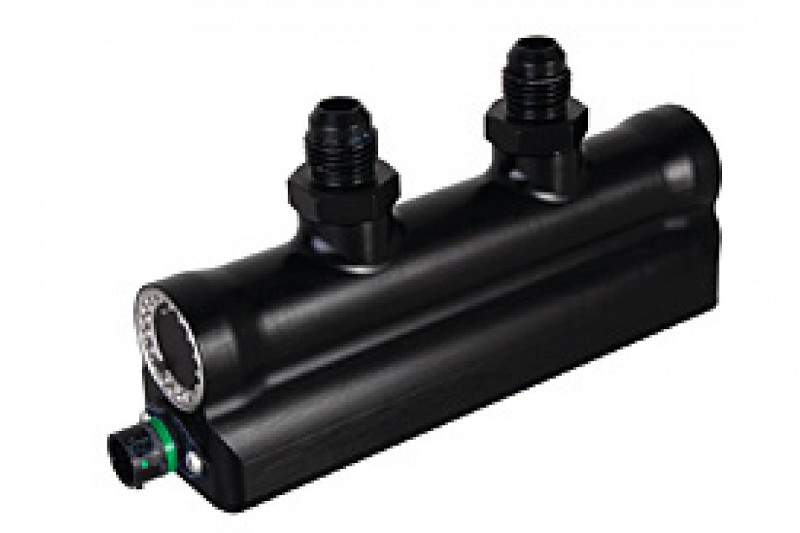
No verifiable reason was given for why the fuel-flow meter it used during the race in Australia had started reading higher than before after the first three runs of free practice two.
And as Red Bull's legal team pointed out, the sensor in question was in the possession of the FIA but without any subsequent testing to understand exactly why there was this difference.
All of this points to more analysis and development being necessary because there are question marks about just how level this playing field is and whether race results will be distorted by the accuracy of any given sensor.
For now, while the sensors are not perfect, they are necessary. It's not ideal, but self-policing is even more dangerous.
This is why the verdict was probably the best one for F1.
Share Or Save This Story


Did Bianchi have potential to become F1 world champion?

Autosport 75: Kubica's road to recovery and beyond

Autosport 75: When Red Bull had its own intra-team fight like Norris vs Piastri


"You're not allowed to make a difference" – Verstappen says the fastest F1 drivers are penalised

The Red Bull seat nobody is talking about – and why that's the biggest compliment of all

What Red Bull's succession plans for Lambiase and Marko reveal about team's F1 future

‘If you're not ready to adapt, you're not good enough’ - Norris addresses changing driving styles in F1 2026
"You're not allowed to make a difference" – Verstappen says the fastest F1 drivers are penalised

Russell: Data shows software calibration behind recent F1 struggles, not driving style

Mercedes identifies Russell's F1 power unit software issue
Subscribe and access Autosport.com with your ad-blocker.
From Formula 1 to MotoGP we report straight from the paddock because we love our sport, just like you. In order to keep delivering our expert journalism, our website uses advertising. Still, we want to give you the opportunity to enjoy an ad-free and tracker-free website and to continue using your adblocker.


Top Comments