


Analysis: McLaren's MCL39 unveil offers few details - but there's some evident developments
McLaren is the first team to unveil its 2025 Formula 1 challenger, but as is familiar during launch season, it has kept many details tightly under wraps. But a handful of key developments hint at what the Woking-based squad has focused on


McLaren MCL39
Photo by: McLaren
Formula 1’s 2025 launch season kicked off in cryptic fashion with the constructors’ championship winners, no less.
McLaren opened the yearly cloak-and-dagger proceedings with a quintet of images of its MCL39 from a distance while undergoing its Silverstone shakedown, dressed in a papaya and black dazzle camo livery that makes its defining details significantly difficult to digest.
Deliberate? Of course; it wouldn’t be launch season without a bit of photographic trickery – or indeed, general opacity. That’s what makes it fun...
It should be noted that there are some clear similarities between the new MCL39 and its MCL38 predecessor, perhaps to further obfuscate how the car will appear in testing or at the opening round of the season. The front and rear wings appear to be in the same specification that the team ended the 2024 season with; the inboard-loaded front wing with the squared-off front lip that led the MCL38 is there, as is the rear wing with the triangular mainplane section.
Despite the familiar front wing, one can still see clear changes viewing the car from front-on. The team has retained the use of pull-rod activated front suspension, where the rockers connected to the torsion bars are located at the bottom of the chassis to lower the centre of gravity. But it appears that, with the few angles that we have, that the rear leg of its upper suspension wishbone has been shifted to an even lower mounting point. Face on, it looks as though it sits almost ‘flush’ with the pull-rod.
The inclination of suspension wishbones has been a much-iterated feature of the cars in this generation, which reaches its climax at the end of the year. There are immediate aerodynamic properties to doing so, in that one can mould the suspension fairings to assist the transit of airflow towards the sidepod’s undercut and keep the flow energised by reducing its path around the car towards the rear.

Although the MCL39 is similar to the MCL38, McLaren has still made some changes
Photo by: McLaren
But the effect is two-fold. Suspension arm positions not only change the load paths through the chassis, but also affect the dynamic properties of the car; in this instance, this should mitigate the effect of dive – when the car pitches forward under braking and brings the front of the floor closer to the ground.
Changing the inclination of the floor can upset the aerodynamic properties underneath, so keeping it stable ensures that the Venturi tunnels underneath work at a similar level through a number of situations – on the straights, under braking, and through corners.
Further back, there’s the presence of an elliptical air intake above the driver’s head, a clear difference over the rounded square shape McLaren has employed over the past couple of seasons. The engine cover appears to be a smidgen wider at the top to accommodate this, but the trade-off is that the area just above the sidepods appears to be a touch less bulky in response – particularly around the tail end. The ‘shelf’ that has been a frequent feature here, where the bodywork flares open for heat expulsion before tightening up underneath, is much less pronounced.
At this point, the sidepods do not seem to be worlds apart from those seen on the MCL38, maintaining the clear top-side ramp to help offer the airflow a course over the top of the diffuser. This should come with a channel towards the trailing edge, although this is not immediately visible from the images provided by the team.
There’s more to come from McLaren in the coming weeks, even if it is simply aspects that will become clearer in the flesh
We’d say the inlets look broadly similar too, but the nature of the livery used to shake down the MCL39 means it’s very difficult to note the shape. There’s the merest hint of a P-shaped inlet, with a narrow opening extruding downwards along the chassis flanks, but this could equally be a trick of the light.
In any case, the over-wing above the inlets remains in place, although the outer edge now curls up to serve as a mirror attachment point. The scope to generate a tip vortex is lost like this, but perhaps the aerodynamicists felt it was no longer necessary to do so.
The push-rod rear suspension remains in place, largely to keep the springs and rockers out of the diffuser area and open up the available space to build downforce. McLaren has used this for the past three seasons, so there’s no significant change to the formula here.

McLaren boss Stella says the rate of development has been consistent with previous years
Photo by: McLaren
It’s hard to see much more given the selectivity of imagery provided and the camouflage livery, as suggested previously, which was clearly the intention. But one can surmise that there’s more to come from McLaren in the coming weeks, even if it is simply aspects that will become clearer in the flesh.
Team principal Andrea Stella contends that the MCL39 shown is “pretty substantially the one that we will see during the Bahrain test”, although people might infer different things from that statement. He says that the team chased the usual goals in downforce and aerodynamic efficiency, although noted that the team was “considerate” in how much it dared to innovate given that it was already building from a title-winning basis.
McLaren has also sought to improve its long-run pace with the MCL39, and the tweaks to the suspension layout have also been carried out to assist how the car employs its Pirelli tyres over the course of a race distance.
With no completely fundamental issues present in its MCL38, the focus has been relatively simple for McLaren – in that it could chase further performance gains while also being wary not to paint itself into a corner with supplementary traits that make the car more difficult to manage.
Stella says that the rate of development has been consistent with that he has seen during his tenure as team principal, one that helped the team turn around its dismal start to 2023 to constructors’ champion in 2024. Perhaps we’ll have to circle back on the finer nuances of the car when testing is in full flow, but fundamentally McLaren appears to have retained its trajectory rather than completely throw the baby out with the bathwater in 2025.
In any case, a bigger challenge remains: defending a constructors’ title and simultaneously lodging a successful bid for the drivers’ crown. To achieve that, the MCL39 must do what its forebears could not: start the season at the top, rather than playing catch-up in the opening rounds.

Watch: Why Stella is confident as McLaren launch their F1 2025 season
Share Or Save This Story


Hadjar set to make Red Bull return at Azerbaijan GP after injury recovery

F1 Monaco GP: Antonelli takes dominant win from Hamilton after chaotic finish

What we learned in Friday practice for the 2026 F1 Japanese GP


Why McLaren cannot fix its F1 car handling until 2027

Why McLaren considers Norris-Piastri Singapore clash so “serious”

How the Bahrain GP in Malaysia exposed Red Bull’s hidden resurgence
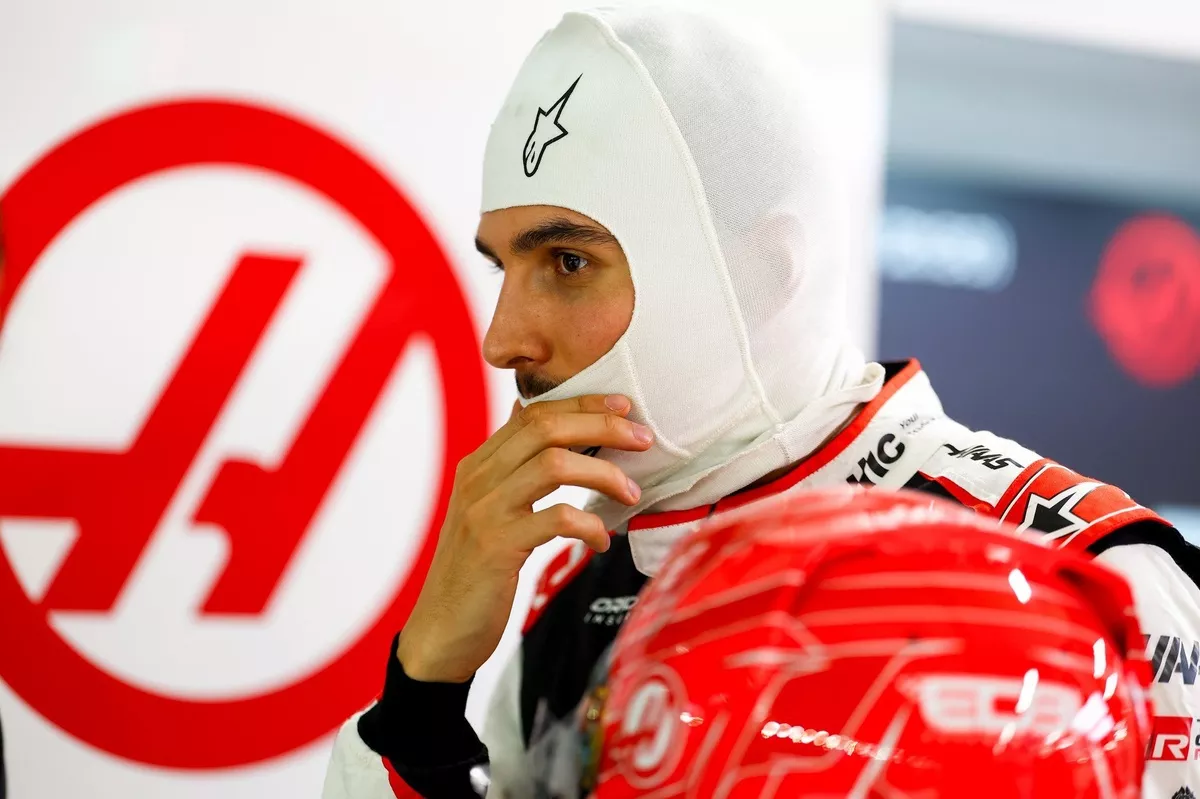
Camara over Ocon - did Haas make the correct call for F1 2027?

Camara to make F1 debut as Ocon's replacement at Haas in 2027

Mekies under the microscope: How different is his leadership at Red Bull from Horner?

Rwanda turns to F1 as it moves forward from a chequered past
Subscribe and access Autosport.com with your ad-blocker.
From Formula 1 to MotoGP we report straight from the paddock because we love our sport, just like you. In order to keep delivering our expert journalism, our website uses advertising. Still, we want to give you the opportunity to enjoy an ad-free and tracker-free website and to continue using your adblocker.


Top Comments