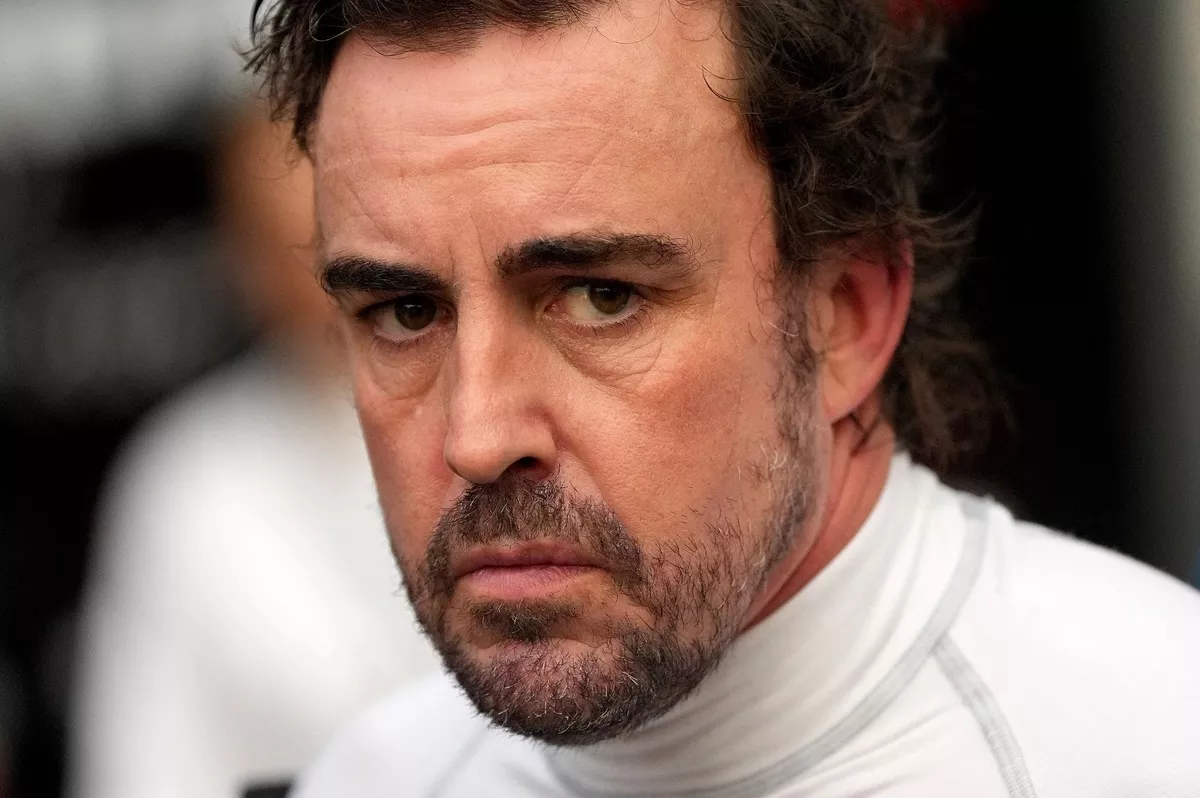


A decade of driver ratings - What we've learned
Autosport has now completed a decade of rating Formula 1 drivers after every grand prix. Who comes out best from our verdicts, and how are those rankings likely to change over the coming seasons as new stars rise?

Rating the performances of Formula 1 drivers is one of the most entertaining - and controversial - topics for fans and journalists.
Weighing up how well a driver has done given their circumstances, machinery and experience is a complicated task and there's always scope for disagreement. The readers' ratings last year agreed with Autosport's driver rater Edd Straw that Lewis Hamilton was the top performer of the season, but after that there were some key discrepancies.
Although Autosport sporadically did driver ratings before, it has only done so consistently since 2009.
That means we now have 10 full seasons of data going into 2019, furnishing us with an opportunity to see which drivers our numbers say performed best over the past decade.
F1's leading lights
Data is more reliable when there's more of it. There are 15 drivers who have contested five or more seasons during those 10 years, and who can therefore be compared fairly. For a season to be included, the driver must have started in at least half the races.
The table below shows the average annual ratings of those 15 drivers, along with the number of 10/10s each was awarded. The final column indicates the average number of 10/10s they scored each season.
Long-standing drivers ranked
| DRIVER | AV SCORE | 10/10s | 10/10s PER SEASON |
| Hamilton | 8.18 | 39 | 3.9 |
| Alonso | 8.05 | 24 | 2.4 |
| Vettel | 7.97 | 31 | 3.1 |
| Ricciardo | 7.49 | 12 | 1.5 |
| Rosberg | 7.48 | 12 | 1.5 |
| Button | 7.36 | 10 | 1.25 |
| Bottas | 7.36 | 3 | 0.5 |
| Hulkenberg | 7.34 | 10 | 1.25 |
| Webber | 7.18 | 7 | 1.4 |
| Perez | 7.04 | 5 | 0.625 |
| Raikkonen | 6.95 | 2 | 0.25 |
| Grosjean | 6.86 | 7 | 1 |
| Massa | 6.71 | 3 | 0.3333 |
| Sutil | 6.46 | 2 | 0.4 |
| Ericsson | 6.44 | 0 | 0 |
Unsurprisingly, multiple champions Hamilton, Fernando Alonso and Sebastian Vettel top the list, with a significant gap to the rest. It's worth noting that neither of Alonso's titles are covered by our period, indicating the high level he maintained subsequently despite a mixed bag of machinery.
Hamilton and Alonso were on almost identical scores until the start of 2017. While Alonso's scores remained reasonably high, Hamilton's great performances in the face of an improving Ferrari/Vettel challenge have lifted him clear.
Five drivers have topped the seasonal average during the decade. Hamilton has done so six times, sharing 2017 honours with Max Verstappen. Vettel has been the top scorer twice (2011 and '13), while Jenson Button (2009) and Alonso (2012) took singleton successes.

The single highest averages scored across a season are 8.79 (Vettel in 2011 and Hamilton in 2014) and 8.76 (Hamilton in 2018). Vettel and Alonso share the record for the most 10/10s scored in a single season - seven.
Daniel Ricciardo is the top non-champion, with stats very similar to Nico Rosberg. The 2016 champion's under-pressure replacement at Mercedes, Valtteri Bottas, has figures very close to one-time title-winner Button, though his peaks so far have been lower.
Kimi Raikkonen fans will be disappointed by the Finn's position, but the average reflects his broadly underwhelming performances
Many have argued Nico Hulkenberg is worthy of a top seat in F1 and the average ratings support that view. He's comfortably the top non-winner, sits eighth overall and is surely capable of more than just the unofficial 'Class B' crown he won in 2018. His problem, apart from taking on Ricciardo at Renault in 2019, could be the scores of some of F1's newcomers (see below).
Kimi Raikkonen fans will be disappointed by the Finn's position, but the 6.95 average reflects his broadly underwhelming performances since his F1 return in 2012, particularly at Ferrari. Had Autosport's ratings existed throughout his pomp in the early seasons of the millennium his average would surely improve, probably to the mid to high-7s.

Felipe Massa's score similarly misses his best years. It's surely not a coincidence that his highest average comes from his half-season in 2009, before his serious accident in qualifying at the Hungaroring.
Romain Grosjean's figures also support the general view of the Haas driver. His average is relatively poor, but he has more peaks (seven 10/10s) than those around him in the list. When Grosjean is on it, he's on it. But he needs fewer bad days.
The 'newcomers'
Looking at the drivers who will be on the grid in 2019 but have completed fewer than five seasons so far is also illuminating, though the top performer isn't a surprise. For comparison purposes, the now-absent Esteban Ocon and Stoffel Vandoorne are included at the bottom.
'Newcomers' ranked
| DRIVER | AV SCORE | 10/10s | 10/10s PER SEASON |
| Verstappen | 8.02 | 13 | 3.25 |
| Leclerc | 7.86 | 2 | 2 |
| Gasly | 7.67 | 2 | 2 |
| Sainz | 7.37 | 3 | 0.75 |
| Kubica | 7.08 | 6 | 3 |
| Magnussen | 6.99 | 3 | 0.75 |
| Kvyat | 6.73 | 0 | 0 |
| Stroll | 6.24 | 0 | 0 |
| Ocon | 7.58 | 1 | 1 |
| Vandoorne | 6.56 | 2 | 1 |
Verstappen's numbers are clearly in the realms of F1's elite - despite his scores being extremely low in the first part of last year. His average would put him third on the main list, just behind Alonso and ahead of Vettel. If he can smooth off his rough edges, he could challenge Hamilton's scores.
Although we only have one season to go on in each case, Ferrari's new signing Charles Leclerc and Verstappen's 2019 Red Bull team-mate Pierre Gasly averaged scores in their rookie campaigns that indicate both deserve their shots in top cars. It seems, by and large, that the right drivers end up in the right seats.

Ocon fans might take exception to that, given he is out of a race drive in 2019, but everyone's expectation is that we will see him back soon. Seeing as his 7.58 average puts him firmly in the Rosberg/Ricciardo zone, that makes sense.
Perhaps unsurprisingly, Robert Kubica's score is above that of fellow returnee Daniil Kvyat. The Pole's figure is boosted by his superb 8.11 average in his final pre-rally accident campaign in 2010.
Bottom of the pops
Apart from the mediocre averages of Adrian Sutil and Marcus Ericsson in the main table, a couple of other drivers come out badly from the decade of scoring.
The worst season average for a driver who completed an entire campaign was Kazuki Nakajima, who scored just 4.8 across 2009. Having racked up nine points in his rookie F1 season the year before, Nakajima failed to get into the top eight (for which points were then awarded) in a Williams that Rosberg used to finish seventh in the drivers' table.

But the lowest individual scores belong to Luca Badoer for his two Ferrari outings in 2009 following Massa's accident. He scored 0.5 in the European GP in Valencia, where he was 1.5 seconds off the back of the field in Q1 and finished 17th, more than a lap behind team-mate Raikkonen.
He doubled his score next time out at the Belgian GP, in which he was 14th and last having started at the back - in a race won by Raikkonen.
Even taking into account the tricky nature of the F60 and Badoer's lack of running, his two outings were woeful and nowhere near the level he would have been at during the main part of his career from 1993-99.
Stats limitations
No method of comparing drivers can be definitive and our ratings have their limitations.
Firstly, it's worth pointing out that the ratings from each grand prix are awarded by a single journalist present. Edd Straw (2009-14 and 2017 to date) and Ben Anderson (2015-16) have performed that role over the past decade.
Secondly, some drivers on the list, most notably Raikkonen and Massa, suffer from not having the best period of their careers covered. Would Alonso creep back ahead of Hamilton if ratings for the period before 2009 were retrospectively created?

Finally, sometimes more information that would have affected a driver's score, such as hidden car damage, can come to light after the ratings have been published. This also helps to explain why Autosport's Top 10 F1 drivers at the end of each season aren't necessarily the same as the top 10 in the average ratings.
Nevertheless the aim is always to score the drivers objectively, utilising information and insights gleaned from teams and drivers. The results from the past decade tally with the wider perception and other statistics, such as titles won. It's hard to argue that Hamilton, Alonso and Vettel haven't been the top performers of the period, or that Verstappen and Leclerc aren't the drivers most likely to join them.
While the figures do broadly show that the best drivers normally end up in the top cars, at least for parts of their careers, they also highlight the exceptions. Hulkenberg's status as the best non-winner - after 156 GP starts - is probably the clearest example.
The interesting thing now will be to see if Vettel can raise his game to challenge Hamilton for the title and move back towards him in our ratings in 2019. And just how high Verstappen and Leclerc can climb this year and beyond.
Statistics compiled by Graham Keilloh and Elliot Wood


The greatest F1 campaigns with no wins

Top 10 F1 results changed by backmarkers – the passes

Top 10 F1 results changed by backmarkers – the clashes

Stars, cars and highlights from the 2026 Goodwood Revival

The Egal has landed – again

Autosport magazine: Antonelli and a Can-Am celebration

Top 10 Can-Am drivers

Top 10 Can-Am cars

Inside Alonso's decision to contest the 2027 Dakar Rally with Aston Martin

The greatest F1 campaigns with no wins
MotoGP to introduce sprint qualifying amid 2027 format changes

Ogier to skip Monte Carlo with other WRC 2027 plans undecided
Subscribe and access Autosport.com with your ad-blocker.
From Formula 1 to MotoGP we report straight from the paddock because we love our sport, just like you. In order to keep delivering our expert journalism, our website uses advertising. Still, we want to give you the opportunity to enjoy an ad-free and tracker-free website and to continue using your adblocker.


Top Comments