


F1 releases details of latest rule changes
The FIA has released details of the latest changes to the Formula 1 Sporting Regulations ahead of the return of racing in Austria next month under COVID-19 restrictions


The updates were formally passed by the World Motor Sport Council on Friday, and officially published by the FIA on Saturday morning.
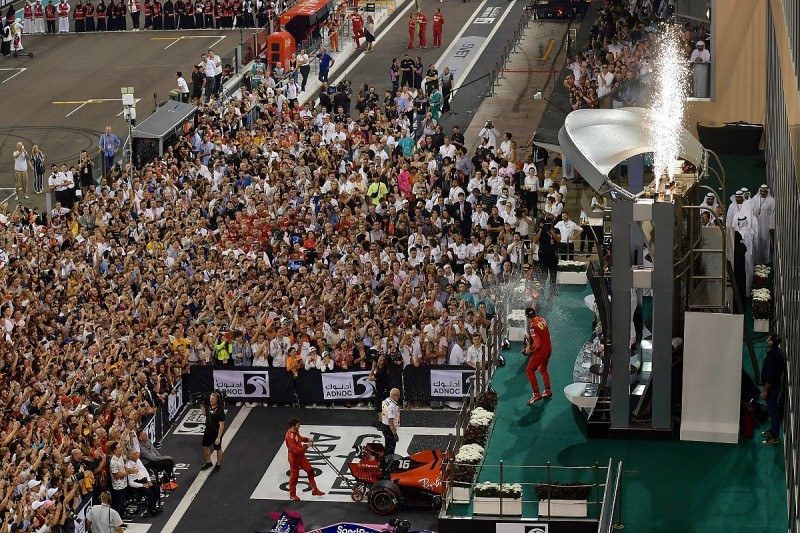
The FIA has given no specific details of how podium ceremonies will work for closed races, but has kept its options open by stating that for closed races "the procedure for the podium ceremony will be detailed in event notes issued by the race director."
For open events that feature spectators the podium ceremony will run to the established procedures, though there are no immediate plans to open grands prix up to the public.
One of the main changes is that the grid procedures have been tweaked to allow for social distancing, with a minimal amount of people involved, and for less time.
Teams are only allowed to have 40 personnel on the grid, a number that equates to exactly half the total head count that they are now allowed to take to races.
Without the usual full pre-race ceremonies, the pit exit now closes 20 minutes before the start, rather than the usual 30.
Cars will have to have their tyres fitted five minutes before the start, rather than three, and at that signal "team personnel and equipment trolleys must commence leaving the grid."
A new rule states that "when the three minute signal is shown, no more than sixteen team personnel for each competitor are permitted on the grid."

The remaining crew members will have to leave before the 15 second signal, as usual, while the new five minute tyres fitted rule will also apply to race resumptions following red flag periods.
To compensate for the altered garage working practices teams are having to deploy now due to social distancing procedures, the curfew has been shortened to eight hours on Thursday and Friday to allow teams to work an extra hour.
Pirelli's request to have more flexibility in terms of the timing of tyre allocations in the context of a fluid calendar has now been formally agreed.
Previously the tyre supplier had to nominate its compound choices 15 weeks before flyaway races, and nine weeks before European events.
Those requirements have been deleted, and the rules now say that the allocations should be made known "unless otherwise determined by the FIA and with the agreement of the supplier, no less than two weeks prior to each event".
As expected, all drivers will be given the same allocation, so teams will no longer choose how many sets of each compound their drivers will have for each weekend.
That fixed allocation is two sets of hard, three of mediums, and eight softs.
The provision for compulsory running of extra experimental tyres has been tweaked slightly, and will now take place in the first 30 minutes of FP2, instead of the last 30 minutes.
The FIA has also allowed for any travel issues stewards may face in getting to a race, allowing them to work remotely.
In a change to the aero testing restrictions teams, have been given a chance to do some work on their 2022 packages this year, but only in relation to improving their brake systems.
All other 2022 aero work has to wait until 1 January 2021.

Share Or Save This Story


Krack: Aston Martin F1 team no longer in “no-man’s land”

Gasly rues costly floor damage from Ocon contact in F1 Japanese GP

How an F1 underachiever became a Japanese political player

Portugal to be absent from WRC 2027 despite date agreement

Whether Baku was Red Bull's last realistic opportunity of winning in F1 2026

Why there’s no perfect solution to the WEC safety car conundrum

Keen and Bryant snatch last-gasp Spa Six Hours win
Subscribe and access Autosport.com with your ad-blocker.
From Formula 1 to MotoGP we report straight from the paddock because we love our sport, just like you. In order to keep delivering our expert journalism, our website uses advertising. Still, we want to give you the opportunity to enjoy an ad-free and tracker-free website and to continue using your adblocker.


Top Comments