



Giorgio Piola: How Formula 1 teams are changing wings for Canada
Multiple Formula 1 teams have redefined their rear wing designs ahead of the Canadian Grand Prix in a quest to find more straightline performance at the Montreal circuit

Ferrari, Toro Rosso and Racing Point are just some of the teams to bring new rear wings to Canada, tailoring their aerodynamics to the demands of the longer straights on the circuit.
Typically, teams opt to create a 'spoon' section in the centre of the wing at circuits that aren't traditionally low-drag, but do still have long acceleration zones.
This is to create a compromise between minimising drag and developing enough downforce for the slower sections.
Ferrari's rear wing - seen on Charles Leclerc's car (left in Giorgio Piola's image below) - seems to be in a similar specification to the wing run in Baku, where the outboard sections of the wing are raised to reduce the overall frontal area.
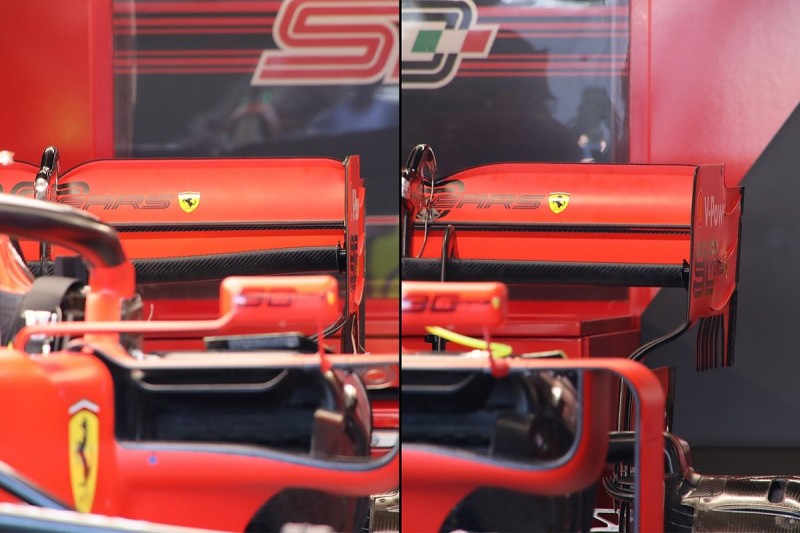
Generally, the outboard sections of a wing develop the weakest pressure differentials compared to the centre section, and so produce a weaker level of downforce.
Reshaping the wing means it produces less drag with the caveat of offering a marginally reduced downforce output.
Curiously, Sebastian Vettel's car is equipped with a more conventional, flatter wing (right) - suggesting back-to-back running will take place in Friday's practice.

Toro Rosso has persisted with a shallow spoon-shaped wing throughout the season so far, but has exaggerated its depth for Canada.
Unlike Ferrari, Toro Rosso's Baku wing had a vastly reduced angle of attack without the spoon section - and so this appears to be a brand new design for Montreal.
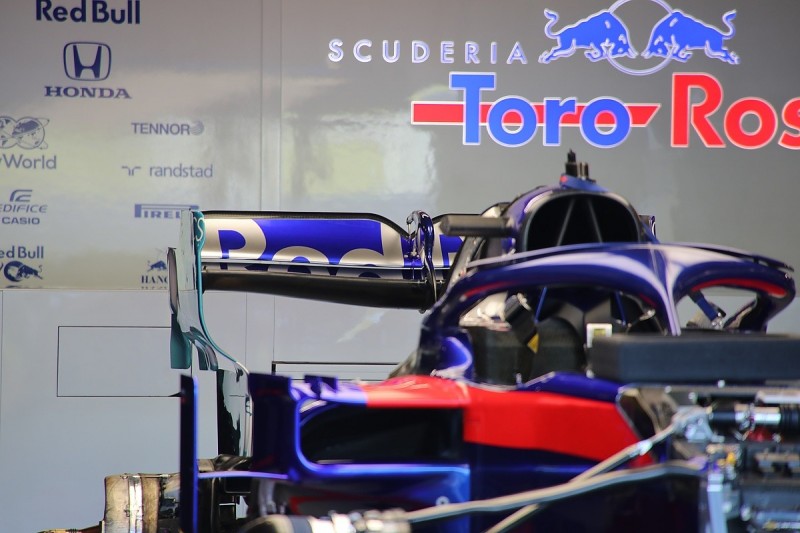
This is also the case for Racing Point's new rear wing; so far this season, the central section's leading edge has been raised, aiming to improve the camber of the rear wing without the drag penalty.
The team has discarded that solution for Montreal, instead electing to create a wing that sweeps down in the central section.
After disappointing races in Spain and Monaco, this change of concept seems to be Racing Point's attempt at arresting the current slide.

Share Or Save This Story

The downforce choices that proved key at the Saudi GP

Revealed: Ferrari’s radical 2022 F1 nose idea

Piola: How new parts will influence 2020 designs

Why "crazy" power unit success is so meaningful for Red Bull - and for F1

McLaren targets Norris’ costly fuel system issue with Singapore F1 power unit fixes

How Ford is "hitting milestones" in preparation for WEC Hypercar assault

Audi F1 drivers reveal biggest engine limitation – and why they’re not worried
Subscribe and access Autosport.com with your ad-blocker.
From Formula 1 to MotoGP we report straight from the paddock because we love our sport, just like you. In order to keep delivering our expert journalism, our website uses advertising. Still, we want to give you the opportunity to enjoy an ad-free and tracker-free website and to continue using your adblocker.


Top Comments