


In conversation with a McLaren legend
Tyler Alexander has seen it all at McLaren, first joining the team as a mechanic in 1963. As McLaren celebrates its half-century, he shared his memories with JONATHAN NOBLE
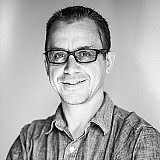
Tyler Alexander has been there, seen it and done it all at McLaren.
After cutting his teeth as a mechanic in his native United States, he witnessed up close the formation of McLaren in 1963, when he originally joined as a mechanic.
He quickly rose through the ranks and became one of Bruce McLaren's most trusted lieutenants.
His experiences with McLaren, Teddy Mayer, Dan Gurney, Denny Hulme and the raft of stars who each helped play a part in the team's 50 amazing years has become the stuff of legend.
Having seen many eras at McLaren - from the initial building blocks, to its survival after Bruce McLaren's death, and then the success, failures and that key arrival of Ron Dennis - Alexander has a wealth of knowledge about life at the team.
As McLaren celebrates its first half century, and ahead of the publication of his own photographic book 'Inside McLaren', AUTOSPORT caught up with Alexander for some unique insights into the early days - and more recent history.
ON BRUCE MCLAREN THE LEADER...
 McLaren was adored by his team © LAT
|
"Bruce had so much damn charisma. He didn't know it, but it oozed out of him.
"When Bruce died, Eoin Young [McLaren's secretary, who became a noted journalist] wrote a letter to Bruce's mother and father and there was a sentence in that letter that summed up the whole part of Bruce McLaren. He said: 'We didn't work for Bruce McLaren, we worked with Bruce McLaren'. There was nothing better to say.
"I also remember a comment from Howden Ganley [McLaren mechanic and racer] who said that if we all came to work one morning and Bruce said, 'Line up in single file, we're going to march across the Sahara Desert,' then we would all have followed him out of the door and not one would have asked why.
"Bruce had that special something about him."
ON A CONFUSING FIRST GRAND PRIX WIN...
 McLaren heads for his team's first F1 win at Spa in 1968 © LAT
|
"This was at Spa in 1968. I remember it distinctly because I was the one who made the balls-up, although not intentionally.
"I was in charge of the pit board. When the leaders came around with two laps to go, it was Jackie Stewart leading the race from Bruce and Pedro Rodriguez.
"With the way the track was set up then, you couldn't see very far from when the cars came into view. So for the final lap as the cars approached I had the board out that said 'P2', but Jackie came into the pits [he was out of fuel].
"There wasn't time to change the board, just a matter of seconds, but Bruce was now first. All I could do as he went past was to make a funny hand signal.
"After he had won the race, he came down the pitlane and didn't know he was first until everyone was yelling and screaming at him. He initially thought: 'What the hell is wrong with these people?'"
ON HOW MCLAREN COPED WHEN BRUCE DIED...
 McLaren's death left a huge void, but his team didn't miss a beat © LAT
|
"I was sitting on the Monday after the Indianapolis 500 in 1970 in our hotel with Dan Gurney having breakfast, when there was a PA message saying there was a phone call for Mr Alexander. It was Teddy Mayer telling me that Bruce had died that afternoon at Goodwood.
"I went back to England, straight to the factory, and everybody got together there. Gordon Coppuck, who was the chief designer, said to the factory guys that we all understood something not very nice had happened and that if people wanted the day after off to get themselves together that would be fine.
"But then Teddy did one of his classic things, which was actually really good and very gutsy. He stood up on the chair and said, 'This thing with Bruce has happened and it's very unfortunate. But we have a Can-Am race in two weeks, so it's best we get on with it.'
"That was all he needed to say. The next day everyone came to work. It was brilliant stuff really.
"The next race was Mosport, and we had Dan in one Can-Am car and Denny Hulme driving the other one, even though he was still bandaged up from being burned at Indianapolis.
"Dan duly won the race, with Denny third, but Denny couldn't get out of the car at the end. He was worn out and couldn't lift his burned hand off the steering wheel. He shouldn't have driven the car that day, but said that he had to for Bruce.
"The cold hard reality was that those two guys, and the people at the factory, kept McLaren alive. You have to understand that - to me and a lot of other people, there's no question about it. Everyone got stuck in and did what they needed to do. And look around, it's still here."
ON HIS FAVOURITE MCLAREN...
 The mighty Can-Am McLaren M8B © LAT
|
"That's not so easy to answer. As far as the sportscars went, the Can-Am car from 1969 - the McLaren M8B with the high wing - was one of the best we had. If you could make that car with the materials that are available now, it would be fantastic. It was so good it won 11 out of 11 races.
"Beyond the success, it was easy to work on; it was quick, and obviously quicker than everybody else's. I don't think we changed anything on that car during the whole season other than the roll bars, and there were two wings, for slow and high-speed circuits.
"I do remember we had a lot of work to do on gearboxes every Saturday night before the races as we were always up until 1am or 2am.
"As far as picking my favourite F1 car goes, it's probably even harder. The Can-Am car was so easy as it was so good and easy to deal with, but I would have to say the car we had in 2005 with Kimi Raikkonen was one of the better ones.
"When you look at it, Kimi should have won 12 races that year, but we had a lot of engine reliability problems.
"That meant a situation where Kimi always qualified in the first three, then he went 10 places back, and he would still finish in the top three all the time.
"So you'd think if he'd started where he belonged, where he actually qualified, he would have won hands down. He was on form and the car was good. It was magic!
"There were several other good cars though. When Mika Hakkinen was driving for us in 1998 it was really good. We went to Barcelona to test the car when it was brand new and, after three or four laps, he was 1. 5 seconds quicker than everyone else who had been testing for two days.
"I remember saying, 'Let's put the car back in the truck and go home as we don't want to touch it!' We went to Melbourne and he and [David] Coulthard were comfortably quicker than everyone else in qualifying."
ON HIS FAVOURITE ERA AT MCLAREN...
 Hakkinen finally gets his British GP win © LAT
|
"There were times when it was good, and then dropped. But we got it organised and it came back again.
"As far as trying to think of a favourite era, for sure there was that period of 1998 and 1999 when Mika Hakkinen won both championships. He should really have won a third in 2000 but he had some reliability issues.
"One thing I do remember from then was that Mika had always tried to win the British Grand Prix, but there had always been a problem.
"In 2001 I remember he came to the track that Sunday and, although he didn't say much about what he felt, he didn't need to. I could tell by the expression on his face that day that he didn't go there to have fun that day - he was already annoyed that he'd been quickest most of the time before but had never won it.
"After he did it that year, he spoke to me and said, 'You know Tyler, the British Grand Prix is one of those races that you just have to win. And I had to win today!'
"Some of the stuff he did racing with Michael Schumacher you wouldn't have said it was possible to do - but he did."
ON HAKKINEN'S WORD WITH SCHUMACHER AT SPA IN 2000...
 Spa 2000: Hakkinen makes his point © LAT
|
"Mika Hakkinen was leading the race by quite a bit before the rain eased off, and he clipped a kerb and spun. That knocked off a bit of the front wing, and during the stops Schumacher got ahead before Hakkinen could close him down again.
"As they battled, going up the long straight to the top of the hill [at Les Combes], Schumacher came over on him to defend the lead. He banged into him and they touched.
"I would have given Schumacher the black flag for that, because it was not only dangerous - it was unbelievably stupid. It was so close to being an accident that you wouldn't even want to write about.
"The next time around they were going back up the hill, and Ricardo Zonta was going up the middle of the straight. Schumacher went on the left side and Mika went on the right-hand side in a tiny gap that was left. He just went for it, and it worked as he got ahead of Schumacher and won the race.
"After the race was over, in parc ferme, Mika got out of the car and went over to Schumacher and said something to him.
"After he came back to the garage, when all the hoo-ha was over, I said, 'What did you say to Schumacher?' He looked at me with a big grin on his face, and he never said another word.
"I was sitting having lunch recently with Mika, chatting about various races, and I said to him, 'You know that thing at Spa with Michael Schumacher? What did you actually say to him?' I got the same response - that cheeky grin. He won't say what he said to anyone, but you can guess what he said...
"I don't think that I can remember him ever getting genuinely annoyed with somebody else in a race. The only time I can remember when he was a little bit like that was in Hungary one year when they were trying to get their clothes changed to get to the airport after the race.
"Hungary was always a pain to get to the airport, and [engineer] Steve Hallam turned to him and said, 'Mika, you don't have time to go and punch him in the face, we have to go and get to the airport!' So they left!
"Mika did some great stuff. Where the hell it came from, I don't know."
ON KEY LESSONS FROM MOTOR RACING...
"You learn to keep your eyes and your ears open, and your mouth closed. And I'm still here. I have tried to do that within reason.
"The other trick part is you have to have some people you trust, and not just the casual people you trust. There are people at McLaren that I've known for decades and I trust them explicitly: they've never let me down and I will never let them down."


Brundle awarded OBE in King’s New Year’s honours

The new rules dilemma that will define the 2025 F1 season

Verstappen issues Red Bull title warning in push for RB21 progress

Mercedes opens up on the factors that hurt Hamilton with the W15

How McLaren faced up to the misinformation, noise and distractions of being an F1 title challenger

Why Bottas is not letting the “worst-case scenario” end his F1 career

Jon Noble: An unfair perception or a genuine concern? Lifting the lid on Red Bull’s Tsunoda scepticism

Binotto on Audi's F1 reality check after finding team "frozen" with no plans

Acosta's long road to his maiden MotoGP win

MotoGP Austrian GP: Acosta finally claims maiden win

Great debate: Which circuit should host the F1 2026 finale if the calendar has to change?

Live: MotoGP Austrian Grand Prix updates as it happens
Subscribe and access Autosport.com with your ad-blocker.
From Formula 1 to MotoGP we report straight from the paddock because we love our sport, just like you. In order to keep delivering our expert journalism, our website uses advertising. Still, we want to give you the opportunity to enjoy an ad-free and tracker-free website and to continue using your adblocker.


Top Comments