
The other Hamilton conqueror seeking career revival
On his rise through the ranks before reaching Formula 1, Lewis Hamilton was usually a cut above the rest. But he never truly asserted himself over a Mercedes-backed fellow Briton who traded single-seaters for touring cars and is now seeking new opportunities after a year largely spent on the sidelines

The events of a Formula 3 Euroseries race at Magny-Cours on the 2004 French Grand Prix support bill provided a fascinating snapshot of two rising British stars.
The winner on that Saturday had converted pole to a relatively easy victory, at least once ASM team-mate Alex Premat had served his penalty for a jump start. It was the third of the season for the Mercedes-backed British Formula 3 graduate, who would go on to score another four on his way to a dominant title. Meanwhile his McLaren-supported rival’s Manor Motorsport machine hadn’t been hooked up in the wet-dry qualifying and from 20th tangled with German driver Robert Kath.
If a spectator that weekend had been asked to pick which of the two would go on to win seven Formula 1 world titles, the likelihood is that few would have plumped for the second-named driver - even though F3 rookie Lewis Hamilton picked up fastest lap in race two following a first-lap altercation with Kath’s team-mate Alex Margaritis.
Most would probably have picked the runaway points leader, Jamie Green.
The Leicester racer won the title at a canter, his tally of 140 points over the 20-race season greater than the combined scores of graduating Formula Renault UK champion Hamilton and Nico Rosberg, and some 52 more than nearest challenger Premat. Yet 2004 was to be Green’s final season in a single-seater, and he remarkably never raced in F1 - making number 14 on a 2013 list compiled by Autosport of the best drivers who never graced motor racing’s top table.
While Hamilton switched to ASM and crushed his opposition in the 2005 F3 Euroseries, before earning his McLaren F1 call-up by winning the 2006 GP2 title, Green had decided against pursuing a “relatively cheap” deal to join ASM’s newly formed GP2 arm ART Grand Prix for 2005 and opted for the security of a Mercedes DTM berth.
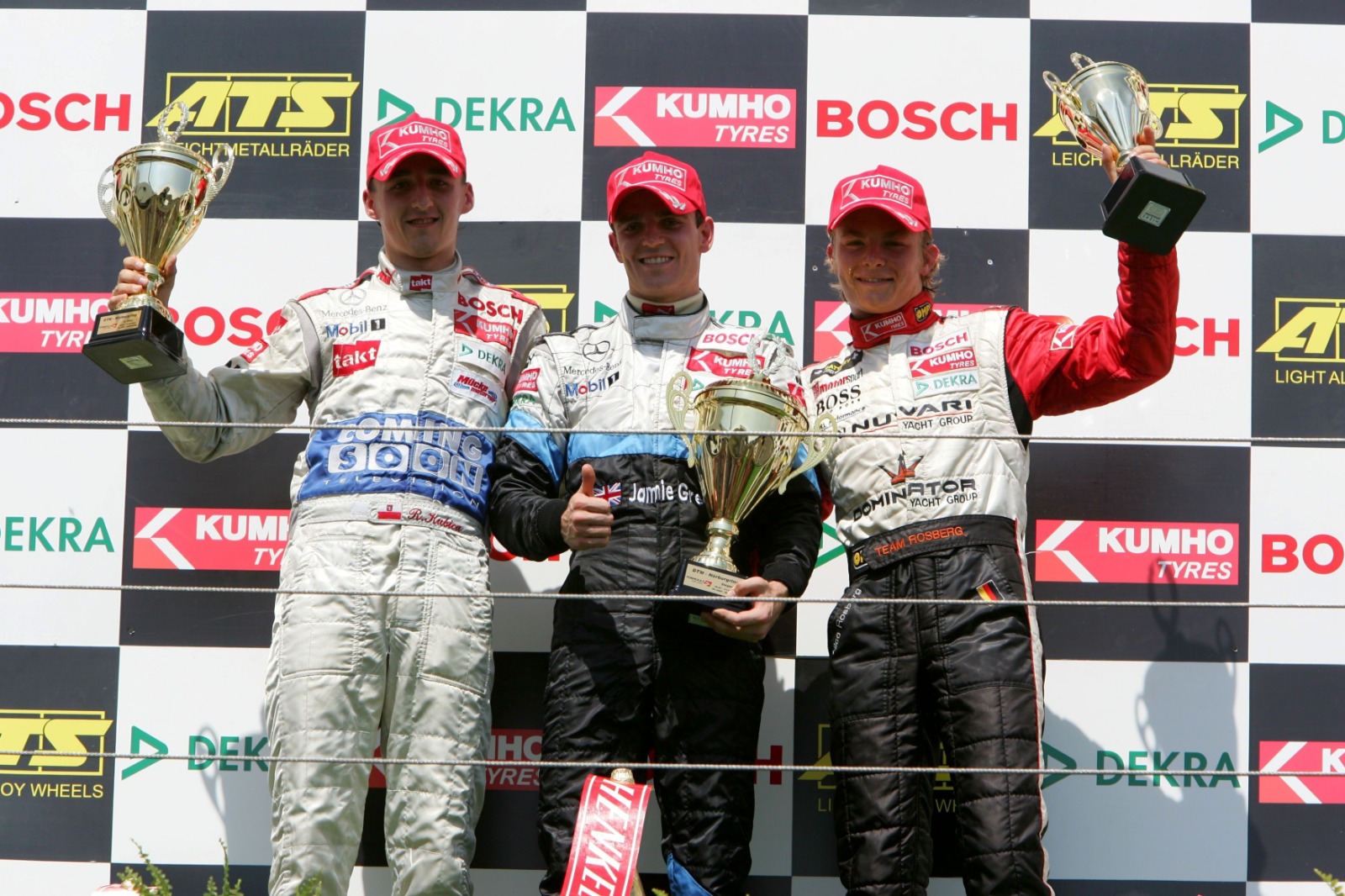
Green dominated the 2004 F3 Euro Series against stiff competition from Hamilton, Kubica and Rosberg
Photo by: Motorsport Images
It was a route that led to F1 for the likes of Paul di Resta, Pascal Wehrlein and Esteban Ocon, and Green beat all of them in a 16-year DTM career that yielded 17 wins, 15 poles and 25 fastest laps (only Bernd Schneider has more) between 2005 and 2020. But as the F1 door remained firmly shut, so Green continued to show his class in tin-tops and twice came agonisingly close to the title. In 2015, he finished as top Audi driver only behind Wehrlein, while in 2017 the points lost to a gearbox failure at the Red Bull Ring that dropped him to first to 14th cost him the crown to team-mate Rene Rast.
Aside from being crowned DTM champion, he accomplished virtually everything else in the series - including successfully establishing himself at Audi after switching from Mercedes for 2013, which he today likens to a footballer moving from Manchester United to bitter rivals City.
“One of the things I’m most proud of is having the bottle to leave Mercedes and go to Audi,” says Green, currently a free agent following the manufacturer’s withdrawal from the DTM at the end of 2020. “It wasn’t going to be a popular choice...”
"I felt like there was a chance I could get myself into an F1 car with McLaren, even if it was just a test driver role. There was that hope, which you may say now was a bit naïve and was never going to happen while Lewis was around" Jamie Green
Green knows in his heart of hearts that he was good enough for F1. But his path was intrinsically linked with Hamilton’s - and despite his remarkable momentum in 2004, the likelihood of McLaren accommodating a protege of its engine partner over the hotshot it had supported since karting was always unlikely. And while Mercedes had the luxury of placing its best-performing DTM drivers at customer teams in the early 2010s, that wasn't an option for Green in the mid-2000s as McLaren had an exclusive deal with Mercedes at the time.
Green was pigeonholed as the McLaren simulator driver, and believes he was never seriously considered for a race role.
“The thing that prevented me from really going into F1 was basically Lewis Hamilton,” the 2002 McLaren Autosport BRDC Award winner tells Autosport, without a hint of bitterness in his voice. “I’m not one for making bold statements, I’d rather just back it up with driving well. I think there was part of me thinking, ‘I’ve beaten him in Formula Renault, I’ve beaten him in F3, they’re putting me in the simulator, I’ve done a really good job at the McLaren Autosport test’. I felt like there was a chance I could get myself into an F1 car with McLaren, even if it was just a test driver role.
“There was that hope, which you may say now was a bit naïve and was never going to happen while Lewis was around, but I also had the backstop of the Mercedes DTM job...”

Green was highly thought of by Mercedes motorsport boss Norbert Haug, but couldn't force his way into McLaren's plans
Photo by: Motorsport Images
He had signed with Mercedes midway through his 2003 British F3 campaign with Carlin, having finished second in his first year of car racing in the Formula Renault UK series (to Danny Watts, fellow rookie Hamilton was third) the previous year. Backing from karting circuit boss Paul Fletcher meant he and manager Trevor Foster could forgo offers from Mercedes - which wanted Green to run its new HWA-built engine in the nascent F3 Euroseries - and from Renault, with Green sceptical about the performance of its Sodemo-tuned engine despite Heikki Kovalainen scoring four wins in the last five races of 2002.
His choice of Carlin’s Mugen-Honda package was instantly vindicated as Green won the first two races of the campaign, prompting Mercedes to swoop again. He was duly slotted into its leading Euro Series team, ASM, as a stand-in for the injured Bruno Spengler at Pau. He finished third, the foundation of his dominant 2004.
Green doesn’t for a moment regret turning down Renault, which backed Kovalainen and Jose Maria Lopez up to GP2 in 2005, likening its reputation for ditching drivers to that of the present-day Red Bull scheme.
“They didn’t mind just throwing you in the bin if you had a bad year,” he says.
And Mercedes’ long-standing McLaren tie-up meant he had a foot in the F1 door too.
“When I did the Mercedes deal, it was with Mercedes in Germany, it wasn’t with McLaren-Mercedes,” Green recalls. “But there was some involvement with F1 though with McLaren, so we felt like that was quite a good deal. I was going to be paid to race and I was going to be racing as a paid professional with a major motor manufacturer [that also had a presence] in DTM.”
His pace in a post-season Formula 3000 test for Arden alongside Nico Rosberg suggests he would have gone well in the ART seat taken up by the future world champion on his way to the inaugural GP2 title. But Green was happy to commit to DTM - with the opportunity to benchmark himself against the likes of Mika Hakkinen, Jean Alesi and marque legend Schneider - and was justifiably confident opportunities to prove his worth to McLaren would follow, only to find them frustratingly limited.
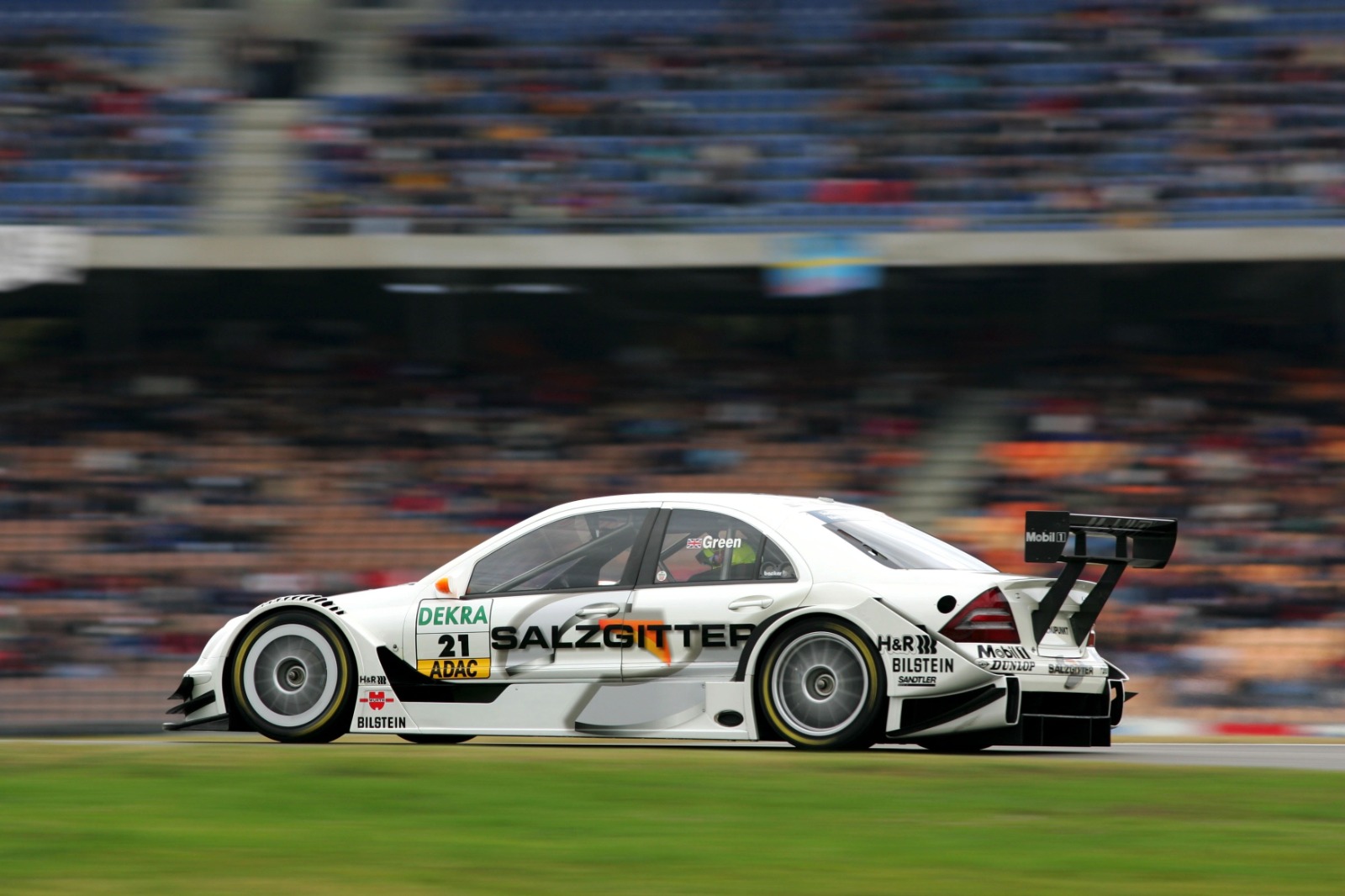
Two poles and two podiums in his first DTM season with privateer team Persson earned Green a call-up to HWA for 2006
Photo by: Motorsport Images
“I never really got the chance to test properly,” he says. “I suffer with travel sickness and in the sim I got a lot of motion sickness, headaches and I think I’m not as fast in the sim as I am in reality. I think that went against me, because a lot of drivers got opportunities based on their simulator laptimes. That didn’t help my career to be honest.
“In 2006 I took the decision to stop doing the McLaren simulator work because Lewis had signed to race for them in F1 [for 2007] and my results in DTM weren’t as good as they should have been.”
After scoring six pole positions, Green’s first win finally came in Barcelona in 2007, the race best-remembered for Audi ordering its cars to withdraw following a spate of clashes with Mercedes. By then, Hamilton was already a three-time Grand Prix winner. Green wasn’t to know it at the time, but their paths had been forged and he inadvertently became a barometer for the next wave of talent seeking to use the DTM as a springboard, including 2007 newcomer Di Resta.
"Both Eki and Timo had won championships and they were part of the furniture at Audi, so it was quite hard to rock up as ‘the Mercedes guy’ and beat them. But ultimately I did" Jamie Green
“He did a very good job in DTM and was quick straightaway which resulted in him winning the championship [in 2010], and I didn’t win the championship in DTM,” reflects Green.
He was shuffled into a year-old car for 2009 but still won at the Norisring in consecutive years, rejoining the top HWA team in 2011. But he felt “if I just stayed at Mercedes I was just going to stagnate” and so made the bold switch to Audi for 2013, relishing its “more open” technical approach and bonding well with the engineering set-up at Team Rosberg.
“Job number one on my list once I joined Audi was to establish myself as one of the best Audi drivers and that was tough because when I signed there was the likes of Timo Scheider, Mattias Ekstrom, Mike Rockenfeller who had all been there for a while,” he says. “Both Eki and Timo had won championships and they were part of the furniture at Audi, so it was quite hard to rock up as ‘the Mercedes guy’ and beat them. But ultimately I did.
“At Rosberg I found a really good group of people that I clicked with like Eric Baumgartner my race engineer and a couple of really good technical directors – there was Ossi Oikarinen and Francesco Nenci who were consecutive technical directors after each other, and I learned a lot on that side.

Green emerged as a winner after switching to Audi, challenging for the title in 2015 and 2017
Photo by: Motorsport Images
“It was an absolute joy to drive the car at times, some of the cars I had there were just amazing. I just wish I could have got the championship, but I’m proud of my performances and I’m definitely happy with what I did.”
His desire to ensure he got on terms with his illustrious team-mates meant he didn’t push for a role in Audi’s LMP1 programme before it folded at the end of 2016, although he made irregular GT3 outings with Audi customer squads in the Blancpain GT Series/GT World Challenge, ADAC GT Masters and Italian GT, a welcome change after visiting the same venues each year since 2005.
Audi’s decision to quit the DTM at the end of 2020 came at a bad time for the series, leaving BMW as its only manufacturer and prompting a wholesale philosophy shift away from manufacturer-funded Class 1 tin-tops to a GT3 series contested by private teams, often with paying drivers. It was also inconvenient timing for Green, whose Audi contract was up.
The departure of motorsport boss and long-time DTM man Dieter Gass, as part of a senior management reshuffle that has brought Julius Seebach to the top role, also didn’t play in his favour and along with Robin Frijns and Loic Duval his deal was not renewed – despite ending the year on a high with two podiums at Hockenheim.
All of this meant Green has expended more of his energy on the cadet karting exploits of his sons Zac and William - operating under the banner of his own Jamie Green Racing team - than his own racing in 2021. Aside from one outing in the Spa 24 Hours in a Sainteloc Audi, the 39-year-old has seen very little by way of action.
“I think most people who are interested in the industry hadn’t realised that I wasn’t still contracted to Audi, because I went to Spa and drove an Audi,” he says. “It was just a private deal, but I think because I was in an Audi, most of the other people around the paddock probably thought, ‘Oh, he’s still under contract’ but that expired at the end of 2020.
“I was hopeful I may get some kind of role within Audi to continue racing - for me, it wasn’t DTM or nothing. I would be happy to go and do several years in GT racing, and I was hoping that something like that would come along, but unfortunately it didn’t. Audi already had a big pool of GT drivers and they were quite loyal to those guys, so they weren’t going to move one of those aside to put me in.”
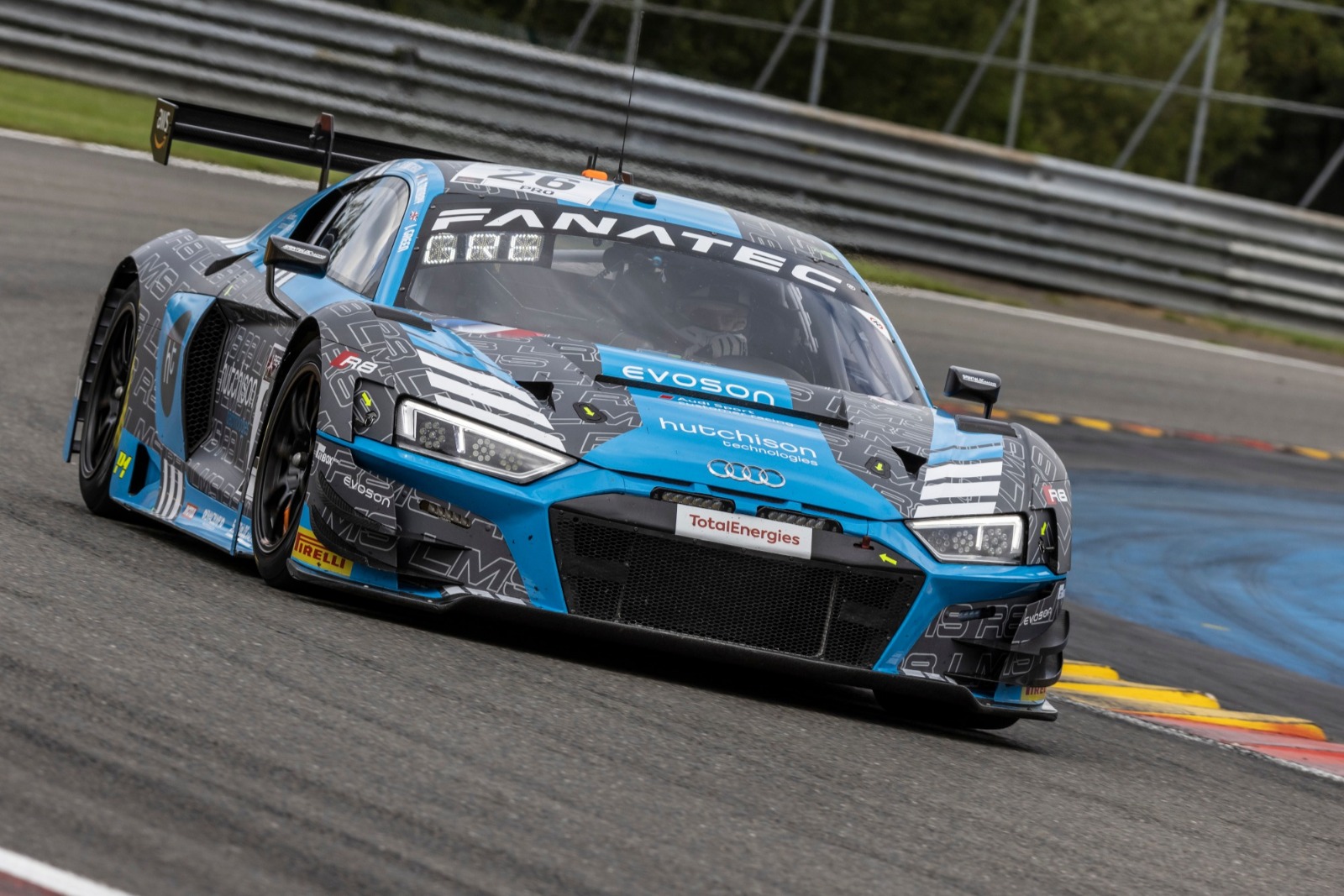
Green's only race outing in 2021 was with the Sainteloc Audi team in the Spa 24 Hours
Photo by: Ferdi Kräling Motorsport-Bild GmbH
Green has been “in contact with other manufacturers since I realised there wasn’t much happening for me at Audi” and though he remains on the market, his fire still burns bright. Adamant he’s not considered retirement, he’s hopeful that the rising manufacturer interest in sportscar racing could yield opportunities.
Di Resta has joined Peugeot for its upcoming Le Mans Hypercar assault on the World Endurance Championship, following his Le Mans class-winning exploits with LMP2 squad United Autosports last year, while one of Green's 2004 F3 rivals Robert Kubica won this year's European Le Mans Series title in his first season of prototypes with WRT. Although Green hasn’t experienced prototype racing before, he believes it’s not a significant drawback.
“I guess the thing on the horizon is LMDh,” he says of the incoming 2023 class that will allow cars to compete in both the WEC and IMSA, already attracting Audi, Porsche, Acura, BMW, Cadillac and Alpine. “If you know how to use downforce, then you’ll be fine in any car with downforce. So it would probably be easier for me to adapt to a prototype car than it would to a GT car.
"Was I good enough to race in F1? I think without a doubt, yes. But I’ve still earned a good living and been a professional driver" Jamie Green
“GT cars don’t have much downforce and are heavier, and I was still able to be competitive in that. I’ve always felt at home in cars with downforce and DTM had good downforce from 2012 up until 2017. I think they were my best years in all honesty, so I think a high-grip car suits me. There’s a lot of talented drivers around and not as many seats as there were, so maybe LMDh will change that in the future.”
Whatever happens with his future, Green is at peace with his journey so far. Not reaching F1 is for many drivers a defining point in their lives, but that’s not the case for Green.
“I had 16 years of being paid to race in the DTM, so it’s glass half-full really,” he says.
“Was I good enough to race in F1? I think without a doubt, yes. But I’ve still earned a good living and been a professional driver. For a young kid from Leicester who started off stock car racing when I was 10, its beyond my dreams.”
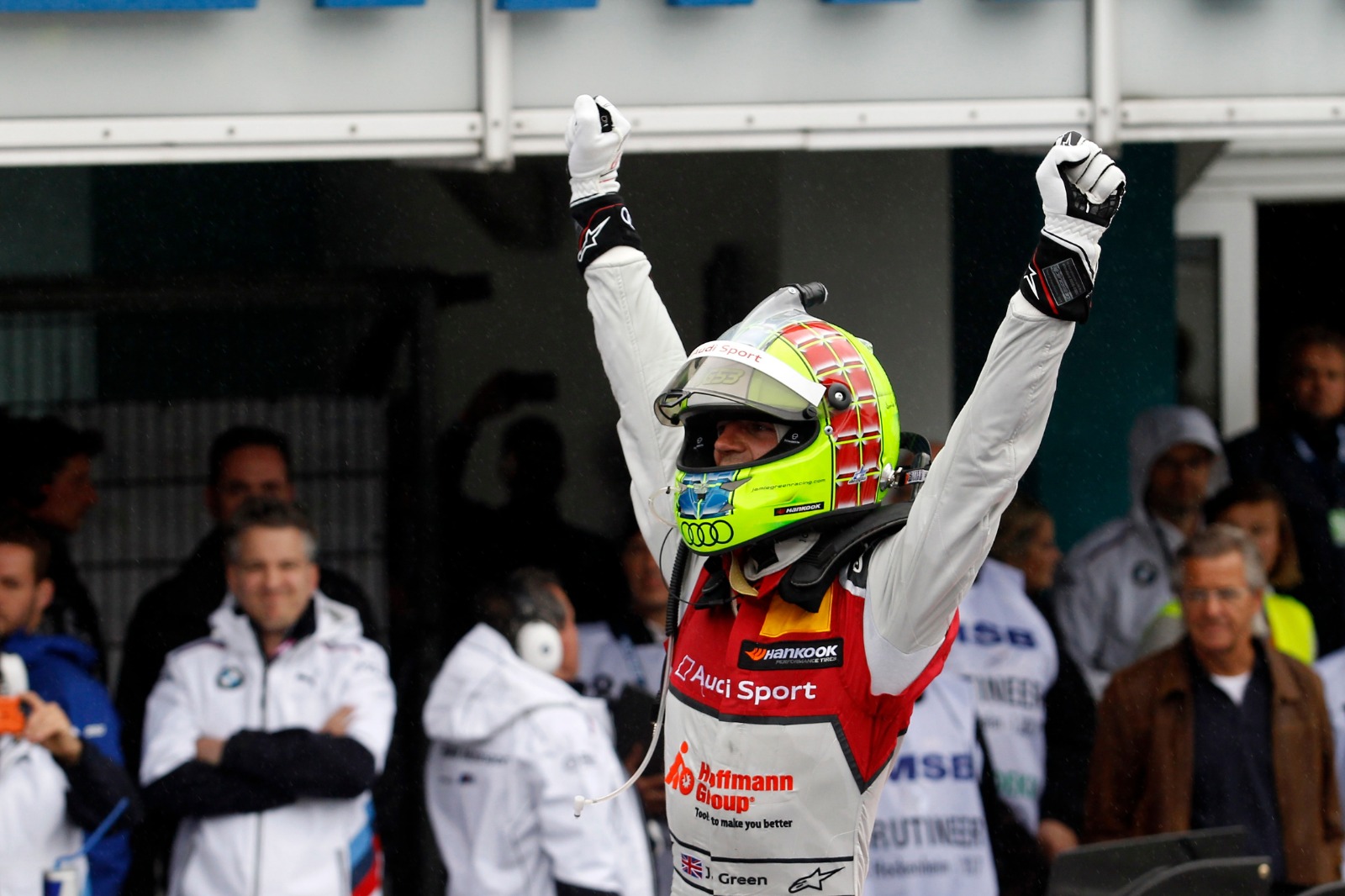
Green wants new racing opportunities after a frustrating 2021 on the sidelines
Photo by: Motorsport Images

Why ‘Mr Formula E’ has called time on his racing career

Archive: When Le Mans made its most controversial change

The man behind Japan's first Le Mans winner

Did Audi ‘give up’ on GT3 too soon?

Alex Zanardi’s top 10 moments

This retro-inspired Mercedes 190E racer is heading to the Nurburgring 24 Hours

Why Verstappen's Nordschleife approach is a win-win for motorsport

The new Mercedes star who had an unconventional route to success

The not-so-obvious chance Leclerc missed to usurp Verstappen

Cheshire cats de la Roche and Musgrave grin after Silverstone Historic F3 thrillers

Dramatic Mini fight goes to the wire as Ovenden wins title by a point at Brands Hatch

How Ingram made his mark on the 2026 BTCC campaign – before going out with a bang
Subscribe and access Autosport.com with your ad-blocker.
From Formula 1 to MotoGP we report straight from the paddock because we love our sport, just like you. In order to keep delivering our expert journalism, our website uses advertising. Still, we want to give you the opportunity to enjoy an ad-free and tracker-free website and to continue using your adblocker.


Top Comments