
The rollercoaster ride of West Surrey Racing's 40 years
It’s four decades since one of UK motorsport’s most successful teams made its debut at Silverstone in British Formula 3. Now it’s top dog in the BTCC, time to blow out some candles with boss Dick Bennetts

Forty years ago a little five-man team named West Surrey Engineering, thrown together over the previous month, made its debut in the opening round of the British Formula 3 Championship at Silverstone. And Jonathan Palmer, one of those five men, took victory on 1 March 1981 in his Toyota-powered Ralt RT3. This was the same chassis that, at the end of 1980, had won the last four races of the series in the hands of Stefan Johansson, carrying the Swede to the title with Ron Dennis’s Project 4 Racing.
PLUS: The ground-effect wonder behind a generation of F1 stars
Project 4’s Dick Bennetts had engineered and run that late Johansson charge and, after rejecting an offer from Dennis to lead the McLaren F1 test team, the Kiwi was the man who would head up WSE. In 1982, basking in the glow of Palmer claiming the 1981 crown, that little team became West Surrey Racing.
Following multiple British F3 successes it moved into the British Touring Car Championship, where it is now the standard setter for BMW. Time to look back with Bennetts, now 73 but very much still at the helm, at four storied decades.
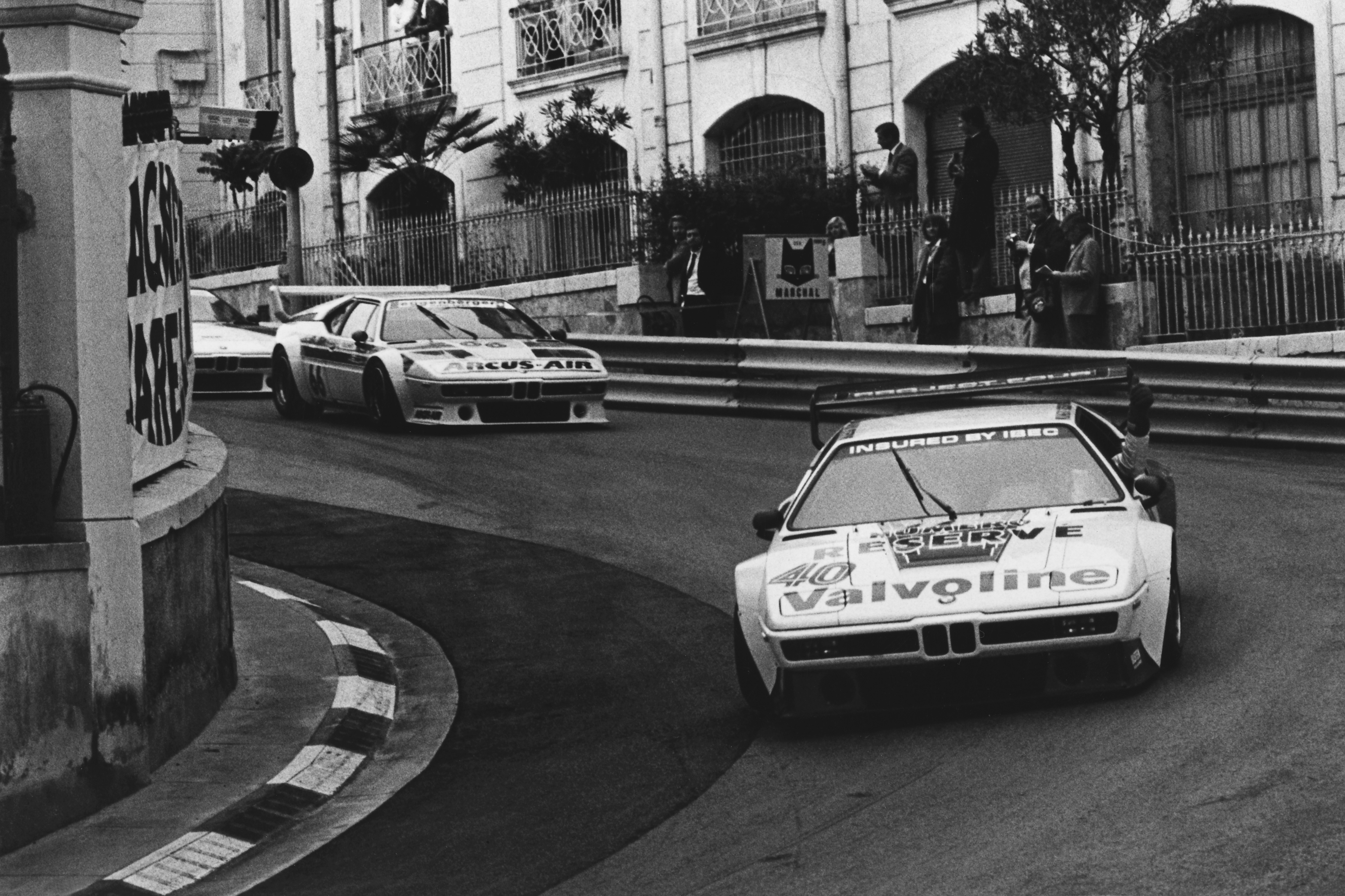
Hans Stuck, 1980 BMW M1 Procar Championship Monaco
Photo by: Motorsport Images
Stuck in the middle with you
Bennetts was only transferred onto the Project 4 F3 team by Ron Dennis when its 1980 campaign in the BMW M1 Procar series with Hans Stuck ended mid-season. The previous year, Bennetts had run Niki Lauda to the title in the P4-entered M1.
“We won Monaco both years, totally different drivers – chalk and cheese,” recalls Bennetts. “Lauda very professional, very serious. Stuck was down to earth, you could have a good laugh with him, but once he got in the car and got his helmet on he was a serious contender.”
Project 4 built the entire fleet of cars before the 1979 series: “Ron got a deal through BMW Munich. They arrived in kit form and we assembled all 24 and got them all painted. We were knackered. Then Ron said can we build one more, and we said, ‘No we’ve had enough,’ and he said, ‘We’re going to run it ourselves,’ and he wouldn’t tell us who the driver is. He said, ‘You’ll be surprised and it’ll be worthwhile.’ That was for Niki.”
"Ron said if I’d stuck with them I might have earned more money than I earn now. Probably true! You can always have regrets and that, but I don’t regret it at all" Dick Bennetts
The budget ran out with Stuck, and Dennis was on the verge of merging P4 with the floundering McLaren F1 team, bringing in John Barnard to design the carbonfibre MP4: “Ron just said we’re stopping running. I was going to leave then but he said, ‘No no’, and he sent me upstairs to help out John Barnard, and then I took over the F3 team after that.
“Ron offered me a job as the test team manager, but I was flatting with three or four guys from Bruce McLarens and Brabhams, and I listened to all their stories. I’m one to have a smaller operation. There were about 20 of us at Project 4, so you got to know everyone, whereas I said if I go to F1 I’ll be number 42 out of 300. That was in 1980. Now it would be number 42 out of 1500.
"Ron sent a little video for my 70th birthday, and he said if I’d stuck with them I might have earned more money than I earn now. Probably true! You can always have regrets and that, but I don’t regret it at all. I took a decision and stuck with it.”
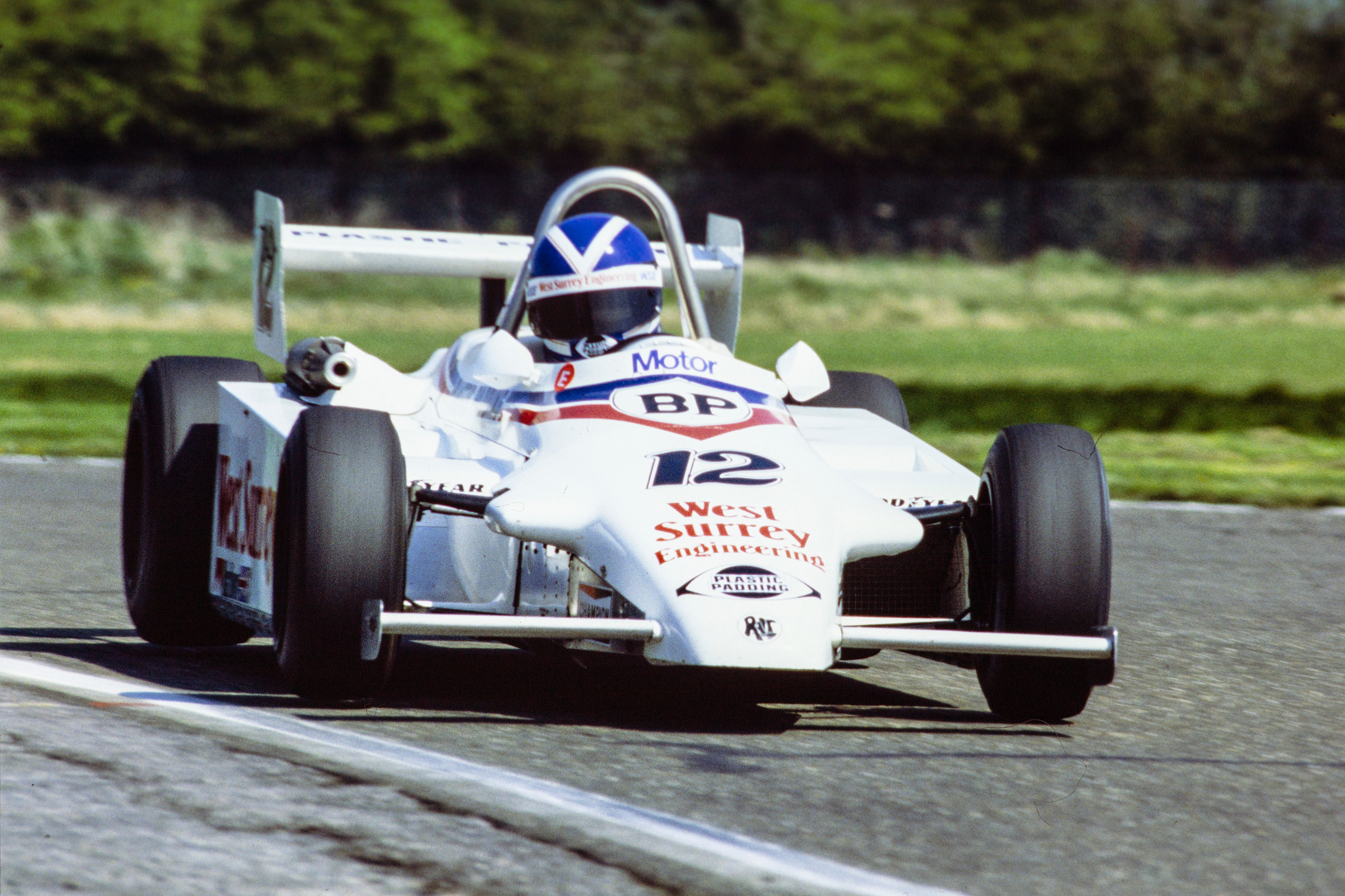
Jonathan Palmer, British F3 Thruxton 1981
Photo by: Motorsport Images
A dose from the doctor
Jonathan Palmer’s Formula Ford backer, West Surrey Engineering chief Mike Cox, bought the ex-Johansson Ralt RT3 from Ron Dennis to go to British F3 with the young doctor in 1981.
Bennetts had returned home to New Zealand, where he ran his old mate Dave Oxton in a Ralt RT4 to the 1981 Formula Pacific title in the Southern Hemisphere summer. And then he got persuaded back to the UK…
“I said I’d think about it, and we basically set up the team while I was 12,000 miles away,” he reminisces. “I came back mid-February and we got up and running. They had built a little workshop at the side of WSE, and that’s where we were based with our little A-series Ford transporter that would only just hit 50mph.
"We had Dave Stevens, who was JP’s Formula Ford mechanic, as a number two, and I got a friend of mine, Harvey Spencer [ex-Brabham, now Carlin], to come and work with me as mechanic/engineer. We had a bit of help from JP’s brother Jamie. He was our weekend gofer.”
Bennetts had to persuade Cox that Palmer needed a spare Toyota engine from Italian tuner Novamotor: “He said, ‘It’s won the first four races, it must be good!’ But I said, ‘Yeah, but it’s a racing engine and they do wear out’.
"We did four races without a spare engine – we were sitting there with our fingers crossed all the time. Eventually Mike and JP got five grand out of BP Sunbury, and we put that sticker on the front of the cockpit covering and got a spare engine. There were so many races in those days, and we could alternate the engines while the other one was rebuilt.”
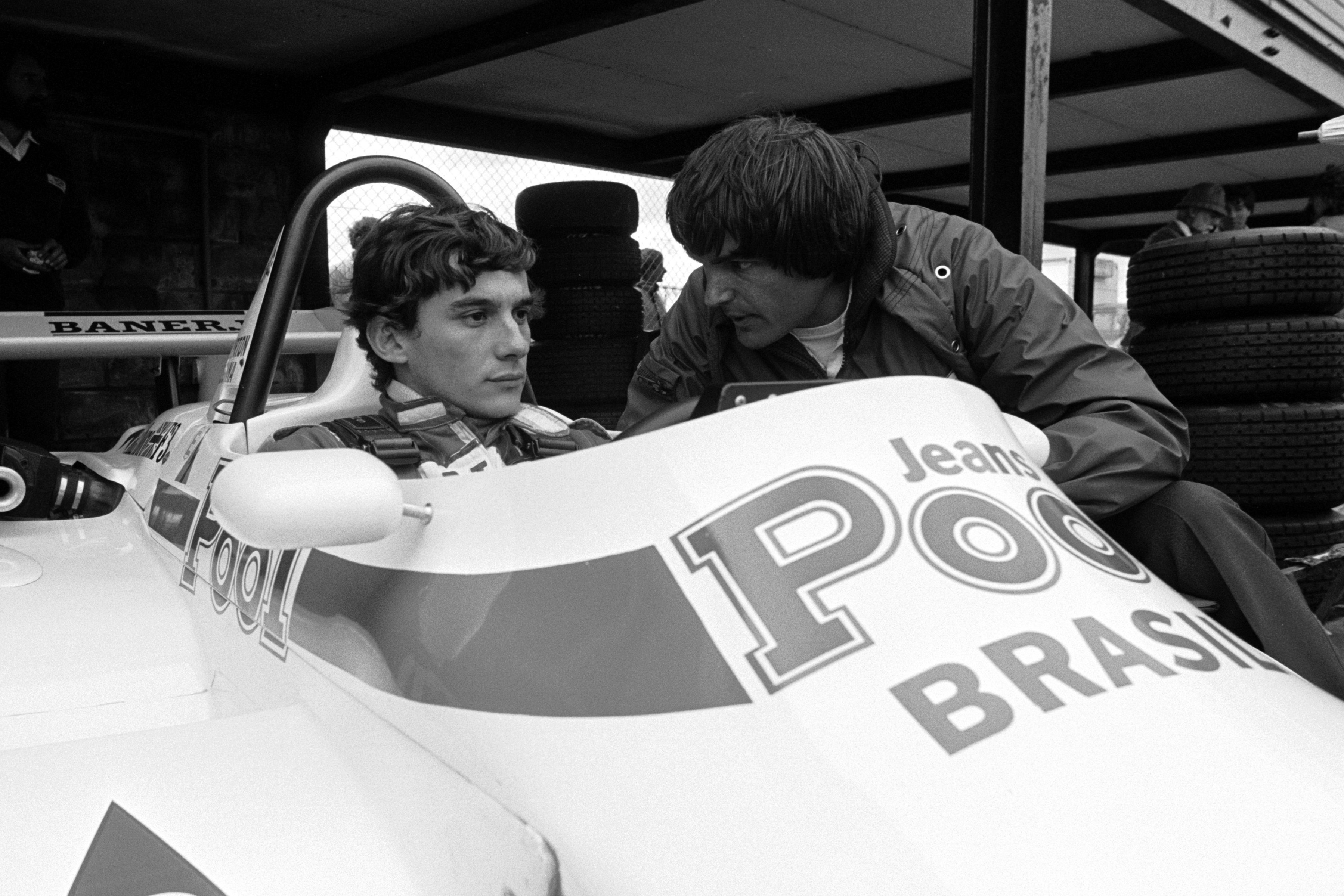
Ayrton Senna, Dick Bennetts 1983 British F3
Photo by: Motorsport Images
Moulding a future legend
WSR carried Enrique Mansilla to the runner-up spot in British F3 in 1982, and that attracted newly crowned European and British Formula Ford 2000 champion Ayrton Senna da Silva to try out the team in the end-of-season non-championship race at Thruxton. A year later, he was feted as British F3 champion following a thrilling duel with Eddie Jordan Racing-run Martin Brundle.
"Ayrton said, ‘I’m happy now, we’re going racing’, and he disappeared – just a handshake, and went back to Brazil" Dick Bennetts
“We did a half-day test at Snetterton, and he was very impressive straight out of the box,” Bennetts recalls. “We just took Quique [Mansilla]’s car up there with the same set-up he’d run, Ayrton hopped in, a couple of laps, back in, checked it around, out he went and then I thought, ‘Bloody hell, this bloke’s good’.”
Senna dominated at Thruxton: “Ayrton said, ‘I want to run with you. Everything was perfect, car was great, we were great.’ Unbeknown to me EJ was chasing him as well, but he was probably trying to sign him up for 10 years [on a management contract]. But Ayrton said, ‘I’m happy now, we’re going racing’, and he disappeared – just a handshake, and went back to Brazil. A few phone calls and we got a contract done, and he arrived back quite late, but he was confident.
“One of the things I always remember is that we always got a new car every year, and he said, ‘Where’s the car I drove at Thruxton?’ ‘We’ve sold it.’ ‘But I liked it, I wanted that car. There’s nothing wrong with that car!’ ‘I know there wasn’t, but we start with a new one each year.’ He was quite taken aback that we’d sold that car. We sold it to Helmut Marko for Gerhard Berger [who raced it in the European championship].”
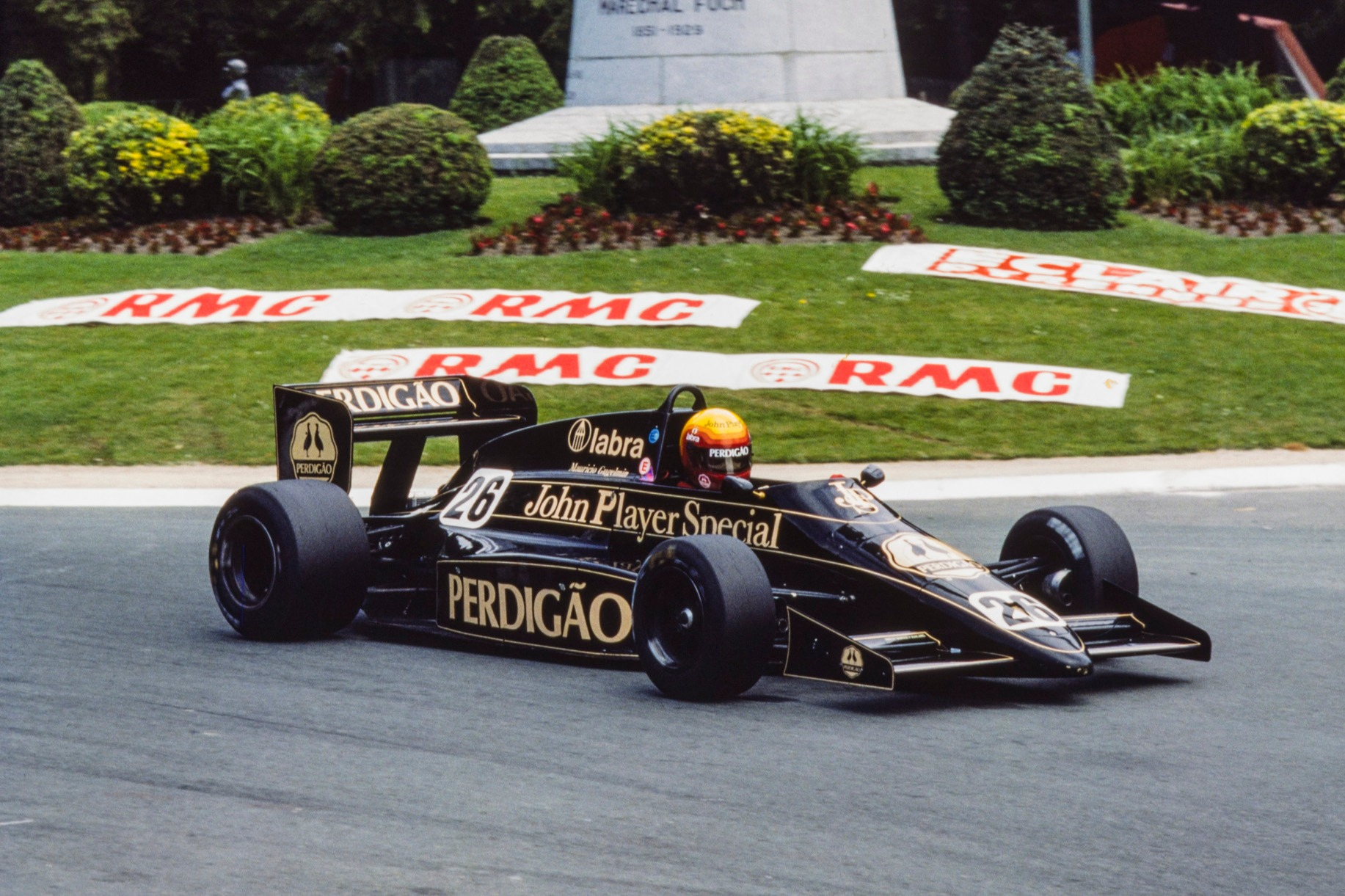
Mauricio Gugelmin International F3000 1986, Pau
Photo by: Motorsport Images
A one-year spell in F3000
After Mauricio Gugelmin had become WSR’s third British F3 champion, in 1985, the team snapped up FF2000 king Bertrand Fabi and FF1600 battler Damon Hill for the following season. “It was 21 February and Bertrand got killed down at Goodwood,” reflects Bennetts. “I was about to close down. We’d never had a serious accident before, no injuries at all, and to have a fatal one… I’d taken a big gamble on Damon, but we couldn’t then do anything, so I got Murray Taylor to run Damon.
“Then Mauricio called me and said, ‘I’ve heard what’s happened, I want you to run me in 3000’. I said, ‘We’ve never done 3000’, and he said, ‘I don’t care, what you did for me in 1985 is enough to convince me’. We got a March 86B late and it had pullrod front suspension – very complicated and we’d never run it before – so it wasn’t the best year. But a beautiful-looking car in black.
“And then of course we had the major drama at Pau when he wrote it off in qualifying. We’d made big changes from the previous session, and he was so quick up the hill before the bridge that with the downforce, the car bottomed out when he hit the brakes, and he just went straight on into the concrete parapet. The worst ever time it could happen because we were racing at Spa the next weekend. We were going to have a gentle cruise up through France, but it was a panic back to England, put a new tub on it, back out for Spa. Not the most enjoyable year.”
Bennetts learned a lesson then: don’t get involved in stuff you haven’t had time to prepare for: “We knew we could do a good job, but if you’re not prepared and don’t know how the car works… Even though we knew what we were doing, and Mauricio was very good, it was embarrassing for him and for us. It was very tight schedules, and not much money to test with. But we did it again in 1996 with the Ford Mondeo!”
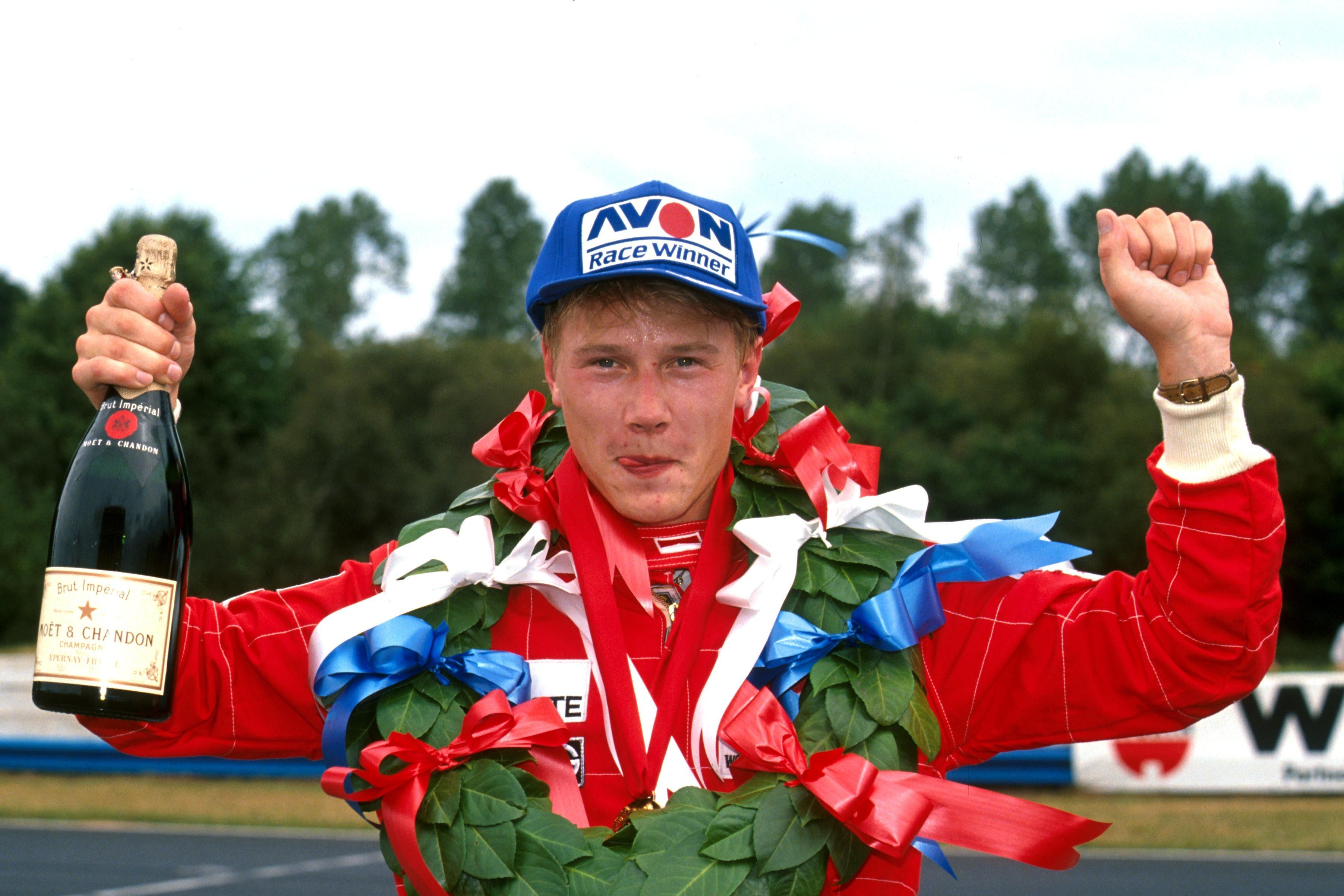
Mika Hakkinen British F3 1990, Oulton Park
Photo by: Motorsport Images
Hakkinen: Talent and lawyers win it
In the late 1980s, WSR ran a string of Marlboro-backed talents in British F3. That continued in 1990, when Mika Hakkinen starred to defeat fellow Finn Mika Salo to the crown. But there was a worrying time before the mid-summer Oulton Park round.
“I got a phone call at my home about nine o’clock at night. ‘Immigration Terminal 2 here, is that Mr Bennetts?’ ‘Speaking.’ ‘We have a Mr Ha-Haa-Ha-kki-nen here.’ ‘Oh yeah, Mika. What’s the problem?’ ‘We’re not letting him in, he’s got to go back to Finland.’ I said, ‘Woah you can’t do that, we’ve got a race this weekend.’
"I'll never forget Steve Robertson’s dad Dave coming down and saying, ‘We’re all wasting our effing time. We thought we were in for a good weekend, that bloke turns up, does five laps and goes P1'" Dick Bennetts
"He said, ‘We’ve warned him five times to get a visa, and he’s come back again, he still hasn’t got one, so we’re putting him on a plane.’ I said, ‘No you can’t do that, please please please.’ I got down on my hands and knees, and they let him in on the condition that he went straight away and got sorted out.
“On the Friday he had to go and see Philip Morris [Marlboro parent company] and sort out a lawyer to start getting the visas done. We were testing on the Friday at Oulton, and the rumour went down the pitlane that Mika was sent back to Finland, because his car was sitting there in the pitlane. We were running Christian Fittipaldi, trying to sort out a new rear wing. Christian said, ‘That’s better’, so we bolted it onto Mika’s car. And then about quarter to five Mika comes rushing into the track. I said, ‘Right, get changed, get in the car. Quick. You’ve got about seven minutes left.’
PLUS: Bidding farewell to a motorsport survivor
“So out he went slowly, bedded the brake pads, and then boom. Quickest. P1. I’ll never forget Steve Robertson’s dad Dave coming down and saying, ‘We’re all wasting our effing time. We thought we were in for a good weekend, that bloke turns up, does five laps and goes P1.’ They’d all been pounding round all day. That was a wake-up call for everyone.”
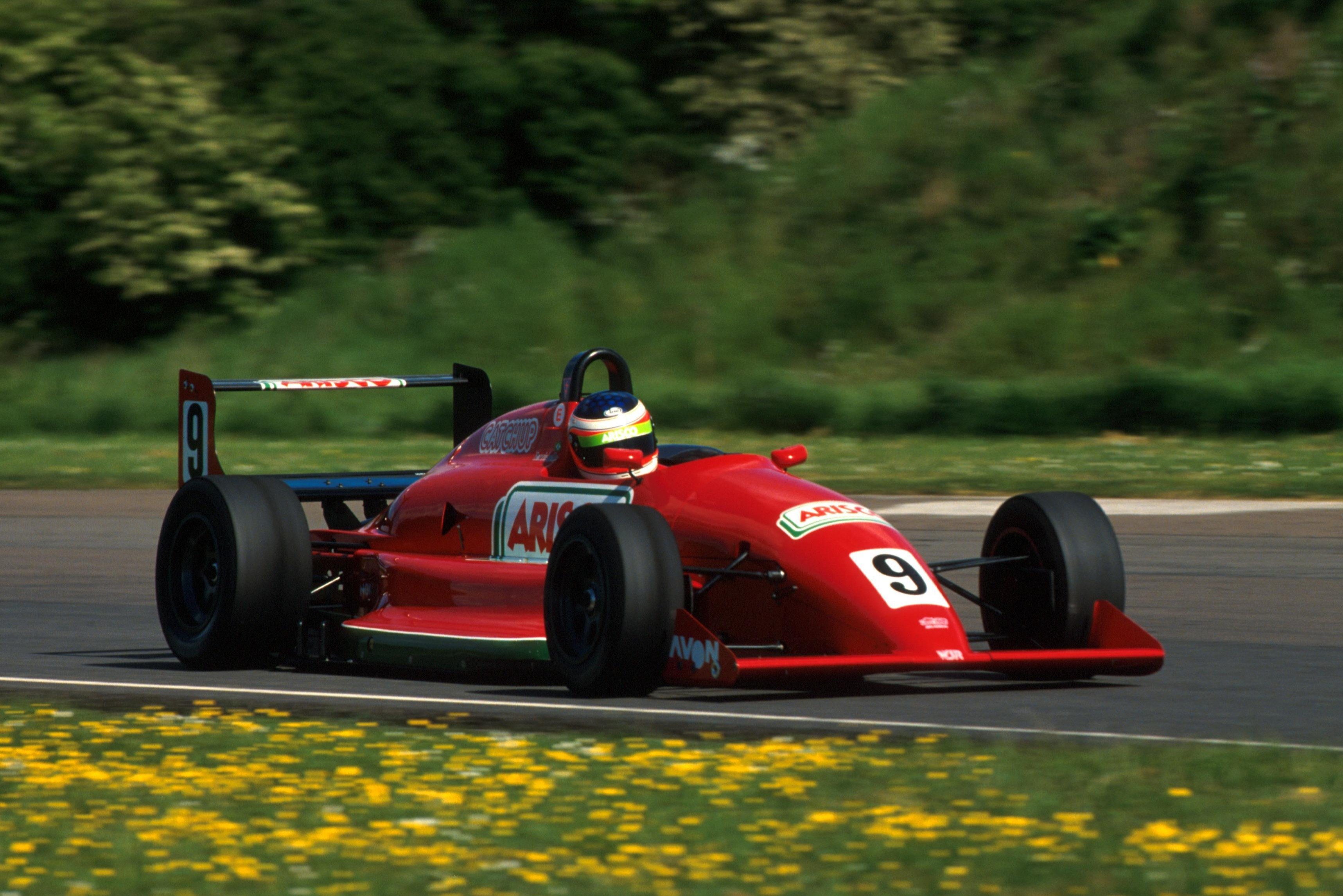
Rubens Barrichello, British F3 1991 Thruxton
Photo by: Motorsport Images
Bad starts, but a good finish
After Hakkinen, WSR lined up with reigning Opel Lotus Euroseries champion Rubens Barrichello for British F3 in 1991. The Brazilian took nine poles, but frequently wasted them with poor starts and claimed ‘only’ four wins. That meant he had to come from behind to defeat David Coulthard (zero poles) to the crown.
“At Silverstone for the first race – pole position and he stalled it,” remembers Bennetts. “I thought, ‘This is not a good start to the season’. We took him and Jordi Gene to Santa Pod to do practice starts. We did nine, and Jordi beat him seven times. He just couldn’t get to grips with getting off the line. But blindingly quick. He arrived with us at 18 years old, left us at 19 as British F3 champion.
“He was very young, very quiet, but very focused what he wanted to do. He knew how a car worked, his feedback was good, whereas Mika just had raw talent. Mika couldn’t tell you the nitty gritty of how the car worked, and did his debriefs with his hands – he turned them one way, understeer, turned them the other way, oversteer. Rubens could explain our method: turn-in, mid-corner, exit. Intelligent young lad.”
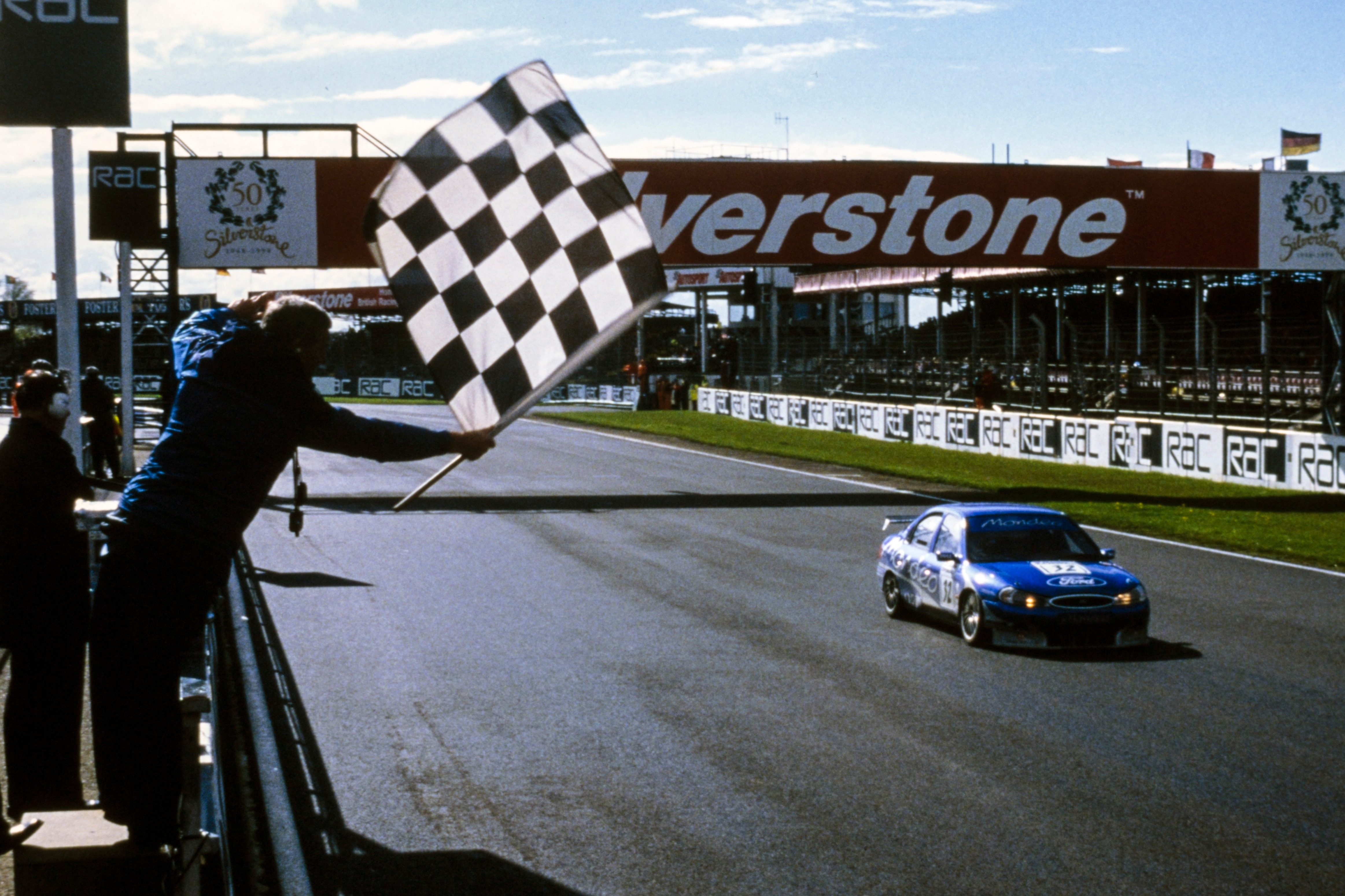
Will Hoy, BTCC 1998 Silverstone
Photo by: Motorsport Images
Feeling blue, and then a win
WSR moved into the BTCC with Ford in 1996, and it became the biggest trial of the team’s existence. The capture of Nigel Mansell for selected rounds in 1998 was a huge story, but it was another moustachioed Brit, the late Will Hoy, who provided the only win for a WSR Mondeo, at Silverstone that year. Hoy, who died in 2002, was running sixth when rain arrived. He was one of the last to pit, had intermediate tyres fitted, and emerged in a comfortable lead he maintained to the finish.
“We made a very good call with the pitstop, but we also had some absolute top-notch pit equipment,” says Bennetts. “We’d spent some money on some magnetic [wheel] sockets made in America, so I think we were about 10 or 15 seconds quicker than anyone with our pitstop. He got out well in the lead and he held onto it.”
"We have about five different weather apps, we have a radar, but you don’t know if you can ever trust them" Dick Bennetts
Malcolm Swetnam, then the team manager, was in phone contact with his wife at their house not far away to find out what weather was heading to the track. “We still do that these days,” says Bennetts. “People we know who live near the circuit, we ring them up and say, ‘What’s the weather like?’ We have about five different weather apps, we have a radar, but you don’t know if you can ever trust them.
“You couldn’t have got a nicer guy than Will. He once said to me on the quiet, ‘Why are you staying in the same hotel as the mechanics? You’re the boss.’ And he gave me all the names of these mega country hotels where he stayed. I tried it a couple of times, and then I went back to being with the lads. But he was a down-to-earth guy. Really good with people, really friendly. Just such a shame he left us so early.”
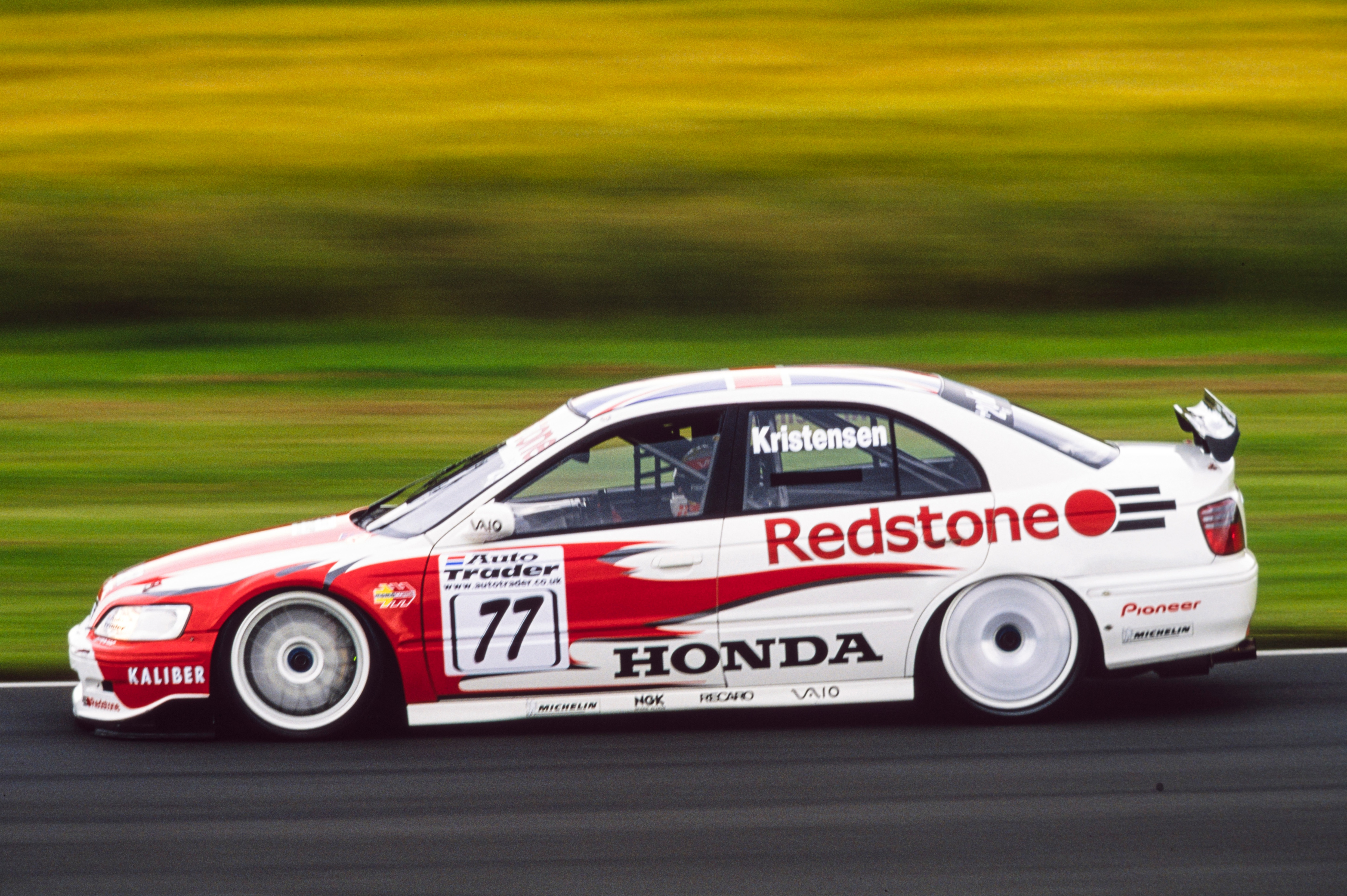
Tom Kristensen, BTCC 2000 Croft
Photo by: Motorsport Images
Honda Disaccord
WSR swapped BTCC manufacturers with Prodrive for 1999, so was now representing Honda. With the Accords, James Thompson and Peter Kox finished fourth and seventh respectively in the standings. For 2000, Kox was replaced by Tom Kristensen, while a third car was run for Gabriele Tarquini by Honda Motor Europe’s Italian team, JAS Motorsport.
“We were asked to do a wish list from the 1999 car for the 2000,” says Bennetts. “Top of our list was more [suspension] caster – the 1999 car we could only get about seven degrees caster out of it. The 2000 car arrived with five degrees caster. So I rang up [Honda Motor Europe]: ‘My guys downstairs have just told me it’s got five degrees, we’re looking for 12/14.’
"And they said, ‘It’s got no power steering on it, that’s why it’s only got five degrees’ – that’s the max you could have without power assistance. They said they did some research, and the team in Italy told them that power steering could be unreliable. I said, ‘That’s very true, it can be, but why have the other manufacturers down the grid all got power steering?’
“That started the disagreement, and I then contacted Ron Tauranac [whose Ralt company WSR had won five titles for in British F3, and whose cars had dominated F2 with Honda engines]. Ron rang Japan, and Honda got some money for us.
"We were told it was a six-month project, but we had the bit between the teeth and we made one set of power steering in two weeks. And we put it on Tom’s car, went out and wow – much better. ‘We’ve got 12 to 14 degrees caster, we’re on the right track now.’ Then we get a call: ‘Why have you fitted power steering?’ ‘Because that’s what we need.’ ‘We told you you’re not supposed to.’ ‘Well, sorry. We’ve got master drivers here like Tom Kristensen, James Thompson – we’ve got to give them the best.’ So then, a week later, they rang up: ‘Can we have power steering for Tarquini’s car?’
“Wanting to win, we gave it our best, but probably upset our relationship with Honda Europe. We were more interested in winning – fixing things up and getting out there.”
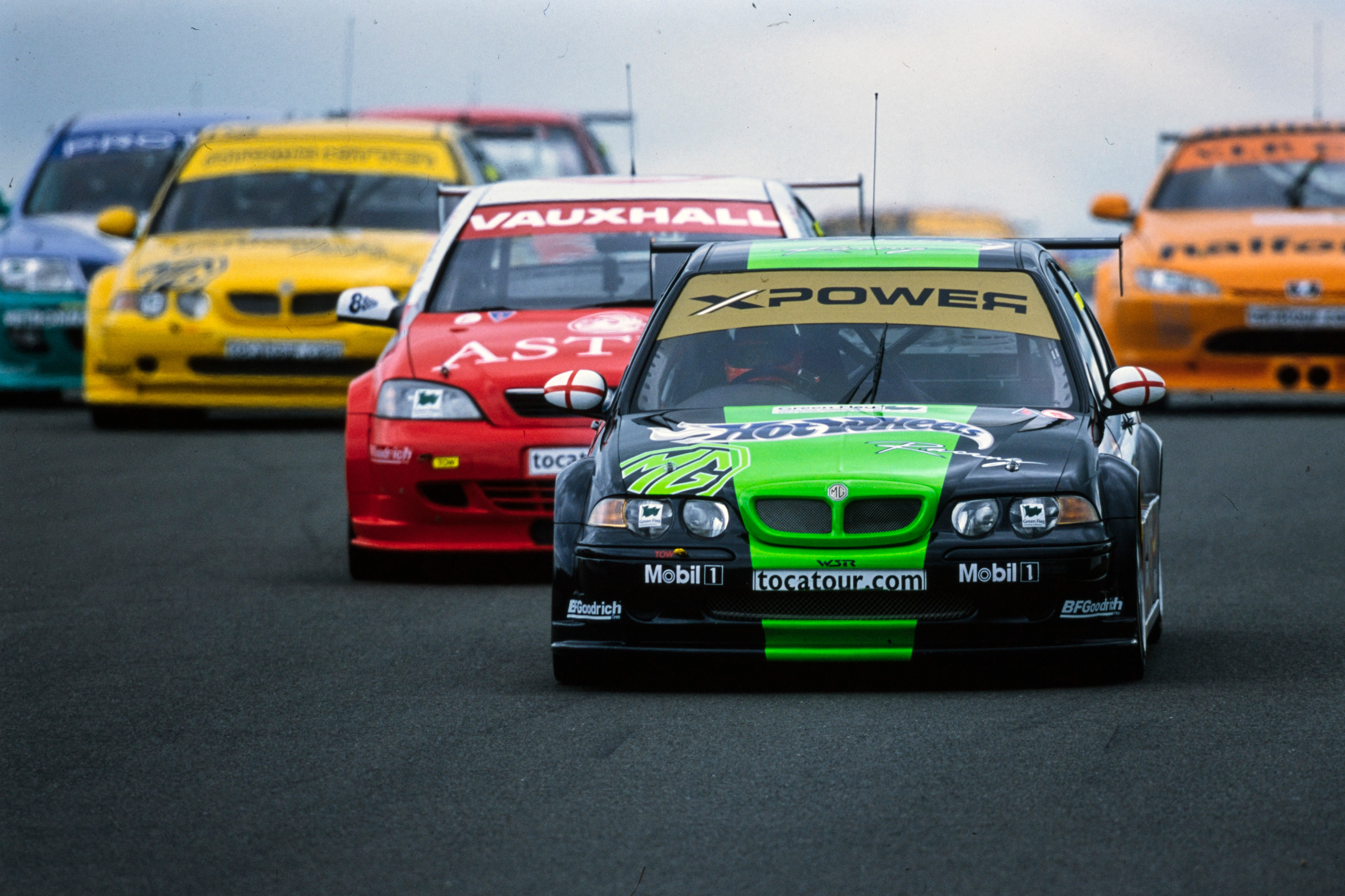
Warren Hughes, BTCC 2002 Silverstone
Photo by: Motorsport Images
Turning constructor at the last minute
The BTCC’s new BTC Touring rules arrived for 2001, and WSR joined late in the season with the new Lola-built MG ZS. Problem was, a spat between Lola and MG Sport & Racing over IP rights resulted in WSR having to design and build two completely new cars in time for 2002…
“When the problem arrived at the end of 2001, it was oh no – we had to hurriedly build two new cars,” shudders Bennetts. “We were asked in October, after the last race, when whatever the problem was came to a head.
"To gear up and run four cars, not two, that just added to the workload. It was really only when we got to 2003 that we started going properly” Dick Bennetts
PLUS: When a new car interrupted a perfect season of dominance
"We had 35 people here in those days. It was hard work, but there was no option when we were told. Those were the days of clocking up a serious lot of hours… We managed it but it was a hell of a lot of work, and then to gear up and run four cars, not two, that just added to the workload. It was really only when we got to 2003 that we started going properly.”
The reason for four cars was that a new satellite squad, Team Atomic Kitten, came into being to enter the Lola-built MGs for Gareth Howell and a BTCC debutant who would become pivotal to WSR: Colin Turkington. In the hands of Anthony Reid, Warren Hughes, Turkington and Rob Collard, the WSR-built MG ZSs would win 14 BTCC races up to the end of 2006.
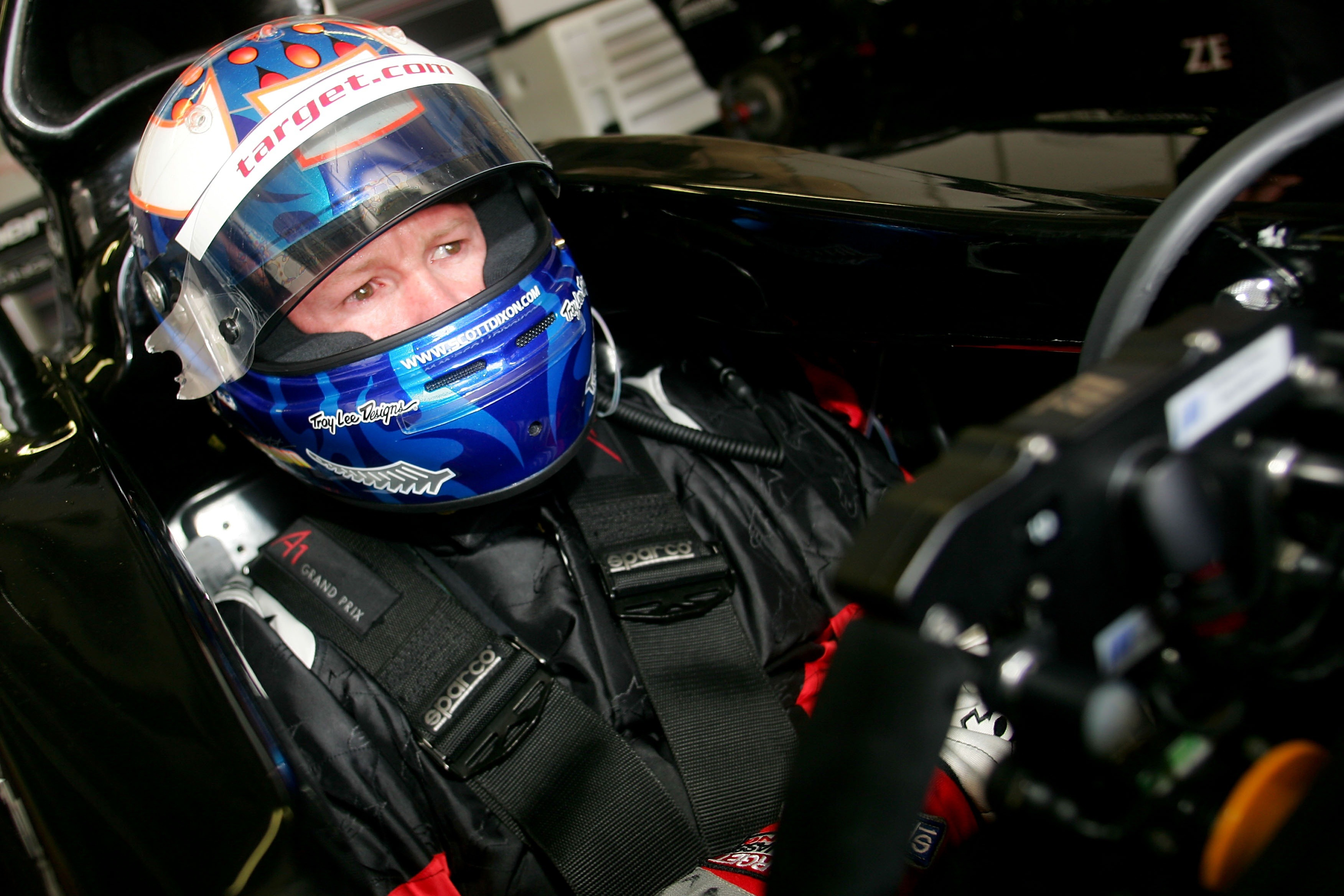
Scott Dixon A1 Team New Zealand Dubai 2005
Photo by: Motorsport Images
A Kiwi legend works with... Scott Dixon
WSR returned to single-seaters in A1GP, when it ran Team New Zealand in the inaugural season of 2005-06. The team would go on to run the USA and Singapore entries too, but its best campaign was with the All-Black car. Matt Halliday drove in the majority of races, and Jonny Reid in some, but the team also welcomed Scott Dixon – then a one-time IndyCar champion – to the cockpit for practice at the Dubai round.
The Dubai Autodrome was the first venue designed by WSR’s Clive Bowen, Bennetts and Drew MacDonald, who all then worked on Hampton Downs in New Zealand. MacDonald also created the revised Silverstone GP Circuit in 2010, alongside Populous Design.
“For Scott it was his first time in an A1GP car, so that was difficult,” points out Bennetts, “and to go to a brand new track you’ve never seen… Luckily we had every corner radius because we designed Dubai Autodrome. We could tell him every radius, every bit of camber of every corner. But it also highlighted we had an engine problem that weekend. Really interesting to listen to Scott’s feedback, but yeah, when we overlaid it we were down on power, so we complained to the engine supplier [Zytek] about it and they reckoned there was nothing wrong with it.
“We were quicker off the 180-degree corner onto the main straight, because Scott got the right line pretty quickly. And down the end of the straight we were down quite a bit. Unbeknown to the engine builder, I got an overlay [of data] from a friend of mine at another team running the same rear-wing set-up. It would have been good to have someone like Scott in the car for a season. Top man. I still follow his races.”
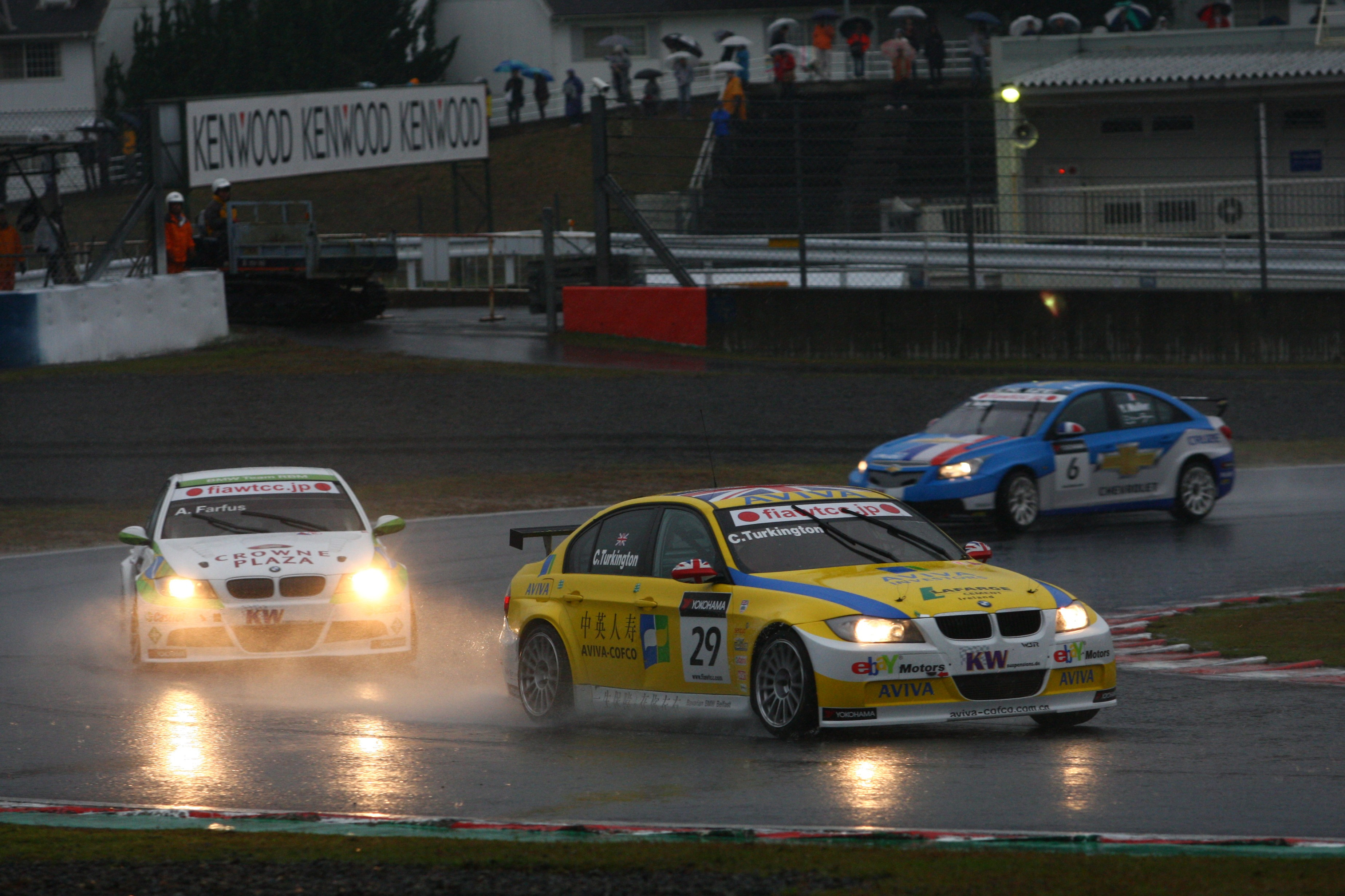
Colin Turkington, WTCC 2010 Okayama
Photo by: DPPI
Winning in the world championship
WSR’s switch to BMW 320si Super 2000 machinery for the 2007 BTCC paid dividends in 2009, when Colin Turkington triumphed to grab his first title in a final-round thriller against Fabrizio Giovanardi and Jason Plato. Still only 27, Turkington wanted to use that as a springboard to the World Touring Car Championship, but it proved difficult to raise a budget.
Eventually, a five-round campaign was pulled together. Turkington had already claimed two podiums at Brands Hatch, and one at Brno, when the Okayama round in Japan came around. In pouring rain, he finished second in the reversed-grid race to the works BMW of Augusto Farfus, but three weeks later Farfus was excluded for running an illegal gearbox. Turkington inherited victory, but he should have won it on the road anyway…
Turkington let Farfus through to lead, while they were shadowed by the RML-run Chevrolet of eventual champion Yvan Muller. Then, with Priaulx now out of the race and title contention, a switcharound should have happened
“It absolutely poured down, and we’d never run Yokohama wets,” says Bennetts. “We just changed the car to what we did with BTCC Dunlop wets, and out he went and we were quick.”
BMW’s Andy Priaulx still had a shot at the title, so WSR had agreed to help the works cars of Priaulx and Farfus if necessary. Sure enough, Turkington let Farfus through to lead, while they were shadowed by the RML-run Chevrolet of eventual champion Yvan Muller. Then, with Priaulx now out of the race and title contention, a switcharound should have happened.
“Of course what happened then is this privateer spun, there were yellow flags and no overtaking on the last lap,” says Bennetts. “But apparently RML protested the works team’s six-speed ’box, and they were deleted from the results.”
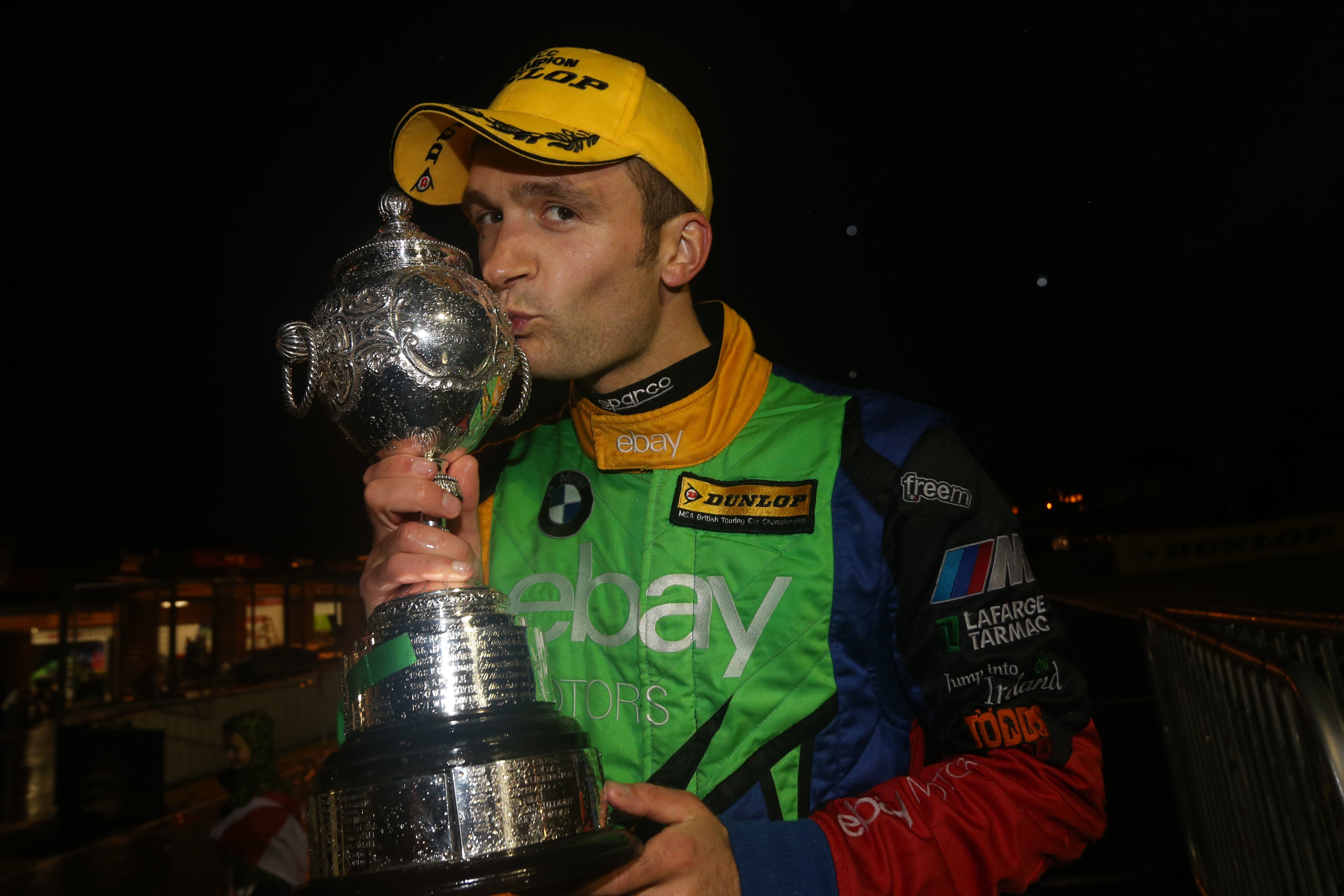
Colin Turkington, BTCC 2014 Brands Hatch Indy
Photo by: JEP/Motorsport Images
WSR on fire - literally
The first WSR-built car for the current NGTC regulations was the BMW 125i M Sport, which made its debut in 2013. Colin Turkington took it to the 2014 crown, his second title success.
The next day, BTCC live-TV broadcaster ITV turned up at WSR for its traditional post-season interview with the champion.
“Col being Col, he was hungry, and he put a bread roll into the toaster, and he went out into the workshop to do his filming,” laughs Bennetts. “Then after about five or 10 minutes the fire alarm went off. Smoke was billowing out everywhere. He could have burned the building down, and that mark’s still underneath the cupboard in the canteen. We’ve kept it there for memories.”
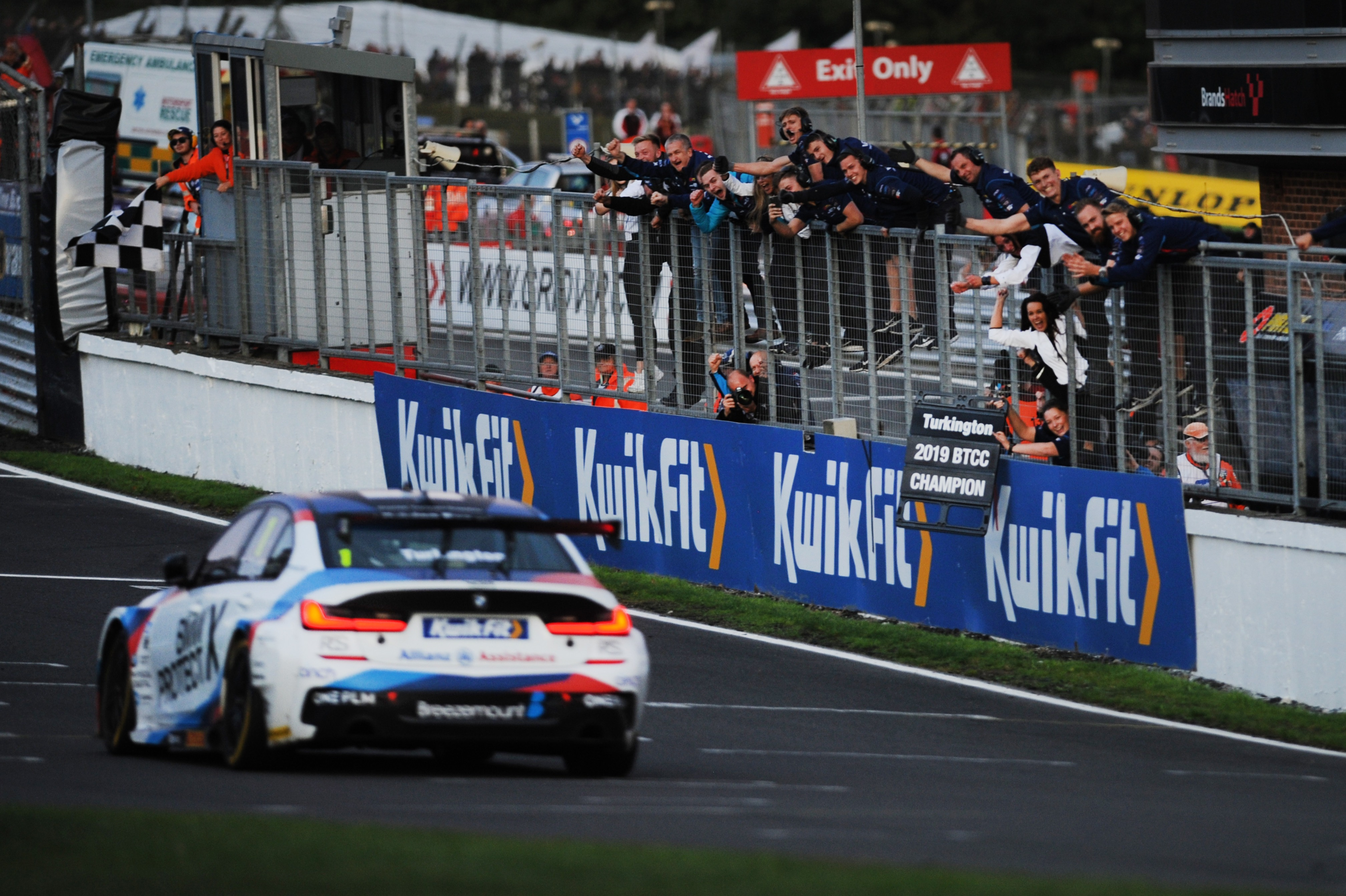
Colin Turkington, 2019 BTCC Brands Hatch Indy
Photo by: JEP/Motorsport Images
The last-minute title
The 2019 BTCC Brands Hatch showdown was a thriller. Turkington had claimed a third crown in 2018 at the wheel of the 125i, and this time around he and team-mate Andrew Jordan were in the mix in the new BMW 330i M Sports. So too was Dan Cammish in his Team Dynamics Honda Civic, and team-mate Matt Neal was on hand to help on a slippery track.
“In race two, Matt gave Col a nudge down at Graham Hill Bend and turned him around,” recalls Bennetts. “He finished 25th, and we thought, ‘That’s it, game over’. Col thought the same, but it’s never over ’til it’s over.”
PLUS: BTCC greats Turkington and Rouse in conversation
"I’ve never seen him so emotional. He was banging the steering wheel, he was shouting – he’s normally Mr Quiet" Dick Bennetts
Cammish had the title in his grasp when, on the penultimate lap, he had brake failure at Hawthorns and crashed out. With Jordan fourth, Turkington’s rise to sixth was enough for a fourth title. “It’s our first ever 1-2 finish,” points out Bennetts. “We knew there was a possible problem with Dan’s car because we could see from about lap three or four his brakes were glowing red up into Druids, and we thought for that early in the race something wasn’t right.
“So yeah, poor bloke – totally out of Dan’s control. He locked up the rears and that was it. Game over. Colin was incredibly emotional, because after race two we’d had a little chat and we thought, ‘Right, just do our best, looks like it’s gone now’. So to then be told on the radio on the in-lap that he’d won it, I’ve never seen him so emotional. He was banging the steering wheel, he was shouting – he’s normally Mr Quiet. Dented the roof of the new 3 Series, but that’s all right – we didn’t mind that.”
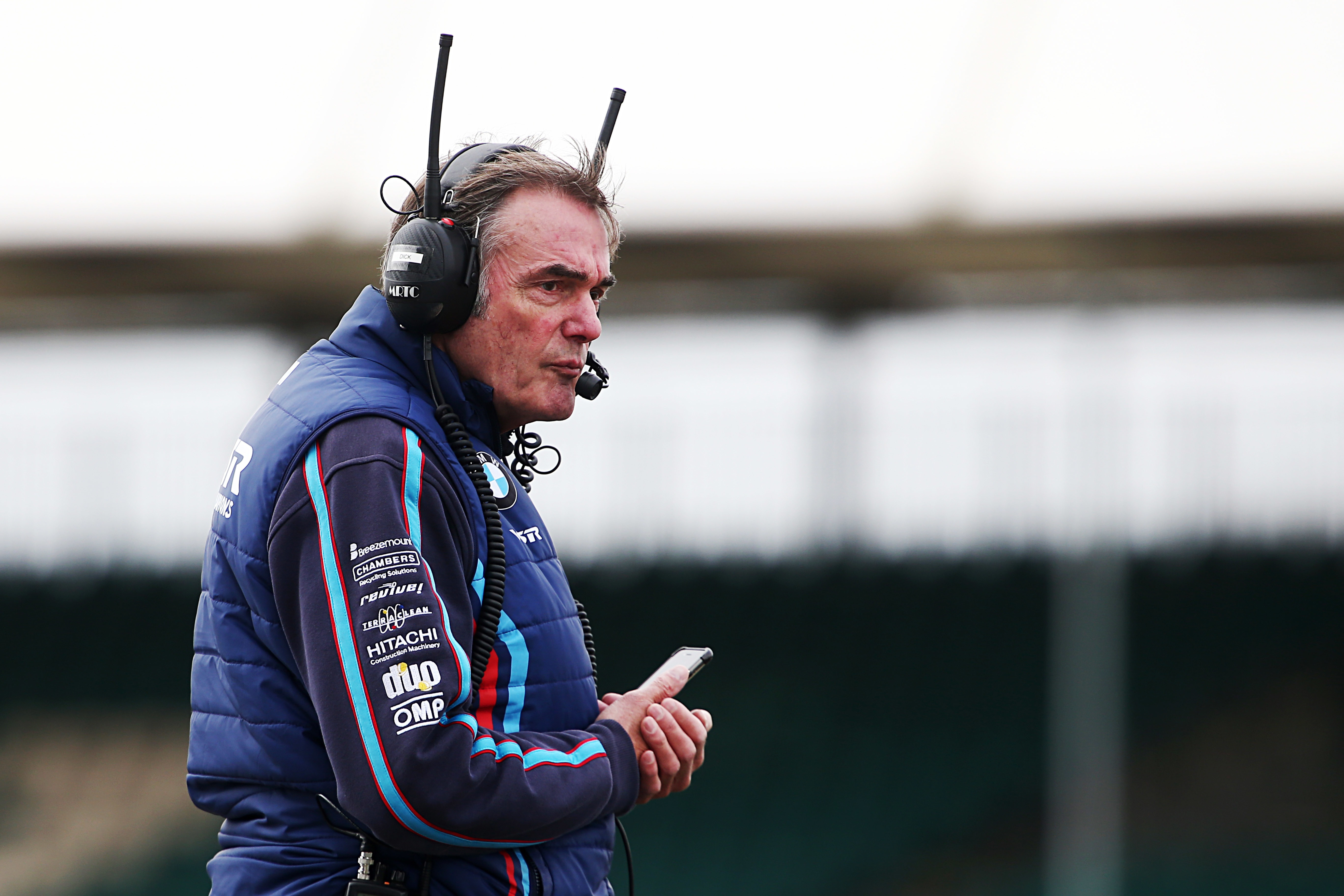
Dick Bennetts 2020
Photo by: JEP/Motorsport Images
WSR today
West Surrey Racing enters its 41st season, continuing to run BMW UK’s team of 330i M Sports in the British Touring Car Championship. Turkington and Tom Oliphant remain on board, while Stephen Jelley returns to a team he last represented in 2009.
Bennetts continues to front an operation that currently stands at around a dozen full-time, and up to 25 on race weekends. You can usually tell if a place is good to work at by the longevity of its full-time staff, and the boss names chief mechanic Steve Buckell and finance director Mike Ewan as the longest servers: they joined in 1989 and 1986 respectively, so they were already around even when Hakkinen famously lost Macau GP victory to Michael Schumacher.
Archive: When Schumacher and Hakkinen battled in Macau
And if a persuasive young medical student named Jonathan Palmer hadn’t coaxed Bennetts to return from New Zealand in 1981, those staffers’ lives – and those of countless others in motorsport – would have been very different.
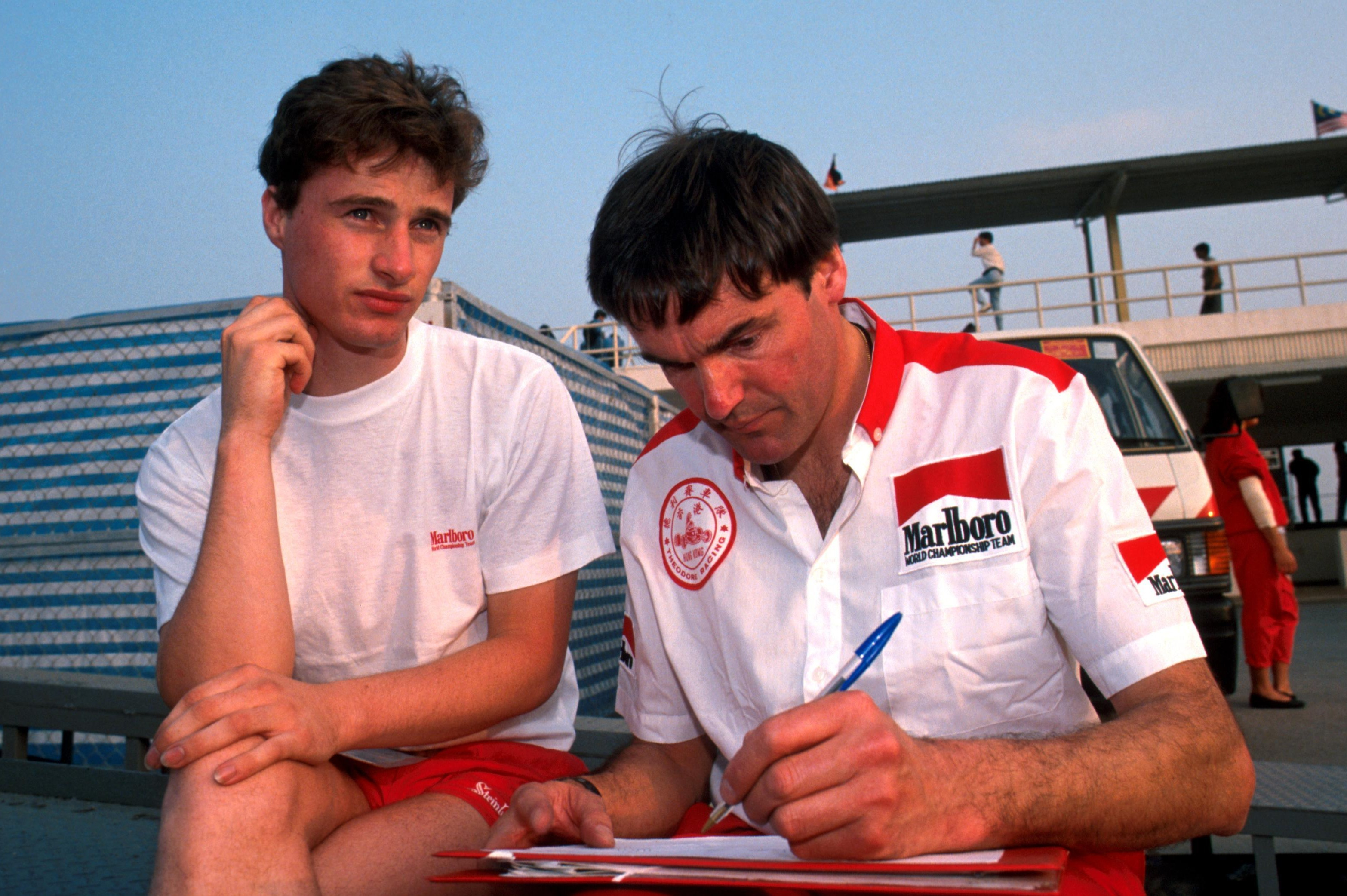
Eddie Irvine, Dick Bennetts Macau
Photo by: Motorsport Images


Kay back on the move in Autosport National Rankings table

Grant moves back to top of Autosport National Rankings

Excelr8 takes on 16-year-old to join Ingram for BTCC 2027

A fond farewell to a few BTCC favourites

How Ingram made his mark on the 2026 BTCC campaign – before going out with a bang

BTCC Brands Hatch: Cammish handed victory after Collard penalty

BTCC Brands Hatch: Ingram doubles up to secure runner-up spot in championship

BTCC Brands Hatch: Ingram wins after wonder move on Moffat

MotoGP's final Australian GP at Phillip Island cancelled due to poor weather

Antonelli pole shows Mercedes is 'finally seeing the results' of car upgrades

Leclerc and Hamilton's differing theories behind Ferrari's Austin qualifying disappointment

Norris frustrated after United States GP qualifying: "I did a very bad job"
Subscribe and access Autosport.com with your ad-blocker.
From Formula 1 to MotoGP we report straight from the paddock because we love our sport, just like you. In order to keep delivering our expert journalism, our website uses advertising. Still, we want to give you the opportunity to enjoy an ad-free and tracker-free website and to continue using your adblocker.


Top Comments