
BTCC 2015: 10 things we've learned so far
After one of the most wide-open pre-seasons in recent history, the British Touring Car Championship title fight is developing into a nail-biter. SCOTT MITCHELL draws up some conclusions from the first half of 2015

You could spin the tale of the 2015 British Touring Car Championship a number of ways after the first few rounds. Having six drivers firmly in contention at the halfway mark is certainly a PR dream.
While some might bemoan the lack of wheel-banging drama that has helped make the BTCC so popular, the action on-track has been of a high quality this year. The usual suspects are coming to the fore, but there are new faces in the mix as well and the racing has been good.
We have, of course, learned lessons with greater substance than that.
NOT PICKING A FAVOURITE WAS WISE
AUTOSPORT felt like it was bet-hedging too much at the start of the year in refusing to make a solid prediction for the season. That caution is, so far, proving completely justified.
There were 90 points between the top six - Colin Turkington, Gordon Shedden, Andrew Jordan, Jason Plato, Mat Jackson and Rob Collard - last season. This year, there are just 39. That's as tight as it's been for some time, and in the seasons that come close to matching that statistic - such as 2011, when 40 points separated the lead half-dozen - it doesn't quite compare, because there were fewer points on offer.
The increase in contenders is the result of a new team joining the fray in Team BMR, with Plato and Turkington now leading its quartet of Volkswagen CCs, Honda introducing a new car, some race-format tweaks and outsiders nicking reverse-grid wins from the usual candidates. With greater variables comes great unpredictability, which in turn creates a more layered storyline.
The big question there is will this go down as a classic? It has all the ingredients. The new grid format for race two has tweaked the racing (and strategies) and shaken up the sequence slightly, while increased ballast amounts have made back-to-back triumphs impossible (unless you're Plato and in Cheshire).
Drivers have always had to balance racking up big scores at some tracks with damage limitation at others. But it's arguably more prevalent than ever this year. It's setting the title fight up nicely, but some question marks remain over whether there are too many variables at play (more on that in a moment) and it remains to be seen whether the close nature of the drivers' standings will translate into any particularly stand-out moments on-track.
PLATO AND SHEDDEN ARE EDGING IT

Tough as it may be to call a champion, Shedden and Plato are doing the best job this season. The Scot's probably driving at his strongest since his title-winning 2012 campaign, and Plato looks every inch a man homing in on his 100th win (though it's unlikely to come in 2015).
Perhaps it was naive to think both might be late to the party this year, thanks to Honda's (delayed) new car and Plato being at a relatively new, unproven independent team. If anyone did think that, their fears have proven misplaced - I, for one, predicted Honda would firmly be in contention if it remained in the mix going into the summer break. Of course, Shedden leads the points...
Key to their prowess this season has been the ability of Shedden and Plato to manage the higher ballast quantities better than any driver. Shedden has qualified extraordinarily strongly given he has often been carrying extra cargo, while Plato is the only driver to win with 75kg on board.
That's making a massive difference, and will likely be crucial in the run-in: if they are the two drivers to head into the final round with 75kg and 66kg respectively, it is the best chance of the weight making the least difference.
It's also worth considering their performances compared with their respective team-mates, a rejuvenated Matt Neal and 2014 champion Colin Turkington respectively. Shedden is the only Honda driver to have won a non-reverse-grid race this year, Plato has four wins to Turkington's one.
Plato has three poles on merit this year, Turkington one - Shedden has one, Neal has none. They even have similar points advantages: Shedden is 22 clear of Neal; Plato 24 of Turkington.
THE PRESSURE'S MOUNTING ON THE SOFT TYRE

Plato is a very skilled driver, but one of the most potent tools in his arsenal is his ability to voice his opinion when something irks him. The subject of his irritation this season is the soft-compound tyre - and with good reason.
While Donington Park's soft-tyre disaster was a one-off, it's not unfair to suggest there is one variable too many in the BTCC at the moment. Plato said it was creating "a circus", and he has a point: not to get too repetitive, but remember that the BTCC has already got success ballast (with increased ballast amounts), the race-two grid set by fastest laps in the opening race, and there's a partially reverse-grid race three.
The difference between the soft and the medium in terms of pace is actually quite minimal on a regular circuit, but there's still a fair bit of degradation towards the end of each race. Does the championship really still need that extra variable?
Dunlop is happy to follow the championship's lead with its soft tyre, and at the Snetterton test even had Josh Cook run the hard-compound rubber currently used only at Thruxton to see if that might potentially replace the soft as the 2016 option tyre. It's understood that's unlikely, though.
It's also understood that the gap between the soft and the medium could be made wider next season, if Dunlop's new endurance-based soft tyre is introduced, thus making the variable greater. But if the variable is going to exist, this could be the best way to accommodate it.
One scenario that Plato has mooted is making the soft tyre quicker over a race distance, not over a few laps before dropping off. That'd shake up the order without leaving the top drivers defenceless, or as Plato calls it: "not racing".
Ultimately, it's down to a simple question: How much do you need to create a show, and at what point does the entertainment become contrived?
TURKINGTON'S FLYING UNDER THE RADAR

We've already touched on the gap between Plato and his new team-mate in the points, but Turkington is very much in contention.
Any fears he'd struggle to re-adapt to front-wheel drive after becoming a rear-drive specialist were dispelled pre-season, when he proved to be a match for Plato's times in testing. Then he took pole for the second round at Donington, and won race two. Things looked good.
Since then, it's not been plain sailing. Handling issues limited him at Thruxton, and he had a brake failure at Oulton Park in race one - though he admits he was not on Plato's level that weekend. He bagged a good haul of points at Croft, including a race-two podium, though he was hampered by a boost-pressure problem in race one that compromised his result there.
Croft was an interesting test. Don't assume his previous successes there have been entirely down to his time in a RWD BMW, he's universally quick there. And he had the legs on Plato, even though Shedden probably looked the most dangerous of the FWD contingent.
Turkington admitted pre-season it would be the last few morsels of performance from a FWD car that would prove most difficult to unlock. And he's done the hard work by bagging plenty of points when the going's been fairly tough.
Yes, he has been under the radar slightly this season, but he has taken a pole and a win and is always in the mix for good points over the course of the weekend. More outright pace after the summer break will make him a formidable title contender.
JURY STILL OUT ON WSR

All the talk at the back of the WSR trucks after race three of Croft was of optimism, of how the team had turned the corner after a difficult start to the year. But is that the case?
Four wins from six across Oulton Park and Croft have made WSR's struggles at Donington Park and, to a lesser extent, Thruxton, a distant memory. But, interestingly, Andy Priaulx admitted he was wary of the Croft clean sweep becoming a "smokescreen".
WSR is an independent team, despite its BMW alliance, and the budget reflects that. So while Honda built a new car and BMR ramped up the development of its Volkswagen CCs for the incoming Plato and Turkington, the fleet of BMW 125i M Sports has not had the same level of investment. It's also holding back potential updates that should unlock further performance, such as fly-by-wire throttle and a direct-injection engine.
That put them on the back foot for this year, despite Priaulx taking pole at Brands and Rob Collard winning the opening round. An engine performance deficit has since been addressed, with much help from Neil Brown Engineering, and there is reason to believe the upturn in form can continue over the summer break.
Croft has always been a RWD track and WSR has always been the best at exploiting those advantages. Sam Tordoff is now fourth in the points after victories at Oulton and Croft, but can he sustain that?
The team expects to be in the mix at Snetterton, and that meeting will go a long way to revealing the answer.
MG'S BEEN UP AGAINST IT

While WSR went into the summer break on a high, the same can't be said for MG. The Triple Eight-run operation has yet to win with its new driver line-up of Andrew Jordan and Jack Goff, having notched up more victories than any other partnership with Jason Plato over the previous three seasons.
Before the start of the year, 1992 champion Tim Harvey suggested MG might be the marque to go backwards slightly in 2015, citing a potential lack of investment compared with other teams as the main reason. It's a similar, though not identical, scenario to WSR. While MG is understood to have increased its investment over recent seasons, the bulk of the effort is being performed by Triple Eight.
Jordan has grabbed a few podiums this season and lies sixth in the points, 39 from the summit and still in contention. But it's worth noting his best weekend of the year - Oulton, where he was fourth, third and second - still went without a win despite the MG6 GT being strong in Cheshire. That was arguably the best opportunity so far, and it didn't quite happen.
It might at Snetterton. Jordan showed very well during last week's tyre test, and the MG has always shone in Norfolk. A victory there could unlock something in the team and its 2013 champion, and it needs to. Otherwise the answer to the question 'is the MG running out of legs compared with its newer rivals?' might be one the team does not want to hear.
PRIAULX'S NOT A MENU OR GIO

Pole (and a podium) at Brands rammed home this point from the very beginning, but Priaulx struggled on the softs in the opening race and then there were a couple of difficult weekends. So it's not been perfect.
Tordoff and Collard won before him, and he was almost at pains to point out he still 'has it'. But what else would you expect from a three-time world champion who has put together his own deal to race in the championship, while firmly in the spotlight that his status as a BMW factory driver brings?
Priaulx has admitted the move could have been a gamble for his reputation, especially as Alain Menu and Fabrizio Giovanardi returned in such underwhelming fashion last season. But the Guernseyman has comprehensively proven such (potential) comparisons unjust.
He has been very quick this year - his average qualifying result, with the Donington technical problem discounted, is 2.7 - and finally converted that pace into victory at Croft, overtaking team-mate Tordoff to do so. He's ninth in the points, two points behind seventh, with four podiums to his name. That's more than Menu (who finished 11th in the points) and Giovanardi (13th) achieved combined in 2014.
While it's fair to point out Priaulx is in a much more competitive package than Menu (BMR VW) and Giovanardi (Motorbase Ford) were in last year, he didn't come back into the BTCC in the most ideal way.
The last time he drove a comparable touring car was 2010. Since then, his life with BMW has been all about the DTM and GTs. The NGTC is very, very different - as is the style of racing the BTCC is famed for. His adaptation has been swift and he's reaping the rewards from that.
Priaulx is enjoying his BTCC return and the good results are helping that. He's keen to remain in the championship next season and should be regarded a title contender if he does - but more wins are not out of the question in 2015 first.
EMERGING TALENTS

The Jack Sears Trophy has been reinvented for 2015 as a class for rookie drivers, with Renault UK Clio Cup graduate Josh Cook the pick of the bunch so far.
Clio champion Mike Bushell started strongly but has lacked luck since, with technical problems, crashes and financial struggles conspiring to make his rookie season as difficult as possible.
Cook, on the other hand, has benefited from a Power Maxed Racing team that has shown very impressively at times with its Chevrolet Cruzes. And it is Cook, not past race winner Dave Newsham, who has hit the highest heights - think race three at Donington Park, where he looked every inch at home while leading the reverse-grid encounter.
There have been problems for Cook, such as a high-speed crash at Croft in race two, but he's adapted well to the rigours of the BTCC. That said, it's a sophomore driver who has arguably been most impressive of the 'unestablished' bunch.
Tom Ingram's record on the TOCA support package was well-known when he arrived in the BTCC last year in a Speedworks Motorsport Toyota Avensis, and he's added better tin-top racecraft to his obvious speed for this year.
When the Toyota is on song, Ingram is a firm top-10 driver. That's a big achievement given the tight nature of that fight, and the bigger teams he and Speedworks are up against. A maiden podium is not far away.
POTENTIAL FUTURE STARS...

Such is the competitive nature of the TOCA support package that it always pays to keep an eye on the next crop of talent looking to make the step up to the BTCC. And it's difficult to look past three guys in the Clio field as potential future touring car aces.
Ash Hand, Ashley Sutton and Ant Whorton-Eales are putting on a fierce display at the head of the Renault pack, and the races are usually incredibly close and terrifically fought - even by the Clio Cup's high standards.
All three have, or have had, touring car links. Hand is a former KX Akademy youngster and is mentored by Andy Priaulx, Whorton-Eales was also on Jason Plato's KX scheme, and Sutton is a British Formula Ford graduate driving for Team Pyro but with Team BMR backing.
They are exciting prospects, but speed isn't everything. Are any the full package? Not yet. Sutton would be the first real rookie champion in the Clio Cup, and is arguably the most exciting. Hand and Whorton-Eales are undeniably rapid.
Could any of those three repeat Ingram's rise from the support ranks to the BTCC? The youngster painstakingly raised the cash to do so, and literally made his graduation happen.
That's the level of dedication and tenacity the Clio Cup trio will need to replicate to turn their undoubted speed into a real career.
...AND UNLIKELY ACES

There's no way to write this without it sounding harsh, so simplicity is the best approach: the back end of the grid is worse this season.
The spread from the front to the back in all four like-for-like qualifying sessions has been slightly bigger this year. And while the gap between 1st-15th is more or less the same - impressive given the new Honda and upgraded BMR VW - the gap from 16th to the back has constantly been bigger, sometimes by a chunk of tenths compared to 2014.
There are drivers at the back of the grid with less experience than in previous years, so they will be expected to improve, but some teams are struggling significantly with reliability.
This is usually in the form of engine dramas, or power-steering problems (a common issue in the NGTC era). Some claim they don't receive enough support when they encounter such issues, but that's a complaint to be raised in private to the TOCA Technical team, and not for this piece to question.
Of course, it's not necessarily fair to question the presence of backmarkers. There will always be backmarkers in racing - someone has to finish last - but given the extent to which the NGTC regulations have closed things up at the front and in the midfield, the argument you can make is that the back end of the grid should be getting closer to the front at the end of a regulation cycle - not further away.

The driver who can wreck F1's "super exciting" 2020 silly season

Red Bull's Verstappen now has basis for first F1 title challenge

Ferrari: Mick Schumacher a good candidate for seat in Formula 1

Hamilton felt pressure of revitalised Mercedes team-mate 'Bottas 2.0'

Alfa team boss Vasseur: Squad must maximise results in chaotic races

Honda: Verstappen F1 relationship like seeing a young Senna

Ferrari: Key team personnel running F1 would be conflict of interest

Late Spa shunt could have cost Giovinazzi his drive - Alfa

How Toyota destroyed the competition to seal the WEC crowns

McLaren retains Fornaroli as F1 reserve and hands him WEC programme for 2027

How Andrew Jordan realised his teenage rallycross dream
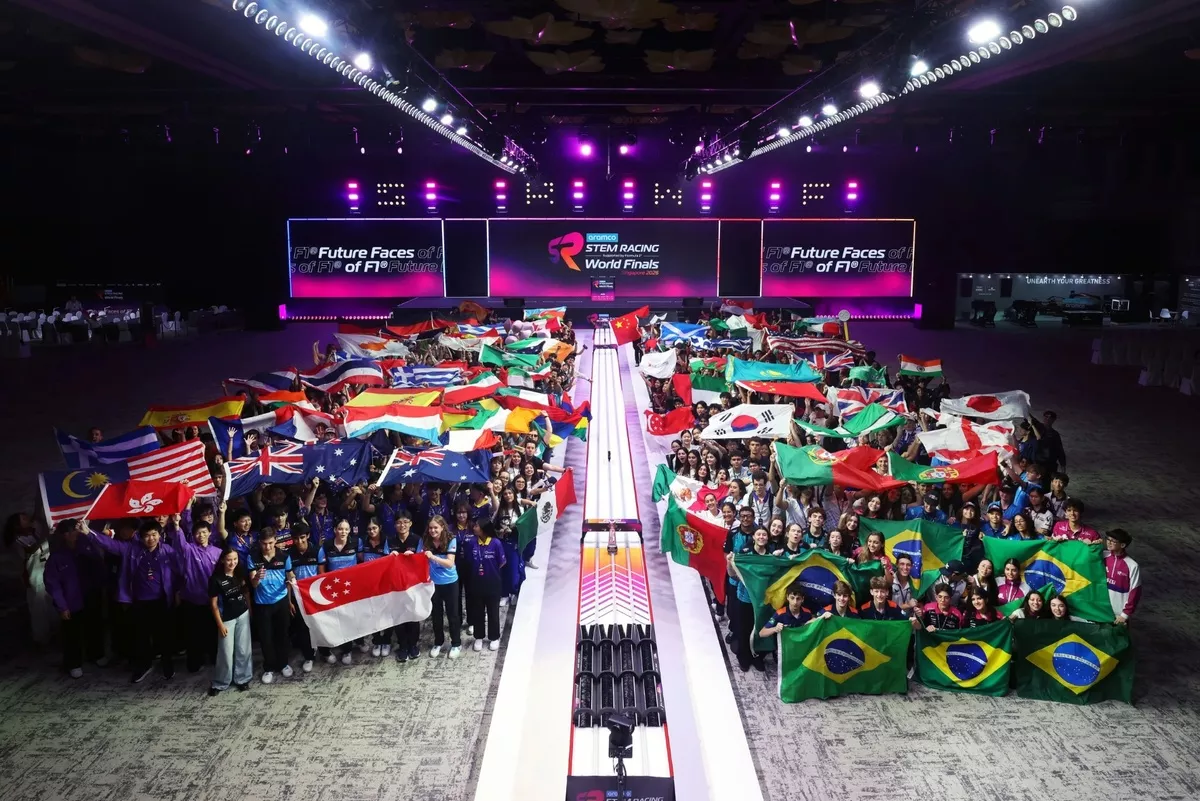
Inside the competition building F1’s future engineering talent
Subscribe and access Autosport.com with your ad-blocker.
From Formula 1 to MotoGP we report straight from the paddock because we love our sport, just like you. In order to keep delivering our expert journalism, our website uses advertising. Still, we want to give you the opportunity to enjoy an ad-free and tracker-free website and to continue using your adblocker.


Top Comments