
The big questions over LMDh/LMH parity at Le Mans
Excitement over the influx of manufacturers to the 2023 Le Mans 24 Hours is understandable. But when balanced against each other, will LMDh and LMH be a short-lived unity?
It’s amazing to see what the ACO has done to bring the Le Mans 24 Hours alive again, with new regulations designed to allow manufacturers to compete with the same car in the World Endurance Championship and IMSA SportsCar Championship. For fans of sportscar racing and people who work in that orbit, it’s exciting to see the interest it has generated with Ferrari joining Toyota, Peugeot, Acura, Porsche and, of course, Audi from 2023.
PLUS: Top 10 Le Mans Ferraris ranked
But I have my concerns over the viability of having two such different categories as Le Mans Hypercar (LMH) and Le Mans Daytona hybrid (LMDh) competing for overall victory because, regardless of who wins or how the Balance of Performance is developed, there will likely be a significant advantage to one or the other. In the longer term, I don’t think that the two categories can co-exist and time will tell which one will survive.
If a manufacturer goes to LMH, invests a lot of resources in developing a hybrid car from scratch but gets beaten by an LMDH car using a spec Bosch hybrid system that is based on an LMP2 chassis, it will be very hard to justify this investment. On the other hand, nobody knows at the moment if LMDh cars will have a chance to beat a ‘thoroughbred’ LMH car designed entirely by a manufacturer. That is an important concern for teams and drivers.
People can argue that it’s only fair that LMH teams are rewarded for being the main category from the ACO, but fair or not fair is irrelevant. The questions should be: ‘What is the championship’s ultimate purpose and how can we maximise technology development/entertainment?’
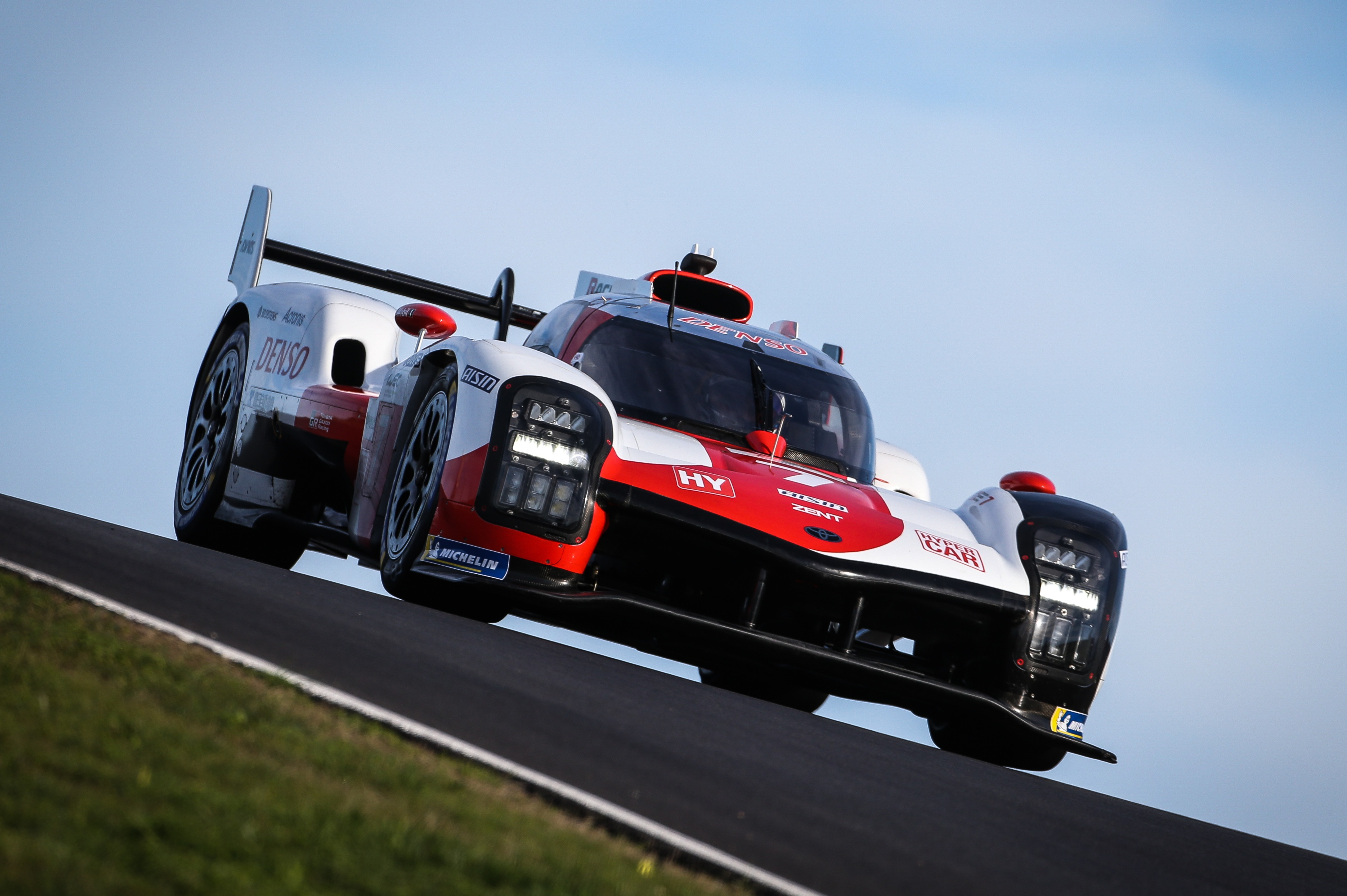
Toyota GR010 Hybrid Portimao test 2020
Photo by: TGRE
I wasn’t surprised that Audi went down the LMDh route. As I understand, it’s not yet decided what configuration of engine it will use or where it will race, but the cost-effectiveness of running an LMDh car that can also race in the US is far better than building a hybrid LMH car from scratch that can only race in WEC – especially when you’re going to have BoP anyway. Maybe you have more control, maybe a better chance of winning and more freedom of development in LMH, but it involves a bigger budget without the necessary technology gains – as the hybrid systems of this new generation are way below the levels seen in the LMP1-HY era.
I understand and fully support why BoP is considered an essential way to ensure parity, but this also concerns me on several levels. For starters, in GTE the impact of the BoP is so great that even if you have the best team of drivers, in most cases you will not win if the BoP is wrong. This has nothing to do with car development, it’s purely a decision from the regulators and rules, which we’ve seen time and again over a number of years.
Since 2017, IMSA has done a good job of balancing the normally aspirated 5.5-litre V8 Cadillac, two-litre turbocharged inline-four Mazda and twin-turbo 3.5-litre V6 Acura within its Daytona Prototype international (DPi) formula (that becomes LMDh from 2023). But the sporting rules in IMSA – for example, backing everyone up behind a safety car whenever there is an incident – has a stronger weight on deciding results and creating entertainment.
Either way, in the long run I expect it will be very hard for both to co-exist. If a brand like Porsche or Audi in LMDh doesn’t win anything, they will either stop altogether or do LMH – or the opposite will happen and LMH manufacturers will pull out
The two classes will produce the same maximum power and have the same minimum weight, but LMH is still allowed four-wheel drive, which will be a massive advantage over LMDh in the wet. How will the regulators balance the cars for these different conditions, different situations? That will be very tricky.
Another important concern is that manufacturers will try to trick the BoP to gain an advantage. The teams naturally will do that, but you don’t want to see that in a highly competitive series and in one of the world’s most prestigious races. You want to see the best competition possible, and know that the best team and car won.
You can argue nowadays, development of the internal combustion engine in motorsport is useless for future road car applications. That was what Honda said when it exited Formula 1, for example, and as more companies announce that they will only produce EVs, it’s clear that developing an LMH or LMDh car to win at Le Mans is becoming more of a marketing and branding exercise than about technology development. There is very little road-relevant technology being developed that can be transferred directly to road cars and we can see in the success of DPi that reducing costs is so important to have manufacturers involved. This is why I think LMDh could have an edge.

#10 Wayne Taylor Racing Acura ARX-05 Acura DPi: Ricky Taylor, Filipe Albuquerque, Alexander Rossi
Photo by: Art Fleischmann
Either way, in the long run I expect it will be very hard for both to co-exist. If a brand like Porsche or Audi in LMDh doesn’t win anything, they will either stop altogether or do LMH – or the opposite will happen and LMH manufacturers will pull out.
Having said that, things are ultimately going in the right direction because LMP1 Hybrid was unsustainable, the cars were extremely complex and the return on investment was not there for the budget spent. The standard hybrid packs in LMDh will not be even close to the technology that we had back in 2016 in the later stages of the Audi LMP1 programme, which was really the peak of engineering, rivalling F1 technology. But that’s not such a bad thing.
When discussing the future of any racing series, you have to imagine a chair supported by three legs; entertainment, cost and R&D. It is extremely difficult to balance all of them. Freedom in R&D will lead to high costs. To have entertainment – the competitive racing we all crave – then you need the cars to be similar in performance by limiting R&D.
The true test will come when LMDh cars join in 2023, but for the time being I believe the ACO and FIA have done a great job. After recent years when it’s been clear who the winner will be, I can’t wait to see a 10-way fight for overall victory at Le Mans again. Endurance racing is going in the right direction.

Audi R18 2016 Le Mans 24 Hours Lucas di Grassi, Loic Duval, Oliver Jarvis
Photo by: Audi

F1 approves shorter races for 2027 to fit revised power unit plan

Ryder clinches third British Hillclimb title by a single point at Prescott

Factory WRC driver Lappi to pause rallying career

Why Leclerc didn’t copy Hamilton’s driving style amid F1 2026 struggle
Subscribe and access Autosport.com with your ad-blocker.
From Formula 1 to MotoGP we report straight from the paddock because we love our sport, just like you. In order to keep delivering our expert journalism, our website uses advertising. Still, we want to give you the opportunity to enjoy an ad-free and tracker-free website and to continue using your adblocker.


Top Comments