
Motorsport's unseen race against the clock
You’ve probably never heard of the Platinum 10 but it is already proving its worth in motorsport safety, as Santa Pod’s medical services manager explains
A Top Fuel dragster sets into stage, as it launches there is an overwhelming noise that presses into the chest of the crowd, it can only be described as an assault on your senses. A fraction later, tyres smoke, flames begin to engulf the shadow of a dragster as it passes the quarter mile, it veers to the side, and meets the barrier at 300mph. For the spectators, crew and families, time stops but, for the rescue team, a countdown begins.
Behind the barriers, our team is already moving. Radios crackle, “Crash, Crash, Crash”. Rescue crews are deployed. Spectators watch in anticipation; they hope the driver steps out. We are already counting the seconds, motorsport medicine is shaped by the Platinum 10, the opening 10 minutes when leadership, coordination, and clear decision-making can be the difference between recovery and tragedy.
What is the Platinum 10?
The phrase ‘the Platinum 10’ was first introduced to me by a colleague and close friend, Consultant Dr Sam Harmer, to describe the crucial first 10 minutes of a serious traumatic incident. While most people are familiar with the ‘Golden Hour’, the idea that a patient’s best chance of survival rests on reaching definitive care within 60 minutes, the Platinum 10 goes one step further, focusing not on the first hour, but on the very first few minutes where the chain of survival truly begins. This is a concept unique to motorsport, where clinicians feel the adrenaline rush of an incident, responding within seconds, not minutes. The aim is to achieve the most, while completing the minimum necessary interventions to save a life.
Dr Harmer’s thinking was simple but powerful. If clinicians, rescuers and systems can act decisively in those early moments, the trajectory of the patient’s journey can dramatically change. Decisions about bleeding control, airway, and extrication in that short window can result in the difference between a life preserved or a life lost. For motorsport medicine, this feels like a philosophy that is almost tailor-made.
At Santa Pod Raceway, the principle of the Platinum 10 is magnified by the unique realities of drag racing. When vehicles can accelerate to more than 300mph in under four seconds, the environment is unforgiving. If something goes wrong, the forces involved are extraordinary, with high-energy transfers, violent deceleration, and the ever-present risk of fire or combustion.
How we do it
The Platinum 10 becomes more than a medical concept here, it is a playbook that shapes every move we make. Every second counts and every role has to be rehearsed. We do not have the luxury of time to improvise. Instead we rely on defined systems, choreographed responses, and close integration with fire and rescue colleagues. A driver pulled by the Fire Diver in seconds instead of minutes has an entirely different clinical outcome, not because of one heroic intervention, but because motorsport medicine runs on precise reaction, not improvisation.
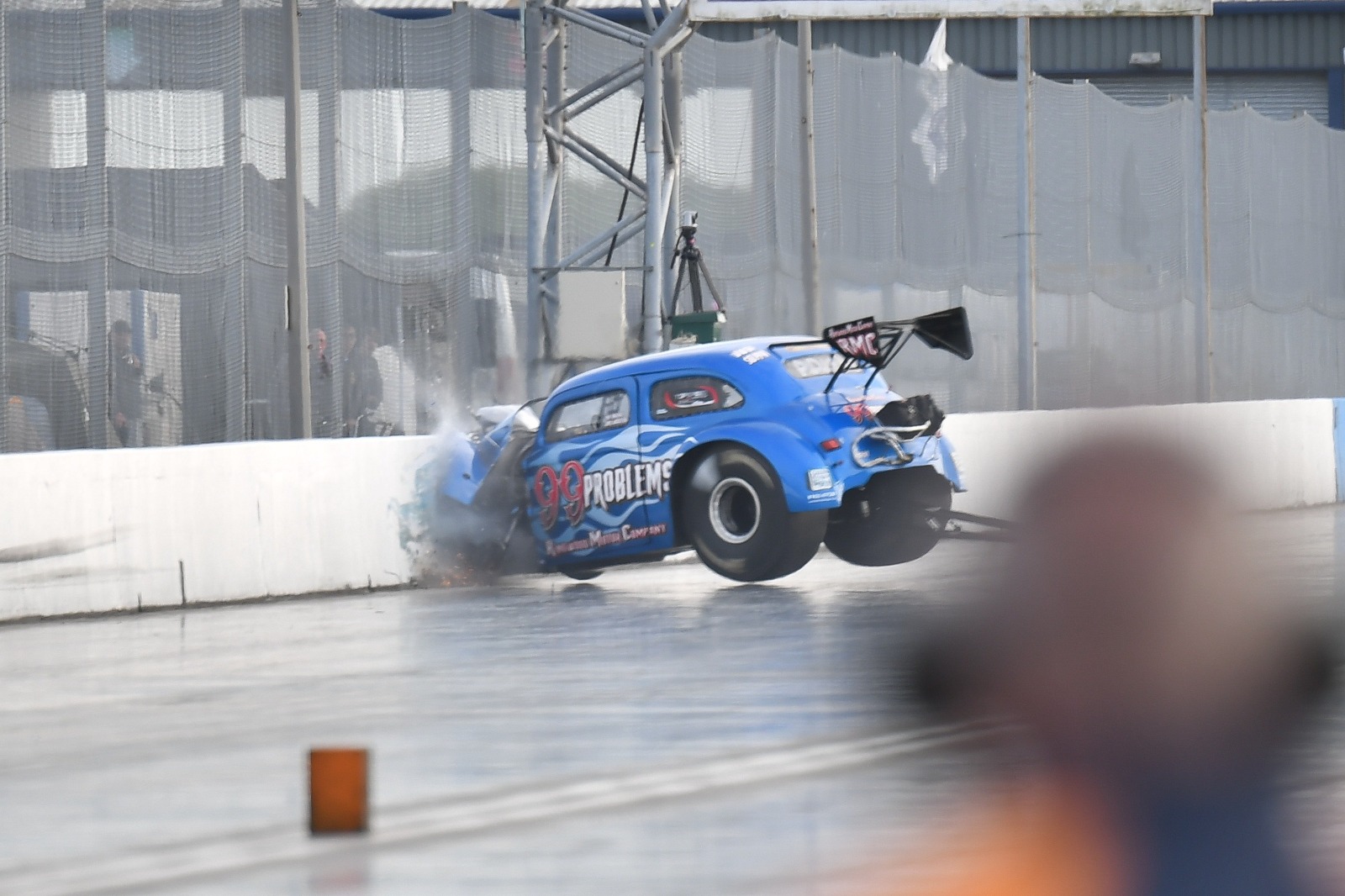
With drivers hitting barriers at up to 300mph, instant recovery and support is essential
Photo by: Callum Pudge
Dr Harmer’s framing of the Platinum 10 also underlines the importance of leadership. This is not just about clinical skill at the patient’s side, but about concise decision-making, communication, and operational oversight in the heat of the moment. Within motorsport we recognise that the Platinum 10 is everyone’s responsibility, from the marshal first on the scene and fire team extinguishing flames, to the medical crew providing that initial care. Each role must connect seamlessly into the next to help shape motorsport safety.
What is perhaps less obvious, but equally vital, is how the Platinum 10 influences preparation outside of race day. Extrication training, simulation, and post-incident debriefs are all structured with that 10-minute window in mind. We not only measure what we do, but also how fast or effective it is achieved. When incidents are reviewed, timelines are broken down to understand how we can improve. Just as teams in the pitlane measure fractions of a second to find the competitive advantage, our rescue crews do the same to ensure the best of patient outcomes.
Ultimately, the Platinum 10 has become our mindset for motorsport safety. It is not simply a medical theory, but a cultural framework. It tells us that the first 10 minutes after a crash define what is possible for the rest of that hour. It drives us to position ourselves more intelligently, to train more rigorously, and to review our actions more critically.
Across a season, there are always moments that underline why those minutes matter. We have seen drivers walk away from wrecks that, on first impact, looked unsurviveable, but more importantly walk away with the chance to heal, recover and race in their championship again
It is important to recognise that Dr Harmer’s concept was never intended to remain on a page. It was meant to change practice. Motorsport, with its extremes of speed and risk, has shown to be a proving ground for that philosophy. We have embedded this concept into every level of our care, from the structure of our crash call algorithms, to the positioning of rescue resources, and a culture of shared accountability is spread throughout the team.
The Platinum 10 reminds us that leadership in motorsport is not abstract. It is measured in resilience, actions and outcomes. And in those first 10 minutes after the unthinkable happens, recovery hinges on how we use every second.
A pitstop that saves lives
The image of a pitstop is one of precision. Every member of the crew knows their role, every movement is practiced, and every second is accounted for. Trackside medicine is no different, it is choreographed, but without predictability.
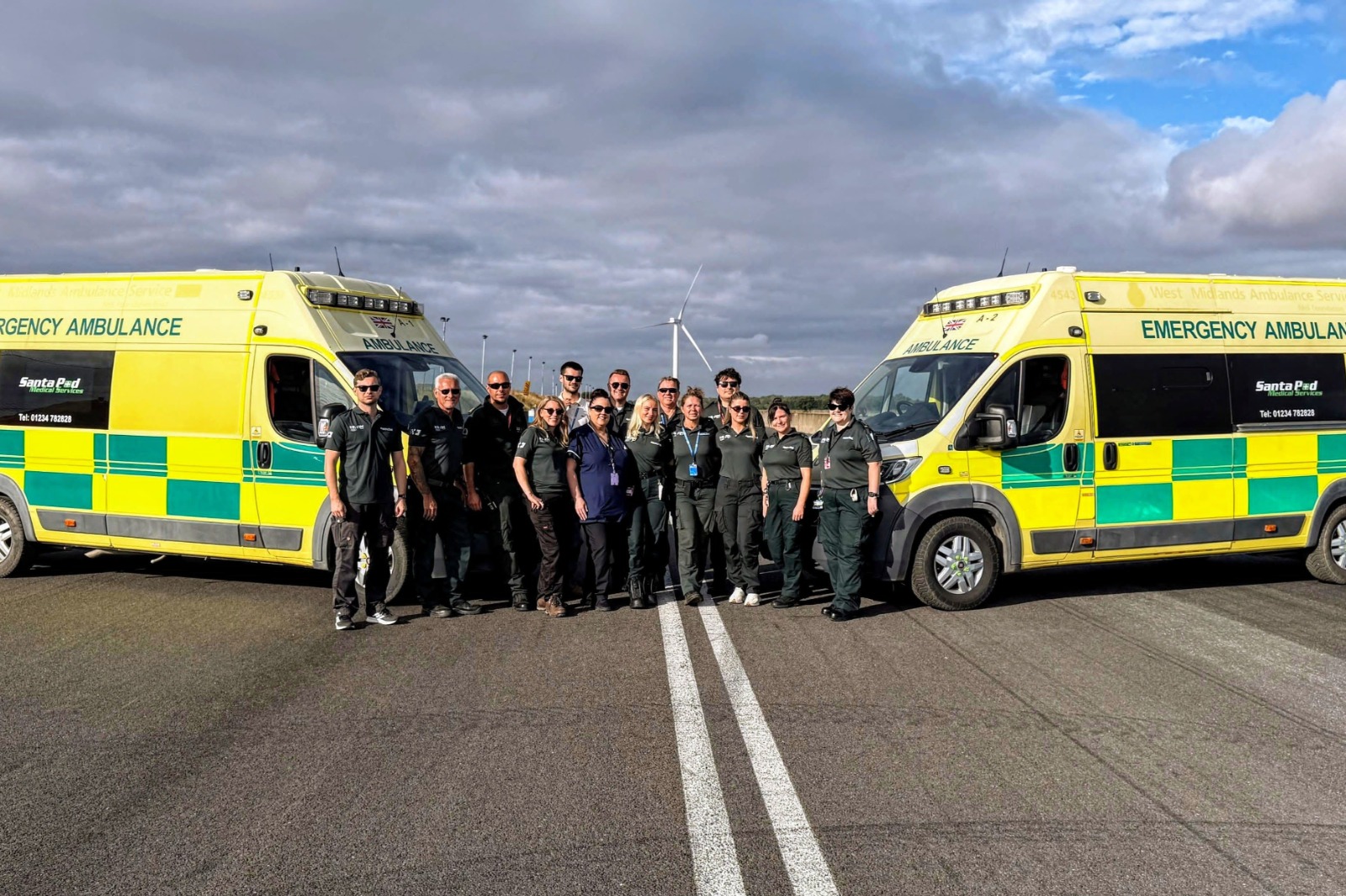
Santa Pod Raceway's crews work to the Platinum 10 mantra with pitstop-like execution
Photo by: Santa Pod Raceway
When an incident occurs, a response follows with similar intensity of pitcrews turning their cars around in seconds. Marshals and fire crews react first, flagging the incident and controlling the scene. Rescue volunteers eliminate hazards and gain access to the driver, they tackle doors, harnesses and rollcages. The medical team is right there with them, ready to assess and stabilise the driver the moment they are clear. Each action is deliberate and methodical, linked to each other much like those seen in a Formula 1 pitstop.
The importance of this precision is never theoretical. Across a season, there are always moments that underline why those minutes matter. We have seen drivers walk away from wrecks that, on first impact, looked unsurviveable, but more importantly walk away with the chance to heal, recover and race in their championship again. That distinction matters in motorsport, saving a life is not only the first step, preserving a career is the ultimate goal.
Equally, we have faced the realities that cause delays – blocked access, a trapped harness. Even the smallest hesitation in the chain of response can stretch those crucial seconds into minutes, altering outcomes in ways we will never forget. In those moments, the philosophy of the Platinum 10 and the discipline of pitstop-style teamwork prove their worth. They remind us that success is not measured by chance, but by preparation, because every driver and their family are part of our wider motorsport family, and every second gained is a second given back to them, their team, and the people waiting anxiously on the sidelines.
Every incident becomes part of a feedback loop. Just as teams debrief after race day, rescue teams review each response in detail. The process is never about blame, it is about learning and developing, to benefit those who may need us next. In motorsport, we carry not just the responsibility of a driver’s safety, but the hopes of their families, their teams, and a community that sees every competitor as part of its own. Refinement is our way of honouring that trust.
In the end, the comparison with a pitstop is more than a metaphor, it’s the culture of motorsport safety. We operate under the same pressures, the same need for perfection, and the same understanding that winning or losing can be decided in the blink of an eye. The difference for us is that the finish line is not a chequered flag, but a driver who gets to race again.

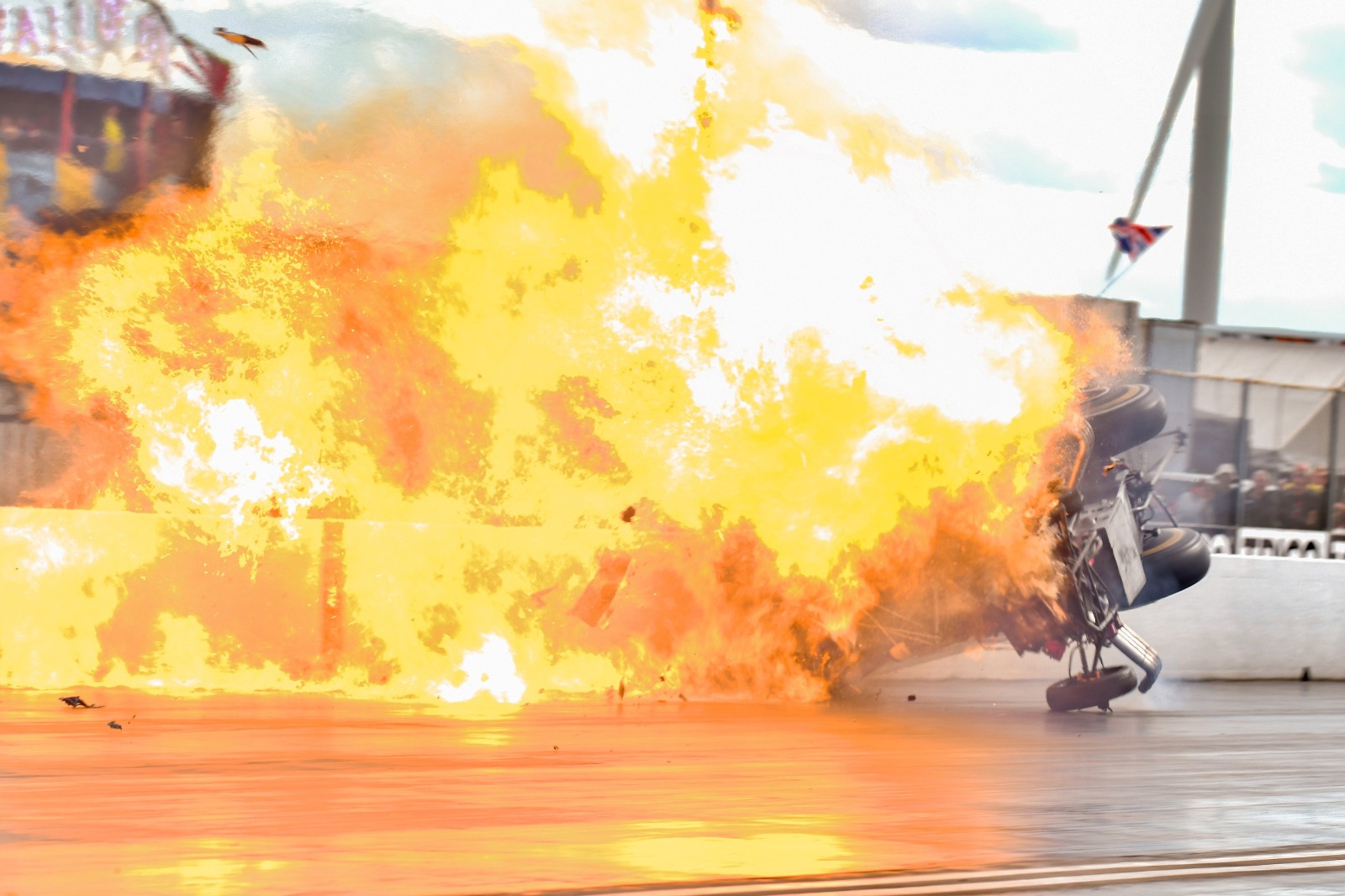
The focus isn't just on saving a life, but saving a career in the recovery process
Photo by: Callum Pudge

F1 champion Norris completes first full test in McLaren’s Le Mans Hypercar

How Solberg lit up WRC title fight in Chile

F2 adds extra Baku feature race and insists Qatar, Abu Dhabi still on – what does this mean for F1?

Healeys, MGBs and Lotus Elans top Castle Combe Autumn Classic
Subscribe and access Autosport.com with your ad-blocker.
From Formula 1 to MotoGP we report straight from the paddock because we love our sport, just like you. In order to keep delivering our expert journalism, our website uses advertising. Still, we want to give you the opportunity to enjoy an ad-free and tracker-free website and to continue using your adblocker.


Top Comments