
Mark Hughes: F1's Inside Line
"Ross Brawn is the messiah Honda has been seeking"
|
At its most basic level, aerodynamic competence. The mechanical aspects of the last few Hondas have been state of the art. All the anecdotal evidence suggests that they have been the lightest, the stiffest and with the lowest centre of gravity. Slow-corner speeds tend to back this up. Mid-corner apex speeds in slow corners last year showed the Honda and the Super Aguri (last year's Honda) to be consistently the fastest of all. It was at all the other bits of the circuit that the Honda went disastrously wrong - the bits where the speeds are dominated by aerodynamics. Why was it so lacking in aero? For many reasons, but chief among them was bad practice. The car was configured in a new tunnel that had not been properly verified and calibrated. There were extenuating circumstances why - the old tunnel was being heavily used in major upgrades to the 2006 car at the time the '07 car was being configured - but it was still bad practice. Stronger technical leadership would not have allowed it. The aero team itself was largely new. The previous chief of aero had left when the '07 car was being laid out. A lot of new staff had joined from lots of different places - and it takes an age to get a disparate group working as a unit. They come from different team cultures, with different structures, different personalities, using different measuring techniques and tools - and their place within the structure was still new and ambiguous enough to be open to damaging in-team rivalry. Senior aero staff left part-way through last year, replaced by guys who weren't there at the car's birth, so had no way of knowing what the thinking was behind the design. The CFD programme was sadly under-resourced. This showed in wing profiles that looked like something from five years ago compared to the razor-edged CFD-style devices on everyone else's cars. Only way too late was a correlation group established - another example of plain bad practice. When you've got CFD, windtunnel models of various scales and the real car on the track, there is no way the data is going to say exactly the same thing. The golden rule is that the bit that is right is always what the car is doing on the track. Anything that disagrees with that is wrong and needs to be corrected. That's the job of a dedicated correlation group. But the aero shortfall only existed because of structural shortfalls within the team. For the last three years there has been a constant tug of war between Japanese and British elements about where the technical leadership needs to be coming from. There have been faults on both sides but the disaster of the RA107 was with a Japanese-led technical initiative. What does Brawn bring? Aside from the vision of overview, a huge intellect, total racing savvy, a fantastically logical brain, relentless work rate and decades of experience at the cutting edge of the field? A true technical manager's appreciation of where resource needs to be allocated. A great eye for where the biggest gains are to be made given finite resource, of when you're into the areas of diminishing returns and something new takes over on the critical path as more important. His areas of expertise cover the manufacturing and the operational ends of the task. Brawn-led teams have always been operationally sharp. An excellent questioning technical mind. He was a top designer himself, has kept up with the technology, even occasionally designed Ferrari bits and pieces himself. So he can question a designer or aerodynamicist or team of them. He can ask the pertinent questions, ask to see the evidence they're basing the answers on, question if that really is evidence or a result of something else. He has been through so many of these trip-wire scenarios himself. An eye for talent. He is very good at putting the right people in the right places, at plucking out the under-utilised ability, putting the square pegs in the square holes. A knowledge of exactly how things work in a top team, which makes the shortfalls and omissions anywhere else glaringly obvious. A great capacity for workload. He leads from the front and everyone just falls in, happy to be learning, excited to be part of something good. He brings a calmness to operations. He's like one of those rare teachers at school, at once both affable yet carrying enormous authority. This extends to those working below him and in his dealings with those above. His views have great weight. As such, it's essential that the Tokyo side of the equation gives him absolute authority within his budget to do anything he sees fit without questioning or interference. But it would be unthinkable for Brawn to have agreed terms with them on any other basis. What has this done for Honda's prospects? In the short term, don't expect miracles. Consider 2008 as Ferrari's '96 season, but starting from an even lower base. The RA108 has been conceived within the same flawed environment as its predecessor, only with some of the obvious worst bits attended to: the tunnel is now properly calibrated, there is a correlation group and the CFD department has expanded. It stands a chance of not embarrassing itself next year and of developing the car at a good rate so that it may be nudging competitiveness by the season's end. Anything more is probably a bit too much to ask. But in the long term this has transformed those prospects, nothing less. Ross is the messiah Honda has been seeking and he could yet make a champion out of Jenson Button. |

In the magazine: Wheldon the Lionheart

MPH: Mark Hughes on...
MPH: Mark Hughes on...

MPH: Mark Hughes on...

MPH: Mark Hughes on...
MPH: Mark Hughes on...
MPH: Mark Hughes on...
MPH: Mark Hughes on...
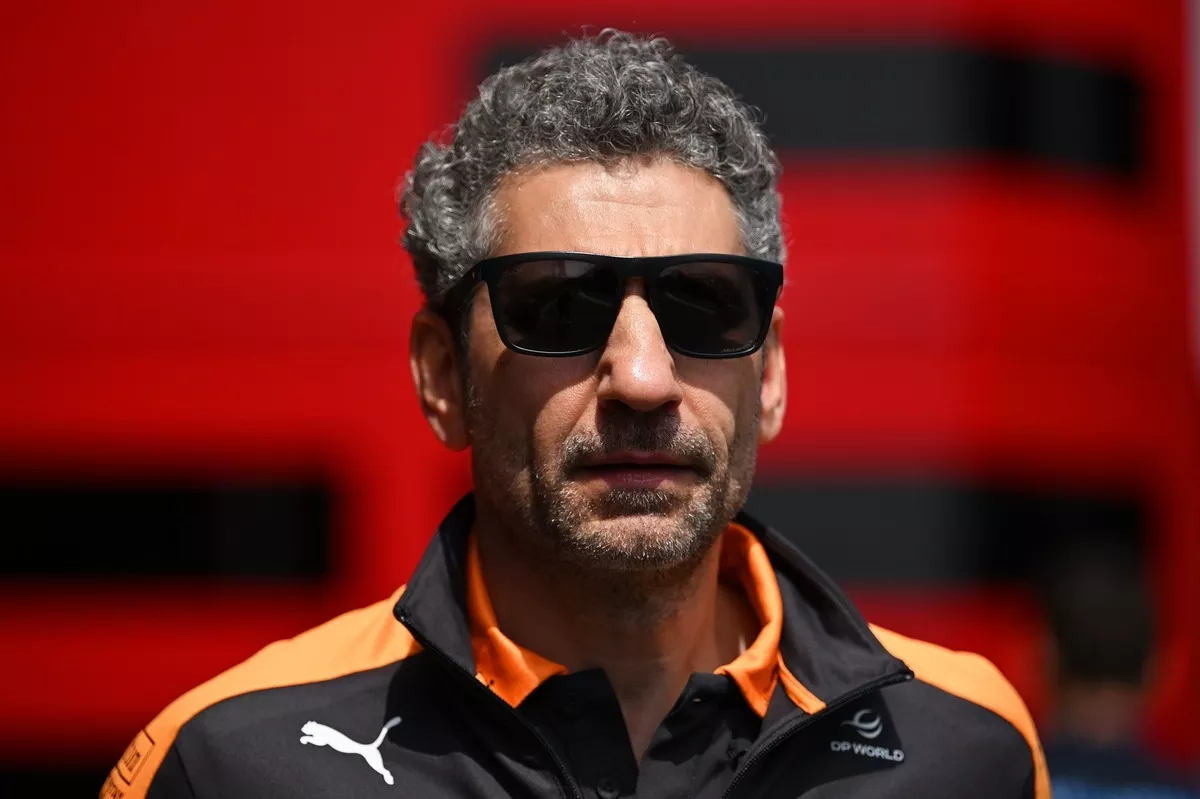
Why McLaren considers Norris-Piastri Singapore clash so “serious”

What Max Verstappen will change after Red Bull’s poor F1 starts in Malaysia and Singapore

A "better job" or more engine power? Verstappen's Singapore pole unpicked

What we learned from the 2026 F1 Singapore GP sprint race and qualifying
Subscribe and access Autosport.com with your ad-blocker.
From Formula 1 to MotoGP we report straight from the paddock because we love our sport, just like you. In order to keep delivering our expert journalism, our website uses advertising. Still, we want to give you the opportunity to enjoy an ad-free and tracker-free website and to continue using your adblocker.


Top Comments