
Mark Hughes: F1's Inside Line
"Ron Dennis is a man who above all else must have control"
|
A sport as technologically complex as Formula 1 doesn't always lend itself well to a mass audience. But the human drama of Fernando Alonso, Lewis Hamilton and 'Pitlanegate' in the McLaren pits on Saturday was very easy for even a casually watching audience to understand. The explosive element was the madly intensive dynamic between two of the most hotly competitive souls on the planet. But its detonator was a technological one. And, if you followed that, the story acquired a deeper fascination. The relevant technological detail in this instance was about the work that's been done to ensure the McLarens get to the end of the pitlane before the others prior to the fuel-burning laps in qualifying's top 10 run-off. You need to know also why being first and second in the queue there is so advantageous. You need to know about the way the engine-cooling systems of the McLarens have been configured to enable them to do this. You need to know about fuel consumption of these engines at this track at different lap speeds - and the implication this has on whether it is possible to give both your drivers an equal number of laps, and why that's important. You need to understand why it is an advantage to run as many fuel-burn laps as possible as opposed to simply not putting as much fuel in the tank in the first place. Only then can you even begin to understand how the pitlane incident was triggered. The incident itself was just the final playing out of these factors. But the human story was actually very significant indeed in terms of the dynamic between not only the two drivers, but also the relationship of each of them to the team boss. Back before the big money came in, before team owners stayed around in the sport long enough to get rich and old, the drivers were the dominant part of the partnership. They risked their necks in a brutally explicit way - and once they were established they answered to no one. Think Jackie Stewart, Niki Lauda, James Hunt, Alan Jones, Jody Scheckter. They could never be considered employees. They were way more than that. They'd operate on mutually beneficial terms with team owners but were certainly not beholden to them. Then the really serious money came and team owners became very, very rich. So they stayed around longer, their average age went up, their experience increased - and the balance of power between them and the younger generation of drivers began to swing towards the bosses. Combine this with telemetry - giving the team bosses a tool for analysing every aspect of his driver's performance, invading his professional privacy - and the process took a very significant further step forward. Next, the average age of drivers graduating to F1 began to fall as karting became forever more successful in producing race car drivers. Furthermore, their car racing careers were accelerated by manufacturer junior driver programmes, whereas previously they'd been left to find their own way up the nursery slopes. Before anyone had quite realised, the driver was no more than an employee. Ron Dennis has always been very much at the vanguard of this. Because he is a man who above all else must have control. He struggled to have it when his driver was Lauda - a man not much younger than Dennis and from a more swashbuckling era. He struggled when he paired Prost with Senna, the two greatest drivers in the world. But since then, with more compliant characters, he's got on top of the situation - though Kimi Raikkonen's disengaged personality irritated him. But then he took on Fernando Alonso and Lewis Hamilton. They are not in any way disengaged, but neither are they up for being treated like employees. These are two warrior characters, with the supreme skills to go with it. Make them team-mates and put them in cars good enough for a championship and there are going to be competitive fireworks. They are not going to be controllable - not to the extent that Dennis needs. This is further complicated in Hamilton's case by him having to make the transition from being Dennis's protege. After the reported frank radio exchange between Dennis and Hamilton on Saturday, we can now take it that transition has been made. Lewis is there on his own terms and the fact that his career has been backed by Dennis is now irrelevant. Dennis and McLaren are benefiting from his supreme skills. His performance level demands respect. "I think something seismic happened there today," said a delighted Damon Hill in the paddock afterwards. "The drivers are the stars of the show and that really sticks in the throats of their bosses. The public aren't interested in the team boss. Who cares about them? "Here we saw two guys not prepared to be dictated to by a team. Yes, it's about team work, but there's an area of competitiveness that is not the territory of the team boss. But Ron wants to control everything - and it's driving them nuts. I know it would drive me nuts. "We discussed me going there once but it would never have worked. For that reason. He's 60 years old and sees these guys as young. But in career terms they're not. They have years of experience in racing, thousands of races, know the world of racing intimately. They're not going to be condescended to." It was interesting that after Hamilton had told Dennis over the radio not ever to do that to him again, Dennis's response wasn't about the incident, it was to tell Hamilton not to ever speak to him like that again. The first response was about control, in other words, rather than the incident itself. After the race Hamilton was asked about it all. "Well, Ron was obviously angry. And I thought that after the argument over the radio he was teaching me a lesson. "So I just took it on the chin and that's why when I went to the press conference I said I wouldn't have thought Fernando would have deliberately done something like that. But I have reasons to believe otherwise." Meantime, post-race, Dennis said: "We will continue to function as a grand prix team with specific values, and if anybody does not want to be part of those values - irrespective of where they sit in the organisation - ultimately they all have a choice. But we will not deviate away from our values." He still doesn't get it. |

In the magazine: Wheldon the Lionheart

MPH: Mark Hughes on...

MPH: Mark Hughes on...

MPH: Mark Hughes on...
MPH: Mark Hughes on...

MPH: Mark Hughes on...
MPH: Mark Hughes on...

MPH: Mark Hughes on...
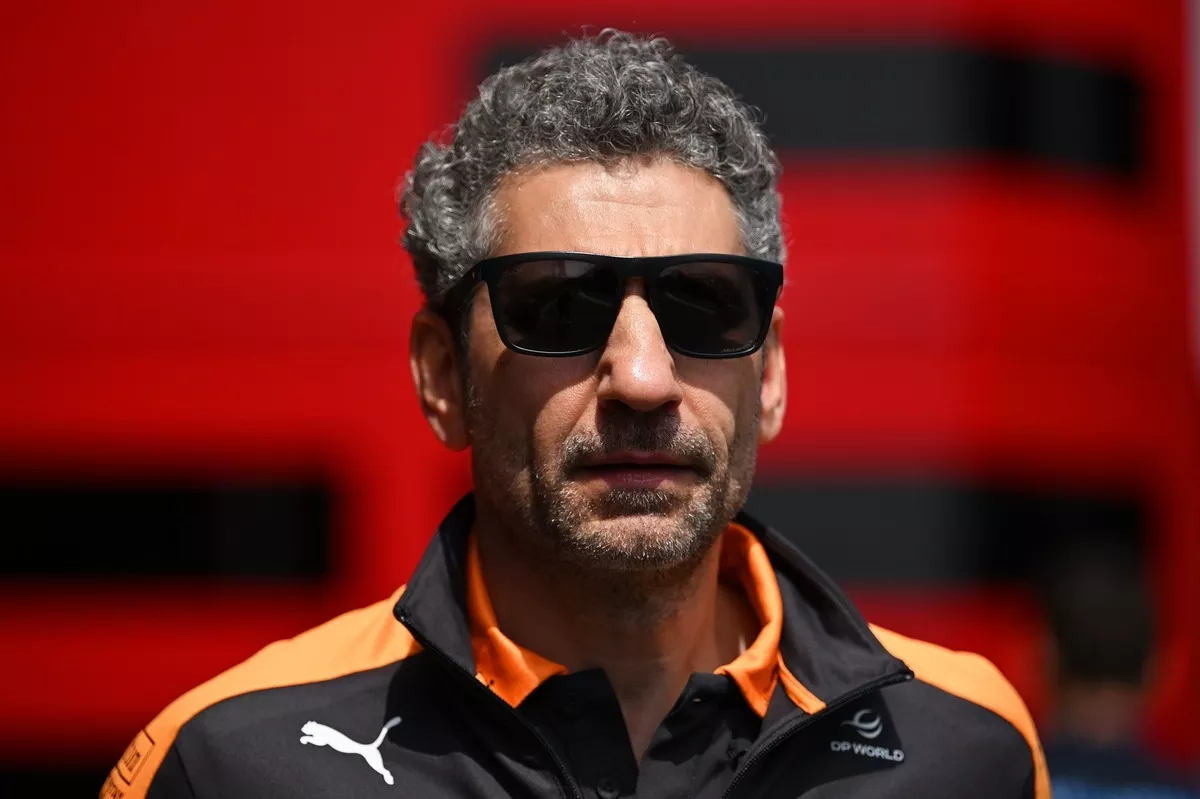
Why McLaren considers Norris-Piastri Singapore clash so “serious”

What Max Verstappen will change after Red Bull’s poor F1 starts in Malaysia and Singapore

A "better job" or more engine power? Verstappen's Singapore pole unpicked

What we learned from the 2026 F1 Singapore GP sprint race and qualifying
Subscribe and access Autosport.com with your ad-blocker.
From Formula 1 to MotoGP we report straight from the paddock because we love our sport, just like you. In order to keep delivering our expert journalism, our website uses advertising. Still, we want to give you the opportunity to enjoy an ad-free and tracker-free website and to continue using your adblocker.


Top Comments