


Oliveira - MotoGP tyre pressure rule "shouldn't apply" on damp tracks
Trackhouse Racing MotoGP rider Miguel Oliveira says the minimum tyre pressure rules should not apply when track conditions are damp, following a spate of penalties in the Jerez sprint race.

As of last year’s British Grand Prix, MotoGP has enforced minimum front and rear tyre pressures in a move ostensibly aimed at ensuring rider safety.
However, this was largely criticised by riders last year as the minimum of 1.88 bar front pressure offered them little margin before the tyre ballooned and became more susceptible to crashes.
Michelin agreed to lower the minimum front tyre pressure to 1.8 bar for 2024 in order to give the riders more margin to play with.
At the Spanish Grand Prix sprint, however, five riders were handed penalties for running underneath the minimum front pressure for more than 30% of the race.
Most notably, this affected Yamaha’s Fabio Quartararo, who rose from 23rd to third amidst the crash chaos only to be demoted to fifth.
Jerez’s sprint saw 15 riders crash across 12 laps, with most of those falls the result of damp patches.
Oliveira feels the rule on tyre pressures should only count when tracks are fully dry, saying after the Spanish GP: “Today [Sunday] was much… I don’t want to say much, but the track was [relatively] normal and that made our lives a little bit easier.

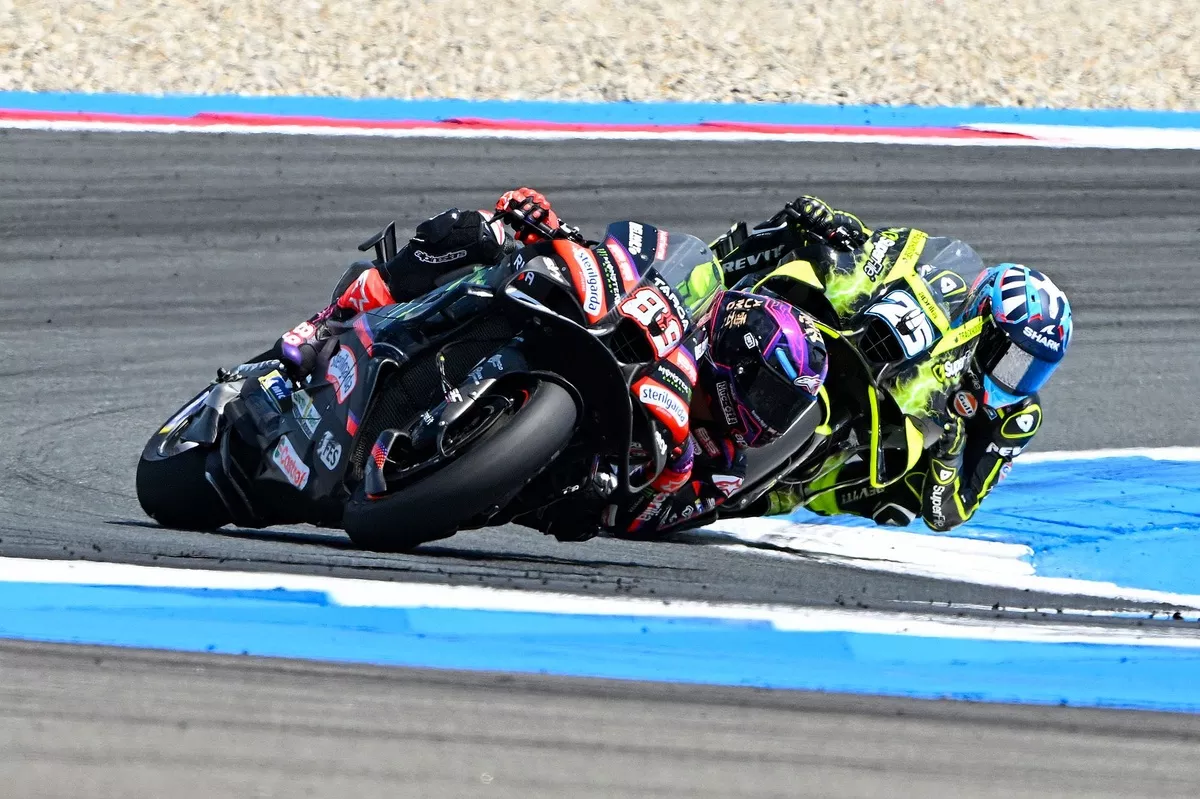
Photo by: Gold and Goose / Motorsport Images
“Anyway, tyre pressure rules when the track is damp, like [in the sprint] should not be in place in my opinion because it’s not this 0.05 bar pressure that’s going to give you the answer to do a good performance.
“But it’s the rule, it is what it is. But my opinion is when the conditions are stable everyone is able to comply with the rules and it’s a bit easier.”
Under the current rules, the tyre pressure rule doesn’t apply when a race is fully wet, or if it is run under flag-to-flag conditions.
All five riders at Jerez in the sprint were hit with eight-second penalties, though originally the punishment was set to be a disqualification.
This was tweaked on the eve of the 2024 season, with time penalties of 8s in the sprint and 16s in the race handed out instead for those found to have contravened the regulation.
Share Or Save This Story


MotoGP 2025: Full rider line-up revealed

A year on from Marquez’s Germany MotoGP meltdown, has Honda improved?

The hockey expansion rule that could benefit Andretti's F1 bid


Oliveira: I did my best to stay in MotoGP but it wasn't enough

Aprilia needs BMW’s approval to sign Oliveira as MotoGP test rider

Why Oliveira was right to pass on 2020 works KTM ride


Fernandez slams "unprofessional" Bezzecchi after crash in Indonesian GP sprint

Trackhouse to enter just one bike for San Marino GP as Ogura withdraws
How Trackhouse's surge is a double-edged sword for Aprilia

The one aspect of the 2026 US GP that should be a blueprint for F1 2027

Red Bull explains why Verstappen and Hadjar's 'silly' problems won't all be fixed in 2026

Why being "very adaptive" gave Norris the edge over Piastri at US GP

Smyth makes Formula Ford Festival history as he wins despite clash with team-mate Murray
Subscribe and access Autosport.com with your ad-blocker.
From Formula 1 to MotoGP we report straight from the paddock because we love our sport, just like you. In order to keep delivering our expert journalism, our website uses advertising. Still, we want to give you the opportunity to enjoy an ad-free and tracker-free website and to continue using your adblocker.


Top Comments