
How a flawed ‘throwback’ series gained acceptance
Against all odds, the series for V12-powered Superleague Formula cars adorning the liveries of football clubs earned a place in the hearts of many. Even 10 years on from its last race, on this day in 2011, it is fondly remembered by those who were part of it

The Superleague Formula championship had lost its way by the summer of 2011.
It had been founded amid much optimism on the premise of connecting football with motorsport, shortly before the global financial crisis struck in 2008. And now it had begun a process of turning away from its USP, hoping to capitalise on A1GP’s collapse by welcoming nations onto the grid. But only two race weekends were staged that year, at Assen and Zolder, before the championship folded.
That was a bitter shame, because the series based around the formidable 750bhp Panoz-MCT was perhaps the closest thing we’ve had in the 21st century to an equivalent of the enormously popular Formula 5000 category (if we’re dismissing Australia’s S5000 series), albeit without the chassis variation.
“It could be as loud as you want, it could be big and heavy, and we could get cars from America and build our own engine, it was just fantastic,” says technical director Steve Farrell, who had previously been the chief engineer at the Subaru World Rally Team. “Everything about it was great fun.”
“I would go as far as saying in 2008-09, it was one of the most enjoyable series I’ve ever done, it was that good,” agrees former Hitech Junior boss David Hayle, whose squad ran former GP2 racer Adrian Valles to the 2009 title with Liverpool.
By the time Farrell joined in 2007, it had already been decided that the series would use a chassis produced by Elan Motorsports Technologies in Georgia – designers Simon Marshall and Nick Alcock had also been responsible for the Panoz DP01 used in the final season of Champ Car in 2007 – and 4.2-litre V12 engines from Menard Competition Technologies (formerly the engine division of Tom Walkinshaw Racing).
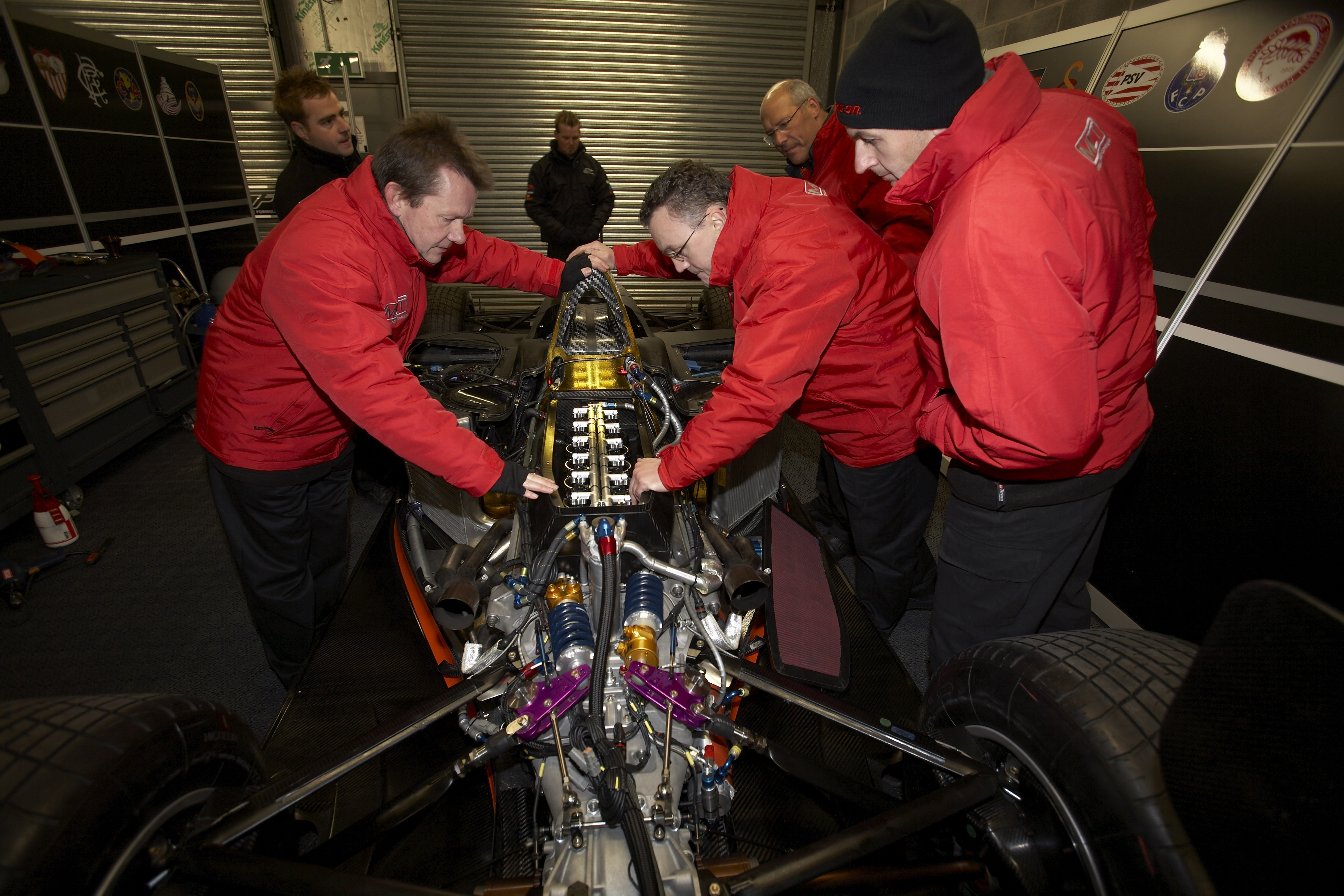
Superleague cars had beefy V12 engines built by MCT
Photo by: Motorsport Images
“It was a huge engine, it was a beast,” Hayle says. “At the start of most races, the pitwall violently shook as all the 18 cars came past. It was something else.”
But despite its visceral impression, Farrell regarded the Superleague machine as “a very usable car” that was designed to “a Champ Car concept, so they were massively strong” and therefore cost-effective for teams.
Its 15-inch wheels could accommodate robust brakes capable of lasting two race weekends. The engine was limited to 10,000 rpm, with an extra 1000 when the push-to-pass was engaged. “They could do that forever,” Farrell says.
Its sheer size meant that cooling could be problematic, but by the end Farrell’s team had made great strides in this regard. “The gearboxes were good and reliable as well,” he adds. “The car was very efficient to run.”
"It was quite an animal really in some ways. It wasn’t so sophisticated, but you could work the car pretty hard and drivers got a response from that" Alan Docking
“It was a big engine but it was a safe engine, reliable,” agrees ADR team boss Alan Docking, who ran Craig Dolby’s Tottenham car to second in 2009 and 2010, and John Martin to the title in the series’ shortened final year. “It was built to last as far as a big powerful car goes. It had to be a low-maintenance, low-costing car otherwise it would have been out of business at day one.”
In all, 21 cars and 30 engines were built, although one chassis was famously destroyed at Brands Hatch in 2010 by Chris van der Drift, who was fortunate to escape from a near carbon-copy of Johnny Herbert’s awful Formula 3000 accident in 1988. That owed much to the incorporation of full 2008 F1-standard safety features, which combined with the bulky engine meant the Superleague car was big, heavy and unwieldy – only adding to comparisons with F5000.
“It was quite an animal really in some ways,” says Docking. “It wasn’t so sophisticated, but you could work the car pretty hard and drivers got a response from that.”
Robert Doornbos had raced in Formula 1 for Minardi and Red Bull before moving to Champ Car in 2007. He describes Superleague as “a bit of a throwback”.
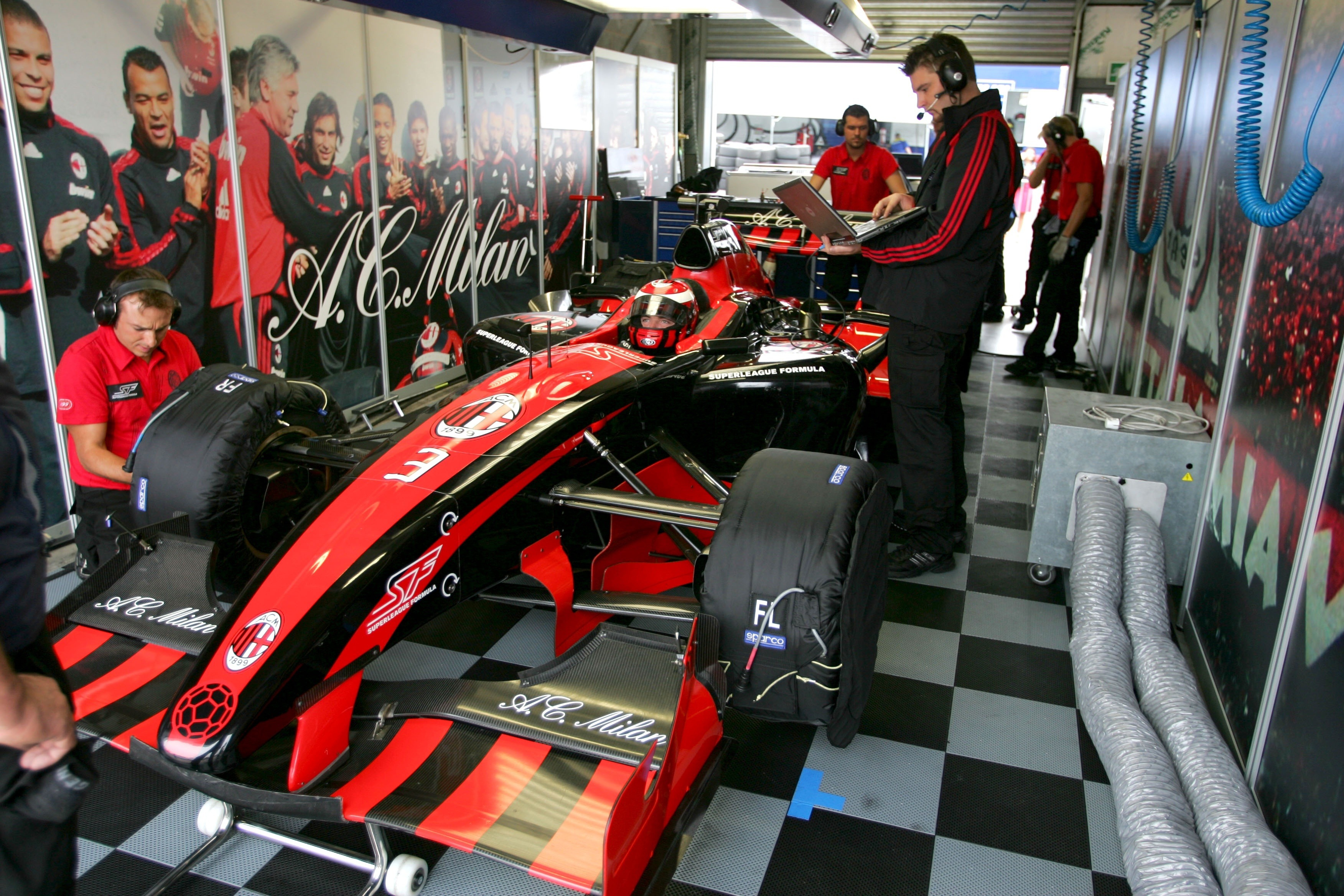
Milan's 2008 driver Doornbos relished stripped back formula after experiencing F1
Photo by: Motorsport Images
“It was quite aggressive, it had wider tyres and it had a turbo boost button to use a bit more power, which was similar to what we had in Champ Car,” recalls the Dutchman, who was invited to join the Scuderia Playteam-run AC Milan squad – which had once employed his aunt as a physio – by his former Minardi chief engineer Gabriele Tredozi.
“A Superleague car was more like a brutal Formula 3000 [Lola]. You only had one lap with the tyres, otherwise you could cook them completely, and the aerodynamics were a bit less efficient than with the [powered by Ferrari] A1GP.”
Yelmer Buurman, who started more Superleague races than anybody – 63 in all, including super final appearances – agrees that the aerodynamics “weren’t as sensitive to the aerodynamic loss when you were following another car”.
“The cars were quite heavy and they had quite a long wheelbase, so they didn’t feel as agile as a GP2 [Dallara],” he says. “Even though [the Panoz] had good downforce levels, they didn’t have as much as GP2. That combined with the push-to-pass made it that you could have really good battles and good overtaking possibilities.”
That was especially important given the unique format of fully reversing the race one finishing order for the race two grid. And that wasn’t the only Superleague quirk – grids for the first race were set by a knock-out qualifying format made up of head-to-head battles, while the top-scoring cars across races one and two were entered in a five-lap super final.
The driver who adapted best was Davide Rigon, now a factory Ferrari GT ace, who won the very first race at Donington in August 2008 on his way to that year’s title with Beijing Guoan, and doubled up in 2010 for Anderlecht.
Rigon had been set to sign for AC Milan when he was invited by Zakspeed boss Peter Zakowski to visit his facility. Suitably impressed, and attracted by the idea of working alongside famed Italian engineer Giorgio Breda, Rigon switched allegiances to the Chinese club and promptly won first time out.
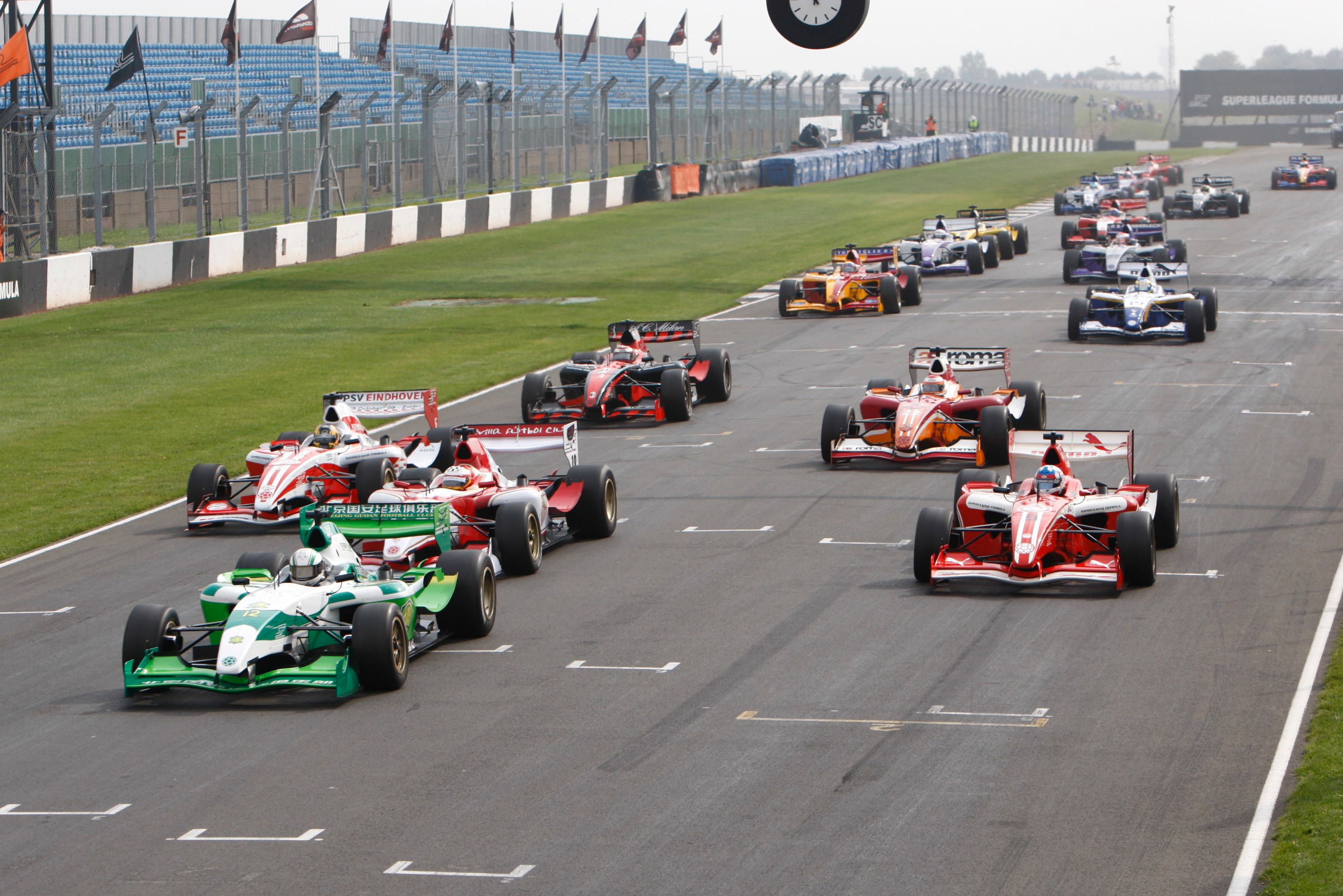
Rigon won first Superleague race for Beijing at Donington in 2008
Photo by: Motorsport Images
“It was a big surprise for me because there were big names like [Antonio] Pizzonia and Doornbos coming from F1,” remembers Rigon. “In the test I was there together with the others, but not super-fast [enough] to expect to win. But at Donington straight away I was very fast there, my car was very well-balanced.”
Having been involved in the Superleague development programme on the understanding that he wouldn’t be fielding a team, Hayle’s Hitech squad was called up “at the eleventh hour” to run Liverpool’s car for Valles, and was paid by the series to do so.
The Spaniard was thwarted by “horrendous” electrical woes that forced him to miss qualifying and start at the back from both races – “The loom was quite complex,” says Hayle. “I don’t think anyone really understood it enough to be able to troubleshoot in the field with it” – so third and fifth had been a decent recovery in front of watching Liverpool FC CEO Ian Ayre.
"A lot of cars had issues, but my car was perfect, not one issue during the races. I could say that sometimes my car was so good, that I was also lucky to win the championship" Davide Rigon
Valles emerged as one of the quickest drivers of 2008, starring to win in the wet at Zolder, and passing Doornbos for victory at Estoril. But the electrical problems continued with two mechanical DNFs at the Nurburgring and would blight his title hopes, costing a likely win at Jerez as Doornbos (who hadn’t started either race at Donington due to a fuel cell-induced fire) rose to third in the points, two behind Buurman’s Azerti-run PSV Eindhoven car.
“I would say electrical issues more than anything else plagued us for 2008 with that car,” says Hayle.
By contrast, Rigon had few such worries, and after dominating the Donington season opener was never headed in the points, his only non-score coming after contact with Doornbos at Zolder. He set it right by dominating race two.
“The first season was quite strange,” Rigon states. “A lot of cars had issues, but my car was perfect, not one issue during the races. I could say that sometimes my car was so good, that I was also lucky to win the championship.”
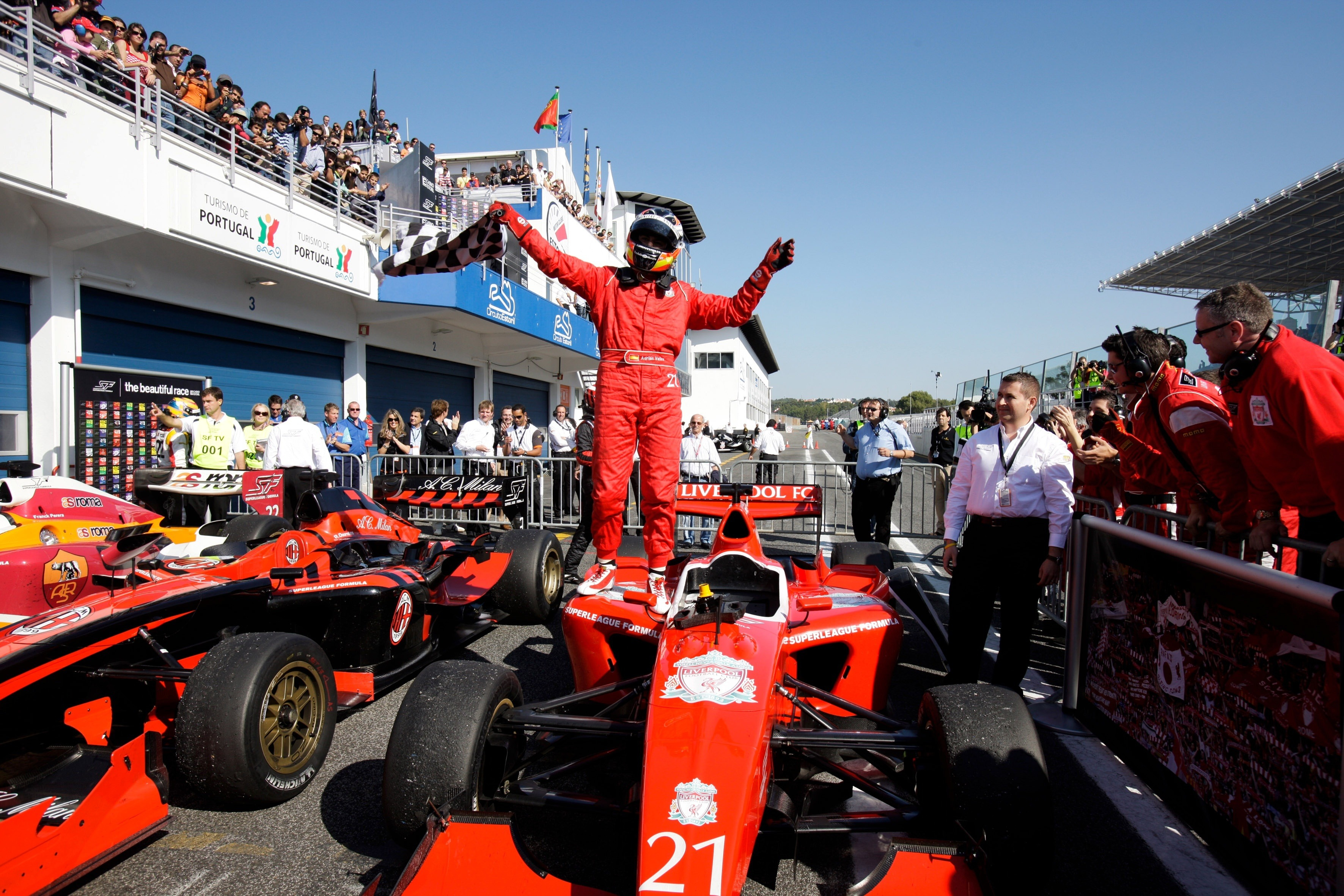
Poor reliability cost 2008 Estoril winner Valles title chance, but he made up for it in 2009
Photo by: Motorsport Images
Rigon elected to concentrate on GP2 for 2009 and appeared only three times for Olympiacos, with Zakspeed pulling out. In the Italian’s absence, Valles romped to the title (while in the world of real football, Liverpool’s poor run of form cost it a long-awaited first Premier League title to bitter rival Manchester United) ahead of Tottenham’s all-action Dolby, while a catastrophic gearbox failure for Buurman at Donington scuppered the Anderlecht driver’s title hopes.
Yet despite Valles’s untroubled run to the title, Hayle says the season wasn’t entirely straightforward – the loss of two key engineers before the season required the Hitech boss to engineer Valles himself.
“It was very much a part-time series in 2008-09, you couldn’t afford to employ people to do it full-time because it just wasn’t viable,” he says. “It was really a case of trying to keep a core group together and get whoever you could on a round-by-round basis, so it wasn’t easy!”
The teams that were being paid to run cars by Superleague weren’t entered into the cash pot, but Hayle reckons it wasn’t worth the gamble.
“Even if you won three or four races, it was barely enough to keep you going for the season, to employ the people you needed, run a factory and pay all the overheads and the costs of maintaining the cars,” he points out. “Everything had to come out of those winnings, so unless you had drivers that were paying and you could somehow share the money with them, it didn’t stack up for me.”
The 2009 season also marked the advent of the super final. After a rolling start for the inaugural super final at Magny-Cours contributed to a procession, Farrell’s team worked on improving cooling and clutch performance to allow for standing starts.
These races often produced superb storylines. Take Jarama 2009, where Buurman’s car had to be hastily repaired following an altercation with Nelson Panciatici entering the pits - “He braked really early for a line for the pit entry, but that wasn’t the speed line…” – and won with a front nose scavenged from stablemate Pedro Petiz. Or Ordos 2010, where stand-in Earl Bamber (promoted from commentary duties to replace a visa-less Alvaro Parente) scored a famous victory in one of the barmiest motor races you could ever see.
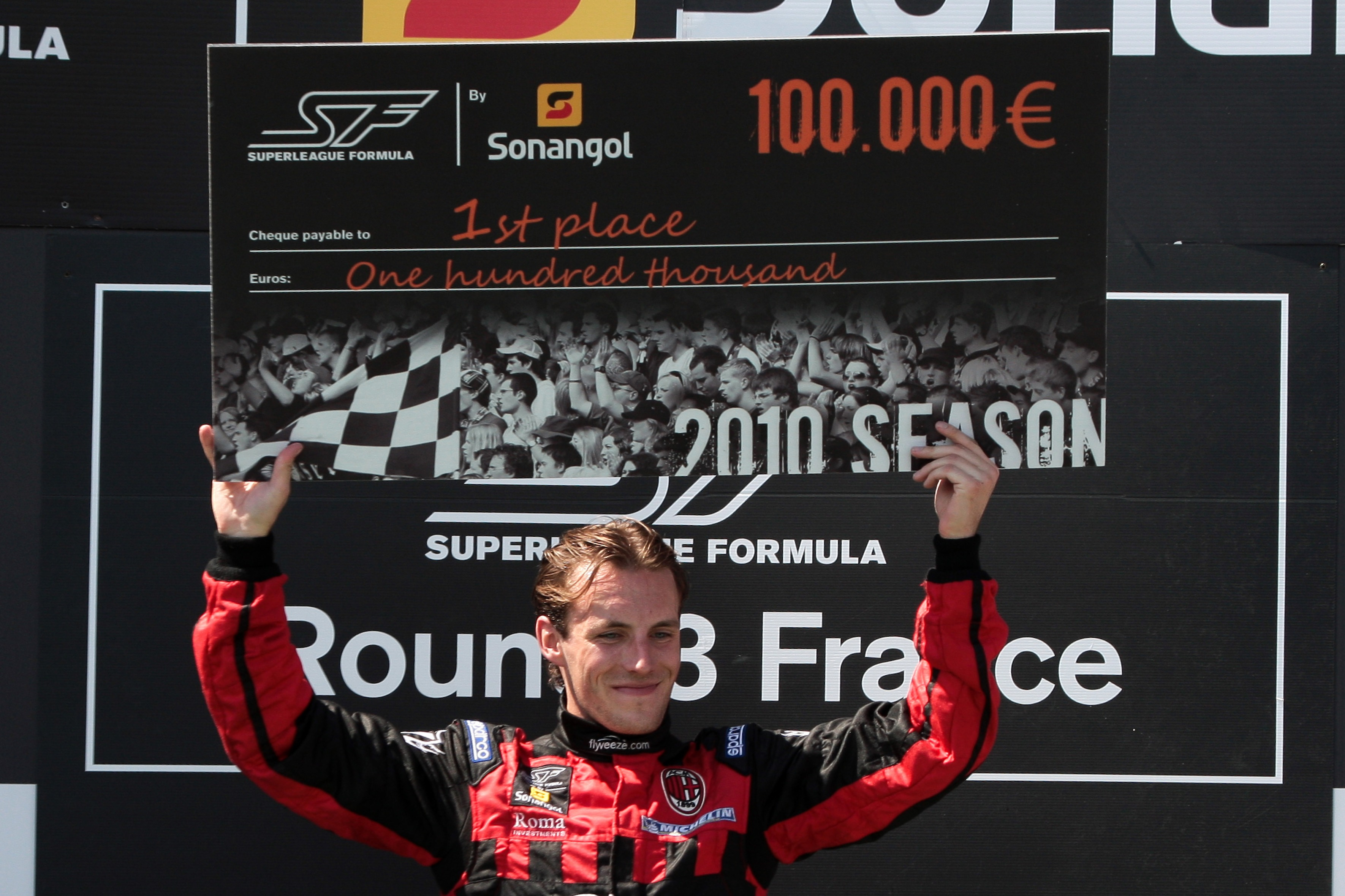
Buurman parades his cheque for Superfinal success at Magny-Cours in 2010, but not every team was signed up to earn the cash
Photo by: Motorsport Images
Ben Hanley shunted into Max Wissel at Turn 1, Buurman took the lead only to suffer a slow puncture, and Franck Perera took the flag first before being penalised for starting in the wrong grid position. Rigon, who had spun avoiding the Turn 1 melee, incredibly finished third.
“In a way it was a lot of pressure,” Buurman says of super finals. “Everything was quite tight, especially after the second race if you were in the shootout. There was no time basically – you went straight onto the grid again after a very quick splash-and-dash. When something went wrong like for example in Ordos, those moments hurt even more then, I would say.”
Having come close to working with Tredozi at Milan in 2008, Rigon finally linked up with him at the Azerti-run Anderlecht team in 2010, as the calendar expanded from six rounds to 12 across the full year. Given “a white paper to decide everything for the car”, Rigon built a team he believed could win, but concedes his 2010 car set-up “was not as good as 2008”.
"The cars were great, they sounded great, they looked great, it was fantastic racing. The whole concept of the knockout qualifying, the complete reversed-grid races and then the super final, it was really well thought out" David Hayle
“We started the first race [at Silverstone] with a very bad result and I said, ‘Oh my God, this will be a difficult season’,” he recalls.
But victory at Assen gave the team hope, and Rigon began a long fightback against early points leader Dolby and Buurman, now in Milan colours, who held the points lead after round seven at Brands Hatch. But it all unravelled for the Dutchman after contact with Dolby at Adria dropped both out of contention and opened the door for Rigon.
Buurman describes the end of 2010 as “a Murphy’s Law kind of thing”: both he and Andy Soucek were handed drivethrough penalties for track limits breaches in the first Algarve circuit race (“by penalising me, a Portuguese driver [Parente] got on the podium”); a diff failure took him out of race two; and a rare engine failure in first practice at the brand-new Ordos circuit in China compromised the following weekend too.
Then came a street race in Beijing that didn’t count for points, as the circuit didn’t have the required International Grade 2 licence. Concerns over safety came to a head after Soucek destroyed the Flamengo car in qualifying at the tricky chicane.
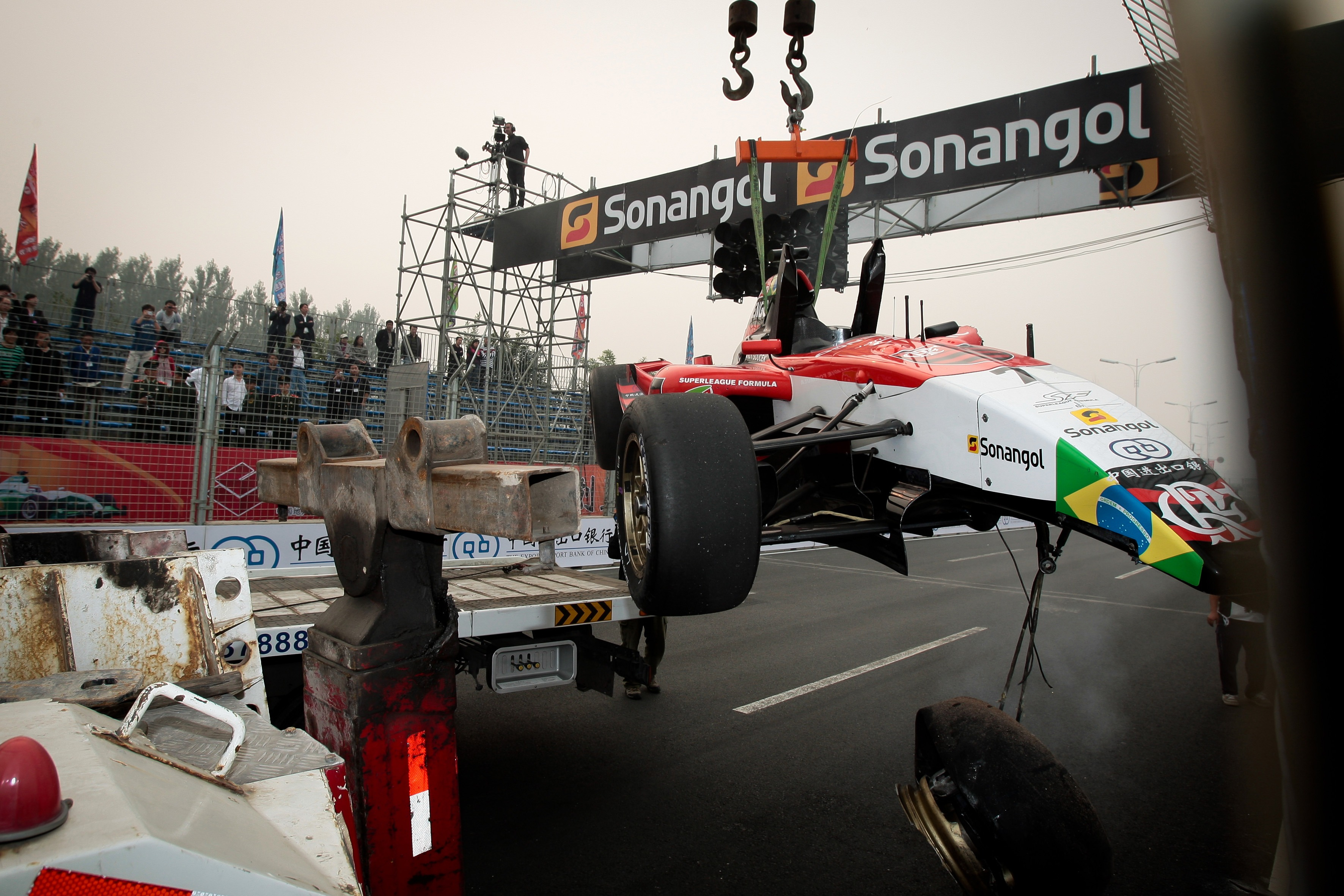
Soucek's 2010 crash highlighted ill-suited Beijing track's dangers
Photo by: Motorsport Images
“It was basically a concrete wall and the end of the concrete wall was the apex,” remembers Buurman. “Soucek turned in a bit too early and stripped the whole side of the car.”
Rigon had a below-par weekend plagued by gearbox trouble, but with no points on offer it couldn’t have come at a better time.
“I was very scared to damage the car because we knew that we didn’t have so many spare parts for the next one that was counting for the championship,” he says. “When I did the track walk on the Wednesday, we said, ‘Guys, we are going to kill ourselves – this is a fast car, we cannot race here, it is hugely dangerous’. Honestly I never pushed 100%, I took it very easy. That was a really unsafe race.”
Had Beijing counted for points, Dolby’s race one win would have given him the title. But the battle instead went down to the wire at Navarra, where Rigon’s participation in the now points-paying super final was put in jeopardy by race two contact with Dolby’s stablemate Martin, which caused him to spin and stall the engine in fourth gear. Fortunately, Rigon managed to bump-start in reverse on the Navarra track’s expansive runoff.
“I was thinking my championship was gone,” he recalls. “I put the manual mode for the gearbox and I go down to neutral, and then while I was rolling back it was like 50 km/h, I didn’t stop because I could see in the mirror that I had still quite a lot of space.
“I put it in reverse, engaged and then I lift the clutch and the engine started. OK! Now, I said, ‘Davide, don’t do stupid things’. I really took it easy, put the neutral back, put the first gear and slowly I started like a gentleman! I was shaking!”
A cagey run to fourth in the super final was enough for a title that he felt carried far more weight than in 2008: “It was very tough, it was 12 races all around the world, like a world championship there.”

Rigon edged Dolby to 2010 title after Navarra race two scare
Photo by: Motorsport Images
Uncertainty dominated 2011, but it still provided Buurman’s favourite Superleague moment when the PSV driver passed compatriot Doornbos’s Netherlands car – via a bit of contact – to win their ‘local derby’ at Assen. “At that time [Doornbos] was steaming!” chuckles Buurman. “That was a real good one in front of the home crowds.”
But the writing was on the wall for Superleague as a spate of events in the Middle East, Australasia and China were cancelled. Just as suddenly as it appeared, it was gone, leaving many sorry to see its demise.
“The cars were great, they sounded great, they looked great, it was fantastic racing,” says Hayle, whose Superleague involvement diminished after forming a partnership with Reid Motorsport in 2010 to concentrate on running Atech GP in the nascent GP3 series and in Formula Renault UK.
"Everybody had a big smile on their face. It was more like back to the roots, how racing should be: less technology, less PR, just a lot of fun with guys racing big engines" Robert Doornbos
“The whole concept of the knockout qualifying, the complete reversed-grid races and then the super final, it was really well thought out. I was really pleased to be part of it, it was a fantastic series.”
“I was very sad when it ended,” adds Buurman. “There was quite a lot of driving time, which was really good. It was a great series, it was organised in a very spectacular way.”
Certainly not everybody ‘got it’, but Superleague certainly made its mark during its brief existence. “I was having a dinner with the president of China,” says Rigon, “and I didn’t realise until that moment how big it was. To do that and win was perfect for me. I really enjoyed that period.”
Perhaps Doornbos puts it best. He found that what he jokingly refers to as the “graveyard for former F1 drivers” had helped him to “get the fun back”, as he enjoyed having “less meetings with the engineers because it was less technical”.
“Everybody had a big smile on their face,” he says. “It was more like back to the roots, how racing should be: less technology, less PR, just a lot of fun with guys racing big engines. There were some good drivers too. And the way they shook up the grid, I thought it was quite fun.”
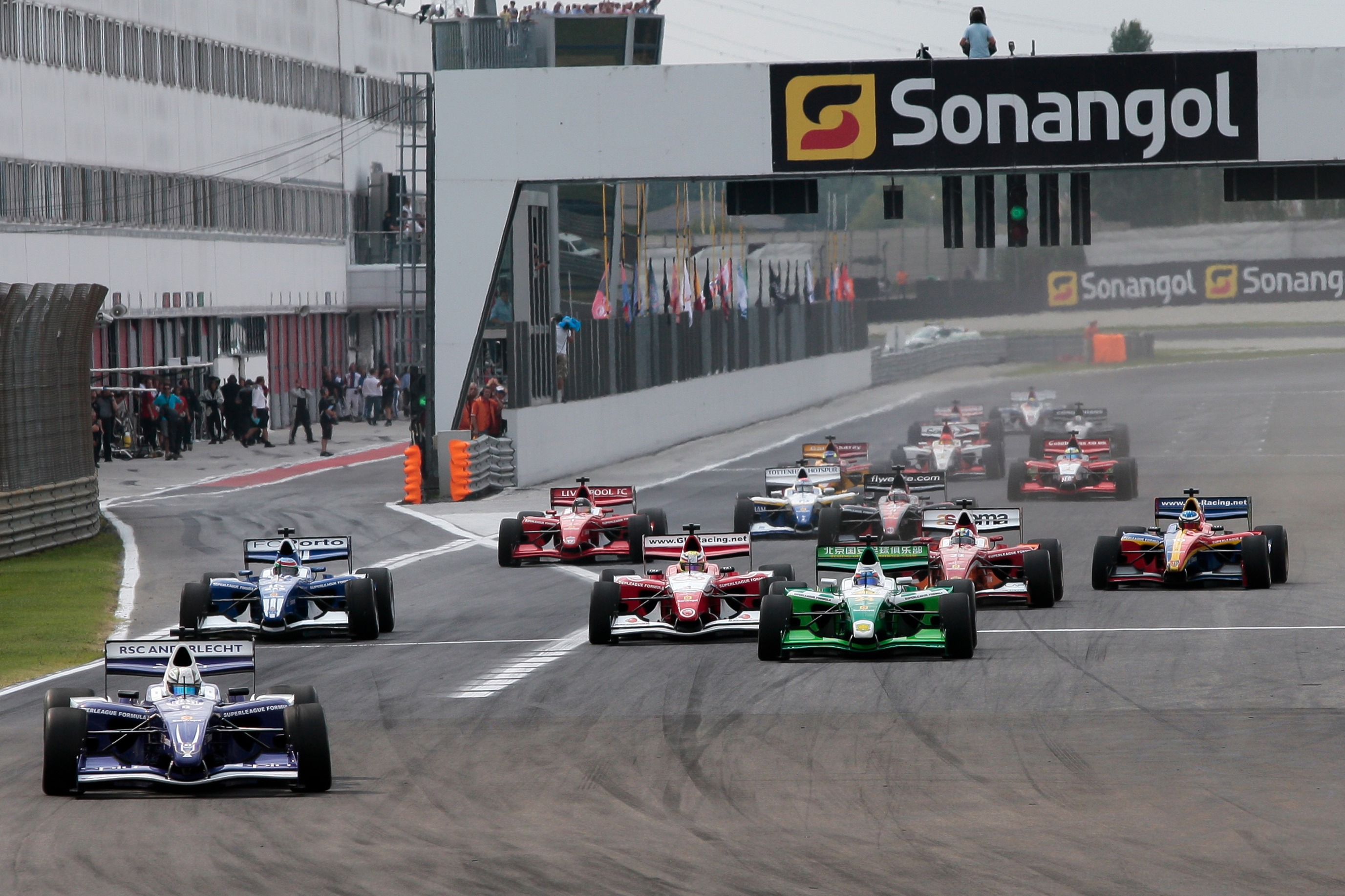
Superleague hit its zenith in 2010, but soon floundered
Photo by: Motorsport Images

Why ‘Mr Formula E’ has called time on his racing career

Archive: When Le Mans made its most controversial change

The man behind Japan's first Le Mans winner

Did Audi ‘give up’ on GT3 too soon?

Alex Zanardi’s top 10 moments

This retro-inspired Mercedes 190E racer is heading to the Nurburgring 24 Hours

Why Verstappen's Nordschleife approach is a win-win for motorsport

The new Mercedes star who had an unconventional route to success

Five key takeaways from F1's big African Grand Prix reveal in Rwanda

IndyCar driver Harvey announces cancer diagnosis

Why McLaren cannot fix its F1 car handling until 2027

MotoGP riders could get what they want, and fast, if only they would stand together
Subscribe and access Autosport.com with your ad-blocker.
From Formula 1 to MotoGP we report straight from the paddock because we love our sport, just like you. In order to keep delivering our expert journalism, our website uses advertising. Still, we want to give you the opportunity to enjoy an ad-free and tracker-free website and to continue using your adblocker.


Top Comments