
The unwanted GT car that changed sportscar racing forever
Had FIA GT boss Stephane Ratel had his way, the Maserati MC12 would never have been allowed to set foot in his series. It duly proved the class of the field that most had expected, but the Balance of Performance that its superiority spawned would keep GT1 battles tight and bring long-term benefits that sportscar racing enjoys today

It all started above an ice-cream shop in Maranello. The Maserati MC12, a car that won titles in five consecutive years, claimed three Spa 24 Hours victories in five attempts and came to define its era – and which could have fallen through the cracks of history without Max Mosley’s intervention – started life in a discreet apartment building in 2002.
“The first time we had a meeting with them, basically Maserati Corse was just three guys,” recalls Nicola Scimeca, who headed up the racing version’s development at Dallara.
“We went to this residential building and on the label there was ‘MC’, which was Maserati Corse, but nobody knew it. That was where they started.”
Prior to 2004, Maserati had been absent from the forefront of international motorsport for many years, its disastrous 1987 World Touring Car Championship assault doing no justice to the storied 250F and Tipo 61 that had gone before. But that all changed when Ferrari assumed control in 1999. Chairman Luca di Montezemolo planned to restore Maserati to its former glory and appointed three trusted lieutenants – Claudio Berro, Giorgio Ascanelli and Maurizio Leschiutta – to lead the new MC division that would turn Ferrari’s Enzo supercar into a GT1 icon in the FIA GT Championship.
“At the beginning it was Giorgio, Claudio Berro and myself,” says Leschiutta, who joined after 13 years on Ferrari’s F1 engine programme. “We were the ones who really believed in this project and were very enthusiastic about it. It was more than a job; it was a vocation we shared.”
But for all the trio’s dedication and the support of Ferrari in developing the production MC12, Maranello’s F1 focus meant another partner was needed to develop the carbonfibre-chassis racer. Enter Dallara.
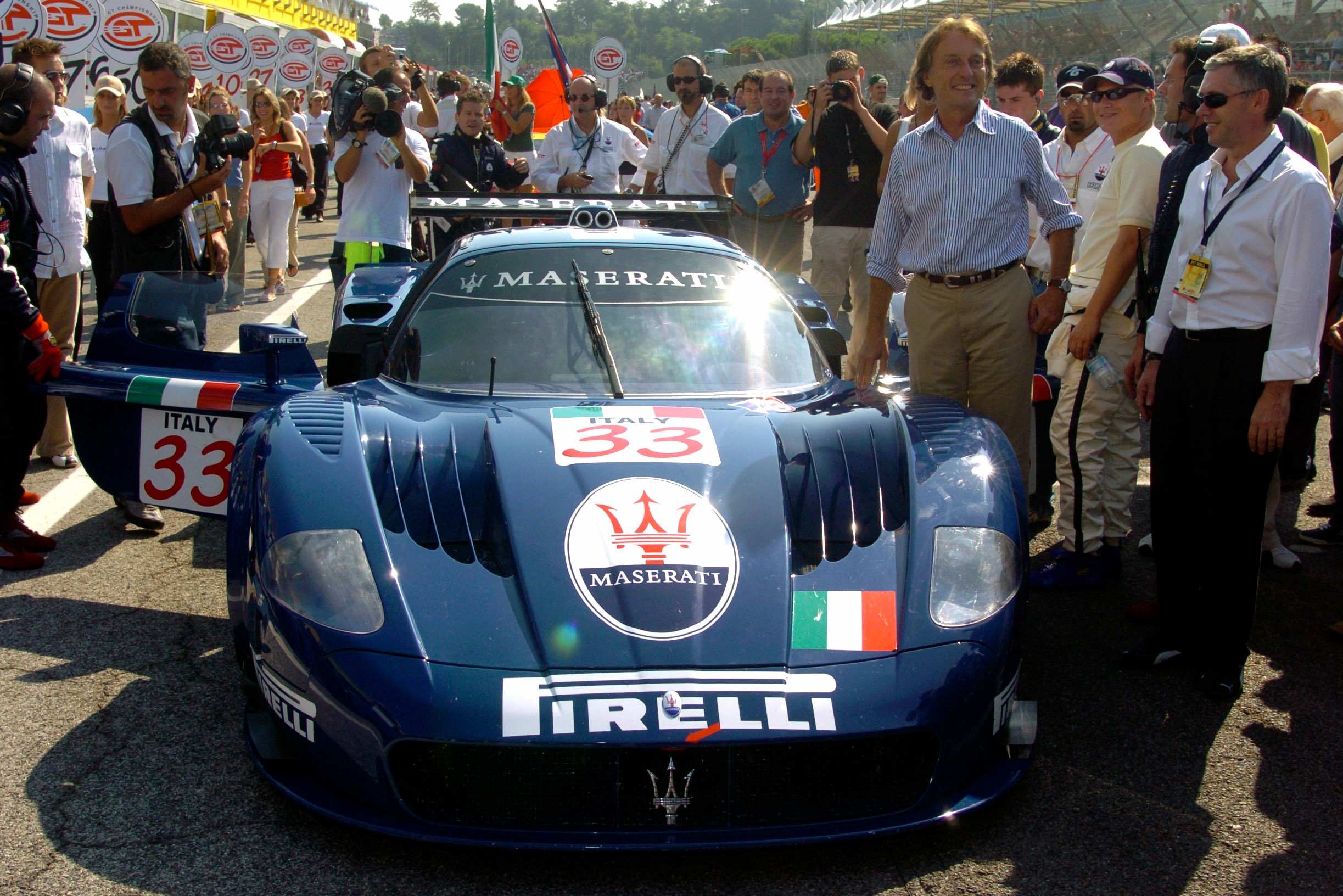
Ferrari chairman de Montezemolo smiles for the cameras before the MC12's competition debut at Imola in 2004
Photo by: Motorsport Images
“In-house, we started with three people that were working in an office above an ice-cream shop in Maranello, that’s the truth,” says Leschiutta. “We couldn’t take on something as big as this programme by ourselves; we needed an expert technical partner in endurance racing used to building cars of this type with carbon chassis. The choice of Dallara was a natural one.”
Dallara had a fairly free hand on styling – “We had freedom to do what we wanted,” says Scimeca – which meant it could work on creating the optimal design for racing and then work backwards for the road model. This no-compromise ethos explains the bodywork’s extreme overhangs, and why plans to keep the MC12 as close as possible to the Enzo soon changed. Beyond the crash structure, suspension components, gearbox and V12 engine, little was carried over.
Maserati’s choice of MC12 road and race development driver was also significant. Andrea Bertolini was known to the group from its collaboration with Ferrari’s Corse Clienti division on racing-derived electronic engine controls and a new sequential gearbox for the 360 GTC, and would prove a fixture in the car’s life until 2010, scoring its first win and four titles along the way. That’s why Leschiutta views Bertolini as “more than a driver” in the MC12 story.
"I really didn’t want the car. It was exactly the same story repeating itself, so my view was to say, ‘It’s absolutely impossible, I’ve worked very hard and we had to go convince many people to develop GT cars, we are not going to accept it’" Stephane Ratel
“Andrea was a partner,” he says of a driver whose development work left Michael Schumacher and Alain Prost impressed after their test outings in the car. “He was sensitive to car changes and an all-round excellent development driver.”
Testing wasn’t all plain sailing though, Scimeca recalling an “embarrassing” failure on the MC12’s first shakedown caused by “a 50-cents piece” in front of the watching di Montezemolo. But once clear of its teething issues, the car proved to be reliable and fast in equal measure. It won on its 24-hour race debut at Spa in 2005, despite never having completed a 24-hour simulation.
“The car was so reliable from the first minute on,” says Michael Bartels, who won titles in each of the four seasons he spent alongside Bertolini and five as the team boss of foremost MC12 squad Vitaphone Racing. “From my first test in the car, Paul Ricard 2005, my feeling was this car is completely bulletproof.”
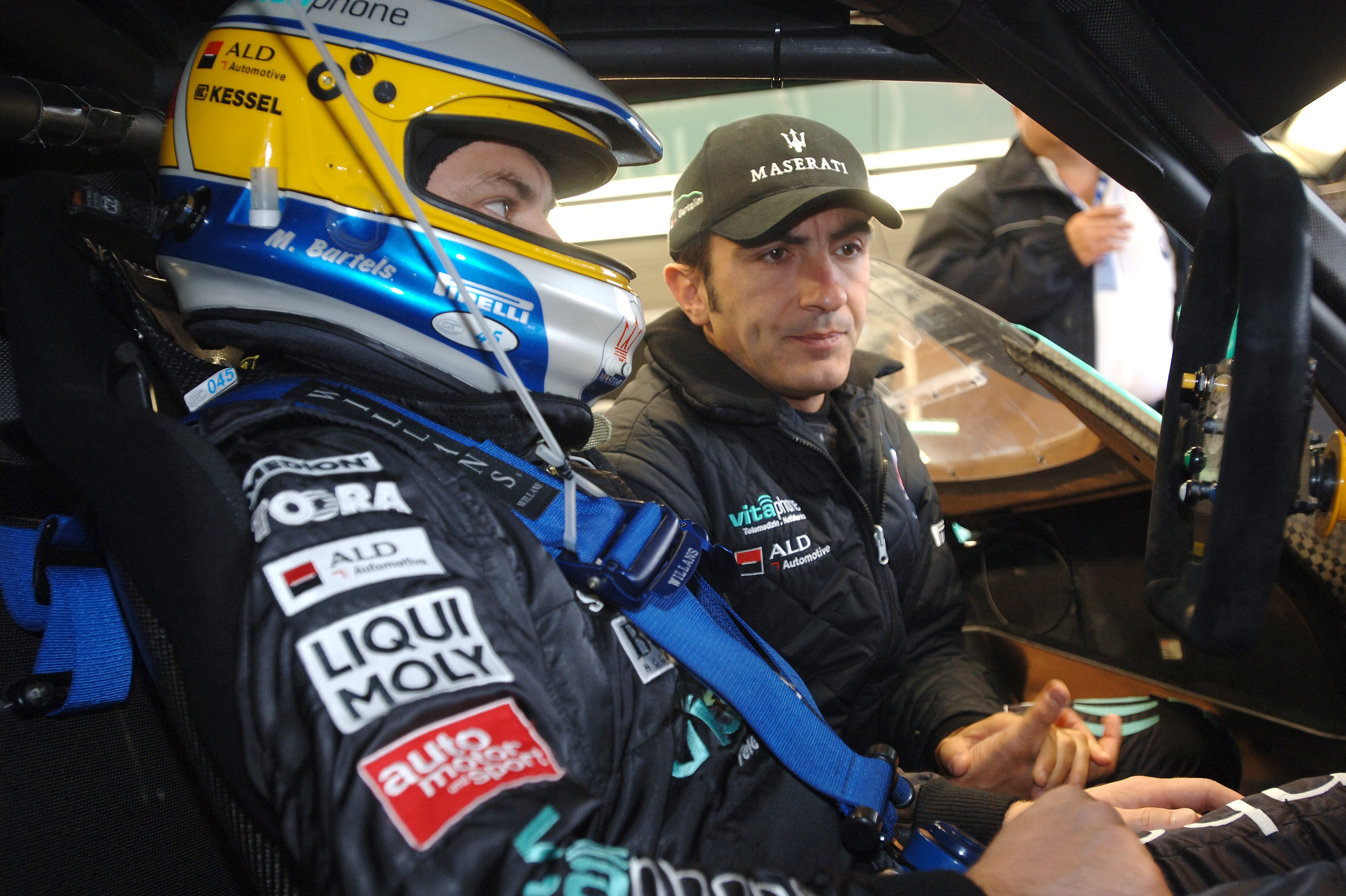
Bartels (in helmet) and Bertolini combined to win four titles in as many seasons together as team-mates in Ratel's FIA GT1 and spin-off GT1 world championship
Photo by: Maserati Corse
The MC12’s biggest hurdle
The MC12’s carbon chassis made it innately stiffer than rivals such as the Ferrari 550 Maranello and Aston Martin DBR9 GT1, or various iterations of the Chevrolet Corvette.
“Every driver who drove the car, you can ask, they felt really comfortable about the handling,” Bertolini says.
It was a car that moved the goalposts, although that’s perhaps unsurprising given its basis as a racer reverse-engineered for the road – much as the Ford GT would be a decade later. This would pose significant problems for FIA GT boss Stephane Ratel, who had been bitten before by an obviously superior car not built to the spirit of the rules.
The all-conquering 1997 Mercedes CLK-GTR had benefited from a last-minute rule change that meant cars did not require road-approval until the end of their first season, rather than before. It blew the doors off existing competitors and prompted a mass walkout at season’s end, resulting in the death of GT1 at the end of 1998.
What had been known as the GT2 class was promoted to become the main attraction, and it was a long road to get the series back to good health again by 2004, with independent tuners such as Prodrive and Reiter Engineering, who respectively developed Ferrari and Lamborghini machinery to run in what was now known simply as the GT class, before being renamed GT1 in 2005. Therefore, Ratel was reluctant to allow their investments to go to waste.
“I really didn’t want the car,” he recalls of the Maserati. “It was exactly the same story repeating itself, so my view was to say, ‘It’s absolutely impossible, I’ve worked very hard and we had to go convince many people to develop GT cars, we are not going to accept it’.”
But the decision was out of his hands. The late Mosley, as FIA president, made that crystal clear, and set in motion the Balance of Performance system, one of the cornerstones of modern sportscar racing.
“Max told me, ‘No, you’re not going to ban it, forget it’,” says Ratel. “He said, ‘We’re going to balance it’. The concept of BoP came from the MC12.”
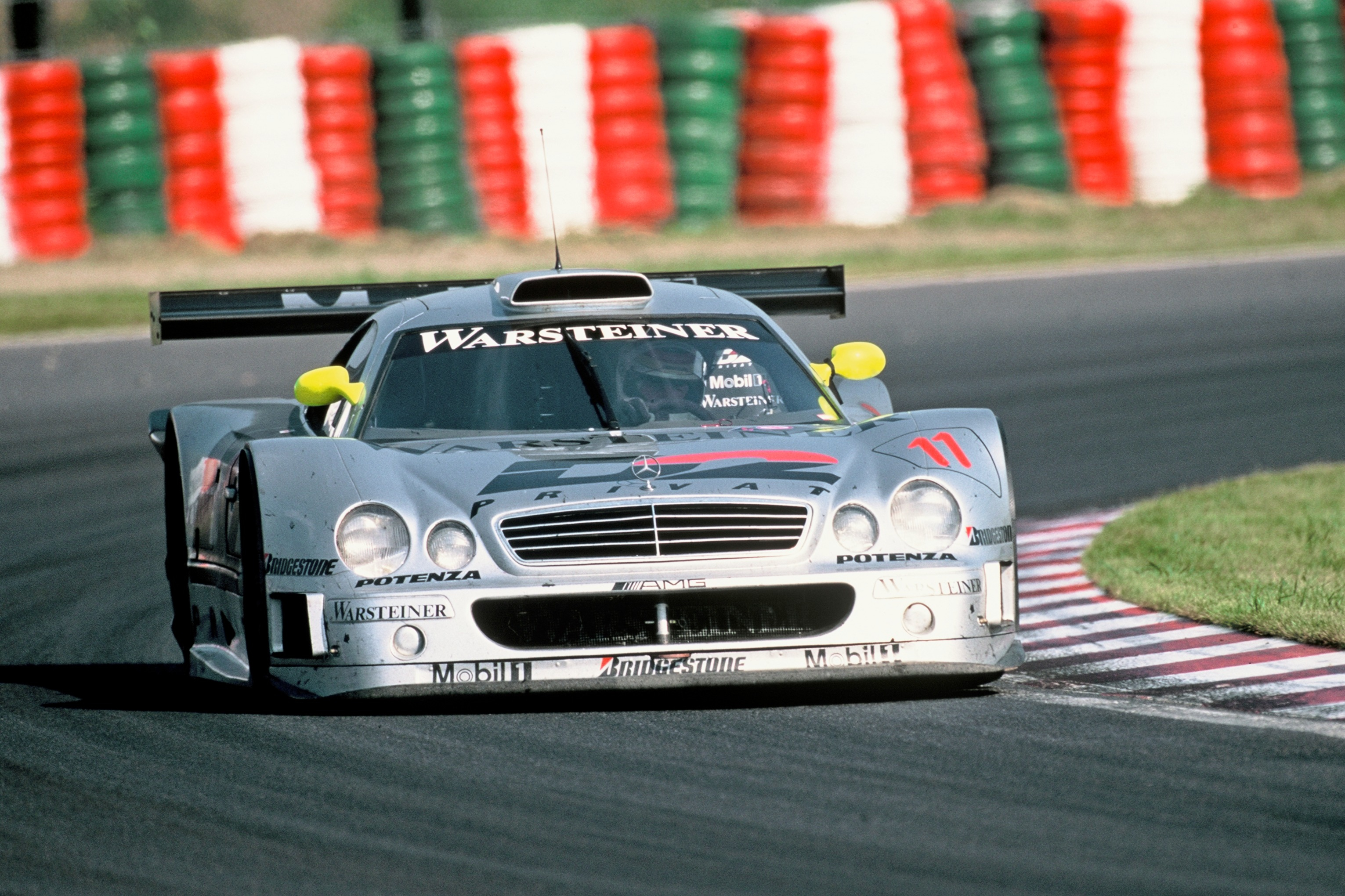
Ratel's experience with Mercedes in the late '90s meant he was reluctant to accept the MC12 into his rebuilt series
Photo by: Daimler
Peter Wright, formerly of Team Lotus, was the FIA man entrusted with leading what Ratel initially regarded as “this bizarre new approach” of tinkering with aerodynamic surfaces, weight, engine restrictions and rideheight. Ratel was eventually sold on the idea, but faced a challenge to convince the teams to agree.
An Autosport feature on MC12, headlined ‘Is this car the death of GT racing?’, reflected the mood as the 2003-04 title-winning Scuderia Italia squad defected to the Le Mans Endurance Series. But Maserati received dispensation to enter the final four FIA GT rounds of 2004, although the car was ineligible for points.
"You could feel in the DNA this was a real racing car. All the adjustments you did you could feel millimetre by millimetre. Even with all the restrictions, it was still working well on the aero and the mechanical side" Karl Wendlinger
The two AF Corse-run de facto works MC12s finished second and third on their debut at Imola, despite trimmed rear wings that made the car a handful over the kerbs. The winner that day by 43 seconds was a Konrad Saleen driven by Uwe Alzen and Bartels, the latter receiving an attractive ‘buy one get one free’ proposition from Berro to run two cars in 2005. Vitaphone Racing – named in deference to Bartels’s long-time sponsor – was born.
GT winner
Bertolini and Mika Salo took the car’s maiden win at Oschersleben – a circuit that would become a fortress for the MC12 in years to come – in 2004, and followed it up by winning the Zhuhai finale, leading Fabrizio de Simone and Johnny Herbert’s sister car in a Maserati 1-2.
Bertolini regards the original spec as his favourite iteration. “The 2004 was the best one,” he says. “The first version with full downforce was – pfft – really fast!”
But the MC12 that was admitted to race in the full 2005 FIA GT championship was very different to the one that ended 2004. To Bertolini, “they were two different cars”.
“We changed completely the car to go to five metres,” says Scimeca of the now 180mm shorter machine, the aerodynamic potency of its overhangs much reduced. “We couldn’t go to Le Mans because basically the car was too long and too wide [by 66mm].”
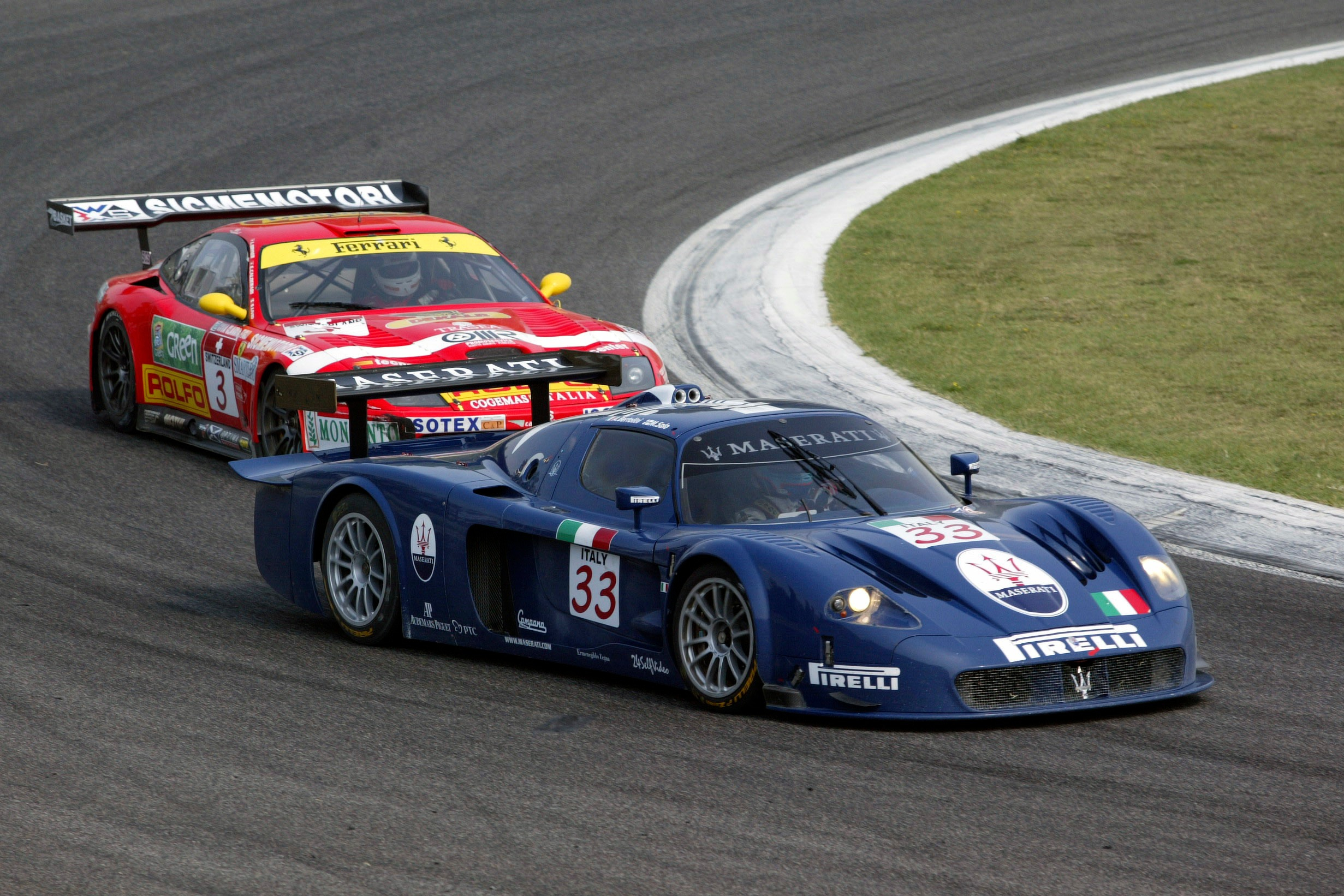
Original-spec MC12 in 2004 featured dramatic overhangs that were lopped off for 2005
Photo by: Motorsport Images
The MC12 would never race at the Circuit de la Sarthe in period, surely making it one of the best sportscars not to race in the 24 Hours (although enthusiast Joe Macari took an ex-JMB MC12 to contest the GT-only support race this year). One car was permitted to enter the 2005 American Le Mans Series, albeit without success.
The MC12 was subjected to what Scimeca describes as “really extreme” BoP restrictions in 2005 – “The rear wing was so low that it was completely behind the roof so it didn’t work,” he says – with Leschiutta recalling “a constant battle” trying to stave off changes that included 10kg of ballast and a 100mm rear-wing-width reduction for Monza, and an extra 40kg for Zhuhai. Added to success weight, it meant “the trio of well-driven MC12s were running either 140 or 150kg heavier” than the rival Larbre Ferrari 550, Autosport reported.
Any one of the three could have won the 2005 crown. MC12s finished 1-2 four times and twice locked out the podium, only to lose out to Larbre’s Gabriele Gardel, who shared for much of the season with Pedro Lamy. Bartels and Timo Scheider scored the car’s maiden Spa 24 Hours victory alongside Eric van de Poele, and were only denied the title after Larbre successfully appealed its Bahrain disqualification for not having the required three litres of fuel to provide a sample at scrutineering, on a point of procedure.
“We started to celebrate and were feeling like champions,” says Scheider, who still regards the final outcome as “very weird”. “Then we were the losers somehow. It was feeling wrong.”
The sister Vitaphone crew of 2003 FIA GT champion Thomas Biagi and Fabio Babini had led the points after Imola after the first four rounds, but were forced into a supporting role by a Spa gearbox failure, while JMB drivers Bertolini and Karl Wendlinger led by a point going into the finale, but were denied by a similar fault.
Wendlinger recalls “a high-quality racing car” that “would have been seconds faster than the rest” without the restrictions.
“You could feel in the DNA this was a real racing car,” says the Austrian, who especially singles out its traction control system. “All the adjustments you did you could feel millimetre by millimetre. Even with all the restrictions, it was still working well on the aero and the mechanical side.”
Vitaphone was the sole full-season MC12 entrant in 2006, as JMB stepped down to GT2. With Scheider returning to the DTM, Bartels and Bertolini teamed up and atoned for their near-misses the previous year by sealing the crown with a round to spare.
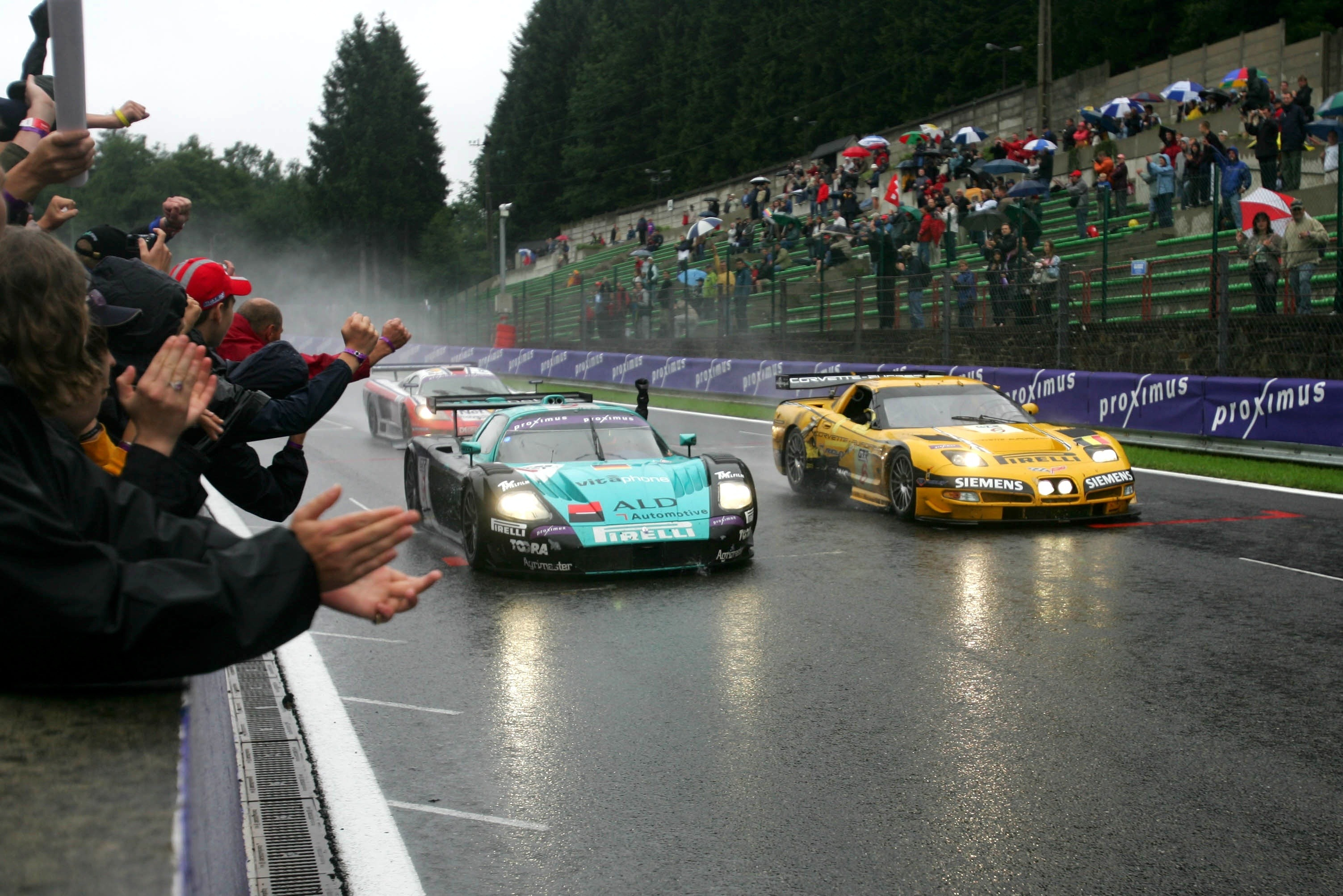
Even without completing a 24-hour race simulation, the MC12 won on its Spa debut in 2005
Photo by: Motorsport Images
Their close victory over Scuderia Italia’s Aston Martin at Spa – van de Poele again the third driver – is Bertolini’s favourite memory of the MC12 years. Like Scheider’s effort the year before, where the German drove for “around 14 hours”, it came after a marathon drive that included two night-time double stints either side of an hour’s rest, Ascanelli overruling the team doctor who had ordered Bertolini to rest.
A significant change occurred in 2007, when Bartels made the call to switch Vitaphone away from long-time Maserati tyre supplier Pirelli to Michelin. While this would mean a financial outlay to ensure support from a rival firm, Bartels was concerned that another MC12 running Michelins would steal a march. His decision was spectacularly vindicated as Biagi won the car’s second title.
“I decided for the competitive way and not the financial way, and in the end it paid off,” explains Bartels.
"We were everywhere good to medium, the car had no really weak points" Michael Bartels
Playteam, which had made a cameo the previous year at Mugello, would uphold Pirelli honour, and gained Bertolini to partner Andrea Piccini. For Leschiutta, now technical director after Ascanelli’s return to F1 with Toro Rosso, the season became “a delicate balancing act” of supporting a proven customer in league with a rival technical partner.
“Michelin had a technical advantage on Pirelli,” Leschiutta concedes. “We struggled to help them develop a tyre that could be competitive against the Michelin.”
The 2007 campaign started poorly for Biagi and Bartels at Zhuhai, where Bartels didn’t complete the mandatory 35-minute minimum drive time and wasn’t eligible to score. This made it easier for Bartels to decide to undergo a kidney operation, but meant Biagi would have a rotating cast of co-drivers for the next two events. Victory at Silverstone alongside MC12 returnee Salo preceded a disastrous Bucharest, where Fabrizio Gollin made two errors at a cost of two laps.
Still, Biagi flourished in his team leader role and, despite an uncharacteristic off for van de Poele in a late rain shower at the Spa 24 Hours, Biagi led the finely poised title race into the Zolder finale and duly delivered under huge pressure.
Bertolini’s 2007 title hopes unravelled with eighth at Zolder, but he maintains that the damage was done at Zhuhai. Spun out by team-mate Alessandro Pier Guidi at Turn 1, he then ran out of fuel after “the engineer made a big mess of the calculation”. He also incurred a drivethrough penalty at Silverstone for improving his best lap time under yellows – protestations that it was his first lap free of GT2 traffic fell upon deaf ears.
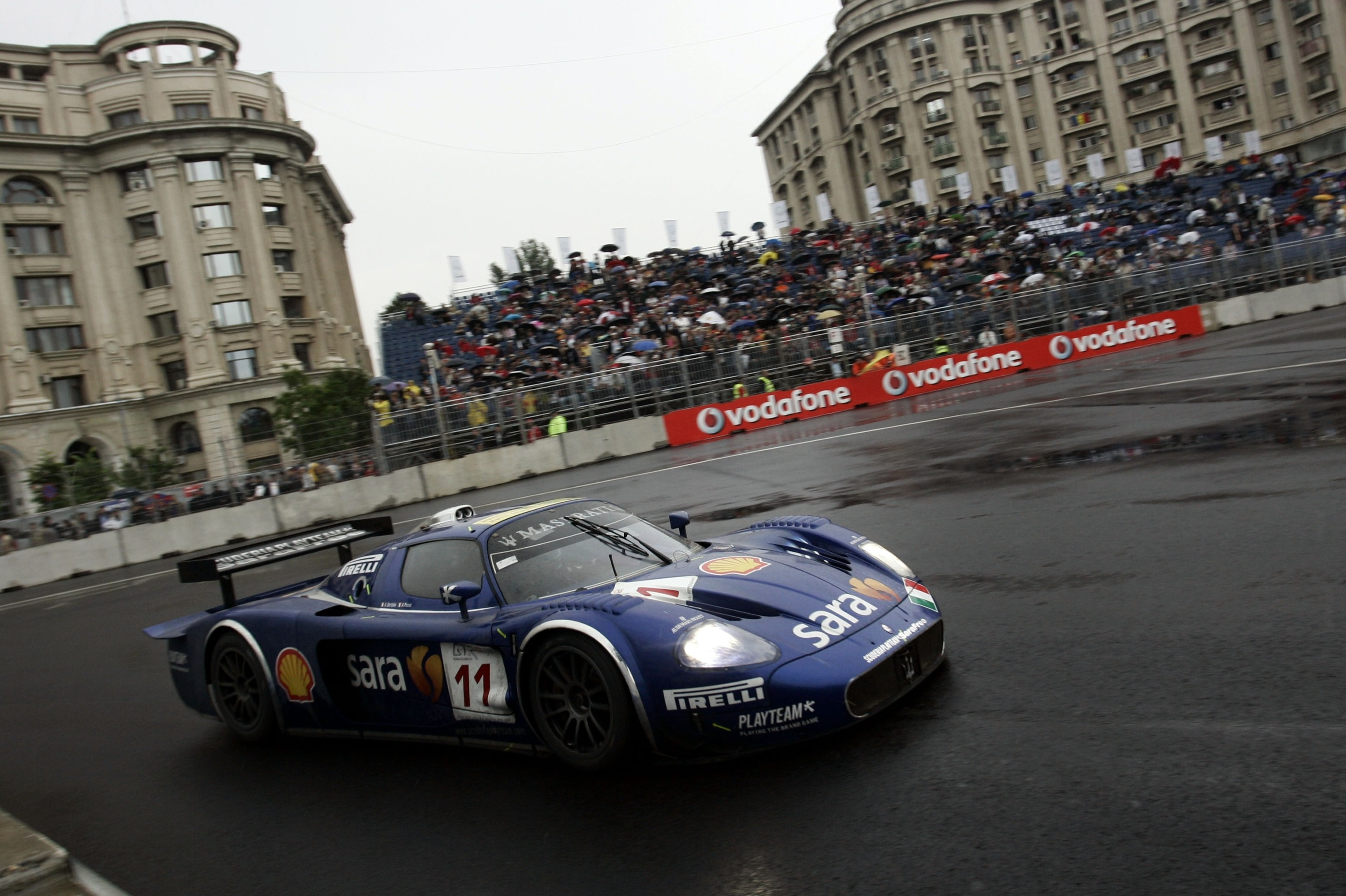
Playteam took on Vitaphone with Pirelli rubber in 2007, but fought a losing battle - despite winning on the streets of Bucharest
Photo by: Motorsport Images
Consolidation of dominance
With Vitaphone the only MC12 runner in 2008, Bertolini rejoined Bartels as Biagi joined Ferrari’s GT2 roster. Playing the percentages and consistent scoring meant the 2006 champions carried on where they left off, leading an MC12 1-2 at Spa together with van de Poele and Stephane Sarrazin. Their 100% title conversion rate as team-mates continued into 2009 and 2010.
In the second of those years, FIA GT morphed into the FIA GT1 World Championship. The dawn of this new era, intended for a new breed of cars, should have been the end of the MC12 story. But not enough of the new machinery was produced, and Ratel’s fallback was to allow in the previous generation of car in lightly modified form.
The MC12 was granted a one-year waiver – the Aston Martin DBR9 and Chevrolet Corvette C6.R were given two years – with a plank fitted to the floor, plus more weight and spec electronics that hurt its traction advantage.
Bartels says his relationship with Bertolini was one of “blind understanding”, and was one of the most formidable elements of a team that became operationally “stronger and stronger until the last lap in San Luis”, Bartels setting fastest lap at the 2010 finale on the Argentinian circuit around a volcanic lake in his final competitive kilometres aboard an MC12.
Undoubtedly, from 2008 Vitaphone also benefited from being the focal point of Maserati support, which far outweighed that received by other manufacturers’ customer teams. Leschiutta recalls “a symbiotic relationship with Vitaphone”. Still, it wasn’t all plain sailing.
The 2009 title had come amid controversy given the ongoing (but unenforceable) FIA ban on team orders. A third car entered for Pier Guidi and Matteo Bobbi aided the team leaders at the Hungaroring, Algarve and Paul Ricard races “in what looks from the outside like a clear and blatant manipulation of the results”, according to Autosport’s correspondent. The Italian pair’s victory in the Zolder finale denied PK Corvette drivers Mike Hezemans and Anthony Kumpen.
For 2010, manufacturers were obliged to field four cars from two teams. To Vitaphone’s two cars were added a pair entered under the banner of Altfrid Heger’s Hegersport operation, but also operated by Bartels with significant works support.
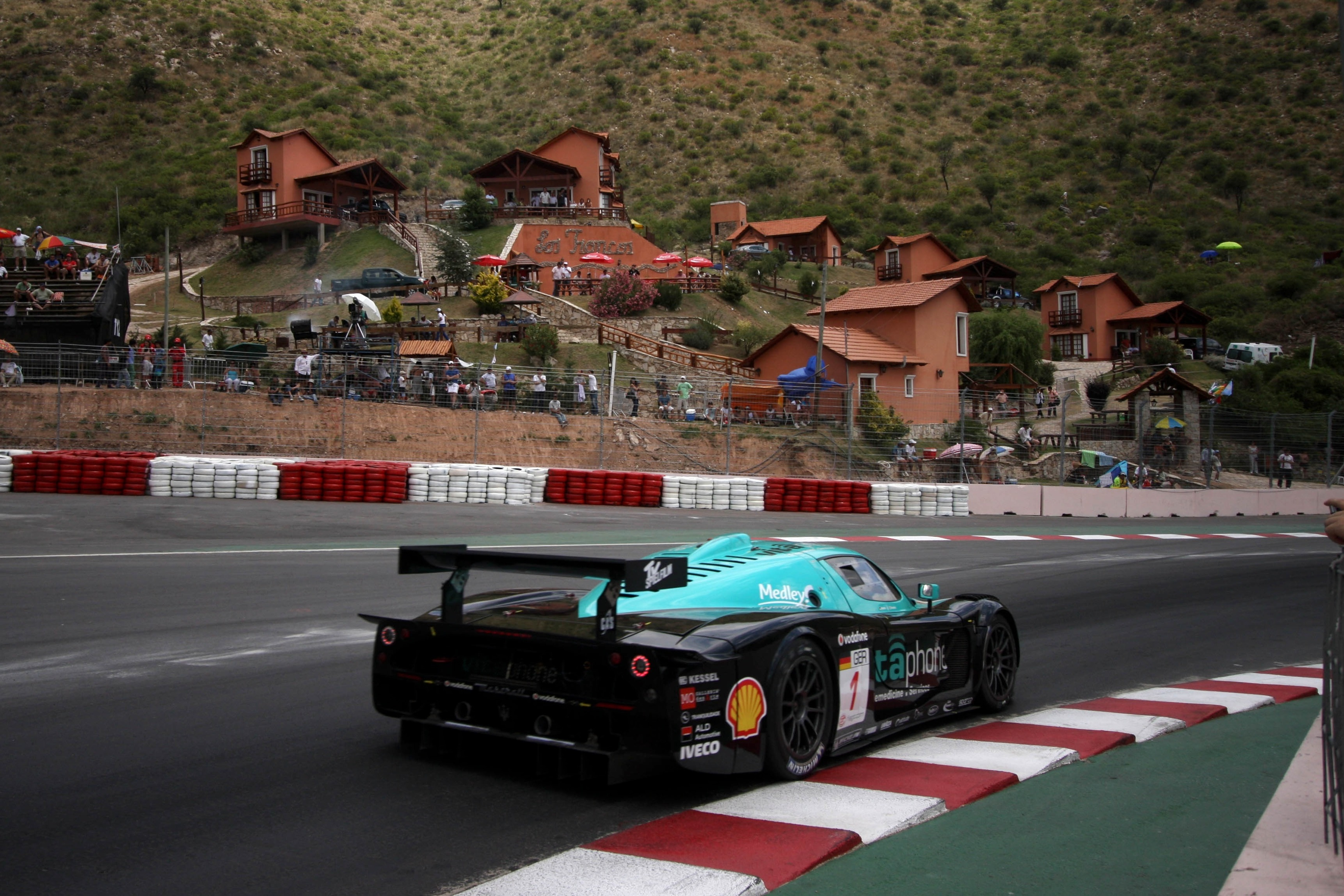
Vitaphone benefitted from close working relationship with Maserati, even more so from 2008 when it became the sole team running the MC12s
Photo by: Maserati Corse
Leschiutta stresses that all four cars in 2010 “were technically equivalent”, even if the battle-hardened crew behind Bartels and Bertolini was “the most well-oiled machine”. Despite the best efforts of Pier Guidi and Alex Muller, Hegersport never graced the top step of the podium, a factor in Maserati’s defeat to Aston Martin in the manufacturers’ standings.
For Bartels, his and Bertolini’s 2010 crown was “the peak moment” in the MC12’s competition life and revealed just how “ahead of time” the car was. In hot conditions it truly came into its own and was much kinder on its tyres than rivals, even with ballast.
Bartels raises these points as the car’s strengths, along with Vitaphone’s “really specialised” pitstops that year. Even if it wasn’t the most powerful car on the grid, around 100bhp down on the Matech Ford GT, the MC12 was still vastly superior.
“We were everywhere good to medium, the car had no really weak points,” he says.
As the guinea pig for BoP, it proved that cars could triumph despite handicaps imposed by the governing body, and laid the foundations for successful equalisation formulas – GT3 is the most famous success story, and has ushered in unrivalled manufacturer involvement
Wendlinger, who had joined Nissan, agrees that the MC12’s success “shows how much they still had in the pocket”.
“The fact is, it was the best car,” agrees Ratel. “BoP could make the racing more interesting, but at the end the best car wins. It was the only GT prototype in the field. It had an aerodynamic advantage, even if it was balanced, and it was well run by a team which had huge experience, so it was the best package.”
To Leschiutta, it remained strong because it was “essential in all its aspects”, a car designed for endurance racing and “basically less compromised than other cars we were racing”.
“In 2010, I didn’t fear that the window was closing, not at all,” he says. “I think we would have been competitive in 2011 had we participated.”
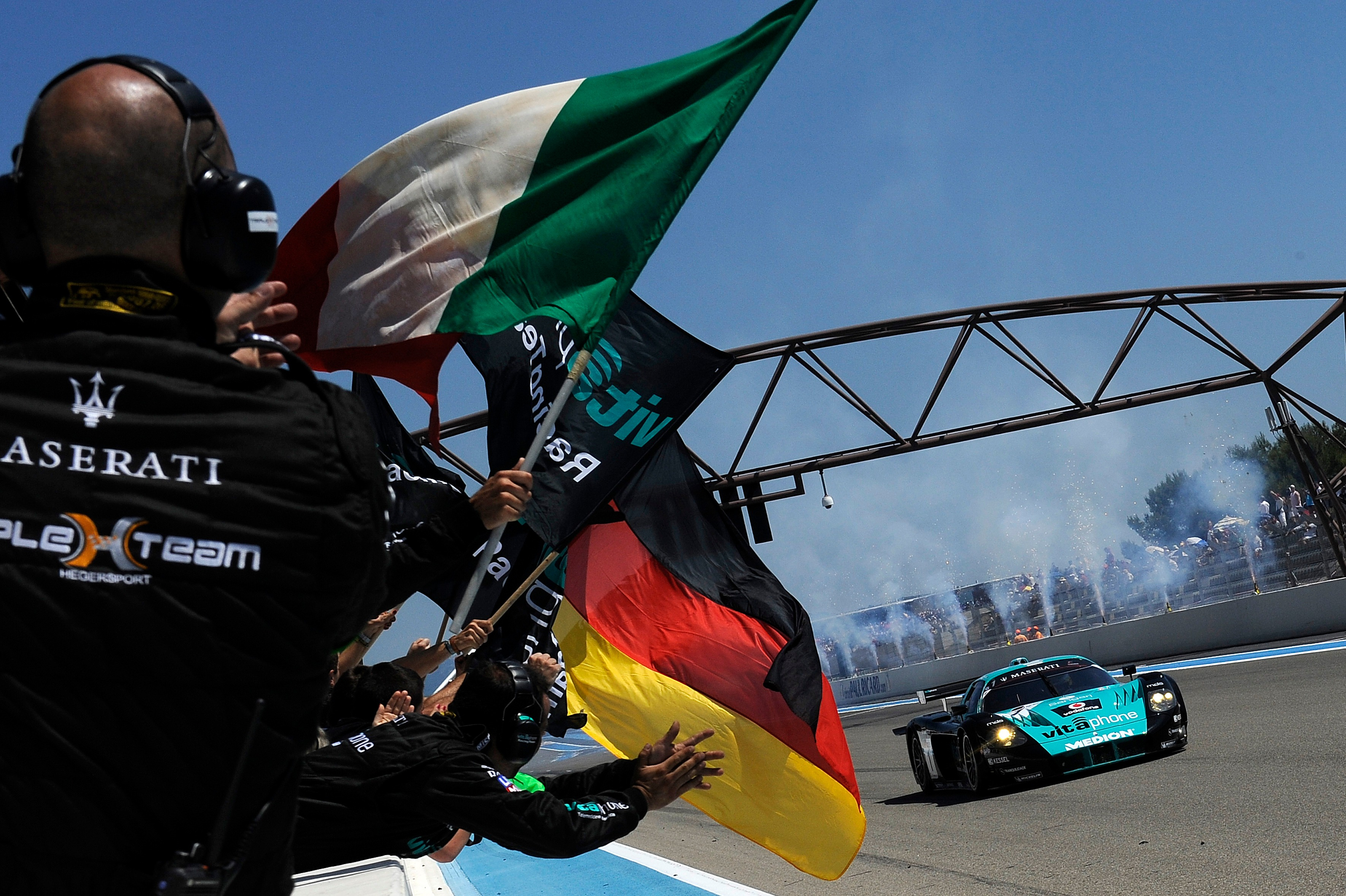
No-compromise ethos helped MC12 against production-based rivals
Photo by: Maserati Corse
Leschiutta is confident that the Maserati would have been allowed to race on into 2011. The call to stop, he says, was “entirely financial” since the Fiat group “was gradually closing” all its racing operations.
“The money that the company was willing to spend was just not enough to field four cars,” he says.
“It was sad,” says Bertolini of the MC12 programme’s conclusion, “but honestly it was the right decision.”
Bartels adds: “We stopped when we arrived on the mountain on the top.”
The ultimate GT1 racer doesn’t look its age, and is still capable of giving onlookers goosebumps, its six-litre V12 soundtrack “music every time” to Biagi and many others besides.
Controversy was never far away, but the MC12 achieved a great deal beyond its on-track success. As the guinea pig for BoP, it proved that cars could triumph despite handicaps imposed by the governing body, and laid the foundations for successful equalisation formulas – GT3 is the most famous success story, and has ushered in unrivalled manufacturer involvement.
Without the MC12, sportscar racing would be much poorer.
“The Maserati could be the catalyst that takes GT racing to new heights or it could kill it stone dead,” wrote Autosport in 2005. It was most certainly the former.
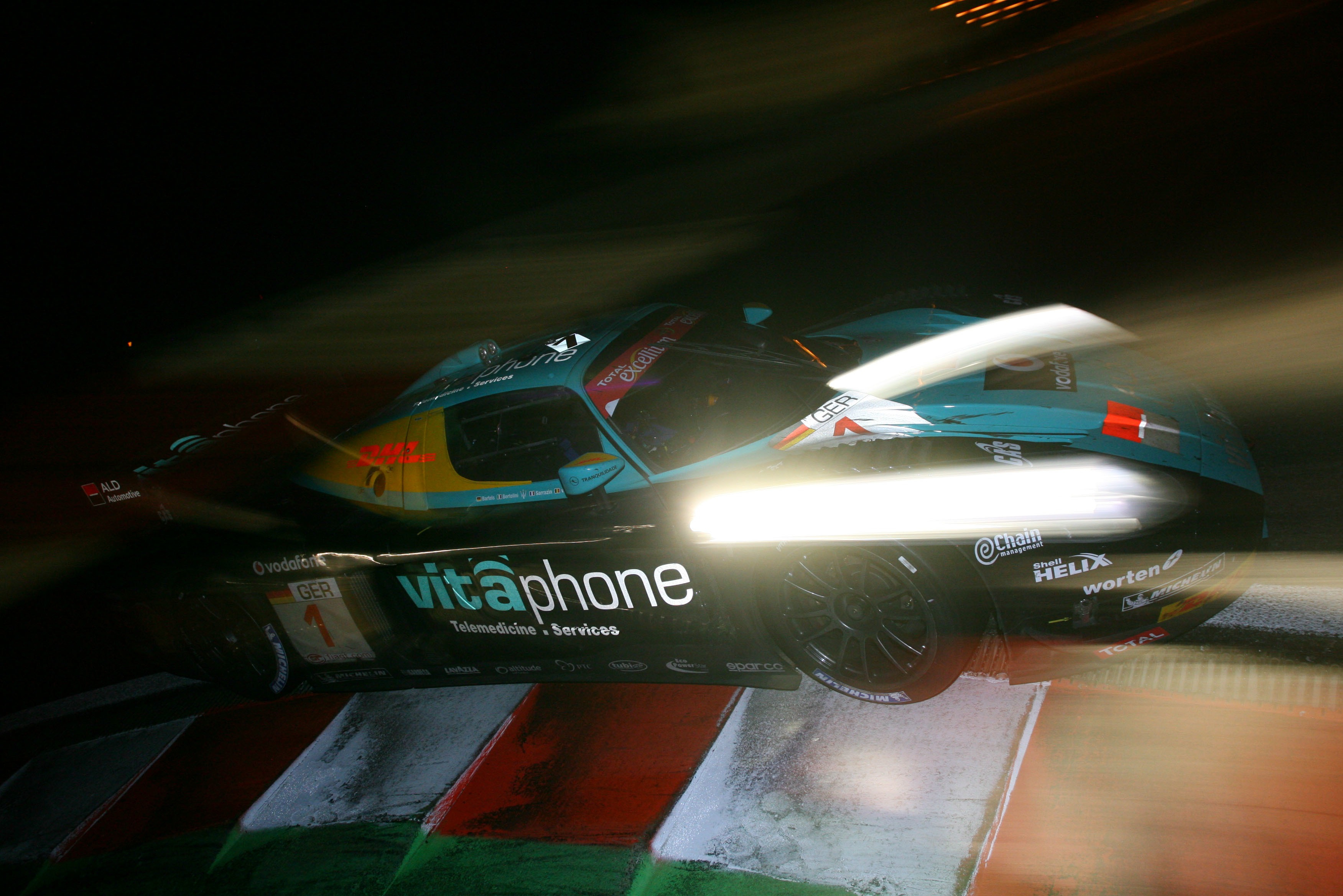
MC12 ended its competition life with three Spa 24 Hours victories
Photo by: Motorsport Images

Archive: When Le Mans made its most controversial change

The man behind Japan's first Le Mans winner

Did Audi ‘give up’ on GT3 too soon?

Alex Zanardi’s top 10 moments

This retro-inspired Mercedes 190E racer is heading to the Nurburgring 24 Hours

Why Verstappen's Nordschleife approach is a win-win for motorsport

The new Mercedes star who had an unconventional route to success

Why Rast is leaving the DTM

WRC Chile: Solberg maintains lead as Neuville and Armstrong suffer rolls

Why Marquez opted for an offset strategy in MotoGP San Marino GP sprint

Bezzecchi defends start after Marquez passes him again in Misano sprint

F1 Spanish GP: Norris snatches last-gasp pole from Antonelli
Subscribe and access Autosport.com with your ad-blocker.
From Formula 1 to MotoGP we report straight from the paddock because we love our sport, just like you. In order to keep delivering our expert journalism, our website uses advertising. Still, we want to give you the opportunity to enjoy an ad-free and tracker-free website and to continue using your adblocker.


Top Comments