
The lesson football’s would-be wreckers could learn from racing
OPINION: The greed-driven push for a European Super League that threatened to tear football apart is collapsing at the seams. Motor racing's equivalent, the football-themed Superleague Formula series of 2008-11, was everything that the proposed ESL never could be

In the world of football, plans announced last Sunday for the creation of a new 12-club European Super League rightly sparked outrage and condemnation, and has resulted in all six of the founding English clubs pulling out. Despite proclamations from Real Madrid president Florentino Perez that the new league was needed to ‘save football’, the notion of the ESL amounts to little more than a cynical money grab by the billionaire owners of its founding clubs, attempting to shut out competition and pool lucrative TV deals between them. And to hell with the consequences for everyone else.
Motorsport is hardly a paragon of virtue when it comes to talks of damaging breakaways. Formula 1 came to the brink in 1981, and again in 2009 at the British Grand Prix, which marked the peak of the row over the FIA’s mooted £30million cost cap for 2010. Prior to that, in 1961 there had been the Intercontinental Formula for cars up to three-litre capacity launched in protest at F1’s new 1.5-litre rulebook. None had a lasting impact.
The idea of a Super League isn’t new to our orbit either. But unlike the ESL, the Superleague Formula single-seater championship that had a short run between 2008 and 2011 was a good thing for motorsport that added to, rather than detracted from, the landscape.
A curious blend of football and motorsport, with identical V12-powered Elan Technologies cars daubed in the liveries of clubs, Superleague was the brainchild of Robin Webb. He had also been involved in the Premier1 series for Reynard chassis that never got off the ground after a few glitzy launches were held in 2001 (Darren Manning racing for Leeds United, anybody?).
ESL founding clubs Liverpool, AC Milan and Spurs were key players, but so too were relative minnows Beijing Guoan and Anderlecht, champions of 2008 and 2010 respectively, either side of Liverpool’s 2009 triumph. PSV Eindhoven finished runner-up in 2008 and Basel twice placed third.

Davide Rigon (Beijing) leads the maiden Superleague Formula race at Donington in 2008
Photo by: Motorsport Images
Performance was totally unrelated to the clout of the clubs, but rather down to the competency (or lack thereof) of the teams running their operations – they included ex-F1 operation Zakspeed, crack Formula 3 squad Alan Docking Racing and the David Hayle-run Hitech Junior Team – and the ability of drivers to navigate its fully reversed grid for race two without getting embroiled in incidents.
From 2009, the best performing teams each weekend were added into a five-lap super final money race (€100,000 at stake for the winner), which in 2010 also earned points. It was a lottery where anything could happen – if you don’t believe me, have a watch of the 2010 Ordos super final – as all sport should be. In short, it was nothing like the thankfully doomed Super League of today.
By the time Webb’s vision had taken tangible (and noisy) form in 2008, it still wasn’t without its problems. It was originally intended that clubs would get a slice of revenue through TV rights, sponsorship and licensing agreements but, perhaps unsurprisingly, technical director Steve Farrell says the idea became “a legal nightmare”.
“There was a lot of subsidy from Superleague, so it never really got to the model that you’d say was commercially viable,” he says.
The ESL’s boardroom wreckers intent on creating a series of glorified friendlies could learn a thing or two from Superleague Formula. Even if nobody asked for it, Superleague didn’t crow about being something it wasn’t
“The clubs thing wasn’t working for the organisers,” agrees Docking. “They were hoping initially that there would be sponsorship coming to the racing programme via clubs, and it really didn’t happen – the sponsors of those clubs weren’t really interested in motorsport.”
The collapse of the A1GP ‘World Cup of Motorsport’ in 2009 appeared to provide a solution that resulted in a mish-mash of nations and clubs competing together in the two Superleague events that were held in 2011 prior to the series’ demise (Docking running Australia to the title with ex-A1GP racer John Martin).
“We thought we’d convert the thing that wasn’t really working on football clubs to countries,” Farrell continues.
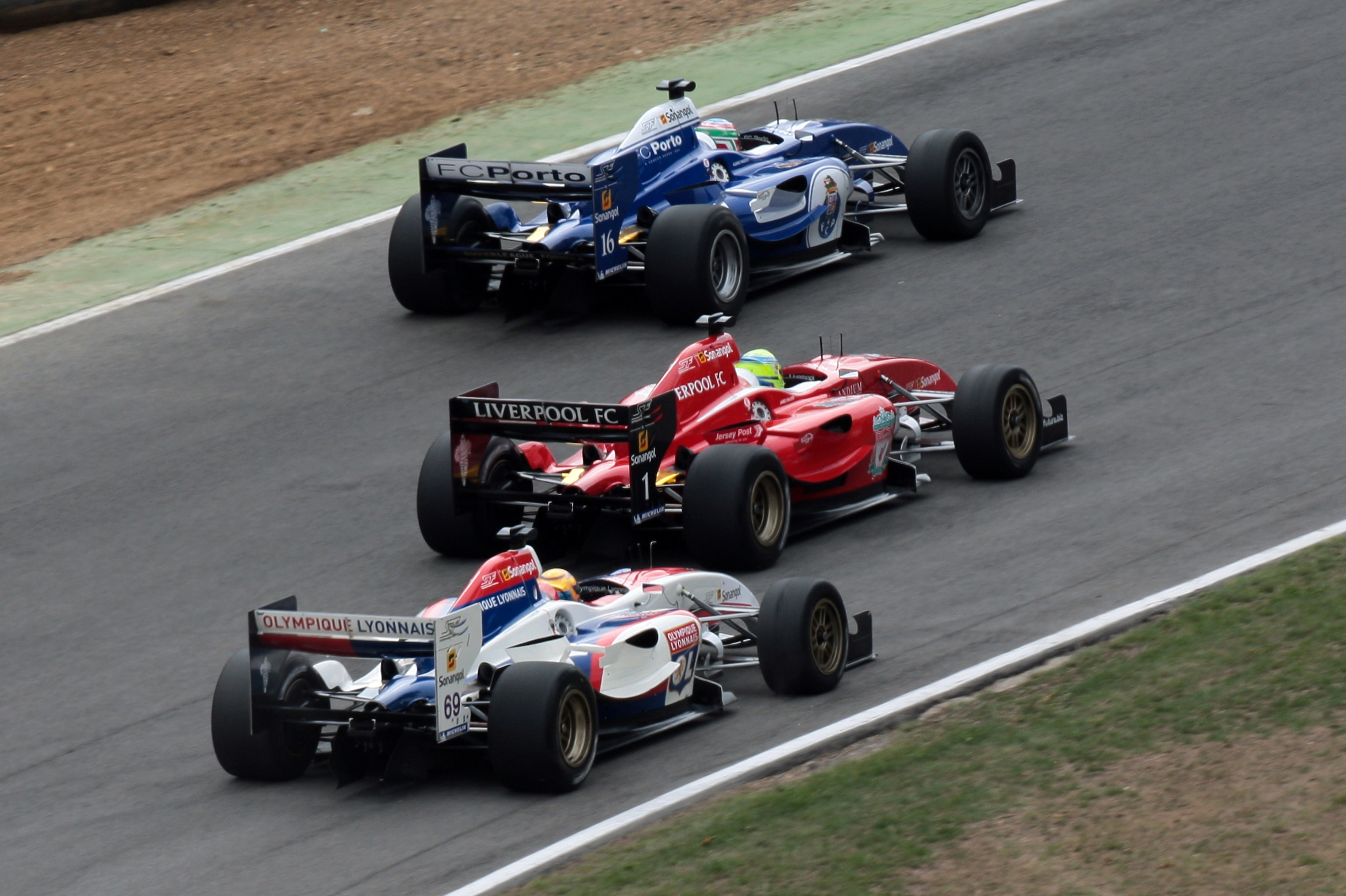
Porto, Liverpool, Lyon 2010 Superleague Formula Brands Hatch
Photo by: Motorsport Images
“The beauty of that is you don’t have to ask a country if you can put ‘England’ on the side of a car… It just made life easier and the business model started to work. It very nearly got pushed over the top of the hill and was going to roll down the other side, but it just fell at the last hurdle on a couple of silly things.”
“If they had started out that way, I think they would have travelled further with it,” adds Docking.
But regardless of its flawed premise and ultimate failure, Superleague had much to be proud of. A true melting pot catering for drivers both ascending and descending the career ladder, it served up a superb racing spectacle and provided moments of heart-stopping drama – see Davide Rigon bump-starting his spun Anderlecht car in reverse to keep his title hopes alive at Navarra in 2010. And its willingness to try new things made it a joy for its participants to work in.
“Everyone says it’s the most fantastic thing they’ve ever been involved in and I would completely agree,” Farrell says. “You had the freedom to ignore everything that normally limits you in motor racing and say, ‘This is how to make a really interesting race series.’ We could sit around and dream up an idea, like the super final, the whole weekend structure. It was just sensational.”
Perez and his band of boardroom wreckers intent on creating a series of glorified friendlies could learn a thing or two from Superleague Formula. Even if nobody asked for it, Superleague didn’t make boasts about being something it wasn’t. It attempted to learn from mistakes and evolve. And it didn’t try to scorch the earth…
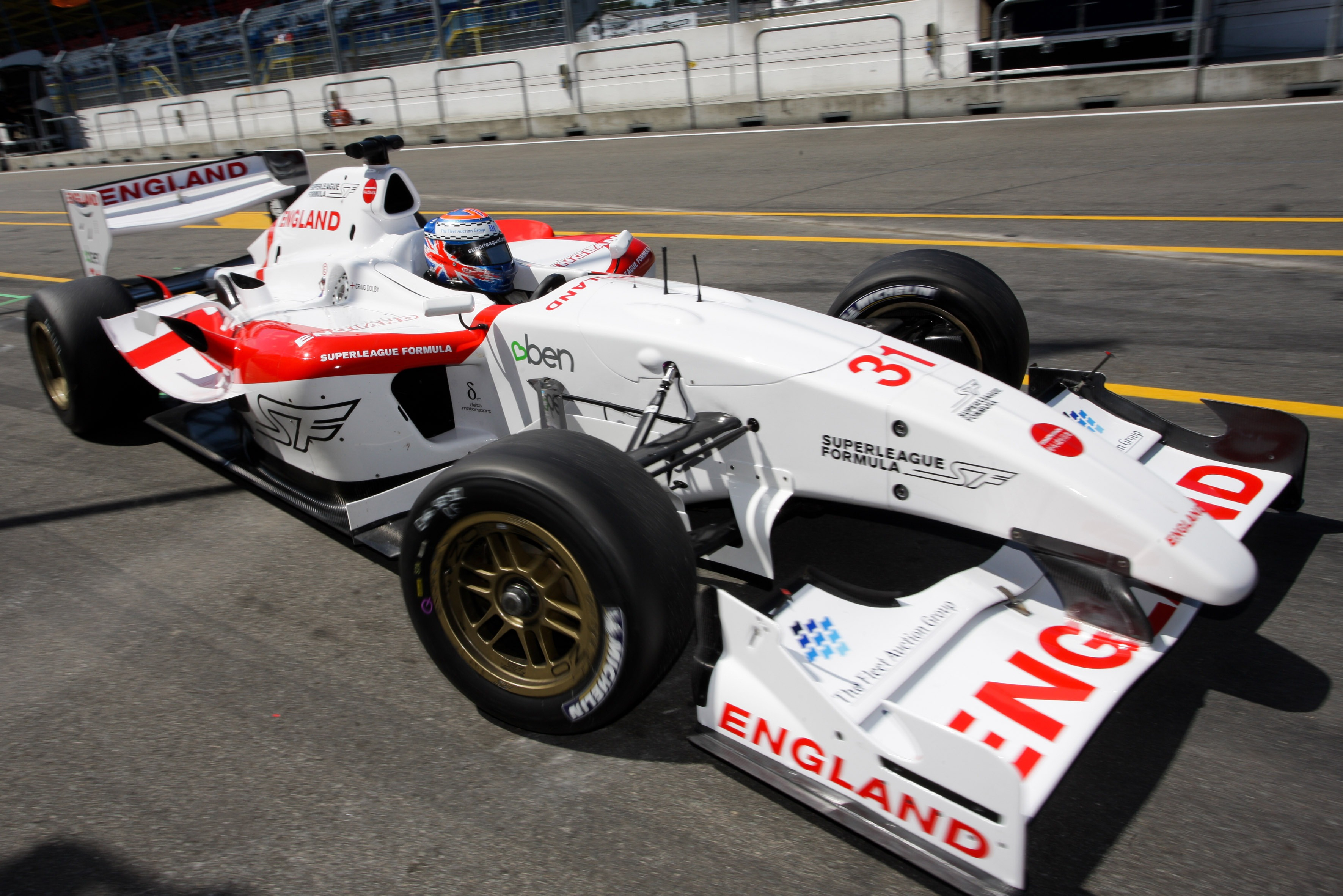
Craig Dolby, Assen Superleague 2011
Photo by: Motorsport Images

Why ‘Mr Formula E’ has called time on his racing career

Archive: When Le Mans made its most controversial change

The man behind Japan's first Le Mans winner

Did Audi ‘give up’ on GT3 too soon?

Alex Zanardi’s top 10 moments

This retro-inspired Mercedes 190E racer is heading to the Nurburgring 24 Hours

Why Verstappen's Nordschleife approach is a win-win for motorsport

The new Mercedes star who had an unconventional route to success

How both Verstappen and Antonelli were “surprised” in United States GP qualifying

Inside COTA's Turn 1 clubhouse and its plans to build a second track

Red Bull no longer falls away on difficult days: What Austin qualifying reveals about its progress

Verstappen responds to COTA boss and proposes drastic measures to tackle bumps
Subscribe and access Autosport.com with your ad-blocker.
From Formula 1 to MotoGP we report straight from the paddock because we love our sport, just like you. In order to keep delivering our expert journalism, our website uses advertising. Still, we want to give you the opportunity to enjoy an ad-free and tracker-free website and to continue using your adblocker.


Top Comments