
Nigel Roebuck: Fifth Column
"If you are a fan, you may feel inclined to crack open a bottle of Bollinger"
|
One of the decisions taken at last week's meeting of the FIA's World Motor Sport Council will have been received in very different ways. If you are an F1 team principal or engineer - or perhaps even driver - your response will have been, at best, unenthusiastic. If you are a fan, you may have felt inclined to crack open a bottle of Bollinger. As of the beginning of 2008, traction control... drum roll... is banned! The move has been approved (if not approved of) by all the teams, and perhaps the trade-off has been for the FIA to shed other possible changes for '08, such as wider cars and a return to slicks. The governing body had also planned to reduce the minimum weight of the cars, from 605kg to 550kg, but that idea too has been shelved, which surprises me, I must say, for Bernie Ecclestone was much in favour of it. For now, though, let us - the people who watch grand prix racing - relish the thought that traction control is to disappear, that before long traction will again be controlled by what Mario Andretti called 'the educated right foot'. Ideologically, Max Mosley has been opposed to the notion of traction control since he became president of the FIA in 1990. Often he has said that all 'driver aids' were fundamentally inappropriate in something calling itself Formula 1, and purporting to feature the best drivers on earth. "I've still got a Christmas card from Ayrton Senna," said Mosley, "and written all over is a long screed about, 'You must get rid of the electronics!' This was 1992..." Both Senna and Alain Prost were particularly opposed to traction control, and not surprisingly so, for they were the two best drivers of the era - and therefore, inevitably, suffered most from any 'gizmo' which served to reduce the gap between the great and the merely good. When, at the behest of his friend Emerson Fittipaldi, Ayrton had a run in a Penske CART car at the end of '92, he raved about the experience. "Wonderful!" he said. "A human's car again..." At the end of 1993, Mosley took action. Henceforth, traction control, as well as launch control and ABS braking, were to be banned in F1. "Traction control and ABS," Max said, "were conceived for road cars, to help ordinary drivers, particularly on slippery surfaces. But grand prix drivers - by definition - are not ordinary drivers, and to me these systems are out of place in F1." Amen to that, said the fans, and the drivers agreed with them. Over time, though, there came strengthening rumours that some teams were... observing the ban more assiduously than others. "Go and stand at the first corner," Jackie Stewart said to me in Montreal one year, "and listen to the *******, and then come back and tell me it doesn't have traction control!" I did as bidden, and there was little doubt about it. On acceleration out of the slow right-hander, the car in question sounded as though it had a severe misfire - and if it really were a misfire, the driver truly was from another planet, for he set the fastest time of the session. "You're right," I said to JYS. "I know!" he exclaimed. "But how the hell d'you prove it?" Ah, now there was the thing. And although ABS has thankfully remained a no-no in F1 for the last 13 years, traction control was eventually allowed to return, in 2001. It had been coming a while, despite Mosley's antipathy. "In December '99," said Max, "we had a meeting, and all the team owners - plus Bernie - were at my throat, saying I had to let traction control back in. They had some very good arguments for it, the main ones being that it would simplify everything, put an end to all the grey areas, simplify the checks, and would be much cheaper for the teams. Also, it was something common on road cars. "I thought about it, and decided it would be a complete disaster. I sent them all a carefully reasoned fax, and at the next meeting they all agreed - they could see it was going to be a disaster for F1. If you allow traction control, where do you draw the line on driver aids - or computer-aided driving? There isn't one: you can't have a logical point where you say, 'Here we go, and no further.' We will not allow things that remove the skill of the driver." To police the ban, he went on, the plan was to use Article 27, which states that it is the duty of the team to prove to the FIA that their car complies. "I've asked Charlie [Whiting] to investigate whether or not the electronics have become so complex that it's not going to be possible to do that, in which case we'll simplify them. "And if you take that to its logical conclusion, we would simply say, 'Here's a standard ECU for the engine, and a standard ECU for the chassis, and these you must use.' We think it would be better to do that, even though it would greatly restrict their technological freedom, than to have a situation in which the car is doing it all, and the driver's skill is becoming secondary." At the time - March 2000 - that all sounded very encouraging, but within a year it had been put to one side and the FIA announced that traction control would once more be kosher, as of the Spanish Grand Prix in 2001. It had proved impossible to police the ban properly, we were told, and these constant allegations of cheating were doing the image of the sport no good at all. Later there were suggestions that, in return for the major manufacturers' agreement to supply 'second' teams with engines at an affordable price, their wish for a return of traction control had been granted. So, back it came. And thus it became possible to have a wet qualifying session - as at Montreal, in 2003 - without a single spin. A couple of years earlier, at the same circuit, Rubens Barrichello had contrived to spin his Ferrari out of the hairpin - and why? "Because the system glitched," said Rubens. "I nailed the throttle as if I had traction control - and suddenly I hadn't! That was when I really understood what traction control did, believe me! And I thought, 'We're all going to forget how to drive...'" Clearly that worried Barrichello more than some of his colleagues. Whereas at one time the drivers were united in their distaste for traction control, more recently they have been increasingly seduced by it. "Why, for God's sake?" I asked a veteran, who had originally been a strong opponent. "Well," he limply answered, "it is safer..." Pragmatist or not, Mosley all the way through retained his fundamental opposition to 'driver aids', notably traction control - and perhaps his desire to see the systems banned for good and all was strengthened by the manufacturers' failure to abide by their promise of 'affordable engines'. Whatever, by 2003 Mosley was again speaking of a ban, which he felt could only be satisfactorily achieved by the imposition of a standard ECU. "The problem there," he said, "is that in a hundred years you would never get unanimous agreement, because of the manufacturers and their electronics, and so on. Therefore the earliest realistic time for a standard ECU would be 2008, after the end of this Concorde Agreement..." Next year is 2008. Good on you, Max. |

In the magazine: Wheldon the Lionheart

MPH: Mark Hughes on...

MPH: Mark Hughes on...
MPH: Mark Hughes on...

MPH: Mark Hughes on...
MPH: Mark Hughes on...

MPH: Mark Hughes on...

MPH: Mark Hughes on...
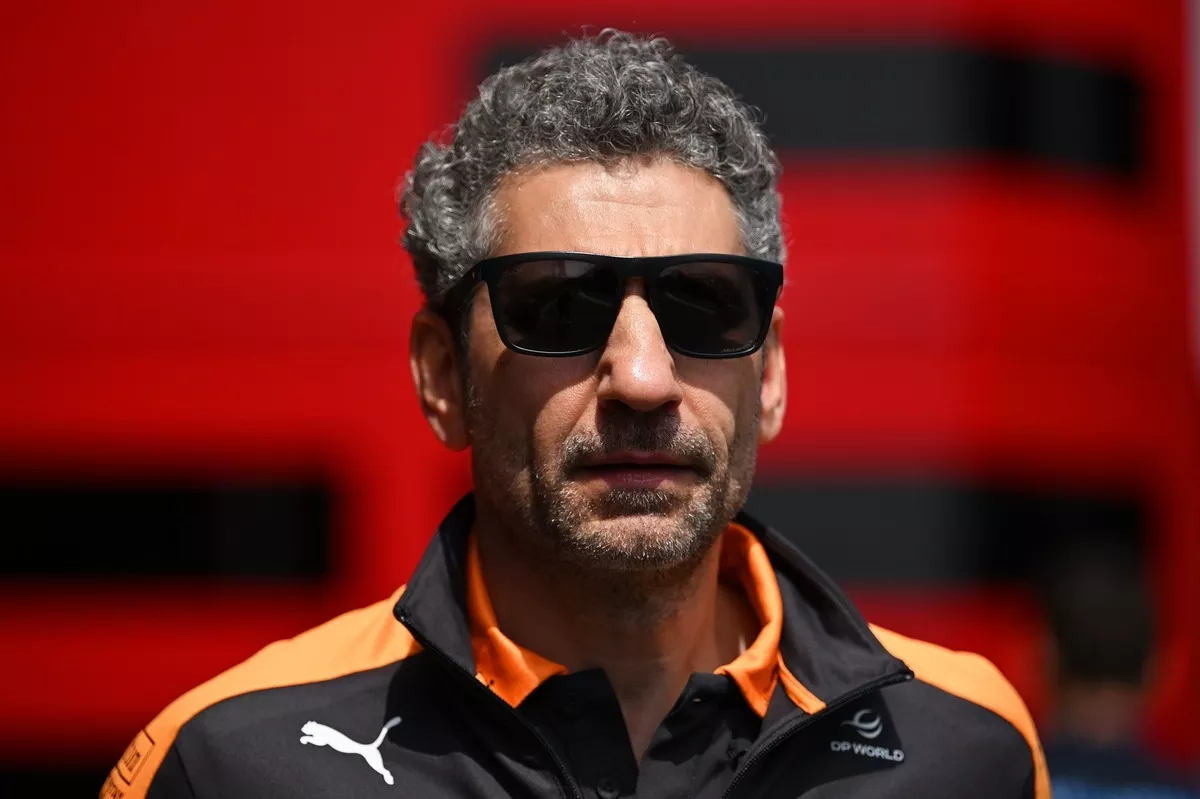
Why McLaren considers Norris-Piastri Singapore clash so “serious”

What Max Verstappen will change after Red Bull’s poor F1 starts in Malaysia and Singapore

A "better job" or more engine power? Verstappen's Singapore pole unpicked

What we learned from the 2026 F1 Singapore GP sprint race and qualifying
Subscribe and access Autosport.com with your ad-blocker.
From Formula 1 to MotoGP we report straight from the paddock because we love our sport, just like you. In order to keep delivering our expert journalism, our website uses advertising. Still, we want to give you the opportunity to enjoy an ad-free and tracker-free website and to continue using your adblocker.


Top Comments