
Autosport 75: What does the future of motorsport behold?
The year 2025 marks the 75th anniversary of both Autosport and Formula 1 and motor racing has changed significantly during that time... but what do the next 75 years behold?

When you reach a milestone birthday, it’s a time to reflect on memories and achievements for better or worse. But it is also human nature to project forwards, sometimes impossibly so, and a celebration of 75 years of Autosport is an opportunity to ponder: what will motorsport look like in the year 2100?
The short answer is: impossible to know. So, rather than a guessing game, it’s more beneficial to gauge the wind direction in a conceptual manner and ask what the future of motorsport could mean.
Speculation on the internal combustion engine, electrification, hybridisation or anything else humans can use to make themselves go faster in circles will be left alone here, because nobody can accurately predict how these matters will be decided several decades from now. Disagree? Go back to 1950 and ask Giuseppe Farina if he’d prefer his Alfa Romeo 158 to be powered by V10s with fully sustainable fuels or hybrid V6s with more reliance on electrical energy from 2026?
The theoretical paths for motorsport’s next steps are endless, but what the conceptual idea of motorsport will become has been a talking point even before this title first went to print 75 years ago.
The drivers to survive
As artificial intelligence capabilities aid (or hinder – ed) our everyday lives, there’s an unstoppable expectation that robots will be able to beat humans in a race. Chess found out decades ago when ‘Deep Blue’ defeated grandmaster Garry Kasparov in 1996-97, but that didn’t render the game redundant.
“Very soon there will be a robot that drives better than a human, be it Max Verstappen or Lewis Hamilton,” asserts Lucas di Grassi, a founder of Roborace, which pitted AI-driven vehicles into competition.

Lucas di Grassi has been at the forefront of robotic racing
Photo by: Andrew Ferraro / LAT Images via Getty Images
But there is no doubt that the human element, with its flaws and deficiencies, is a constant that literally drives motorsport. It simply won’t happen without human interest. Di Grassi ponders the use of technology to aid drivers and where the limit is.
“The question is how much we allow the humans to be augmented by this technology to be still considered a normal human driving the car – the human must control the car, the human must be the centre of the attention,” affirms the 2016-17 Formula E champion.
He feels that harnessing technology advancements will be the solution: “The opportunity is to prepare drivers more cost-efficiently, earlier and better, with less risk, in simulators. Then using better the time you have in the car, instead of driving around, actually focusing on the [driver’s] weak points.”
"Since Liberty took over Formula 1 they’ve made sure everyone realises first and foremost it’s entertainment and that is what is fundamental to growth" Pat Symonds
Ian Smith, Motorsport UK technical director, explains that technology of today can utilise that theory, using electric karts as an example: “We need to focus on how karting facilitates young driver development and makes the sport as accessible to as many people as possible. The overarching strategic priority for that is simplification. It should be talent over tech. The electrified powertrain really simplified that prospect.”
With more accessibility and lower costs through widespread availability of advanced tech – di Grassi estimates simulators to be 10 times cheaper now than during his junior days – comes more competition. That is a positive societal push, but with investment in motorsport in a state of uncertainty it may result in fewer professional drivers and a surge towards participation via the amateur route.
“Most of the professional drivers, they make money from the manufacturer investing in motorsport because they want to sell more cars,” di Grassi states. “Which might not be a thing in the future, because there are many companies proving that they don’t need motorsport to create a strong brand.”
That’s entertainment

F1 has grown in popularity under the tenure of Liberty Media
Photo by: Mark Sutton / Motorsport Images
If making a living out of motorsport is trending towards an occupation for the exceptionally talented few (which many argue it already is), then the pure involvement of people will be split into all degrees of interest.
Popularity is a fickle beast – just look at any racing series over the past 75 years amid booms and busts – but the overall increase of interest in motorsport is fuelled by the population having more leisure time than at any point in history. With all this time on our hands, it needs to be filled with engaging pastimes, something embraced by motorsport from top to bottom.
“Since Liberty took over Formula 1 they’ve made sure everyone realises first and foremost it’s entertainment and that is what is fundamental to growth,” argues Pat Symonds, former technical boss at Benetton, Renault, Williams, FOM and now engineering consultant to Cadillac’s F1 project.
“That is the reality of now; national motorsport is a leisure industry,” Smith concurs. “That’s the big journey Motorsport UK has been on over the past eight years, realising that actually that’s the industry we’re in. We are about facilitating people enjoying their time.”
Who these people are is changing all the time. In the latest Global F1 Fan Survey run in partnership with Motorsport Network (and with more than 100,000 respondents), there is a growing shift in the fandom within grand prix racing, with 27% of respondents categorised as Gen Z, while 25% of all respondents were female – a figure that has more than doubled in eight years.
An eye-catching 90% of all respondents stated that they were emotionally invested in a race, with 61% engaging in motorsport daily. A more diverse, highly attentive and involved audience is surging to F1, aided by trends such as Drive to Survive’s impact putting it in a wider public spotlight.


The audience demographic of F1 is getting younger and younger
Photo by: Ben Stansall / Pool /AFP via Getty Images
How motorsport grabs and retains this societal trend is an open exercise – both drilling down to pacify a rise in demand for in-depth experiences, and also expanding wider to capture a more passive crowd.
“What will be highly interesting is how you enhance the entertainment,” Symonds reckons. “We will see a lot more data-driven entertainment. We see it in other sports, particularly in America; if you watch a basketball or baseball, the stats that they throw at you are unbelievable.”
“Motorsport could become simpler, maybe it does not [need] to have relevance in terms of technology development, it just happens because people want to have fun,” adds di Grassi. “With the automation of everything, people have more time for entertainment.”
"In 75 years’ time, it will be totally unacceptable for people to die of anything other than old age. It’d be unacceptable for people to die on a race track. We won’t have anything that will make cars go much faster, because it becomes more and more difficult to design a race track. It is an Achilles’ heel" Pat Symonds
From a grassroots perspective, there’s countenance to adjust the sport entirely to meet people’s lifestyles, reckons Smith: “There was always a group of people that were quite happy to spend three days in a soggy paddock at Donington Park. Those societal factors are very different now, so making the sport accessible to as many people as possible is important.”
Society’s perception of motorsport has featured a sea change over the past 75 years as safety and environmental concerns grow. The sport knows it must constantly do better on these factors – recent headline examples being halos for single-seater cockpits and the net-zero emissions target – but the clock is ticking in a society more conscious of its impact on the planet and its people.
Safety advances have minimised risks greatly but, with cars getting faster and circuits being outgrown, the push to minimise risk is an uphill struggle. “In 75 years’ time, it will be totally unacceptable for people to die of anything other than old age,” Symonds asserts.
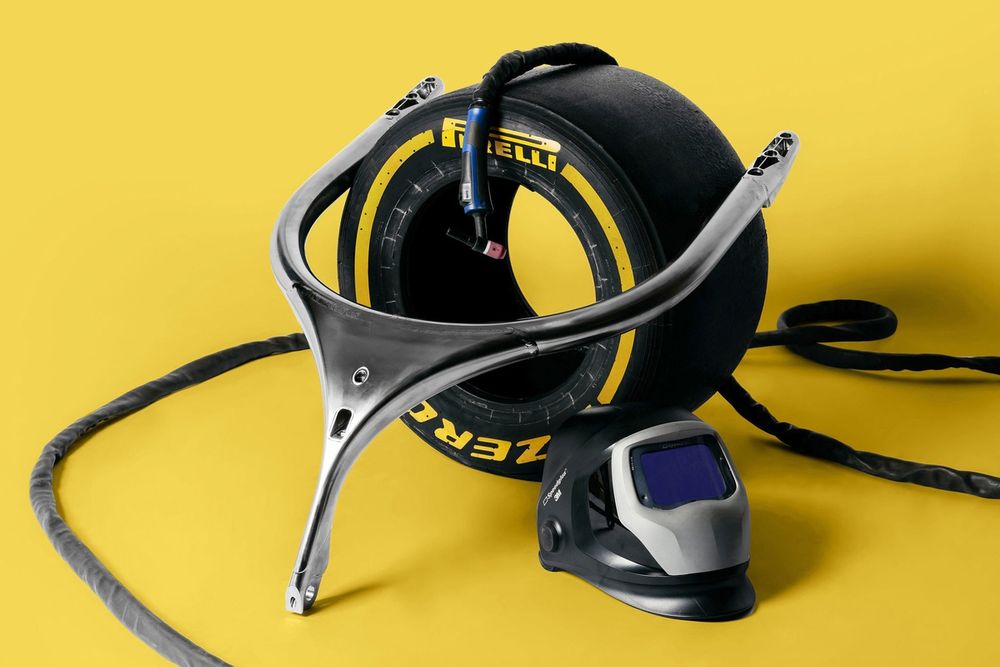
Motorsport is as safe as ever, but there is still room for improvement
Photo by: LKN WeldCompany BV
“It’d be unacceptable for people to die on a race track. We won’t have anything that will make cars go much faster, because it becomes more and more difficult to design a race track. It is an Achilles’ heel.”
Symonds, who instigated F1’s push for fully sustainable fuels from 2026, feels climate change concerns means the biggest risk to motorsport is public perception: “If we are not environmentally conscious, then the public could turn against us.”
Horse racing and hope
Curiously, one comparison that repeatedly occurred during our research was to a different type of racing, one that long predates motorsport.
“People still go and watch horse racing but they don’t ride their horses now,” Symonds points out. “We have a very different form of transport to get us to a horse race but we’re still watching something that’s not all that dissimilar to what we had years ago.”
The theory is that, despite technological advances and society’s interests changing, horse racing remained ever-present and has not altered in principle for centuries, able to exist in an ever-changing world. If motorsport has the same fate, its outside world could change forever, while inside staying the same – but only as long as it gets societal approval.
So, we can dream about what motorsport will look like in 2100, but the passion and human interest that fuels racing – the four-wheeled variety – means the concept can remain as long as people want it to. That’s what fuels the hope for the future; whatever threats, challenges and changes are ahead, the passion will burn brightly.

Will motorsport take inspiration from horse racing?
Photo by: Getty Images
“I hope motorsport adapts to the technology that will be permeated in our society in a way that it continues to provide joy, entertainment and adrenalin for future human beings,” is how di Grassi sums up his hopes for the future. “People like thrills, people like to compete against each other, people like the joy of going fast.”
Besides, with our increasing dependency on automation, maybe we’ll need a reason to feel human, as Symonds puts it: “Sport is going to play a really important part in our future. We’re probably going to be quite dull by the time we’ve got robots doing everything for us!”
This article is one of many in the monthly Autosport magazine. For more premium content, take a look at the Summer 2025 issue and subscribe today.

What will motorsport look like in 75 years' time?


"We don't need to be respectful" - Alpine bullish about Italian GP win after Gasly’s shock pole

Haas completes latest TPC test as focus on 2027 F1 driver line-up decision grows

Mercedes still searching for answers on why it was “rubbish” through high-speed corners in Dutch GP

Ukraine files complaint to FIA ethics committee after Russian ban lift

Why Lindblad hasn’t felt the pressure in F1

New Honda F1 engine to debut in Aston Martin filming day ahead of Dutch GP

Wolff admits Mercedes has most powerful F1 engine – and Red Bull agrees – as ADUO returns to spotlight

Why Leclerc wasn’t penalised for clash with Piastri in Belgian GP

Ferrari not yet switching focus to 2027 F1 car

The verdict on the WRC Rally Chile tyre solution

Top five roles on Motorsport Jobs this week

Quartararo explains why Yamaha relationship has strained ahead of Honda move
Subscribe and access Autosport.com with your ad-blocker.
From Formula 1 to MotoGP we report straight from the paddock because we love our sport, just like you. In order to keep delivering our expert journalism, our website uses advertising. Still, we want to give you the opportunity to enjoy an ad-free and tracker-free website and to continue using your adblocker.


Top Comments