




Why F1 teams should back the reversed grid revolution
Formula 1 has been searching for the answer to its overtaking problem for decades. But its teams can never agree to something that may hurt their chances. Here's why a compromised but radical event format idea could solve that issue

There was a flurry of excitement last week when some slightly edited and relatively old quotes from Mattia Binotto began circulating on social media, as they suggested that Formula 1 teams had agreed to ditch qualifying and switch to reversed grid heats to decide the grand prix starting order from 2020.
But while the reports suggesting this was a done deal were wide of the mark, the reality is that it looks like something of this nature is coming.
F1 fans should be prepared for reversed grids being trialled at a few events next year as a way of assessing if it is something the championship should take forward for its new era in 2021.
F1 owner Liberty Media has been open that format changes are something it wants to evaluate properly and, as the teams have begun discussing it, there is a growing consensus that perhaps now is the right time to at least try something.
We are not over the line yet in terms of it getting approval - many details still need to be sorted out prior to unanimous approval being possible - but F1 teams certainly seem more open to reverse grid races than they ever were to refuelling coming back.
Where the idea has gained traction is that it has not been pushed as an either/or, meaning taking reversed grid heats would be the end of normal qualifying.
Permanent switches have led to opposition in the past. Previous talk of reverse grid races always prompted the argument that it would never work at tracks such as Monaco, for example. On the tight confines of that track, starting at the back pretty much means finishing near the back.
Right now, the discussions over a format shake up are concerned with having it as option that can be slotted in at some races, where an injection of excitement would be a welcome boost.

That could mean a Saturday reverse championship-order race with the result deciding the starting order for Sunday, or a reversed-grid last-driver-standing knockout, or some sort of extra-points spectacular to reward overtaking from the back. A combination of all three could be on the cards.
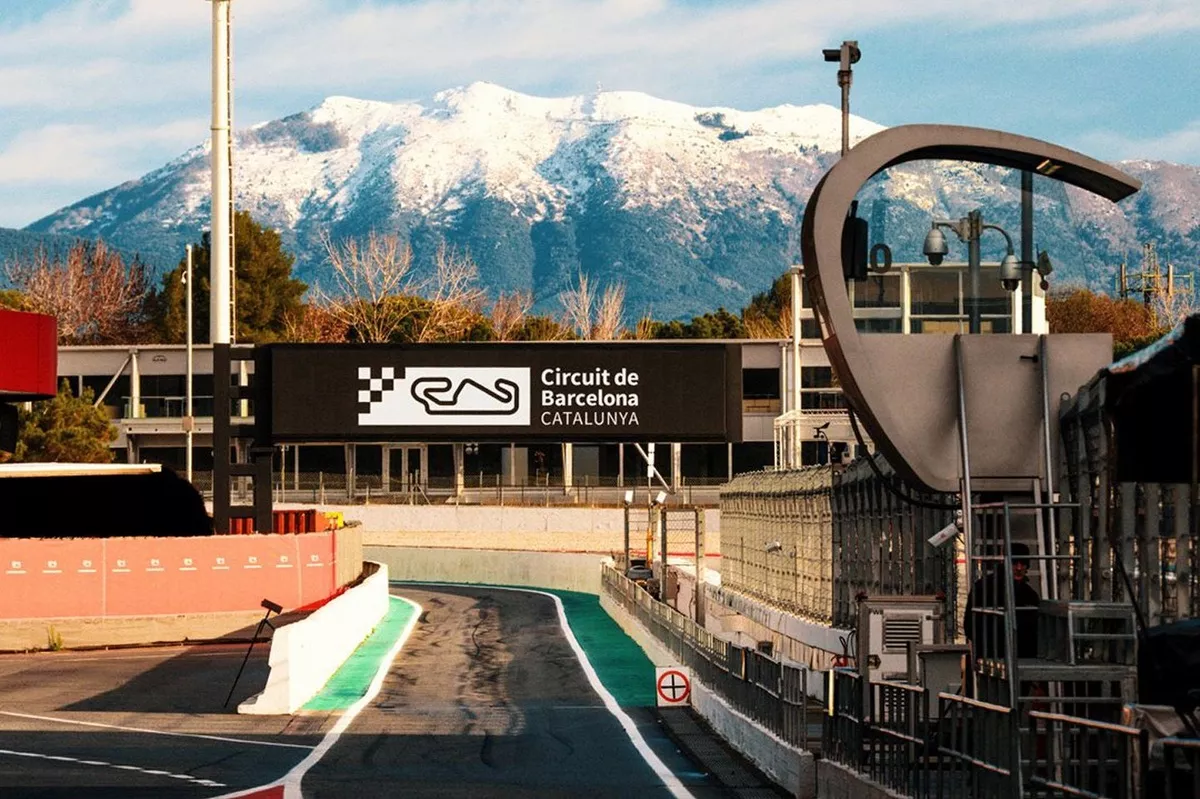
Monaco could keep its traditional timetable, but maybe for races at Paul Ricard, Barcelona or Abu Dhabi - where the wheel-to-wheel racing has not been that great - things can get properly shaken up.
With the F1 calendar expanding - and potentially going to 25 events in the future - there is a real danger of races disappearing into obscurity and becoming easy ones to miss as they roll on top of each other.
F1 teams are not charities and it is not their job to deliver cars that can easily be overtaken
So, having four or five events with different formats spread through the calendar would freshen things up; offering teams and drivers something challenging to get out of the grind and, for fans, it would be a definite reason to tune in. Who would want to miss F1's first reversed grid race?
But beyond the potential short term benefits of an increased spectacle on Saturdays and mixed-up grids for Sundays, there is one long-term potential benefit of reverse-grid races that could ultimately become a force for good in F1.
For decades now, F1 chiefs have battled the ongoing frustrations of getting cars to follow each other close enough. It has been an issue that has existed ever since aerodynamics became a dominant factor in car performance.
Over the years, F1 has bounced between various ideas to try to find the answer - bigger wings, smaller wings, aero restrictions, aero freedom. But beyond the addition of the sticking plaster that is DRS, it has never been able to find the perfect solution.

It's not because there isn't an answer out there, nor that the right brainpower isn't down in the pitlane to sort the issue. Instead, it's because up until now there has never been a unified endgame for everyone to work together to create cars that can race and overtake. For the teams the aim is to win, not to make things exciting.
For all the investment the FIA and F1 have done - plus all the work that team representatives on the Overtaking Working Group completed - the very nature of grand prix racing's competitiveness always ultimately scuppered many of the positive ideas. Teams are motivated by self-concern.
They are not charities and it is not their job to produce cars that can easily be overtaken. All they care about is performance, and anything that they think could level the playing field and wipe away an advantage is something that they feel compelled to resist.
Cars are designed in the windtunnel to deliver perfect performance when running alone; and not one second is devoted to producing less disturbance for the car behind. Beyond the simple car design implications, this determination to maintain an advantage has led to resistance for rule changes that could open up the racing.
Liberty is well aware that the opposition it is receiving over ideas it has for the 2021 cars - which are aimed at improving overtaking, and are illustrated by Autosport's own concept design below - are because teams are worried that it could hurt their respective competitive advantages. The big teams simply do not want anything that makes it easier for a car behind to come through.

But if you suddenly make the top teams face starting a quarter of the races with their cars lining up at the back, then suddenly a whole new mindset would open up.
When those squads quickly realise that perhaps some car rule tweaks to aid overtaking could be quite useful to helping their drivers make progress through the pack, then you would be amazed by how soon the call to arms would come. Ideas for change would get tabled rapidly and the support behind such changes would start rolling.
Teams would invest more towards designing cars that were better adapted to running in traffic, even if it meant having ultimately compromised performance in terms of cooling and aero.
F1 would be in a situation where the teams, drivers, the FIA and the championship organisers were finally working together with a unified aim: producing rules that enabled the cars to race and overtake each other, but without moving away from that core DNA of teams still being focused on being the best.
It's the Holy Grail that F1 has been unable to find for decades. But now it could finally be within its grasp.



Brundle awarded OBE in King’s New Year’s honours

The new rules dilemma that will define the 2025 F1 season

Verstappen issues Red Bull title warning in push for RB21 progress

Mercedes opens up on the factors that hurt Hamilton with the W15

How McLaren faced up to the misinformation, noise and distractions of being an F1 title challenger

Why Bottas is not letting the “worst-case scenario” end his F1 career

Jon Noble: An unfair perception or a genuine concern? Lifting the lid on Red Bull’s Tsunoda scepticism

Binotto on Audi's F1 reality check after finding team "frozen" with no plans

Camara over Ocon - did Haas make the correct call for F1 2027?

Camara to make F1 debut as Ocon's replacement at Haas in 2027

Mekies under the microscope: How different is his leadership at Red Bull from Horner?

Rwanda turns to F1 as it moves forward from a chequered past
Subscribe and access Autosport.com with your ad-blocker.
From Formula 1 to MotoGP we report straight from the paddock because we love our sport, just like you. In order to keep delivering our expert journalism, our website uses advertising. Still, we want to give you the opportunity to enjoy an ad-free and tracker-free website and to continue using your adblocker.


Top Comments