


Why F1 must adopt MotoGP's key concepts
Ross Brawn has admitted Formula 1 can learn from MotoGP, and once he digs deeper into the two-wheeled world he'll find much more to benefit grand prix racing than he probably thought
For a category regarded by many as Formula 1's 'opposition', the merits and structures of MotoGP have been referenced rather a lot in recent times by F1 folk. They point to the championship's ladder of talent, its cost-effectiveness - whether for manufacturers, teams, sponsors, broadcasters or promoters - and, last but not least, its marketing activities. There is, though, another element: its stability.
In February, Malaysia's Sepang International Circuit's bosses confirmed they had requested an early exit from their F1 deal. It was tellingly granted without penalty clauses by Bernie Ecclestone as one of his last acts while CEO of the Formula One Group, although he mischievously later admitted to having "charged them too much for what we provide".
As expected, those comments infuriated the Malaysians - and, understandably, FOG's present hierarchy - who then waxed lyrical about MotoGP. So they should: SIC regularly attracts 150,000 punters to the MotoGP event. Shell recently extended its title sponsorship of the race, while canning its commitment towards F1's Belgian Grand Prix, a casualty of its ramped-up partnership with Ferrari.
Saliently, MotoGP insists that Sepang turns a healthy profit on MotoGP, which certainly could not be said of its F1 event, which posted red figures virtually from the off in 1999.
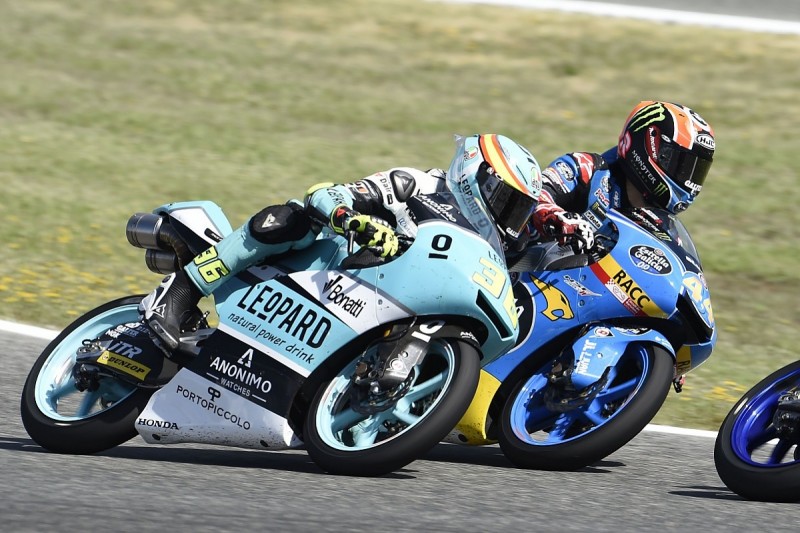
In hitting back at Ecclestone, Sepang CEO Dato' Razlan Razali met with the media in London, and praised MotoGP's approach, saying: "In MotoGP they have everything, they have great support races with Moto3 and Moto2. There are three world championship races [per meeting], and they create fans from the beginning.
"When a new rider comes into Moto3, younger fans follow this particular rider. Maverick Vinales, for example, he started in Moto3, he moved all the way up to MotoGP, and the fans did the same."
Then, in a broadside clearly aimed at F1's new owner Liberty Media, Razali said: "There's no harm in looking at what the two-wheelers are doing. Put ego aside, put whatever aside, and look at what they are doing."
It seems his comments hit home. During the Spanish GP weekend, Ross Brawn, managing director of FOG's motorsport division, admitted to having met with Carmelo Ezpeleta, the CEO of MotoGP commercial rights holder Dorna in order to establish "how we can learn from what each of us does".
"We're not too proud to consult with other championships and work out the best way forward," Brawn, arguably F1's best-ever team manager and most certainly its most successful, added before praising what he termed meritocracy between Moto3, Moto2 and MotoGP.
"It's also interesting looking at the commercial side, the way they structure the teams, and the deals and the way it works for customer teams."
Indeed, F1 could certainly benefit from studying Dorna's commercial structures. For all F1's bragging about having been a world championship since 1950, FIM - motorcycling's governing body - introduced its version a year earlier. The FIM hived off its commercial rights in 1992, five years before the FIA and Ecclestone cut a similar deal.
The difference, though, is that FIM deals run for five years - ensuring Dorna has the best interests of the championship at heart while enabling the FIM to amend terms and prices - whereas Max Mosley's FIA administration gifted (no alternative word springs to mind) F1's commercial rights to Ecclestone's family for a total of 113 years in exchange for a one-time fee plus inadequate operating contributions.
For better or worse, in 1998 CVC acquired Dorna then cashed out in 2006, but only when forced by the EU Commission. We know how that impacts on F1 - but, significantly, the FIM's options are open after each five-year block, whereas the FIA is (now) saddled with its notorious 100-year agreement.
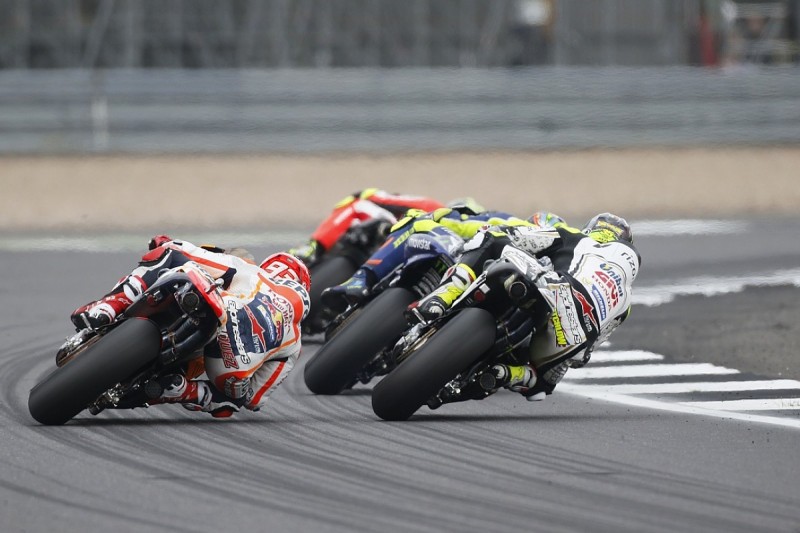
On, though, to MotoGP's stability. Where recent F1 has been about kneejerk regulations changes seemingly framed on a suck-it-and-see basis, MotoGP's changes are few and far between, and made only after thorough think-throughs and proper consultations with all players.
The International Road-Racing Teams Association (IRTA) is the third player in running the show and making decisions, along with Dorna and the FIM. The Motorcycle Sports Manufacturers' Association (MSMA) feeds into that set-up, and joins them on the Grand Prix Commission.
MotoGP's stability was highlighted humorously in Desseldorf in February by commercial boss Pau Serracanta, speaking during the Spobis sport business seminar on its business model. Serracanta opened his presentation by apologising to audience members who had been present when he had taken to the same rostrum six years before: so stable is MotoGP, he said, that his presentation was little changed.
"This morning [on the way here] I was thinking 'What was I explaining a few years ago?' In fact, we have not changed a lot on our strategy," he said. "MotoGP is the oldest motorsport world championship that exists, it is one year older than Formula 1, maybe it is [that] one year that gives us a push for some things!"
Much was familiar from 2011's seminar, but his words bore repeating, for Dorna manages its sporting properties well. In addition to MotoGP and its junior classes, Dorna promotes supercross, World Superbikes and various SBK feeder championships, the Asian Talent Cup, next year's new British equivalent, the Red Bull Rookies' Cup and other series, in a totally structured and fully integrated fashion.
Any wonder this writer last year proposed to Ecclestone that Ezpeleta should replace him?
"Our sport is impressive, we had last year a very good season, very unpredictable, we had nine different winners," continued Serracanta.
"We think that the full support of manufacturers is one of the keys of our success, and I'm happy and proud that this year we have KTM coming on board.
"When we do internal analysis, which is the key of [our] success, the first thing we have done is learning by doing. Last year we celebrated our 25th anniversary of our company managing this sport. Within these 25 years we have [made] a lot of mistakes. But we've also learned some things that have been good for the sport."
Yes, lest this be read as a glowing testimonial to MotoGP. The series has had its flaws and faults, like smaller grids at the turn of the decade, the 800cc formula, or the introduction of control tyres. The engine formula was rectified ASAP and Michelin is changing the construction of the front tyre based on rider feedback, so development and quality is not being hindered.
"I think that the most important thing is that we have yearly stability to the sport," Serracanta said. "This is the key word. Having a sport that is stable. The stakeholders we have, they realise there is a company managing the sport, they have assurances that things will happen, and happen in a corporate way."
True, now that a listed media company has acquired F1, it can be expected to develop in a "corporate way" - for which read responsible governance - but many transitional pains lie ahead. MotoGP has long been through those. What should such corporate responsibility deliver? Serracanta has a ready answer:
"As stakeholders, the race promoters know we will bring the best teams and riders for their race. Also they know that we have good TV agreements to promote their race. Therefore they know they will sell tickets.
"The teams, they have the stability, because they know that on the agreements that we have with them, that it's renewable every five years. That they will receive their money that we commit to pay them; that they will receive the paddock passes we'll commit to give to them... that they will receive the logistics we put in place for the championship.
"They are sure that they will have good TV coverage that will benefit their business. There is also the stability that they have, that we're offering them."
As virtually every team boss can attest, stability is a rare state in F1, which was seemingly run as a fiefdom, subject to whims and fancies.
Dorna treats its manufacturers as partners, not adversaries, highlighted by its partnership with not just FIM but also the teams' body IRTA: "They know there will be a race organised, with good safety standards, good crowds, good TV exposure. They say 'Win on Sunday, sell on Monday' - [but] it's more than that. It's working. In fact KTM, this is why they are taking up this challenge. They are competing in MotoGP to sell more bikes. They have a stable framework where to do it."
Then there's Dorna's attitude to satellite teams, the non-manufacturer entries that prop up the series. A new price cap on leasing machinery has been introduced for 2017, at €2.2million per rider, excluding damage, and Dorna takes care of that €2.2million per rider figure as part of the latest, improved deal for teams, too. Tech3 Yamaha boss and IRTA president Herve Poncharal reckons that is is about half of his budget of "between eight and nine" million euros.
Where F1 has a churn of sponsors, Dorna's retention rate is impressive.
"The sponsors, they know that the championships is organised on safe circuits with good riders, with good teams, with good manufacturers, with good TV coverage that helps them to get better exposure of their brand and the association that they have with our values," Serracanta explained.
Liberty Media obviously saw potential in F1, or its executives would not have committed to acquiring control of a company with an equity valuation of $4.4bn (£3.1bn), suggesting F1's media rights are underexploited.
By contrast, MotoGP's "media department is the biggest [in Dorna],' says Serracanta. "The department is spending more money within the company to create fantastic images and to provide good facilities that the broadcasters feel very comfortable to work in our environment.
"Media is an important part of what we're doing. But what is also very important is social media. We have always been very, very proactive. When all these tools have been put in the market, we realised that our fans that are quite dynamic and enthusiastic, and like to think outside the box, that they like to receive more content from our side.
"We started to be very proactive in the new media, and we have very good numbers compared to some other motorsport series. In the end this has been a good tool to attract [new audiences], because today everyone is chasing Millennials - I can show we have the Millennials thanks to the numbers we have on social media."
Again, no comparison with F1's social media activities required. It is, though, relevant to add that Dorna last year MotoGP received YouTube's Golden Baton Award for "being 10 times ahead of any other motorsport series in YouTube with the strategy that you have".
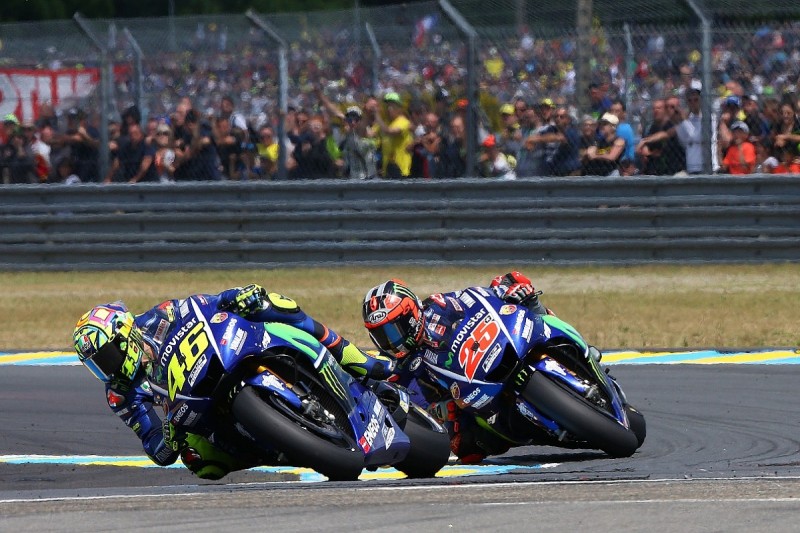
Serracanta points to MotoGP's 45-minute race format as yet another reason for its success: "Nowadays, with Millennials and those following us on new media, on a Sunday they have many, many things to do. They have many opportunities to enjoy a Sunday. It is quite a bit of concentrated time that you can dedicate for racing.
"We're not having discussions saying 'Maybe we should change the race format', or 'To have more media exposure, instead of 45 minutes we should go to an hour-and-a-half and therefore we'll have better exposure for our sponsors, better value.' No way.
"We have a format and we know it's working, and we don't have to change it. These 45 minutes, it's quite attractive and it helps to catch the attention of the fans."
By contrast, F1 has been stuck in its two-hour or 200-mile rut for longer than most current fans have been alive.
Ask commentator Toby Moody to identify MotoGP's shortcomings, and he falls silent rather than resorting to nit-picking. "I must confess, I can't think of any major issues," he says.
The same could not be said of F1 in its present state - but, fortunately Brawn and company are not too "proud to consult other championships". Talking to MotoGP is a good start.

Vettel: Last Ferrari step back to winning F1 titles will be hardest

Revealed: What F1 teams really spent in 2017

Aftermath of Hamilton Baku clash Vettel's 'worst feeling' of 2017

Why F1 is sitting on a timebomb of contradictions

Lewis Hamilton hopes Fernando Alonso is in 2018 F1 title fight

How teams lost patience with F1's new era

Michael Schumacher doubted himself, reveals ex-Ferrari F1 boss Todt

Why Todt's reign is eight years longer than planned

The not-so-obvious chance Leclerc missed to usurp Verstappen

Cheshire cats de la Roche and Musgrave grin after Silverstone Historic F3 thrillers

Dramatic Mini fight goes to the wire as Ovenden wins title by a point at Brands Hatch

How Ingram made his mark on the 2026 BTCC campaign – before going out with a bang
Subscribe and access Autosport.com with your ad-blocker.
From Formula 1 to MotoGP we report straight from the paddock because we love our sport, just like you. In order to keep delivering our expert journalism, our website uses advertising. Still, we want to give you the opportunity to enjoy an ad-free and tracker-free website and to continue using your adblocker.


Top Comments