


Why a dormant F1 rivalry is about to explode
They've won seven of the last nine Formula 1 titles between them, but there hasn't been a true Sebastian Vettel versus Lewis Hamilton head-to-head yet. This could be the year we find out how they handle it

Lewis Hamilton versus Sebastian Vettel: it's a head-to-head that conjures up visions of, well, not a great deal really.
Inconceivably, the two drivers that have shared seven of the last nine world championships between them have contrived to avoid the intense rivalry that should surely be the inevitable consequence of two greats thriving simultaneously.
The hope is that, after Vettel jumped Hamilton to win the season-opening Australian Grand Prix, 2017 is the year we finally get the head-to-head we had been hoping for in '16, before Ferrari's slump.
A rivalry is about more than just two individuals competing against each other. It needs depth, texture, a narrative that makes it about more than just one brilliant driver in a car battling another of the same stature. For Vettel and Hamilton, there hasn't been that spark.
If you want to know when such competition transcends the relative mundanity of a sporting contest and becomes a true rivalry, then it's simply a question of semantics. You cannot say the name Ayrton Senna without thinking of Alain Prost. It's the same in all sports - true rivalries are bound up in the simple verbal formula of 'x and y' - Ovett and Coe, McEnroe and Borg, Fischer and Spassky, Ali and Frasier...
That list could go on for some length, but today Hamilton and Vettel just doesn't ring true. In a true rivalry, the 'and' between the two names ceases to be a simple conjunction, instead becoming a shorthand that encapsulates all of the history existing between the pair.

Hamilton and Vettel are not yet bound together in our minds. In literal terms, they exist in the same space and time, but seen through the prism of the rivalry they are separate entities that occasionally cross into each other's space without taking up permanent residence. Eight months down the line, that might have changed.
That's not to say there haven't been moments. It was Vettel's overtaking move for Toro Rosso in the rain at Interlagos in 2008 that bumped Hamilton's McLaren out of the fifth place he needed to win the championship, necessitating the famous last-gasp pass on Timo Glock that secured the title.
The boot was on the other foot four years later during the 2012 run-in as Vettel fought for the title with Fernando Alonso. Hamilton seized upon Vettel losing momentum while lapping Narain Karthikeyan's HRT to make the pass that won the United States Grand Prix.
That followed a year after Hamilton's late pass on Vettel to win the Chinese GP, the same race where, in 2010, the two had a mild disagreement after a drag race in the pits that led to both being hit with reprimands. So there have been some moments.
The pair have started 179 F1 races together, and the Australian GP was the 13th time they've finished first and second. There have been a further 14 occasions on which they have finished in adjacent positions.
When looking for on-track battles, Hamilton and Vettel have spent a total of 250 laps separated by less than a second (excluding safety-car laps and laps on which pitstops happened). To put that into context, that's fewer than Riccardo Patrese versus Thierry Boutsen, or Ralf Schumacher versus Rubens Barrichello.

It's also true that Hamilton and Vettel have already gone head-to-head for the world championship, back in 2010. But given McLaren's late-season loss of form, Hamilton went into the season finale in Abu Dhabi as the longest shot of the four contenders. That left him cast as a bit-part player, there only to pick up the pieces if the real title rivals, Vettel, Alonso and Mark Webber, had disasters.
They should also have done in 2012, when Vettel beat Alonso to the title. Hamilton lost a vast number of points to what might be termed McLaren-related problems (unreliability and pitstop errors), and ended up almost 100 adrift rather than in the thick of things.
All of this adds up to a driving relationship unconsummated by on-track clashes. That doesn't necessarily mean they have to hit each other (although the two collisions at Suzuka certainly did the trick for Senna and Prost), but it does mean we need to see how they respond to racing each other in the most intense of circumstances.
Elite sport is played out in the mind as much as through the skills of the drivers. Were there a way to quantify the prowess of Vettel and Hamilton scientifically, there wouldn't be much difference between the two in terms of their physical speed, ability to drag a qualifying lap out of a car or execute a race fundamentally. Instead, it's the grey and white bit between the ears that makes the difference. That's even harder to measure.
Certain drivers get under the skin of others in a way that others don't. What we don't know is how this dynamic might manifest itself between Hamilton and Vettel during 20 races trading victories.

The first time they head to a corner side-by-side in such conditions, who will blink first? Will they both be able to take it right to the limit but no further? Who is better equipped to maximise the results on the bad days when the other is cruising serenely to victory? What is the real level of respect between the two? Who will make the costly errors as they try to match the level of the other?
It's under the most extreme conditions of a world championship fight - the all-consuming pursuit of a sporting goal, with your rival cast as the one who's trying to deny you your right - that you get the real measure of the driver. And the one thing you can be certain of is that Hamilton is convinced he is better than Vettel, just as much as Vettel is convinced he is better than Hamilton. And that's the keystone of any great sporting rivalry: the need to prove it.
For it isn't the statistics - the wins, the titles, the pole positions - that really count. It's how many times you beat your foe on a level playing field, or, at least, one as level as it's going to get in motorsport.
That's what makes this potential clash so mouth-watering for the fans. While it's frustrating that Red Bull drivers Daniel Ricciardo and Max Verstappen are out of the picture for now, it only takes two people to make a great season. And two very different characters, one a three-time champion, one a quadruple title winner, going toe-to-toe in different teams might just be the perfect duel for F1.

It's not too late for this to be the career-defining rivalry for both of them. Hamilton is 32, Vettel 29, so in a perfect world they could be fighting each other for world championships for a few years yet. In that dream scenario, the legacy of the pair may be written more by that struggle than by what's happened during the past decade.
The Australian GP is an outlier in terms of circuit characteristics, so it may be a one-off. And there's no guarantee that every race will produce a tense battle between Hamilton and Vettel.
But as at the start of all seasons, there is hope. And if you have a season-defining rivalry for the ages, nothing else matters. The cars, the engine noise, the distribution of wealth, the spectacle all fade into the background when you have a true battle between two great drivers in different teams.
Hamilton versus Vettel is the head-to-head that F1 deserves and, perhaps even more importantly, one that the two men themselves need. It has the potential to play a significant part in, if not define entirely, their sporting legacies.


Did Bianchi have potential to become F1 world champion?

Autosport 75: Kubica's road to recovery and beyond
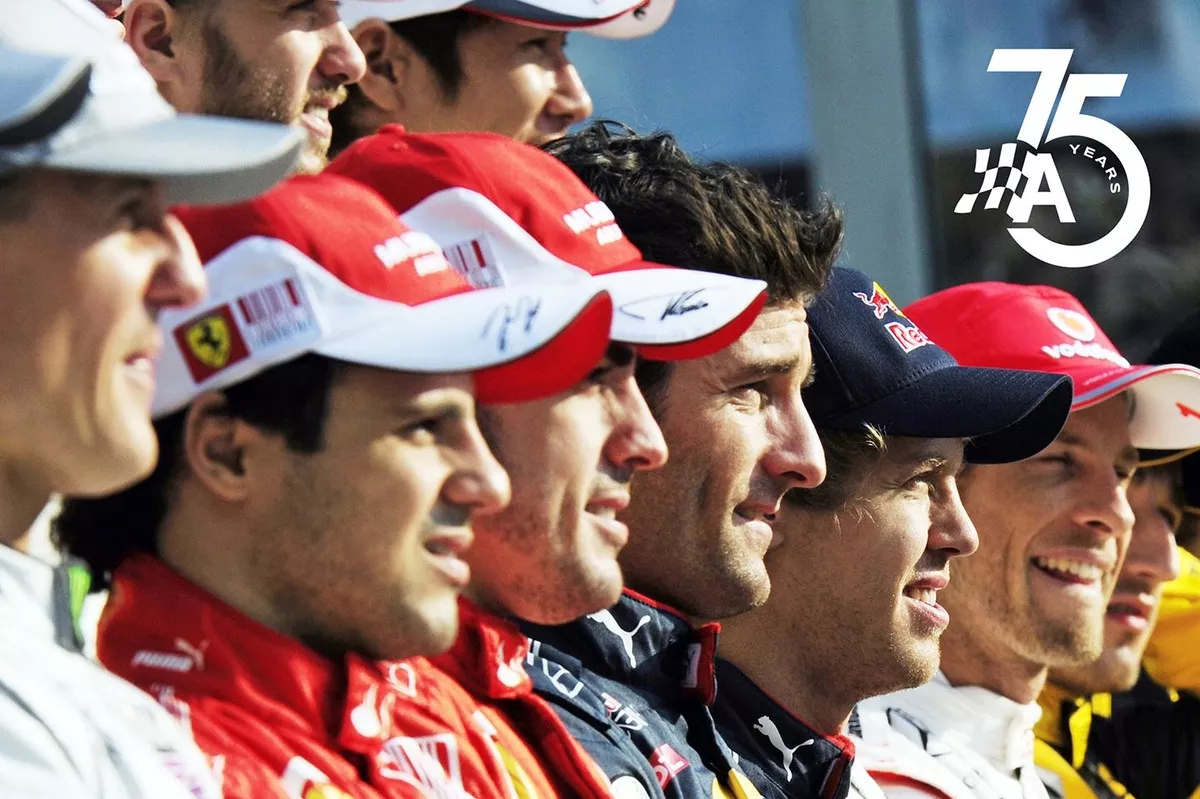
Autosport 75: When Red Bull had its own intra-team fight like Norris vs Piastri

Autosport 75: Why Verstappen was ready for F1 at 17

How the Senna myth has been transformed

Archive: When the French GP almost produced F1's greatest shock

Autosport 70: How Scheckter instigated Silverstone's most famous F1 incident

Autosport 70: The lost F1 team that launched Newey

Why being "very adaptive" gave Norris the edge over Piastri at US GP

Smyth makes Formula Ford Festival history as he wins despite clash with team-mate Murray

Taken for a ride? The less heralded flaw of the 2026 F1 regulations

Sainz set for Rally1 outing in latest gen WRC car
Subscribe and access Autosport.com with your ad-blocker.
From Formula 1 to MotoGP we report straight from the paddock because we love our sport, just like you. In order to keep delivering our expert journalism, our website uses advertising. Still, we want to give you the opportunity to enjoy an ad-free and tracker-free website and to continue using your adblocker.


Top Comments