


Verstappen: F1 should revert to cars it used around 2010
The four-time world champion has spoken about what he wants from the next regulation era of F1

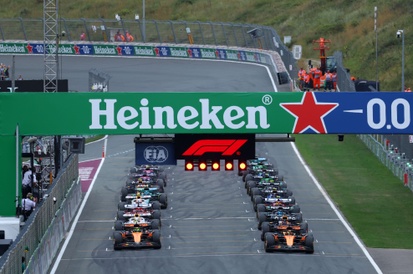
Start action
Photo by: Getty Images
Max Verstappen has argued that Formula 1 should revert to the cars it used from the late 2000s to early 2010s for when the championship next ushers in a new regulation era.
The 2026 campaign will introduce widespread changes to the chassis and power unit regulations, including smaller cars, active aerodynamics and a 50/50 combustion-electrical split of the engines.
This comes after F1 cars have become much bigger through the years resulting in more difficult overtaking and less closer racing, which is something the regulation switch aims to overcome.
Verstappen hopes F1 takes inspiration from what it had approximately 15 years ago, when engines were naturally aspirated V8s and cars were around 180kg lighter.
“What is most important is lighter cars, smaller cars,” said the four-time world champion. “But you can only really do that if you change the engine regulations.
“At the moment, the engines are super efficient, but they are also quite big. That makes the car longer, you need more cooling, so the car becomes quite big.
“I think if we can get a similar type of car like they were in the 2010 era, or even before, that would be nice, because I think it will help the racing. But at the end of the day, I'm not the one deciding.”
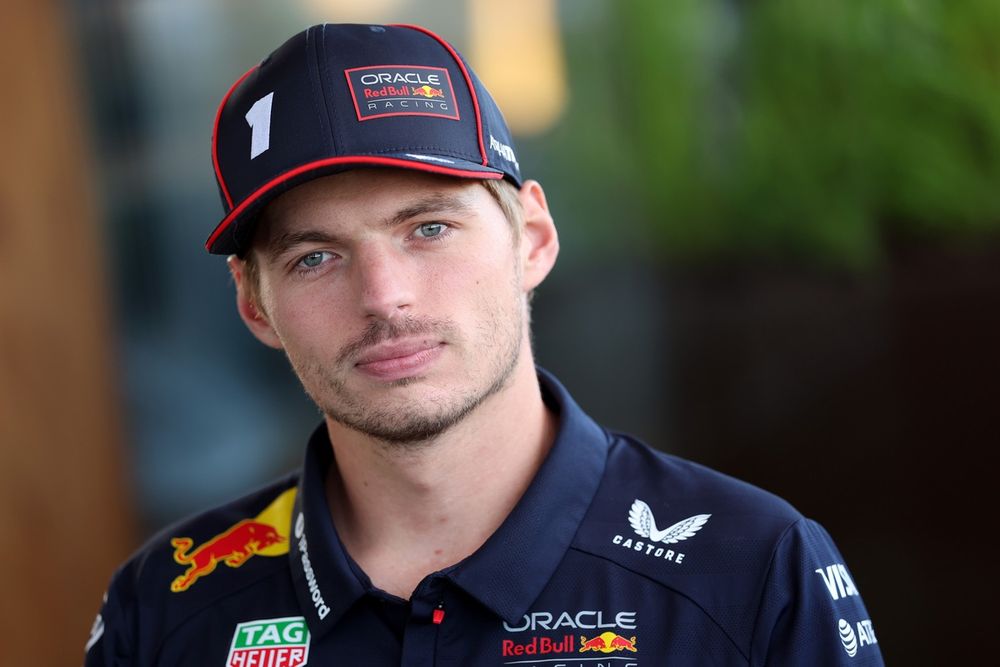
Max Verstappen, Red Bull Racing
Photo by: Mark Thompson - Getty Images
Verstappen’s Red Bull team has the added challenge of debuting its in-house power unit next season after receiving supply from Honda since 2019 and Renault, Ferrari and Cosworth before then.
It has added doubt to how good Red Bull could potentially be in 2026, given the regulations may favour Mercedes which is rumoured to have the strongest engine.
But Verstappen refused to get drawn into placing expectations on Red Bull as there remains many unknowns surrounding the pecking order for next season.
“It's a big question mark, but honestly I think there are not many people that can say right now, ‘yes, we are going to be really, really good’,” he added. “You don't have any guarantees. I know it's a big challenge what we are doing, with also bringing our own engine, but it's also quite an exciting challenge.
“It also gives us the best opportunity of being competitive instead of being dependent on another car manufacturer that is willing to give us an engine.
“The regulations are so complex that, of course, the engine is going to be super important, but you also need to make sure that you build a good car.
“I think the first few races will be very challenging for everyone to integrate everything very well, from the power unit to the car and the behaviour in general, so hopefully it can give you some interesting races.”


Share Or Save This Story


Collard/Cook's Donington Park win causes huge British GT title swing

Alonso on his F1 future: "It is more about the regulations"

The team orders debacle that made for a controversial Formula E title decider

How Antonelli is proving unbeatable, even when he's beaten

Red Bull defends decision to force Verstappen to give back two positions

Verstappen: Victory at Spanish GP to be "tough" with lack of overtaking opportunities


F1 drivers criticise Madrid circuit, Verstappen laughs: "I'll sort it out"

Verstappen points to Lawson and Tsunoda as proof F1 2026 is too easy

The hidden benefit of Verstappen’s new F1 deal that Red Bull wants to exploit

F1 champion Norris completes first full test in McLaren’s Le Mans Hypercar

How Solberg lit up WRC title fight in Chile

F2 adds extra Baku feature race and insists Qatar, Abu Dhabi still on – what does this mean for F1?

Healeys, MGBs and Lotus Elans top Castle Combe Autumn Classic
Subscribe and access Autosport.com with your ad-blocker.
From Formula 1 to MotoGP we report straight from the paddock because we love our sport, just like you. In order to keep delivering our expert journalism, our website uses advertising. Still, we want to give you the opportunity to enjoy an ad-free and tracker-free website and to continue using your adblocker.


Top Comments