


From Senna's brilliance to tragedy: Tim Wright’s F1 testing tales
As Formula 1 prepares for the start of its three-day test in Bahrain this week, Autosport's technical consultant recalls days with McLaren and Benetton when testing was a far bigger part of an engineer's role
We all know the expression “an army marches on its stomach”, yet during my early days testing with McLaren - when we were just a handful of guys - we had to find our own food during the day. Before lunchtime, we sent the truckies off to the local shop for bread, ham and cheese and we made our own sandwiches, or to the local pizzeria.
On one occasion we were testing at Imola and parked next to us was the Williams team. To our complete envy, they turned up with a motorhome (the first anyone had seen a test team have) and proceeded to roll out an awning with a few tables and chairs laid out underneath.
Fed up with sitting in the back of our test truck on uncomfortable and cold surfaces, I asked our truckies how much money they had in their float (they always were given plenty to cover any unforeseen circumstances) and sent them off to the local supermercato to buy some plastic tables and chairs.
I then had to square this decision with Ron Dennis when we returned to the factory, but I would like to think that this led to his conversation with Marlboro to send its hospitality truck to tests as well as races…
PLUS: How Ron Dennis transformed McLaren
After leaving McLaren for the Peugeot sportscar team, I returned to F1 and, after spells with Jordan and Sauber, I settled at Benetton where I ran the test team from 1995 until I left the team then known as Renault in 2008. In 1995, Renault, as the supplier of engines to Benetton, had moved the alternator into the rear of the engine vee. However, after pretty much every run we made, the car would grind to a halt due to running out of battery power. The reason for this, we soon discovered, was that the alternator belt driven off the back of a camshaft kept falling off despite it being of a multi-grooved design.
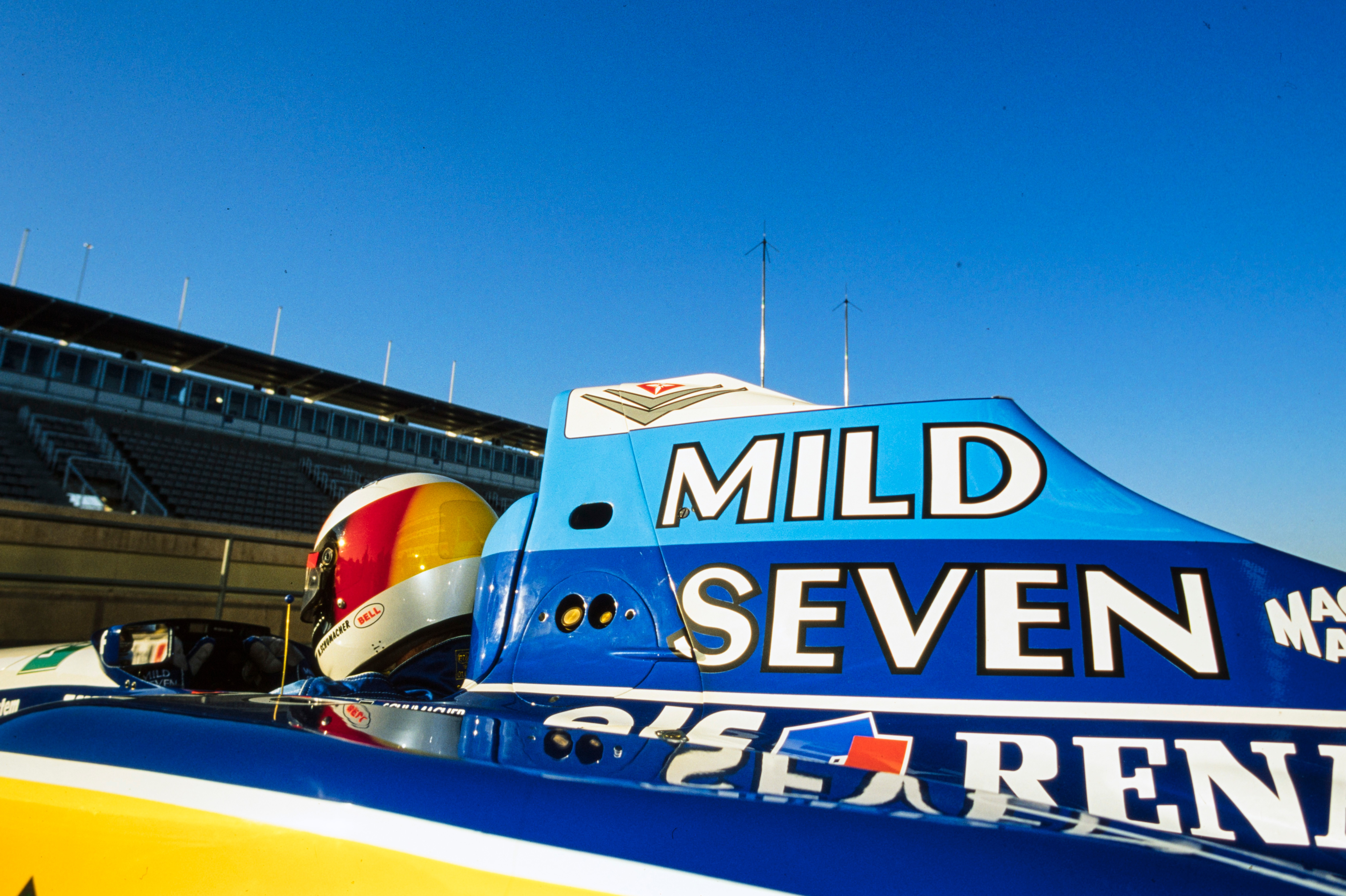
Michael Schumacher Benetton 1995
Photo by: Motorsport Images
This happened so regularly that we decided to run an engine on the dyno in Viry-Chatillon and video what was happening. What astonished us was that the belt, at certain resonances in the rev range, would start to turn itself inside out and then fall off the pulleys. The only way to make it survive was to progressively add idler pulleys until we had seven of them at various positions on top of and underneath the belt assembly. Even like this we had a few failures of the belt during the season, but it led to Renault repositioning the alternator to the side of the engine and with a direct solid driveshaft.
Before windtunnels became de rigueur in F1, a lot of the test team's time was spent performing aero testing. This would take place at various old airfields such as Lurcy Levis, near Magny Cours, Bruntingthorpe in Leicestershire or Keevil in Wiltshire. As important as these tests were, they became quite boring, as the car was sent out to perform one kilometre runs (where possible) at different speeds. Timing beams were set up on the side of the runway at specific distances and the driver instructed to reach a particular speed by the first beam and maintain this speed until passing the second beam, turn around and repeat the run in the opposite direction.
From time to time, there would be other happenings at the airfields that would provide a distraction from our work. One time at Keevil, we were asked to stop running for a while as the RAF was conducting dropping tests. This was a mystery until a Hercules transport plane suddenly appeared at low level with its rear door wide open and several big boxes were launched out onto the grass alongside the runway. This provided me with extra material to write into my reports, which were widely appreciated by the guys in the design office (but less so by the management who advised me to stick to the facts). On another occasion, again at Keevil, there was an array of farm machinery being tested on the grassy areas alongside where we were running. This too was added to my report!
The weather was incredibly hot with track temperatures in the middle of the day reaching over 50 degrees. There was little point in making changes to the car in this atmosphere, so we negotiated with the circuit to be able to start earlier in the morning and run a little longer into the evening
There were no such distractions at Lurcy Levis, however, but we used to enjoy staying at the local hostelry called the Pont Neuf that had an excellent restaurant, a swimming pool and a tennis court. If the aero tests happened to be during the summer months, there was plenty of time (as running time on the airfield was restricted due to nearby houses) to take advantage of the facilities.
One of my favourite testing facilities in the Benetton days was Jerez in southern Spain, where you were nearly always guaranteed good weather. However, when we were running Michael Schumacher in 1995, the weather was incredibly hot with track temperatures in the middle of the day reaching over 50 degrees. There was little point in making changes to the car in this atmosphere, so we negotiated with the circuit to be able to start earlier in the morning, have a two or three-hour break for lunch and then run a little longer into the evening. I think the marshals quite appreciated this as well! Of course, there were other attractions to being near Jerez as there were many good hotels and restaurants nearby and tours of the famous sherry companies.
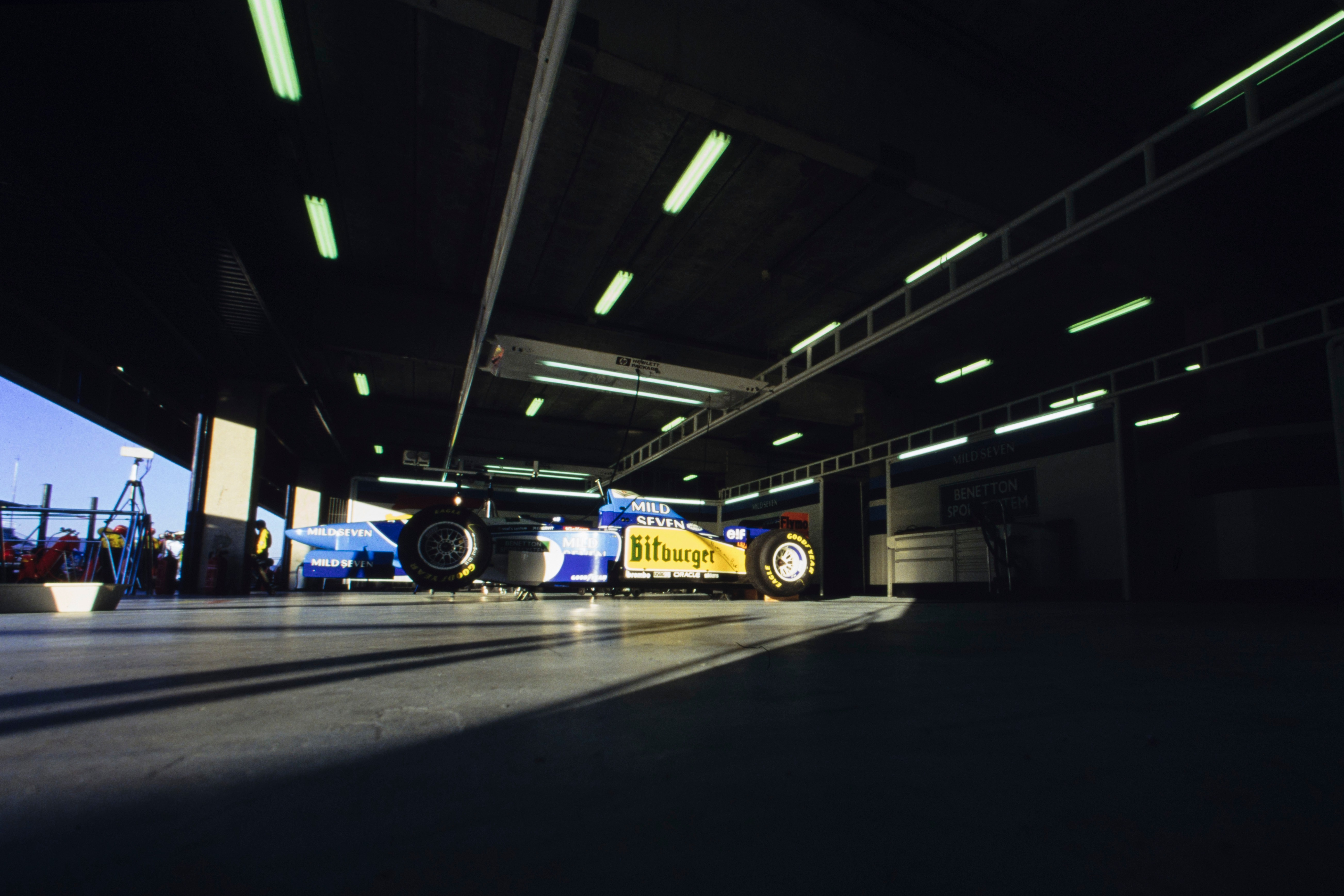
Benetton Barcelona 1995
Photo by: Motorsport Images
Then there was suddenly a hotel complex, the Montecastillo, erected right next to the circuit that you could actually walk to and from. At the time, the most spectacular part of the complex was an 18-hole golf course designed by Jack Nicklaus that was used as part of the Volvo Masters tour. As we occasionally stayed at the hotel, we had access to the course whenever there was time after testing.
But my memories from testing aren’t always positive. Probably the worst time during a test was back in the McLaren days in 1986, when we were at a very hot Paul Ricard circuit in the south of France. During this general test, where Alain Prost was driving the MP4/2, we were preparing to send him out with a full tank of fuel. But, during the fuelling, we had seen a small leak from the sealing ring on the top of the tank. This was cleaned up and as the leak did not appear again, we sent Prost out.
A few moments later we saw in the distance a pall of smoke and immediately feared the worst that Prost had had an accident, or the car had caught fire due to the leaking fuel. The circuit car went out at speed, but rather than stand around waiting for news, some mechanics and I jumped into our hire car and drove down to the scene of the accident.
To our immediate relief, we saw Prost standing by his car looking off to the side of the track, where we could see the Brabham of Elio de Angelis was upside-down in the bushes. We soon realised that the car was on fire and the marshals - who were dressed in shorts and t-shirts - seemed more concerned about putting out the fire in the bushes than tackling the fire around the car.
The mechanics and I tried to pull the car back onto its wheels, as de Angelis was still strapped in and not moving. But the heat was too much, and the circuit director told us to back off as the fire truck had then arrived. Eventually de Angelis was extricated and flown off to the hospital in Marseille, but it was too late. Tragically, he succumbed to his injuries.
I was Prost’s race engineer at McLaren in his title-winning 1985 and 1986 seasons, so got to know him fairly well between all the race weekends and tests in-between. One particular test with him that sticks in the mind was at Monza, where most of the top teams were in attendance, as it was just before the Italian Grand Prix weekend. The circuit had been in use for several years before, but on that day the drivers took issue with a tree that was in the middle of what is now the run-off area of the second chicane.
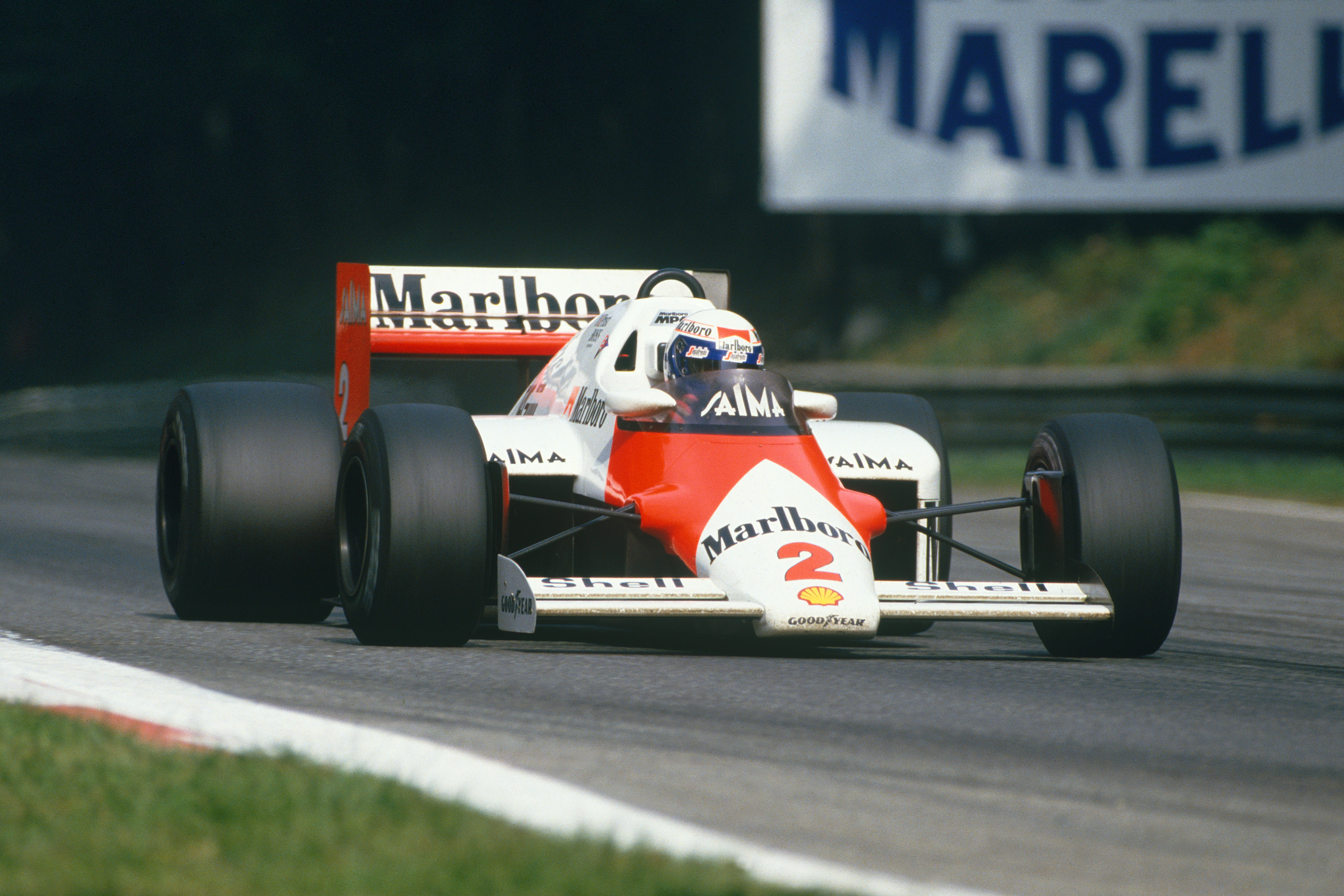
Alain Prost 1985 Italian Grand Prix
Photo by: Motorsport Images
The circuit is just one small part in the middle of a huge public park and, along with some beautiful ornate buildings, a TV relay station, two golf courses and thousands of trees, everything is protected by a preservation order. Therefore, proceedings not only stopped at that point but the whole test had to be delayed while permission was sought to remove the offending tree. As nobody knew how long this would take, Prost went off to play golf…
I can’t miss the opportunity of including stories of testing at McLaren with Ayrton Senna. During the 1988-89 seasons, I had several chances to run tests at which Ayrton was the sole driver, notably a very wet Hockenheim and a very hot Hungaroring. It’s well known how dominant the MP4/4 was, but the best attribute of the car was the ease at which we could find a good set-up.
Top 10: Ranking the greatest Formula 1 McLarens
Despite Hockenheim being a quick circuit, the way forward there was plenty of wing. At Hungaroring, which is a high downforce circuit, I was baffled by how astonishingly quickly Ayrton came back to the pits following a run, only for him to confess that he was taking a shortcut from Turn 2 to Turn 13 via a service road. The marshals and organisers weren’t impressed as they thought this was too dangerous, and insisted that he kept to the track…
On the bullet train back to Tokyo, a full two hours after driving the MP4/4, Ayrton wanted to go through a circuit map to tell me exactly what the car was doing at each corner
One time when testing at Suzuka not long before the Japanese Grand Prix, Ayrton asked if he could do the test instead of Emanuele Pirro. Honda thought this was a great idea as it was in the middle of developing the NSX supercar and had taken two examples to Suzuka so that Ayrton could advise them on the different suspension set-ups. Following a break in our test schedule, Ayrton drove both cars with one of Honda’s designers on board and, after the last run, invited me to jump in to see what I thought; an experience I will never forget.
Following the end of the test, I was even more impressed with Ayrton’s mindset as on the bullet train back to Tokyo, a full two hours after driving the MP4/4, he wanted to go through a circuit map to tell me exactly what the car was doing at each corner. His attention to detail was extraordinary and what made him so special.

Ayrton Senna Suzuka 1988
Photo by: Motorsport Images
An unusual test I was asked to attend involved two teams that I had previously worked with, namely Lotus Engineering with the Evora GTE sportscar and Renault F1, that briefly also became Lotus F1. There was obviously a link up between the teams, and Lotus at Hethel had been developing its single-seater, the T125, that was primarily to be used by private individuals who wanted something akin to an F1 car that they could track test.
The Lotus F1 test team had been asked by Hethel to take over the running of the car, but as they did not have an available engineer, I was contacted because I was by then freelance, impartial and known by both parties. The car was taken to Portimao (then not a part of F1’s circus) and Romain Grosjean was contracted to drive the car, which had a V8 engine developed by Cosworth. There had been problems with the front suspension rockers binding up during the car build that were still an unknown.
Given that the car suffered with understeer, we suspected that this was still the cause, but as it was also bottoming badly, we had to look elsewhere. The circuit there being quite bumpy was making it uncomfortable for Grosjean to get an idea for the set-up but, as the car was destined for drivers who would not always be on the limit, we did eventually come up with a reasonable balance.
As an aside to this story, when I was still working at Lotus, the track had been hired one cold Saturday in November by none other than Roger Daltrey of rock band The Who. As patron of two of his charities, he was there to put a special design on one of the road-going Evoras that would be auctioned off with the proceeds going to the charities. During the day, he was tutored by James Rossiter, one of our regular Lotus drivers.
Daltrey drove many cars from an Elise to an Evora GT4 and then up to the T125, but listening to the sound of it, he was clearly very nervous of it given the 650 horsepower. But at least he kept it on the track and climbed out with a huge smile on his face!
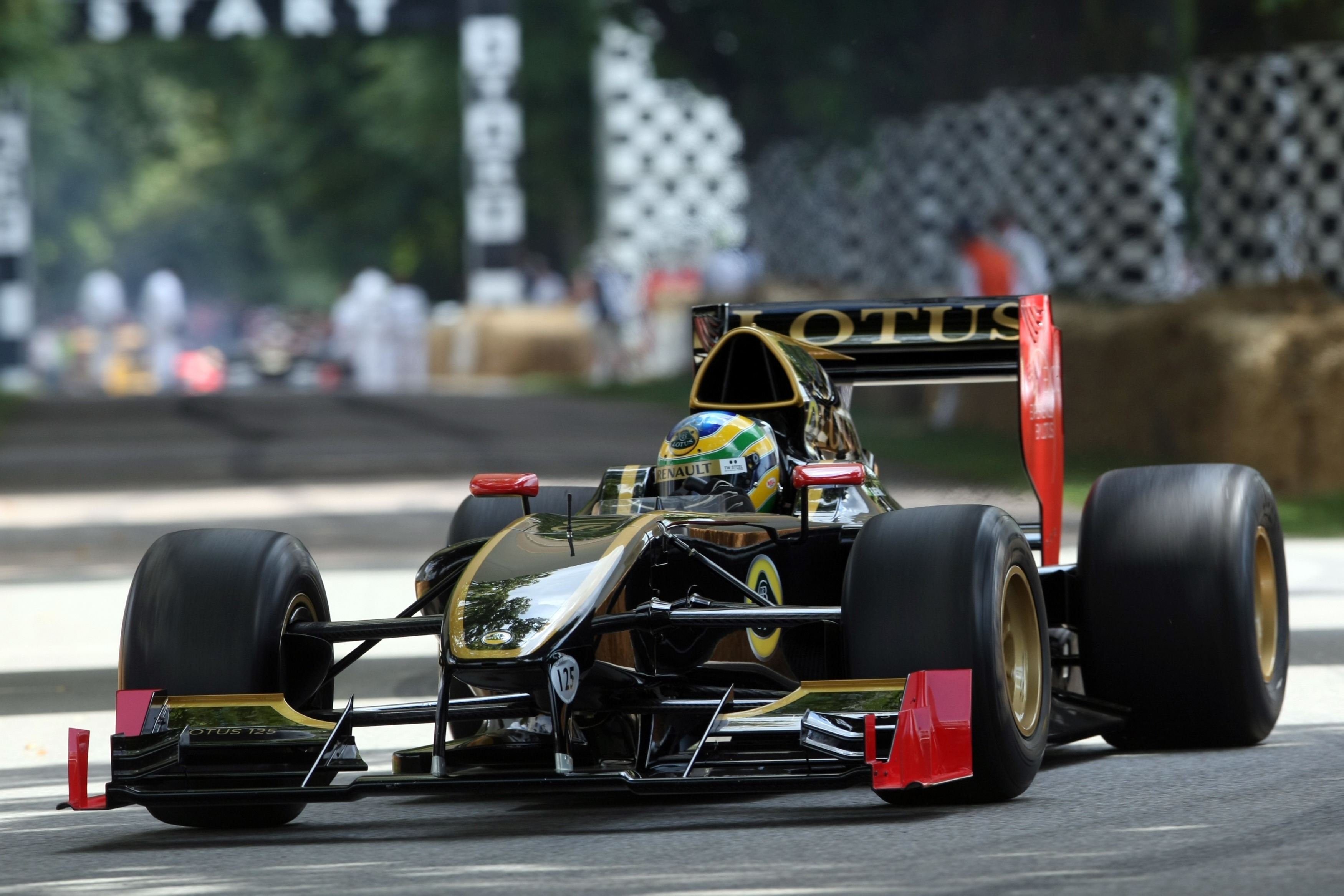
Bruno Senna, Goodwood Festival of Speed Lotus T125
Photo by: Motorsport Images

The karting guru who helped Norris and other F1 stars

What teams lose and gain from F1’s testing restrictions

How Silverstone has evolved into a modern classic

The F1 cycles of staying ahead of the opposition

How an engineer survives Le Mans

The history lessons Peugeot should have learned on its return

The past figures F1’s returning drivers will hope not to emulate

How F1 teams and personnel react in pressurised situations

Marquez: MotoGP rivals gave me a “present” - and it tastes “sweet”

Red Bull defends decision to force Verstappen to give back two positions

WRC Chile: Penultimate stage puncture dashes Evans’ Chile podium bid

The reason for Martin's MotoGP San Marino GP fall-off
Subscribe and access Autosport.com with your ad-blocker.
From Formula 1 to MotoGP we report straight from the paddock because we love our sport, just like you. In order to keep delivering our expert journalism, our website uses advertising. Still, we want to give you the opportunity to enjoy an ad-free and tracker-free website and to continue using your adblocker.


Top Comments