

The tech clues to 2016 F1 form
What did teams' development rates and strategies during testing tell us about how Formula 1 2016 might unfold? CRAIG SCARBOROUGH has some answers
The 2016 Formula 1 season had a very unusual prelude: a late finish to the previous calendar, a late start to testing and then just eight days of running at Barcelona.
The regulations have hardly changed for this year, yet there are huge changes coming next year.
Teams are having to apportion resources on resolving issues from 2015 while being mindful of the upcoming changes, and for those playing catch-up the compressed testing period was a handicap.
Many ended the tests with largely the same car specification as they had at the beginning. But for those who know their correlation is good, new parts fitted only in Melbourne can be trusted to work straight out of the box without having required running-in at Barcelona.
Here is what the technical development seen so far tell us about the likely early-season form.
MERCEDES

There's no doubt Mercedes arrived at testing and headed on to Melbourne fully prepared and as the championship favorite.
Testing told us little we weren't expecting: the team never ran the super-soft tyres, let alone the new ultra-softs, but this was all part of the plan of sticking to long runs and racking up high mileages.
The only obvious blip was a failure of the gearbox, which is a new concept for 2016. But it's telling that it happened on a high mileage unit and that the car was out again after that day's lunchbreak with a replacement and racked up more distance.
Alongside the ominous long runs, the W07 gained new aero parts on a daily basis, each of them adding complexity to the otherwise evolutionary design.
Front wings, noses, turning vanes and rear wings were all updated, then seemingly proved to be successful as they all stayed on the car.
This overtly rapid development is a slightly new direction for Mercedes. Although it has one of the best chassis, it hasn't been seen to push very hard on aero updates through the past few seasons.
Clearly last year's focus largely on reliability has paid off and will continue to reap rewards. The field is catching up so the team needs a step in performance in order to retain its dominant position so aero development becomes more of a focus.
The direction of its upgrades shows the team is on a slight tangent to rivals. The new nose with its narrow wing mounts and complex bargeboards suggest the W07 is turning the air more abruptly around the middle of the car, compared to the long wheelbase streamline shape of most other cars.
It's now up to the rest of the grid to bring the fight to Mercedes.
FERRARI

Ferrari's rebuilding process after its disastrous 2014 campaign continues.
Last year's package was already in development when the team carried out the restructure that involved sacking technical staff and hiring new people, notably James Allison.
That means we're only now seeing what a chassis and power unit package created by the new Ferrari technical line-up - with Simone Resta and Mattia Binotto as the key design staff - looks like.
Though described by some as revolutionary, the SF16-H is in fact quite conventional by F1 standards.
Ferrari's previous isolated design approach has been rejected in favour of solutions used by the rest of the grid. So the new car has a short nose, normal front suspension geometry, a pushrod acting on the front suspension and conventional power unit packaging.
With this switch Ferrari has aimed to close the gap to Mercedes, and the car exhibits greater front end grip, more downforce overall and should have a better power unit.
But while Mercedes further refines its car concept, Ferrari is only just embarking on understanding its new design direction.
The fact that the car showed pace and general reliability pre-season suggests the change has brought the gains Ferrari sought, but it was testing with some 2015 parts - the wings, diffuser and turning vane set-up.
In Ferrari's favour is that the car should have greater development potential than Mercedes. The team struggled with getting new parts to work as expected in recent years, but new working practices through 2015 solved that problem, so while Ferrari finished testing with pretty much only half a 2016 car, it can expect a strong progress curve through the year as the new parts arrive.
It's still going into 2016 as the chaser, though.
RED BULL

It's likely to be tough season for Red Bull, still with an engine yet to challenge its rivals and with a sister team that has a competitive chassis but now a better power unit.
At races where its power deficit won't be such a challenge, Red Bull can make the most of its excellent chassis. Otherwise it's a case of waiting for a big combustion upgrade from Renault to bring more power.
Testing was a curious case for Red Bull. The car is a clear evolution of the 2015 design with even sleeker sidepods and a novel bat wing under the nose. It had pace and was generally reliable, but the machine we saw start the test was largely the same specification that ended the test, with no updates or new parts beyond a subtly revised front wing.
For a team relying on its chassis and specifically its aero programme for results, the lack of new parts was puzzling. Perhaps more is to come in Melbourne?
TORO ROSSO

The late switch to Ferrari power units forced a huge development push for the small Toro Rosso team, bolstered by staff contracted in for the winter.
It's a surprise the car made it to day one of testing in the circumstances, and an even greater surprise that it looks so good both in design terms and on track.
With the power unit switch, Toro Rosso gained not only more power and reliability, but also a reduction in cooling demands, allowing for a slimmer car.
When added to what many regard as the best chassis of 2015, the power hike of over 50bhp and yet more innovative detailing on the STR11 means Toro Rosso may present a greater challenge to its sister team Red Bull this year.
Reassuringly the second test brought more upgrades: a new floor, front wing and monkey seat winglet.
Whether Toro Rosso can keep adding performance via chassis upgrades will be the critical factor in its 2016 season because its Ferrari engine is a late-2015 spec that will not receive any upgrades during the year.
With every other power unit in the field set to enjoy performance boosts from token spending and new fuels, Toro Rosso is effectively going to backwards by standing still in this regard. It's going to have to get its results early in the year before that happens.
WILLIAMS

Testing proved to be a typical Williams engineering-led process: no fuss or drama, just a steady schedule of runs to prove the new car's pace.
This year Williams has chosen to run its own gearbox casing rather than being tied to the Mercedes version, which means it can use the longer wheelbase it prefers.
Although the gearbox case is new, it's still made from cast aluminium, something being queried by rival engineers, as it is a less efficient material than titanium or carbon fibre.
Chassis wise the car is a clear development from 2015, the sidepods reshaped to follow the current trend for long sidepods ending within the rear suspension.
Above this the Williams unique 'whale tail' is added - a large curved vane to direct air around the sidepods and between the rear wing and diffuser.
Both the rear and front suspension have changed in a bid to get the tyres into their working range and give the drivers more confidence after the rather more awkward handling of the 2015 design.
This appears to have worked and the car will now receive more definitive 2016 parts. A new shorter nose, right at the limit of the length allowed within the regulations, is due and will be mated to a new front wing.
Williams will need these parts to add pace, as merely keeping the gap to Mercedes constant as it did in 2015 is not enough.
Last Ferrari jumped into that gap and this year, Red Bull, Toro Rosso and possibly Force India could have the pace to oust Williams from its third position.
FORCE INDIA

After finding issues with its aero programme in late 2014, Force India had a transitional year in 2015 while waiting for its new programme based around Toyota's Cologne windtunnel to come online.
Once the parts started arriving at Silverstone, the team's season took off.
Force India's development programme is now out of phase by six months to the rest of the grid. As a result, the new car is a clear evolution of the outgoing one, but continues the momentum built up by the new gains in the aero programme.
Retaining its distinctive vented nose and many of the detail aero parts, the car also gains the new Mercedes power unit, but sticks with the 2015 specification Mercedes gearbox, with an outer carbon case and titanium inner 'cartridge' case.
If Force India can continue its upward curve, it's a strong contender to lead the push of the midfield teams chasing Ferrari and Mercedes.
McLAREN

Week one of testing did not initially bode well for the beleaguered McLaren-Honda partnership. But by the end of the tests the new specification power unit and chassis updates left the team looking more likely to succeed in 2016.
It is coming from a long way back, though, seeking to get both chassis and power unit performance on a par with the midfield before it can even consider the frontrunners.
As with last year the design side of the MP4-31 is a technical tour de force, seeking to gain performance from working the engineering limits harder.
So again, we see the compact power unit with its turbo tucked away inside the V, and the chassis exhibits many clever touches from its front suspension geometry and pushrod set-up.
Equally the work last year to understand how to get the car set up with a steep rake angle has been integrated into the new car package, with the tail of the McLaren sitting as high as the Red Bull's for the first time.
But Honda is still an independent operation. Though it identified its power unit's weaknesses last year, that's not to say it can fully resolve the ERS, turbo and reliability issues alone without outside help.
McLaren meanwhile brought endless update parts last year, but the impact of the upgrades didn't seem to reconcile with a performance step.
Both sides now need to show they can bring developments that work first time out. They have the technical resources to do so and can't afford not to as it will be cut-throat in the ultra-competitive midfield this year.
SAUBER

Just when things looked brighter for Sauber with an all-new chassis for this year, commercial issues and the loss of the team's technical director blighted the run up to the first race.
In 2015 Sauber ran only a light evolution of its 2014 car, so this year's version is a step ahead immediately.
Ferrari's new power unit opens up packaging benefits for Sauber with slimmer sidepods, and this area appears to be the main area of change for the new car.
More aero parts are coming, but these won't be ready for the first races, so last year's quick start to the seasons isn't likely to be repeated.
The uncertainty facing the team is a handicap, but management change and a lack of resources are the norm for Sauber. Still with so much movement in the midfield this year, it could be left behind.
RENAULT

Another team racked with uncertainty during its preparations for 2016. Renault has now bought Lotus and the switch away from the Mercedes engine left the team with a design headache to resolve over the winter.
There's no doubt the outgoing Mercedes power unit is far and away better than the Renault power unit in Melbourne spec. In most respects the Renault lags behind: power, drivability, reliability and packaging.
The Enstone design team has had to part-design a car and then fit the engine at the last moment. As a result, the monocoque isn't optimised as it could be, the gearbox is a revised 2015 casing and the different cooling package has required new sidepods.
However, the car is a neat package, with its clever V-section nose, and it is expected to gain a new front wing and other aero parts over the opening races.
It is clear the power unit will improve over the year too, as development tokens are spent to get the internal combustion engine power to match its rivals.
But how far can the team devote resources to improving the RS16 while wanting to make the most of the opportunity to get ahead of the development curve for the far-reaching new regulations that will come into effect in 2017?
THE REST

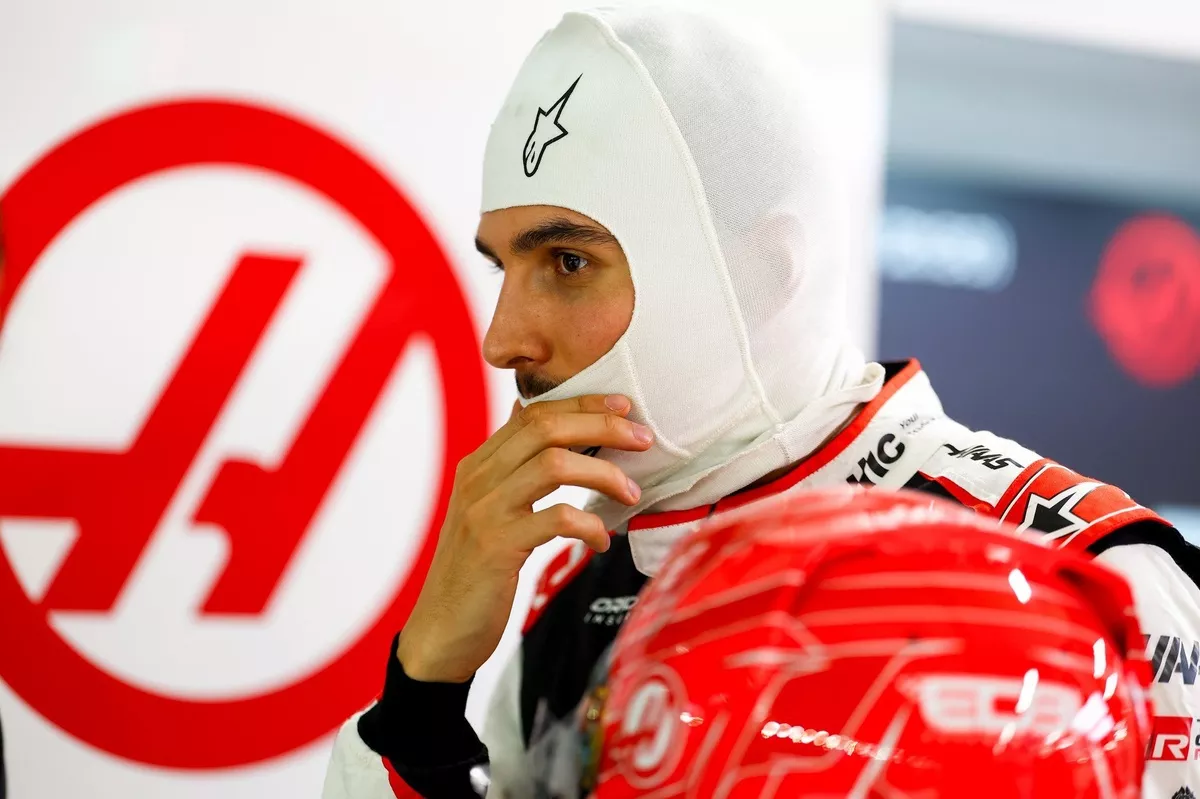
Haas is proving to be a hard team to categorise - new but made up of many existing elements.
Its VF-16 has Haas-developed structures and aerodynamics, but is based on a Ferrari power unit and mechanicals, and run by a strong British and Italian contingent brought in from other F1 teams.
Testing went relatively smoothly, but unsurprisingly Haas is taking time to gel the different elements being put together.
There's little doubt the VF-16 is a solid midfield car, but inevitably Haas will make mistakes and learn from them, and only then can it start to look at how competitive it is.
Another year means another rebirth for the Manor Racing team, but greater certainty over the winter allowed the design team to put together the all-new car it wasn't able to last year.
The Mercedes power unit mated to a Williams gearbox will be a step up from the 2014 Ferrari engine package run for the past two years.
How far forwards Manor's overall step will be isn't yet clear and it's perhaps inevitable it will be the backmarker again, though with a smaller gap to the rest and surprise results possible with some canny race strategies from the new management.


The perfect Formula 1 car from 2016

F1's new development war has already begun

F1 teams still pushing with an eye on 2017

A glimpse at McLaren's 2017 work at Austin?

Engine oddities and aero tweaks at Suzuka

The unexpected technical upgrades at Sepang

Mercedes' suspension under the spotlight again

F1 teams' low downforce secrets

Camara over Ocon - did Haas make the correct call for F1 2027?

Camara to make F1 debut as Ocon's replacement at Haas in 2027

Mekies under the microscope: How different is his leadership at Red Bull from Horner?

Rwanda turns to F1 as it moves forward from a chequered past
Subscribe and access Autosport.com with your ad-blocker.
From Formula 1 to MotoGP we report straight from the paddock because we love our sport, just like you. In order to keep delivering our expert journalism, our website uses advertising. Still, we want to give you the opportunity to enjoy an ad-free and tracker-free website and to continue using your adblocker.


Top Comments