


The single F1 season of a British sportscar great
It’s 20 years since Allan McNish made his long overdue Formula 1 debut with the brand-new Toyota team. But the circumstances were hardly ideal for the Scot, whose spell in F1 would prove to be all-too brief before making a successful return to sportscar racing

It’s fair to say that Allan McNish didn’t fit the typical profile of a Formula 1 debutant when he lined up on the grid for the 2002 Australian Grand Prix with the brand-new Toyota team. Aged 32, the Scotsman hadn’t raced a single-seater since 1995 and was already well established as a top sportscar talent, having won the Le Mans 24 Hours in 1998.
Two decades have now passed since McNish’s one and only season as a grand prix racer before Toyota unceremoniously dropped the axe on both him and team-mate Mika Salo. Reflecting on a campaign in which his best finish of seventh in Malaysia wasn’t enough to score points – 2002 was the last year in which only the top six were eligible to score – McNish concedes that “it was probably a bit too late coming in my career”.
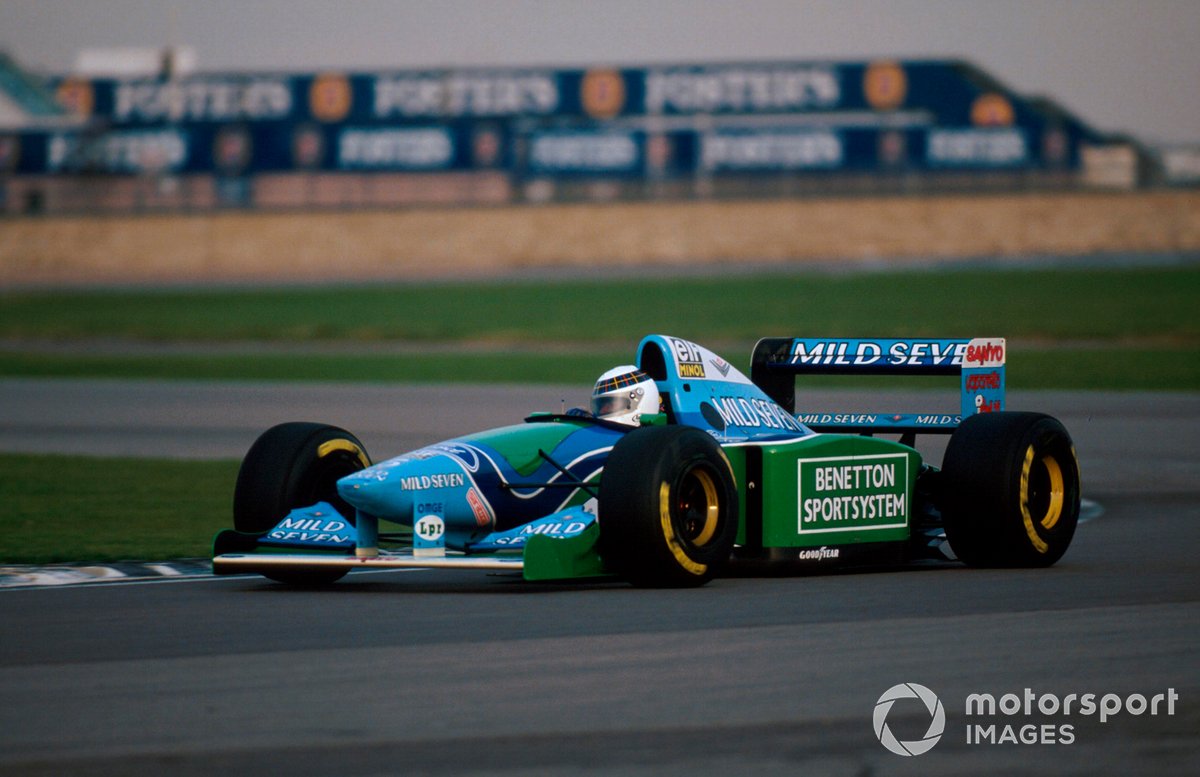
“In the early 1990s if the momentum had taken me into Formula 1 then, I think it would have been a very different scenario,” says McNish, a McLaren protege before his career lost momentum with Lola’s disastrous T91/50 in Formula 3000, then a lack of sponsorship/mystery virus that waylaid his 1992. “I would’ve been able to adapt a little bit easier. When you’re on that momentum road, you roll with the punches quite easily, and you also have a slightly longer honeymoon period to learn and keep gaining experience, whereas that clearly reduces later on.
“It was also a very different time because in the early 1990s there was a massive separation between the cars. You could be 2.5 seconds off pole, but you’d still be 10th on the grid whereas by 2002 that wasn’t the case, the margins had closed up.
“I was probably a little too early arriving on the door [to F1] when I was 20, because then it was a different environment and people were needing to gain experience live. But I was probably too late by the time I got there when I was 32, so I missed the sweet spot in a way.
“Still, you take the chance when you can. Toyota was still the biggest car manufacturer in the world and I’d worked like hell to get the chance. I knew as well that I had established enough credibility in sportscars that, if it didn’t work out, I could knock on doors back there.”
McNish had been on the path to F1 in the early 90s, but his options dried up and he had to head for sportscars
Photo by: Motorsport Images
When the offer came in from Toyota, midway through his title-winning 2000 American Le Mans Series season with Audi, it caught McNish by surprise. He hadn’t driven an F1 car since 1994, when he’d tested the unraced Lola T95/30.
“I had kind of given up on the whole idea, thinking, ‘Well, it’s not going to come’ when I joined Porsche [in 1997],” says McNish, who subsequently returned to Audi for 2004 to resume a successful sportscar career that yielded two more Le Mans wins and the 2013 World Endurance Championship title. “It was something I never expected. It was purely by a series of circumstances that looked as if they were not ideal at the time, that actually led me to Toyota.”
McNish was still contracted to Porsche when he made what was only ever intended to be a cameo appearance for Toyota at Le Mans in 1999, while the Stuttgart manufacturer took a year out to develop the ultimately cancelled LMP900: “Porsche allowed me to go and race for basically anybody else, apart from BMW, and I felt Toyota would give me the best chance of success.”
"There was no aero development through the season. If we’d gone back to the first few races, we would have done the same lap time whereas everyone else would have evolved and probably been half a second faster" Allan McNish
There followed a one-year deal with Audi for the 2000 ALMS and Le Mans, where he was engineered by Dieter Gass. McNish remembers: “During the course of that, Toyota came back and said, ‘We’re doing Formula 1, are you interested?’ Clearly yes, there was no question I was interested.”
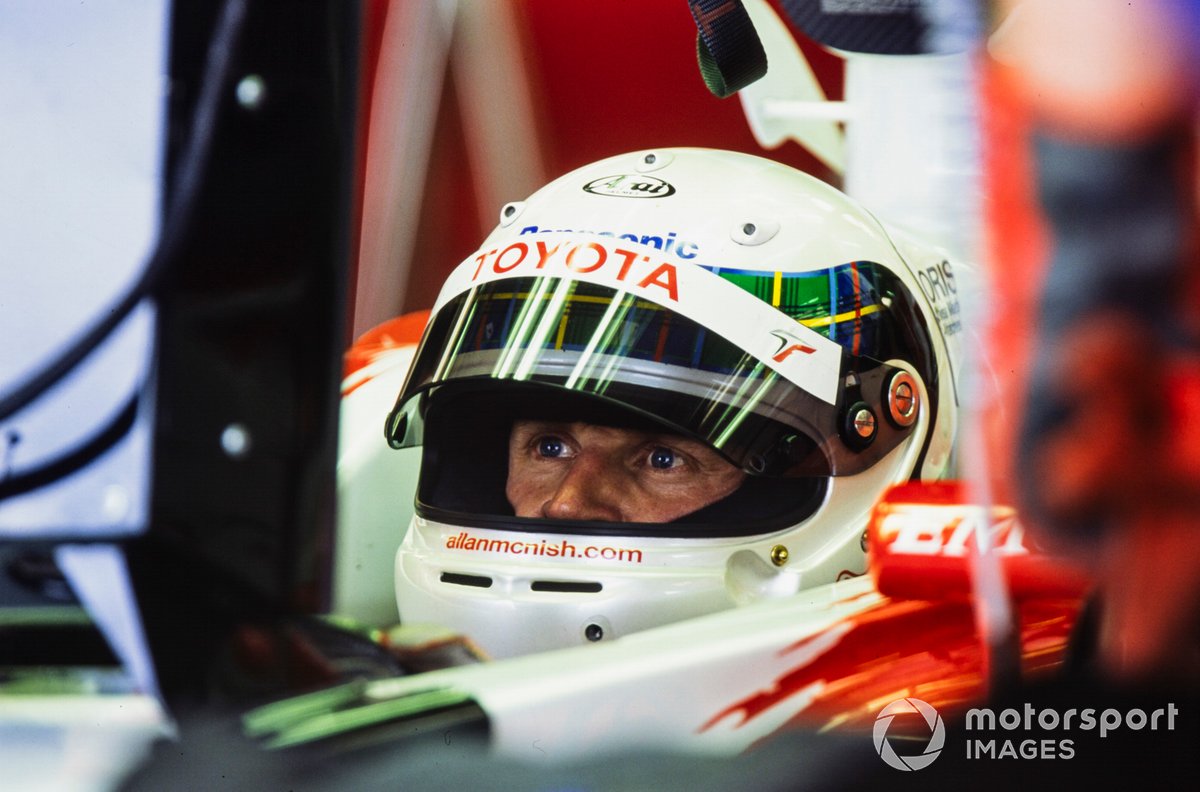
McNish would be reunited with Gass, latterly Audi’s head of motorsport, as his race engineer in 2002. But first came a year of testing to get the team working harmoniously, while building up reliability that would form the underpinning of the conservative Gustav Brunner-designed TF102. It couldn’t properly prepare the team for the intensity of racing, but McNish says “it was useful”.
“There were a lot of positives there,” he says. “It kept the team working together and built up the race engineering structure to give them experience. The reality was, there were two people at that first race in 2002 that had grand prix experience. That was Mika and his engineer [Humphrey Corbett, who had run Jaguar’s Pedro de la Rosa in 2001]. No one else had in real terms – they’d been to a few races but hadn’t been active.
“They were also able to run through a lot of reliability aspects, which I think was a strong point of the car in the beginning of 2002. It was principally one of the reasons why we came out of the blocks able to get top-eight, top-six finishes.”
After a year of testing, McNish and Toyota were ready for the start of 2002, but soon fell back in the pecking order
Photo by: Rainer W. Schlegelmilch / Motorsport Images
Come the first race in Australia, where half the field – including McNish – was wiped out in a first-corner pile-up, Salo went on to finish sixth. But McNish reckons the result inflated expectations unrealistically.
“Before that I remember the press guidance was, ‘We just want to be respectful and respected,’” he recalls. “Then it suddenly came to, ‘We want to finish halfway up the championship’ and that was in the space of about two races. That was a massive ask and a massive misalignment of our target.
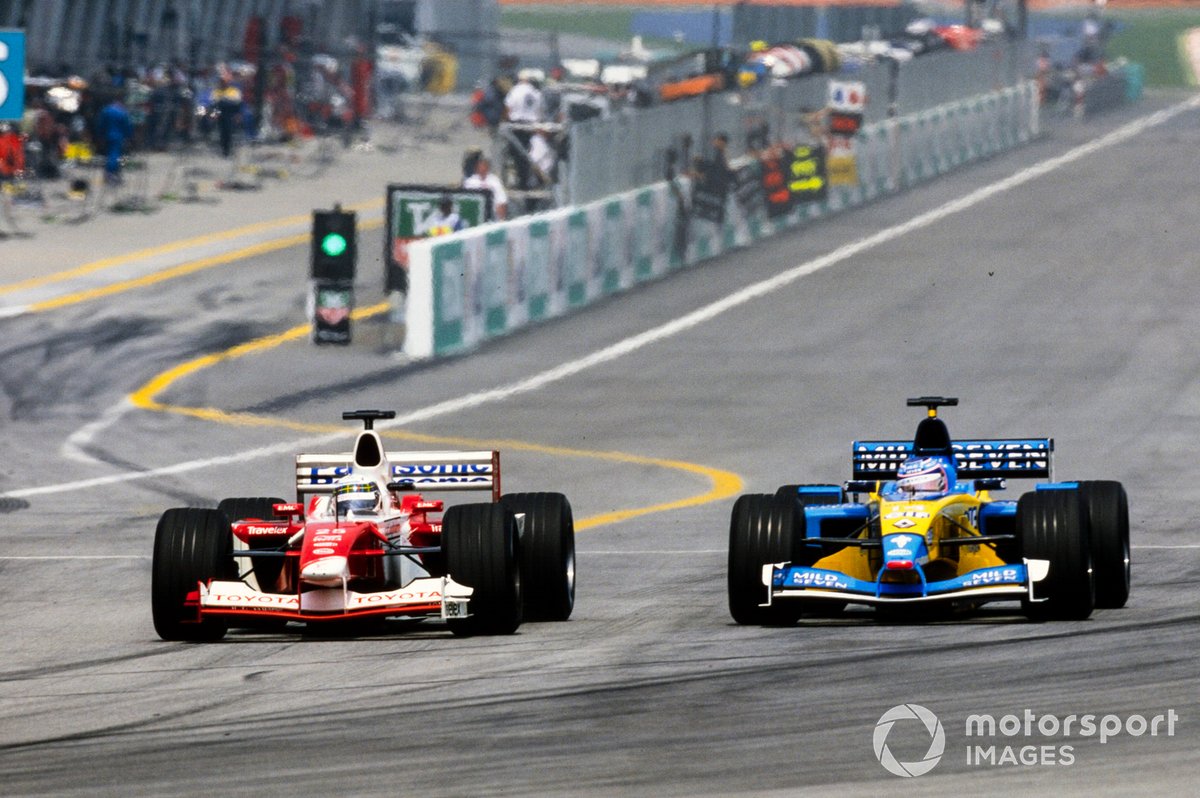
“The sixth place there, then Mika had a sixth in Brazil, I was seventh in Malaysia – that was the first three races and I think that probably highlighted how prepared we were at those first races to pick up the pieces from having the car running in November the previous year.”
McNish neglects to mention how, in Malaysia, he would certainly have finished sixth without a tyre mix-up when Salo pitted unexpectedly and the team didn’t have any tyres ready, leaving him to finish the race on rubber now well past its best. Thereafter, Toyota slid steadily back down the order and scored no more points – it was beaten to ninth in the standings by Minardi.
“There was no aero development through the season,” McNish says, a situation not helped by its Cologne windtunnel not being operational until April. “If we’d gone back to the first few races, we would have done the same lap time whereas everyone else would have evolved and probably been half a second faster.
“That was I think the biggest thing that they learned – going racing is very different to testing. You’re having to develop through the racing season as well as testing and developing the next car. It was just a huge task because they’d done them in singular silos in the past – where you test the car, race a car, test a car, race a car. Then having to test, race and develop the next car at the same time I think was quite an eye-opener.”
McNish says the TF102’s engine, the RVX-02 overseen by Norbert Kreyer, “was without doubt the best part of the package”. But he concedes that the car’s fundamental lack of downforce – and therefore relatively little drag – may have exacerbated this.
Battling with Jenson Button's Renault in Malaysia, McNish was robbed of a point by a pitstop mix-up
Photo by: Motorsport Images
“The car didn’t have the downforce, so on big, long straights like Malaysia or Monza it tended to actually be a little bit more competitive than say, for example, Hungary, where you really needed a lot of downforce,” he says. “It didn’t have very good grip – the traction-control system was basically saturated. It tended to understeer and not really turn, but then when it released the rear, when the rear stepped out, it went very quickly. It wasn’t as if it had any progression to it.”
McNish was outqualified 15-2 by Salo, which he puts down to the experienced Finn's ability to work around the car’s limitations in practice. He feels too much time was spent on set-up tweaks, to little avail.
“The car wasn’t necessarily evolving when we were making these tweaks, not to the level that it needed to because we’d reached the plateau point,” he says. “We could play with the diff and there were lots of systems on the car to try and solve problems. But fundamentally if it isn’t there, it’s not there. Looking back, I would have maximised focus on what we had and tried to make sure we evolved it.”
"There wouldn’t have been many combinations under the circumstances that would have done a heck of a lot better. It wasn’t as if there was another 15 points on the board that we didn’t catch" Allan McNish
McNish doesn’t believe that registering a point in Malaysia, Austria (where his strategy was undone by a safety car) or Monza, where his suspension failed while running sixth, would ultimately have turned the tide. Ex-Ferrari man Salo was “pushing in reasonably the same direction”, but was no more successful for his blunt approach.
“If something wasn’t right, he just said it and called them out straight away,” says McNish of Salo, a veteran of 92 grand prix starts before the season began. “I was maybe too polite in that and he shouted it from the rooftops!”
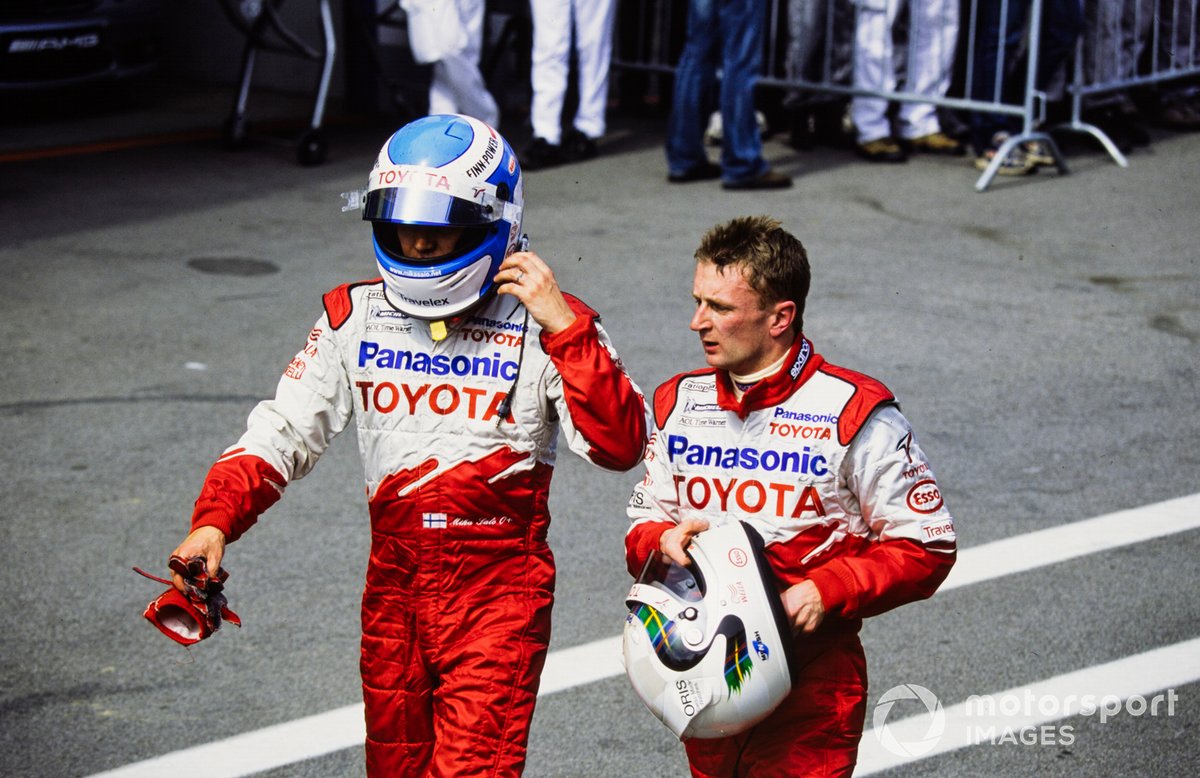
McNish knew to expect political interference, even if he admits to being taken aback at how open the machinations were. So when Toyota opted for a clean slate for 2003, bringing in all-new line-up of Olivier Panis and Cristiano da Matta, he wasn’t entirely surprised. McNish reckons it showed that the upper management was “searching for answers, as opposed to understanding what the situation was”.
“There wouldn’t have been many combinations under the circumstances that would have done a heck of a lot better,” he says. “It wasn’t as if there was another 15 points on the board that we didn’t catch.”
Both McNish and Salo were ditched at season's end
Photo by: Rainer W. Schlegelmilch / Motorsport Images
McNish’s season was ended prematurely by a huge qualifying crash at Suzuka’s 130R, from which he was lucky to escape only with a bruised knee. It was a sour note on which to end 2002, but his F1 journey continued as Renault’s regular third driver on grand prix Fridays in 2003. Driving the R23 that Fernando Alonso used to win in Hungary brought new perspective to the TF102’s limitations, and gave McNish “a completely different understanding of what F1 was about”.
“My first-ever lap at Renault, at Barcelona, was quicker than my qualifying lap in the Toyota,” says McNish. “It was just a massive gulf in performance, driveability, in confidence, everything. In comparison to the Renault, the Toyota was massively edgy. That showed me the difference between being in it and being in it to win. To cut it in F1, whether as a driver or as a team, it has to be done in a certain way. It allowed me to settle some of the frustrations of 2002 and put any doubts away, as well in terms of my speed and my capability.”
Even if he wasn’t given the time to change the paddock’s preconceptions – “I think people did look at me at that point as a sportscar driver, and in that respect, were dismissive” – McNish felt his F1 spell was valuable for his career.
“I never have any regrets and I learned quite a lot from that year, good and bad,” he says. “One of them was, you’ve got to know ‘What is the limitation?’ and then, ‘What do you need to do to get more out of what you have?’
“As well, the understanding of how to stand up under quite difficult situations and keep looking at the end goal as opposed to all the fog that’s just in front of you, that was another thing I learned.”
Toyota exited F1 at the end of 2009 without a single win to its name, having never properly emerged from that fog. McNish was better off out of it…
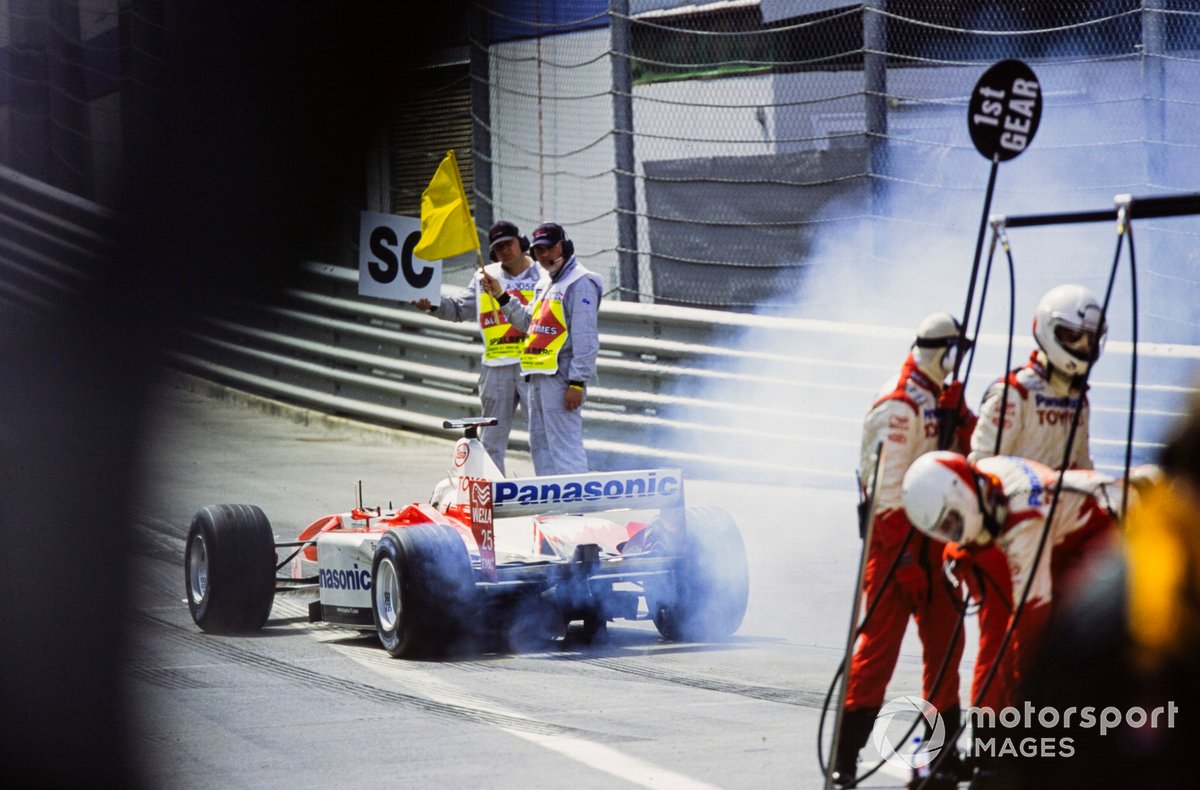
Ill-timed safety car in Austria also cost McNish likely points
Photo by: Rainer W. Schlegelmilch / Motorsport Images

Archive: When Le Mans made its most controversial change

The man behind Japan's first Le Mans winner

Did Audi ‘give up’ on GT3 too soon?

Alex Zanardi’s top 10 moments

This retro-inspired Mercedes 190E racer is heading to the Nurburgring 24 Hours

Why Verstappen's Nordschleife approach is a win-win for motorsport

The new Mercedes star who had an unconventional route to success

Why Rast is leaving the DTM

Marquez "silencing" theory on 'Aprilia or Ducati tracks' - di Giannantonio

Autosport magazine: Antonelli and a Can-Am celebration

Why F1's Madring debut was a wasted opportunity

Bruising F1 2026 will not be the end for Russell - Wolff
Subscribe and access Autosport.com with your ad-blocker.
From Formula 1 to MotoGP we report straight from the paddock because we love our sport, just like you. In order to keep delivering our expert journalism, our website uses advertising. Still, we want to give you the opportunity to enjoy an ad-free and tracker-free website and to continue using your adblocker.


Top Comments